


Latest KFF Health News Stories
Malaria Funding Has Helped Prevent Nearly 1M Child Deaths Over Past Decade, Study Finds
The results of a study (.pdf) published in Malaria Journal “suggest that funding for malaria prevention in Africa over the past decade has had a substantial impact on decreasing child deaths due to malaria,” according to the study’s abstract. Between 2001 and 2011, malaria prevention intervention scale-up helped prevent an estimated 842,800 malaria-related child deaths, an 8.2 percent decrease over the period had malaria intervention remained unchanged since 2000. The researchers note that 99 percent of the decline can be attributed to the use of insecticide-treated bednets. “Rapidly achieving and then maintaining universal coverage of these interventions should be an urgent priority for malaria control programs in the future,” the study concludes (Eisele et al., 3/28).
Global Fund’s General Manager Discusses Future Direction, Achievement of Fund In Interview
Gabriel Jaramillo, general manager of the Global Fund to Fight AIDS, Tuberculosis and Malaria, “has given an interview [.pdf] with the Spanish newspaper El Mundo, in which he outlines the direction and achievements to-date in making the Global Fund a more efficient and successful organization,” according to a Global Fund press release. In the interview, Jaramillo “also stresses the importance of continuing the work of the Global Fund in saving lives through greatly improving the grant management processes and strengthening this function inside the organization,” the press release states (3/28).
Ethiopia’s Workplace HIV/AIDS Policy Aims To Help Employers, Employees Nationwide
Ethiopia’s new HIV/AIDS workplace policy, instituted in January by the government in cooperation with the country’s main employees’ and employers’ associations, “is expected to protect job seekers from mandatory HIV tests, while facilitating voluntary counseling and testing and defending the right of employees living with HIV to medical leave or job re-allocation,” PlusNews reports. The policy “provides guidelines for the establishment of an AIDS fund to help employees cope with living with the virus” and “stipulates that employers will make the necessary investments to ensure universal precautions in workplaces to protect employees from HIV infection, and … put in place a post-exposure prophylaxis system for their workforce,” the news service writes. Tadele Yimer, president of the Ethiopian Employers Federation, said, “What we hope [the new policy] will do is bring about an agreed consent and uniform approach among employers to fight HIV/AIDS nationally,” according to PlusNews (3/26).
Today’s early morning highlights from the major news organizations, including recaps of yesterday’s Supreme Court action related to the constitutionality of the individual mandate, and scene setters for day 3 of the oral arguments, which will tackle issues of severalbility and questions about the health law’s Medicaid expansion.
Pundits Parse Tough Questions By Conservative Justices
The second day of the momentous Supreme Court hearing on President Obama’s health law ended almost exactly at noon. By 12:03, many conservative lawmakers and television commentators who had been in the packed chambers stood on the marble steps outside, saying the health insurance mandate at the heart of the law appeared to be in deep trouble. […]
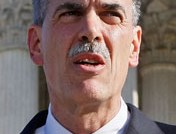
Transcript: Highlights Of The Lively Arguments At The Supreme Court, Day 2
Here are excerpts of some of the most compelling parts of Tuesday’s oral arguments at the high court.
Hundreds Brave Chilly Weather For Chance To Witness History
With the Supreme Court poised Tuesday to hear arguments about the health law’s mandate requiring most Americans to buy health insurance, about 200 advocates for and against abortion rights marched outside the court on a sunny, but chilly morning. They carried signs saying, “Abortion is not Health Care,” and “Protect the Law.” A few feet […]
Day 2: Justices Grill Obama Administration On Health Law
The second day of the historic hearings on the health reform law focused on this question: Does Congress have the power to require Americans to purchase health insurance? KHN contributor Stuart Taylor, Jr., tells Jackie Judd the conservative justices were especially skeptical, with sometimes-hostile questions.
Conservative Justices Appear Skeptical Of Health Law’s Insurance Mandate
In today’s oral arguments, the individual mandate was the focus of a barrage of tough questions. Kaiser Health News tracked the afternoon’s media coverage of the session.
Today’s Headlines – March 27, 2012
Good morning! It’s day two of the Supreme Court hearings on the health law. There’s lots to read — The New York Times: Most Oppose At Least Part Of Overhaul, Poll Finds Two-thirds of Americans want the Supreme Court to overturn some or all of the health care law, even though large majorities support a […]
If It’s Tuesday, It’s The Individual Mandate
In the second day of oral arguments, the Supreme Court will hear extended arguments on whether the federal government can require people to buy health insurance or face a penalty. Known as the “individual mandate,” this provision, which is viewed as the “heart” of the health law, is steeped in politics.
High Court Unlikely To Push Health Law Ruling Into The Future
Based on justices questions’ during the opening day of oral arguments in the challenges to the health law, it appears the court was receptive to arguments by both the federal government and the measure’s opponents that the case should be decided now rather than waiting until after the individual mandate’s penalties for not having health insurance have kicked in.
What Individual Mandate, Other Health Law Rulings May Mean For Americans
News outlets analyze arguments around the individual mandate and what a ruling by the Supreme Court will mean for most Americans. Kaiser Health News looks at changes in the health care industry as a result of the law, and how most of those shifts will continue regardless of what the Court decides.
Insecurity Threatening Success Of West, Central African Mass Polio Vaccination Campaign
Instability and insecurity in some West and Central African nations are threatening the success of a 20-country polio vaccination campaign, which aims to immunize 111.1 million children against the disease, IRIN reports. Ongoing insurgent attacks threaten the campaign in Nigeria, the region’s only polio-endemic country and home to 57.7 million of the children targeted, the news service notes. Parts of Mali, Niger, and Chad also pose security problems for health care workers trying to access children in remote or disputed areas, according to IRIN. “Human error and weak health systems also play an important role in sub-optimal immunization reach,” the news service writes, noting so far, “only Ghana, Cape Verde, Burkina Faso, Gambia, and Togo have achieved the required 90 percent coverage, according to UNICEF” (3/23).
As Court Brings Health Overhaul Into Focus, Politicians Pounce
Santorum picks up his criticism of Romney’s efforts in Massachusetts, which set up mandatory health coverage, but the former Massachusetts’ governor continues to assail the federal plan.
South African Mines Must Have HIV, TB, Workplace Safety Policies To Receive License, Minister Says
Speaking at an event where South African Deputy President Kgalema Motlanthe urged the mining industry to take greater steps to address tuberculosis (TB) and HIV among its employees, Mineral Resources Minister Susan Shabangu “announced that mining companies, whose HIV, TB and workplace safety policies are being audited by her department, will have to submit their policies as a prerequisite for renewing their mining licenses,” PlusNews reports. “According to Shabangu, South Africa’s mining sector sees three times as many cases of active TB as the general population,” the news service writes.
Scott Brown Turns To Olympia Snowe For Help In Appealing To Women Voters
The Massachusetts senator, who has riled some women’s groups for his stand on the Obama administration’s contraception coverage policy, is seeking to raise the profile of women in his campaign.
Demonstrators Provide Punctuation, Personality To Ongoing Debate
Though events inside the Supreme Court were staid and steeped in the high court’s rules and processes, outside activists converged to argue their positions and to shape public opinion about the health law.
Study: Insurance Loss Or Acquisition Means More ER Visits
News outlets report on findings published in the latest issue of the Archives of Internal Medicine.
States Continue Epic Struggle Over What The Health Law Means For Them
Minnesota GOP lawmakers are being criticized by their Democratic governor for how they are trying to create a health insurance exchange. Elsewhere, California insurance rates are increasing as the Supreme Court hears arguments on the health law and a pair of protests targets the health law and unions in Missouri.