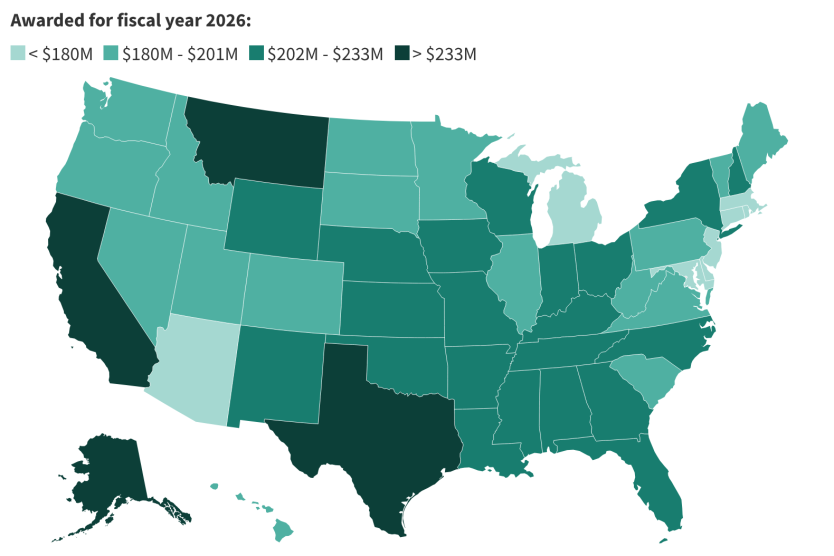
Tracking State Rural Health Transformation Plans
KFF Health News is working to collect and post approved plans as more states respond to emails and public records requests for their documents.
The independent source for health policy research, polling, and news.
KFF Health News covers the health issues facing people who live in America’s rural reaches.
KFF Health News is working to collect and post approved plans as more states respond to emails and public records requests for their documents.
1-20 of 826 results
Many rural voters say immigrants are a key part of their local economy, but views on whether President Donald Trump’s immigration crackdown has had positive or negative effects on their communities are split.
KFF Health News journalists made the rounds on national and local media recently to discuss topical stories. Here’s a collection of their appearances.
While Democratic congressional candidates are floating the restoration of federal Affordable Care Act subsidies and Medicaid funding, Oregon officials are crafting a more ambitious plan to implement universal coverage in their state.
Getting financial assistance from hospitals often involves filling out cumbersome forms. Some states now require hospitals to identify and automatically enroll patients eligible for charity care.
President Donald Trump has championed sprawling health policy changes under the Make America Healthy Again movement, but a KFF-Associated Press survey of rural voters found people aren’t seeing the initiatives reach their communities.
Staff raced against rising floodwater to evacuate 36 residents from a nursing home in New Richland, Minnesota. It’s one of 100 facilities KFF Health News identified as facing some of the nation’s worst flood risk.
In most states, people with Medicaid coverage will have to prove they’re working, volunteering, or studying starting Jan. 1. But Montana put the rules into effect early, and they’re sowing uncertainty and anxiety.
Healthcare in general, and health costs in particular, are a top issue for voters in 2026. But it remains unclear exactly how voters want lawmakers to fix the problem. Meanwhile, the Trump administration doubled down on its fraud-fighting efforts. Tami Luhby of CNN, Joanne Kenen of the Johns Hopkins Bloomberg School of Public Health and Politico Magazine, and Sarah Jane Tribble of KFF Health News join KFF Health News’ Julie Rovner to discuss these stories and more.
The disease has long been a risk of coal mining, an industry the Trump administration is trying to reinvigorate.
Rural voters rank the cost of living and cost of healthcare as top issues they want to hear about from midterm candidates as they face a tightening pocketbook pinch.
As the oldest baby boomers turn 80, researchers worry there won’t be enough room in nursing facilities for a rapidly graying nation.
California is crafting weaker heat protections for prisons than other workplaces, citing billions in costs to cool aging institutions as climate and health risks increase. It’s a second-class standard, health and safety advocates say, and would leave correctional workers more susceptible to heat illness.
States are spending rural health dollars on tech startups, betting that untested companies will succeed where doctors have vanished and hospitals have collapsed. Louisiana’s call for innovative technology drew more than 200 pitches, seeking from $250,000 to $3 million in seed money.
With the expiration of enhanced subsidies for Affordable Care Act health plans, thousands of Georgians are paying more for coverage or going uninsured. In one of the state's reddest districts, the economic impact is growing faster than the political fallout.
Children in immigrant families are facing health threats from President Donald Trump’s policies: separation from parents detained or deported by Immigration and Customs Enforcement, economic and housing instability, withdrawal from health and nutrition programs, and an overarching environment of fear.
Get our weekly newsletter, The Week in Brief, featuring a roundup of our original coverage, Fridays at 2 p.m. ET.
KFF Health News gives readers a chance to comment on a recent batch of stories.
Native Hawaiians will have to comply with the new work requirements in President Donald Trump’s signature One Big Beautiful Bill Act, despite facing significant obstacles to employment and healthcare.
A federal judge ruled that President Donald Trump can’t unilaterally kill the $2.75 billion Digital Equity Act, but he also sided with the administration by saying using race as a factor in awarding the grants is unconstitutional. The split decision has halted digital-skills programs for ethnic and racial minorities.
Democrats and Republicans in Troy, New York, joined together to challenge a national Catholic health system determined to close the last birthing center in the county.
© 2026 KFF