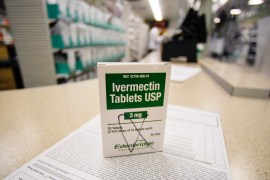
Drug Industry Last-Minute Contributions Boosting Campaigns of Republicans
The pharmaceutical industry is financing a "last-minute, pre-election advertising blitz" in an effort to help Republicans win control of Congress, the Wall Street Journal reports. At least $16 million has been spent on the advertising campaign, which is being led by the United Seniors Association, a group with ties to the Pharmaceutical Research and Manufacturers of America, Pfizer and other drug companies. USA is running ads in 20 "key" House districts and in Minnesota, New Hampshire and Colorado, where Senate races remain too close to call (Hitt, Wall Street Journal, 11/4). The ads call for "market-based solutions" to reduce drug costs and "praise" House incumbents who voted for a House-passed Medicare reform bill (HR 4954) that included a prescription drug benefit (Mondics, Philadelphia Inquirer, 11/2). With federal campaign law prohibiting the not-for-profit group from expressly supporting a particular candidate, USA Chair and CEO Charles Jarvis said the ads are meant to create an "honest and open debate." Jarvis added that he hopes the elections will "pressur[e]" lawmakers into supporting the House-passed Medicare drug benefit plan. "This is the best time to get their attention," Jarvis said. Drug companies also are running ads in "battleground[d]" states, including Florida, Minnesota and Missouri, where prescription drugs are a "hot" election issue, the Journal reports. For example, Pfizer is airing ads in 23 states in an attempt to "put a positive face" on the industry by highlighting its discount program for seniors and its investments in research and development. "We saw the election cycle, where pharmaceutical issues are front and center, as an important opportunity to correct impressions," Pfizer spokesperson Nehl Horton said. In addition, the 60 Plus Association, which has dubbed itself as the "conservative alternative" to AARP, is using radio ads and direct mailings to highlight party differences on prescription drugs. Meanwhile, other interest groups have been airing ads on behalf of Democrats in an attempt to counter the drug industry advertising, the Journal reports. For example, the AFL-CIO is spending $1.5 million on prescription drug ads across the country, and AARP is spending $4 million.
Election Aftermath
If Republicans successfully retain control of the House and win a majority in the Senate, the drug industry advertising could have a "broad impact" on health care policy, the Journal reports. The industry could cite the advertising as a reason for the Republicans' electoral success, giving drug companies leverage on issues such as a Medicare drug benefit and the debate over expanding access to generic drugs. However, if the ad campaign "falls short," the pharmaceutical industry could face a "backlash" from Democrats, who would have "absorbed the industry's best blow and survived," according to the Journal (Wall Street Journal, 11/4).
Receptive Voters?
In related news, U.S. residents say Democrats are more likely than Republicans to "make certain" that prescription drugs are available for seniors, the New York Times reports. According to a New York Times/CBS News Poll, which surveyed 1,018 adults -- including 795 registered voters -- 61% said Democrats are more likely than Republicans to work to ensure prescription medications are affordable (Nagourney/Elder, New York Times, 11/3).