


Latest KFF Health News Stories
The common comparison of having increased transparency in drug pricing to forcing car companies to add sticker prices is flawed because it overstates the usefulness of the knowledge by implying that patients have much more power to act — to shop around or negotiate — than they actually do. In other pharmaceutical news: lobbying efforts on Capitol Hill, money for a biotech firm, and a CBO projection on the Senate’s drug pricing bill.
While wealthy Americans have been able to weather increasing costs, and the Affordable Care Act helps those on Medicaid afford coverage, the middle class is at a loss. The families have health insurance, but they can’t afford care. The divide is creating ever-deepening resentment, especially toward those who receive government help.
Interviews with staffers suggest there were managerial problems beneath Dr. Leana Wen’s tenure. But the former chief’s departure also highlights an organization at a philosophical crossroads. Where Wen wanted to treat abortion less as a war and more as a health care issue, other leaders in the organization see an aggressive leader as necessary in this time of crisis. Meanwhile, cracks are appearing in the anti-abortion movement, as well, even as members rack up victories.
But, experts warn, the overdose death rate is still about seven times higher than it was a generation ago. And overdose deaths from synthetic opioids, such as fentanyl, are still trending up.
Previously undisclosed data–obtained by The Washington Post and HD Media, publisher of the Charleston Gazette-Mail in West Virginia–on the distribution of painkillers during the epidemic cements drug companies as the target for blame. The numbers reveal “clear heinous, criminal distribution that has visibly contributed, if not caused, the crisis our country is facing with opioid use disorder,” the anti-drug group Shatterproof said in a statement. The drug companies are facing thousands of lawsuits over the issue. News on the epidemic comes out of New York, Tennessee, Arizona and Kansas, as well.
Although the guidance shifts costs to insurers, the companies have actually been pushing for the flexibility to begin providing coverage for those treatments, such as glucose or blood-pressure monitors, because people who don’t get ongoing treatment for a disease can have their condition worsen, leaving insurers paying even more for their care.
2020 hopeful Sen. Bernie Sanders speech at George Washington University came amid a public battle between him and rival candidate Vice President Joe Biden, who wants to take more incremental steps on health care. But many of the claims he made about what the plan would save were dubious, an Associated Press fact check found.
A spokeswoman for Sen. Rand Paul (R-Ky.) said the lawmaker isn’t seeking to block the bill–which was thrust into the spotlight following a congressional appearance from comedian Jon Stewart–but that he wants to add a provision to pay for it. Utah Republican Sen. Mike Lee had earlier placed a procedural hold on a floor vote for the bill.
Sen. Bernie Sanders (I-Vt.) invited his fellow presidential candidates to join him in refusing to accept contributions over $200 from political action committees, lobbyists and executives of health insurance and drug companies. But an ABC News review of FEC records identified at least three contributions of more than $200 from two individual donors who could be considered executives at companies in those fields.
Lawmakers are gung-ho about addressing the issue of surprise medical bills, but the central question of who covers the costs instead remains. The debate is drawing out major health care players to push for the best outcome in the fight. On Wednesday, the House Energy and Commerce Committee approved its version of the legislation.
The “Cadillac tax,” which never went into effect, was intended to help control costs by putting a brake on the value of health insurance plans and avoid having insurers and employers shifting more costs to policyholders. Its implementation has been delayed for years, and House Democrats voted to repeal it once and for all. It still needs to go to the Senate, but in all likelihood the upper chamber will eagerly follow suit, as Republicans didn’t like the provision.
Today’s early morning highlights from the major news organizations.

KHN Investigation On Opioid Prescribers Pains Some Readers And Tweeters
Kaiser Health News gives readers a chance to comment on a recent batch of stories.

‘Climate Grief’: Fears About The Planet’s Future Weigh On Americans’ Mental Health
Although there’s no official clinical diagnosis, the psychiatric and psychological communities have names for the phenomenon of worrying about the Earth’s fate: “climate distress,” “climate grief,” “climate anxiety” or “eco-anxiety.” The concept also is gradually making its way into the public consciousness in television shows and movies.
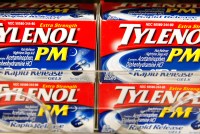
Common Medications Can Masquerade As Dementia In Seniors
A wide variety of medications used to treat allergies, insomnia, leaky bladders, diarrhea, dizziness, motion sickness, asthma, Parkinson’s disease, chronic obstructive pulmonary disease and psychiatric disorders can interfere with cognition in older patients.

Surprise Medical Bill Legislation Takes A Step Forward, But Will It Lead To A Step Back?
A House committee approved its version of legislation to solve the problem of surprise medical bills. But the measure includes a key provision that’s got less support in the Senate.
News outlets report on stories related to pharmaceutical pricing.
Read recent commentaries about drug-cost issues.
Opinion writers weigh in on these health care topics and others.
Research is being performed to see if children can learn to identify emotions and interact with people by using technology. Other advances like Alexa could also help, researchers claim, adding that rigorous testing needs to take place. Public health news also looks at: simple ways to avoid heat wave deaths; Elon Musk’s experiments for paralyzed patients; the link behind fewer children’s deaths and universal background checks; a new way to manage menstrual cycles; Latin America’s TV ad redo to fight obesity in children; paying people to stop smoking; links between early puberty and migraines in girls; benefits of going barefoot; and more.