Different Takes: Health Care Is Now Too Expensive For Americans; We’re Losing The Ability To Think Deeply
Opinion writers weigh in on these topics and others.
Bloomberg:
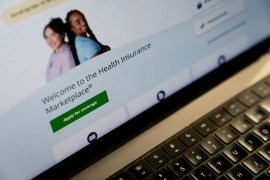
Rising US Health-Care Costs Are Forcing Painful Trade-Offs
Americans are struggling to pay for their medicines, living in fear of health emergencies, and skipping out on basics like meals in order to cover their insurance premiums. Increasingly, they are going without insurance altogether. (Lisa Jarvis, 3/27)
The New York Times:
Technology Weakens Our Minds. We Can Fix This.
Just as we changed our thinking around physical fitness, we need to change our attitude toward cognitive fitness. (Cal Newport, 3/27)
Stat:
More Hospitals Should Try Smoothing Elective Admissions
Imagine seeing a patient who drinks excessively, eats only foods high in saturated and trans fats, never exercises, and ignores prescribed medications — yet constantly complains that he doesn’t feel well. The advice would be obvious: change those behaviors. In many ways, U.S. health care delivery resembles this person. (Eugene Litvak, 3/27)
CIDRAP:
Osterholm Podcast: Episode 205: Disease Waits For No One
In "Disease Waits for No One," Dr. Osterholm and Chris Dall discuss how a federal judge temporarily blocked Health Secretary RFK Jr's rollback of childhood vaccine recommendations. Has the damage of this administration's assault on US vaccine policy already been done? Or is there a chance it could be undone? They'll also dive into a report calling for sweeping changes to how the government tracks COVID vaccine harms, review a recent meningitis outbreak in the UK, cover the latest on measles and avian flu, and answer a listener's question about the risk of catching COVID in public. Plus, we'll bring you the latest respiratory illness update and another public health history segment honoring Women's History Month. (3/26)
Stat:
Medical Schools Need To Teach Science-Based Nutrition
After decades of research, there is little doubt that nutrition plays a critical role in promoting health across the lifespan. This is especially true among vulnerable populations (infants and young children, pregnant people, the aged, and the food insecure) but also among otherwise healthy people. (Christopher Duggan, Marie-France Hivert and Kevin Klatt, 3/27)