Reversing 15% Cut To Home Health Services Part of House GOP Medicare Reform Package
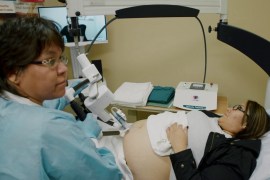
A scheduled 15% cut in Medicare payments for home health services would be eliminated but beneficiaries who receive such services would be required to pay a copayment for the first time under a draft of the House Republican Medicare reform package, the AP/Milwaukee Journal-Sentinel reports. The $350 billion package, which also contains a Medicare prescription drug benefit, will be formally introduced next week. The package includes a provision that would eliminate the 15% cut in home health payments scheduled to take effect in October as part of the 1997 Balanced Budget Act. But the package also includes a provision that would require home health beneficiaries to pay a $50 copay for each "episode" of service, with an episode defined as 60 days of care. Seniors are increasingly obtaining home health services through home health agencies, which provide such services as nursing, attendant care and help with meals (Carter, AP/Milwaukee Journal Sentinel, 5/6). Home health care advocates expressed concern about a possible copay. William Dombi, vice president of the National Association for Home Care, said, "We don't want a new tax on people who use our services. Most of the people we serve are poor or nearly poor" (Kaiser Daily Health Policy Report, 4/29). The Republican draft also would eliminate a $1,500 annual cap on physical therapy and speech therapy for Medicare beneficiaries. Instead, the package would establish three separate caps of $1,500 for physical, speech and occupational therapy. The package also would boost Medicare payments to rural home health and hospice agencies by 10% (AP/South Florida Sun-Sentinel, 5/6).
Opposition Brewing?
As House Republicans prepare to unveil their Medicare reform package, some in the party are expressing concern about its contents, including the drug benefit CongressDaily/AM reports. Rep. Charlie Norwood (R-Ga.) expressed concern about plans to reduce payment updates to hospitals by 0.55% a year for an additional four years, to institute home health copays and to include President Bush's prescription drug discount card plan. "We have very serious concerns about the package and are not inclined to support it," a Norwood aide said. Norwood also is concerned that the drug benefit House Republicans are proposing would not provide assistance to moderate-income seniors (Fulton, CongressDaily/AM, 5/7). Under the GOP measure, Medicare beneficiaries would receive coverage for 70% to 80% of the first $1,000 of their annual prescription drug costs and coverage for 50% of their annual costs between $1,000 and $2,250. Seniors would have to cover 100% of their annual prescription drug costs between $2,250 and $5,000, but the legislation would cover 100% of annual costs of more than $5,000. The bill also would cover all drug costs for beneficiaries with annual incomes less than 135% of the federal poverty level, and seniors with annual incomes slightly more than that level would receive aid on a sliding scale (Kaiser Daily Health Policy Report, 5/6). Some members of both parties also are expressing concern about the cost of the benefit. The GOP package was crafted by House Ways and Means Chair Bill Thomas (R-Calif.) and House Energy and Commerce Chair Billy Tauzin (R-La.) (Fulton, CongressDaily/AM, 5/7).
Let Home Health Cut Go Ahead, GAO Says
In related news, the General Accounting Office has recommended that Congress allow the 15% cut in home health payments to proceed after concluding that Medicare paid home health agencies about 35% more than the cost of care during the first six months of 2001, according to the BNA Medicare Report. The "magnitude of the disparity between payments and estimated costs demonstrates that the reduction would not harm the industry," the GAO report said. It also recommended that Medicare implement a "risk-sharing program that would limit home health agencies' profits and losses." From January 2001 to June 2001, home health agencies received an average payment of $2,691 for a 60-day episode of care, while the cost of care averaged $1,997, according to the report. "A single payment to cover all services provided during a 60-day episode of care, combined with a lack of standards for what constitutes necessary or appropriate home health care, leaves beneficiaries vulnerable to underservice, Medicare vulnerable to future overpayments, and [home health agencies] with a disproportionate number of beneficiaries with extensive needs vulnerable to underpayments. Implementing the 15% reduction would not lessen these vulnerabilities," the report stated. The home health industry dismissed both GAO recommendations, saying they would cause "irreparable harm" to many home health agencies. "We think [the report] is wholly unreliable and is based on the kinds of projections that have misled Congress for the past five years" since the Balanced Budget Act, which first mandated the home health cuts was passed, Dombi of the National Association for Home Care said. He added, "The conclusions are based on no real data on actual costs or actual revenues" (Teske, BNA Medicare Report, 5/10).