When she was 25 years old, Rhonda Swaney nearly died delivering a stillborn baby. She’s a member of the Confederated Salish and Kootenai Tribes in Montana. Although her experience was nearly 50 years ago, Swaney said Native Americans continue to receive inadequate maternal care. The data appears to support that belief.
In 2024, the most recent year for which data for the population is available, Native American and Alaska Native people had the highest pregnancy-related mortality ratio among major demographic groups, according to the Centers for Disease Control and Prevention.
According to a CDC analysis of 2021 data from 46 maternal mortality review committees, most, if not all, deaths among Native American and Alaska Native people were considered preventable.
In response, Native organizations, the CDC, and some states are working to boost Native American participation in state maternal mortality review committees, which investigate deaths that occur during pregnancy or within a year after birth. Native organizations are also considering ways tribes could create their own committees.
Kim Moore-Salas, of the Arizona Maternal Mortality Review Committee, said tribal sovereignty, experience, and traditional knowledge are important factors to consider in developing tribal-led committees.
“Our matriarchs, our moms, are what carries a nation forward,” she said.
In 2024, Moore-Salas, a member of the Navajo Nation, became the first Native American co-chair of Arizona’s committee. Last year, she and other Native members of the committee developed guidelines for an American Indian/Alaska Native subcommittee and reviewed its first cases.
The National Council of Urban Indian Health is also working to increase the participation of Urban Indian health organizations in state committee processes. As of 2025, the council had connected Urban Indian health organizations to state maternal mortality review committees in California, Kansas, Oklahoma, and South Dakota.
Native leaders such as Moore-Salas find the efforts encouraging.
“It shows that state and tribes can work together,” she said.
After her stillbirth, Swaney had another complicated pregnancy. She went into labor about three months early, and doctors didn’t expect her son to survive. But he did, and Kelly Camel is now 48. He has severe cerebral palsy and profound deafness. He lives alone but has caregivers to help with cooking and other tasks, said Swaney, 73.
He “has a good sense of humor,” she said. “He’s kind to other people. We couldn’t ask for a more complete child.”
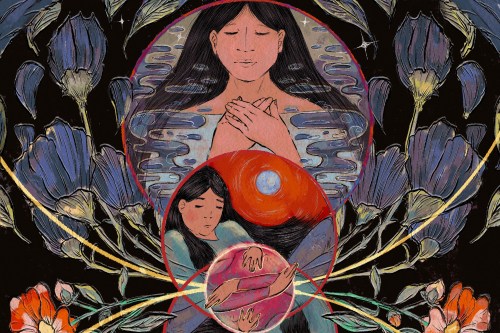
Native Americans Are Dying From Pregnancy. They Want a Voice To Stop the Trend.
Native American women face higher rates of death than other demographics. In response, Native Americans have been working with state and federal officials to boost tribal participation and leadership in maternal mortality review committees to better track and address pregnancy-related deaths.
Read More