Latest KFF Health News Stories
What the Health? From KFF Health News: The GOP Circles the Wagons on ACA
Republicans are solidifying their opposition to extending pandemic-era subsidies for Affordable Care Act plans and seem to be coalescing around giving money directly to consumers to spend on health care. Meanwhile, HHS Secretary Robert F. Kennedy Jr. continues to leave his mark on the agency, with the CDC altering its website to suggest childhood vaccines could play a role in causing autism. Paige Winfield Cunningham of The Washington Post, Joanne Kenen of the Johns Hopkins Bloomberg School of Public Health and Politico Magazine, and Shefali Luthra of The 19th join KFF Health News’ Julie Rovner to discuss those stories and more. Also this week, Rovner interviews Avik Roy.

Breast Cancer and Birth Control: A Huge New Study Shows How Science Can Be Distorted
The study sought to answer questions about how breast cancer risk differs by type of hormonal contraceptive. Doctors say the results won’t change how they counsel patients.

Wielding Obscure Budget Tools, Trump’s ‘Reaper’ Vought Sows Turmoil in Public Health
Through shrouded bureaucratic maneuvers, White House budget director Russell Vought and DOGE have quietly upended outbreak response, HIV treatment, and dementia care in communities across America.

Is Covid During Pregnancy Linked to Autism? What a New Study Shows, and What It Doesn’t
Massachusetts researchers examine how growth and learning are subtly shaped among children whose mothers had covid while pregnant.
What the Health? From KFF Health News: Schrödinger’s Government Shutdown
Democrats and Republicans remain stalled over funding the federal government as Republicans launch a new attack on the Affordable Care Act. Meanwhile, the Trump administration is taking advantage of the shutdown to lay off workers from programs supported mostly by Democrats. Anna Edney of Bloomberg News, Lauren Weber of The Washington Post, and Joanne Kenen of the Johns Hopkins Bloomberg School of Public Health and Politico Magazine join KFF Health News’ Julie Rovner to discuss those stories and more. Also this week, Rovner interviews health insurance analyst Louise Norris about Medicare open enrollment.
What the Health? From KFF Health News: Starting To Feel the Shutdown’s Bite
The government shutdown continues with no end in sight, and while it theoretically should not affect entitlement programs, the lapse of some related authorizations — like for Medicare telehealth programs — is leaving some doctors and patients high and dry. Meanwhile, the FDA quietly approved a new generic abortion pill. Sarah Karlin-Smith of Pink Sheet, Tami Luhby of CNN, and Alice Miranda Ollstein of Politico join KFF Health News’ Julie Rovner to discuss those stories and more. Also, Rovner interviews Sarah Grusin of the National Health Law Program.
What the Health? From KFF Health News: Democrats Make This Shutdown About the ACA
The foreshadowed federal shutdown came after Congress failed to pass required spending bills, with Democrats demanding Republicans renew the expiring Affordable Care Act subsidies in exchange for their votes. While a shutdown does not affect Medicare and Medicaid, it could eventually hinder activities from every corner of the Department of Health and Human Services. Meanwhile, as Democrats and Republicans point fingers, HHS Secretary Robert F. Kennedy Jr. pursues policies and personnel that would undermine vaccines. Lauren Weber of The Washington Post, Shefali Luthra of The 19th, and Rachel Cohrs Zhang of Bloomberg News join KFF Health News’ Julie Rovner to discuss the news. Also this week, Rovner interviews KFF Health News’ Cara Anthony, who wrote a recent “Bill of the Month” feature about an out-of-network eye surgery that left one kindergartner’s family with a big bill.
In a rambling news conference that shocked public health experts, President Donald Trump — without scientific evidence — blamed the over-the-counter drug acetaminophen, and too many childhood vaccines, for the increase in autism diagnoses in the U.S. That came days after a key immunization advisory panel, newly reconstituted with vaccine doubters, changed several long-standing recommendations. Former Centers for Disease Control and Prevention official Demetre Daskalakis joins KFF Health News’ Julie Rovner to discuss those stories. Meanwhile, Sandhya Raman of CQ Roll Call and Anna Edney of Bloomberg News join Rovner with the rest of the news, including a threat by the Trump administration to fire rather than furlough federal workers if Congress fails to fund the government beyond the Oct. 1 start of the new fiscal year.

Watch: Why Is Having a Baby So Expensive in the US?
KFF Health News video producer Hannah Norman breaks down why new parents are getting billed thousands of dollars for births.

Maryland Taps Affordable Care Act Fund To Help Pay for Abortion Care
The state is using an old source of funding to pay for a new money crunch: assisting out-of-state patients with the costs associated with abortion.

Why Young Americans Dread Turning 26: Health Insurance Chaos
Young adults without jobs that provide insurance find their options are limited and expensive. The problem is about to get worse.

A Guide To Finding Insurance at 26
It’s a difficult rite of passage for young adults without job-based insurance. Here are some tips for getting started.

Surprise Medical Bills Were Supposed To Be a Thing of the Past. Surprise — They’re Not.
The No Surprises Act, which was signed in 2020 and took effect in 2022, was heralded as a landmark piece of legislation that would protect people who had health insurance from receiving surprise medical bills. And yet bills that take patients by surprise keep coming.
What the Health? From KFF Health News: Digesting Trump’s Big Budget Law
President Donald Trump’s big budget bill became his big budget law on July 4, codifying about $1 trillion in cuts to the Medicaid program. But the law includes many less-publicized provisions that could reshape the way the nation pays for and receives health care. Meanwhile, at the Department of Health and Human Services, uncertainty reigns as both staff and outside recipients of federal funds face cuts. Rachel Roubein of The Washington Post, Tami Luhby of CNN, and Rachel Cohrs Zhang of Bloomberg News join KFF Health News’ Julie Rovner to discuss these stories and more. Also this week, Rovner interviews KFF Health News’ Julie Appleby, who reported the latest KFF Health News’ “Bill of the Month” feature, about some very pricey childhood immunizations.

An Arm and a Leg: The Prescription Drug Playbook, Part II
In this second part of a two-part series on dealing with the high price of prescription drugs, experts share their insider tips.

HHS Eliminates CDC Staff Who Made Sure Birth Control Is Safe for Women at Risk
The Trump administration eliminated the CDC team that developed national guidelines for prescribing contraception safely for millions of women with underlying medical conditions.

Despite Historic Indictment, Doctors Will Keep Mailing Abortion Pills Across State Lines
When a New York physician was indicted for shipping abortion medications to a woman in Louisiana, it stoked fear across the network of doctors and medical clinics who engage in similar work. But some physicians vowed not to stop.
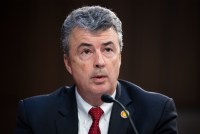
Alabama Can’t Prosecute Groups Helping Patients Get Abortions Elsewhere, Judge Rules
Although most abortions remain illegal in Alabama, a judge’s decision in early April allows doctors and advocacy groups to tell patients about abortion options in other states, and help with travel and other costs.

Future of Cancer Coverage for Women Federal Firefighters Uncertain Under Trump
In the waning days of the Biden administration, the Labor Department added ovarian, uterine, cervical, and breast cancer coverage for wildland firefighters. It’s unclear whether the new protections will stick under Trump.
Trump’s Already Gone Back on His Promise To Leave Abortion to States
On the campaign trail, President Donald Trump said the power to make abortion policies “has been returned to the states.” In his first two weeks in office, he’s already gone further to restrict abortion than any president who’s held office since the 1973 “Roe v. Wade” decision, writes Julie Rovner.