Latest KFF Health News Stories

Atlanta Struggles To Meet MLK’s Legacy On Health Care
Fifty years after the death of Martin Luther King Jr., his hometown still has major disparities in mortality and other measures of health.
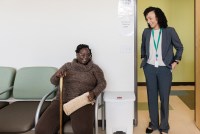
Psychiatrist Stays Close To Home And True To Her Childhood Promise
Yamanda Edwards is the only psychiatrist at Martin Luther King, Jr. Community Hospital, caring for residents in South Los Angeles, a community with a shortage of mental health care.

Black Men’s Blood Pressure Is Cut Along With Their Hair
A new study shows that educational sessions about high blood pressure at African American barbershops, coupled with prescribing and helping to manage medication, reduced hypertension rates significantly.
Listen: Why Don’t You Hear More About Sickle Cell Disease?
Sickle cell disease receives far less attention from the medical establishment and the press than other illnesses that affect far fewer people.

Sickle Cell Patients, Families And Doctors Face A ‘Fight For Everything’
Premature death, a dearth of treatments, mistreatment in emergency rooms and a woeful lack of funding are just a few of the problems confronting people with sickle cell disease.
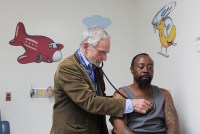
Sickle Cell Patients Suffer Discrimination, Poor Care — And Shorter Lives
People with the genetic blood disorder that mainly afflicts African-Americans can live into their 60s with competent care. So why is life expectancy slipping down to around age 40?
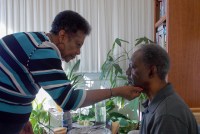
Lag In Brain Donation Hampers Understanding Of Dementia In Blacks
A long history of racism and cruel experimentation in health care are among the reasons African-American families oppose donating patients’ brains for study.
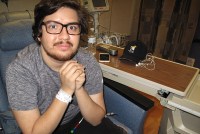
Latinos Left Out Of Clinical Trials … And Possible Cures
Fewer than 8 percent of enrollees in medical studies are Hispanic. Those who don’t participate have less access to cutting-edge treatments, and researchers have less data on how a drug works within the Hispanic population.

Reluctant Patients, Hispanic Men Pose A Costly Challenge To The Health System
Many Hispanic men don’t seek medical care soon enough and as the Hispanic population grows, some health care professionals are sounding an alarm.

‘Tsunami’ Of Alzheimer’s Cases Among Latinos Raises Concerns Over Costs, Caregiving
The number of U.S. Latinos with the memory-robbing disease is expected to rise more than eightfold by 2060 to 3.5 million.

Attending To The ‘Human Element’ Is Key To Keeping Patients Healthy
Research to be published in full this fall details how medicine’s “implicit bias” — whether real or perceived — undermines the doctor-patient relationship and the well-being of racial and ethnic minorities as well as lower-income patients.

Baltimore Draws 10-Year Blueprint To Cut Racial Health Disparities
Officials aim to bring elevated rates of lead poisoning, heart disease, obesity, smoking and overdoses among Baltimore’s African-Americans closer to those of whites.

Genetic Insights About Health Risks Limited By Lack Of Diversity, Study Finds
A study in the New England Journal of Medicine detailed how the diagnoses of risk for a common hereditary heart disease may have been skewed because studies have traditionally had low numbers of black participants.
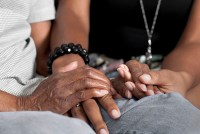
In Later Years, Disabilities End Blacks’ Active Lives Sooner Than Whites’
Elderly black women suffer most from shorter active life expectancy free of disabilities, showing no improvement since the early 1980s, Health Affairs study finds.

For Many In Baltimore’s Growing Latino Community, Health Care Is A Challenge
Many immigrants lack access to affordable services due to lack of citizenship and legal residency.

Latino Youth In California See Significant Rise In Psychiatric Hospitalizations
Some experts say the 86 percent increase in psychiatric hospitalizations since 2007 means preventive care is seriously lacking; others believe reduced stigma has led more kids to accept help.

In Freddie Gray’s Neighborhood, The Best Medical Care Is Close But Elusive
Last year’s Baltimore unrest highlighted deep distrust between police and poor African-Americans. Dozens of interviews and little-seen data show a similar gap between that community and the city’s renowned health system.

A Racial Gap In Attitudes Toward Hospice Care
Hospice use has been growing fast in the United States as more people choose to avoid futile, often painful medical treatments in favor of palliative care and dying at home surrounded by loved ones. But some African-Americans have long resisted the concept, and their suspicions remain deep-seated.
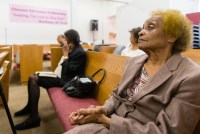
A Matter Of Faith And Trust: Why African-Americans Don’t Use Hospice
Even as end-of-life planning gains favor with more Americans, African-Americans, research shows, remain very skeptical of options like hospice and advance directives. The result can mean more aggressive, painful care at the end of life that prolongs suffering.