


Latest KFF Health News Stories

Testing In California Still A Frustrating Patchwork Of Haves And Have-Nots
It’s hard to overstate how uneven access to critical coronavirus test kits remains in the nation’s largest state. Even as some Southern California counties are opening drive-thru sites to make testing available to any resident who wants it, a rural northern county is testing raw sewage to determine whether the coronavirus has infiltrated its communities.
As Lawmakers Reconvene, Not Everyone Agrees On COVID-Only Agenda
California legislators resume their work Monday after more than a month off. While the coronavirus pandemic has shifted the state’s priorities, many lawmakers say they still intend to push non-COVID health care bills to tax soda, ban vape flavors and more.
Always The Bridesmaid, Public Health Rarely Spotlighted Until It’s Too Late
Because the public health system mostly operates in the background, it rarely gets the attention or funding it deserves ― until there’s a crisis.

Listen: A New Hope In The Battle Against COVID-19
KHN’s Julie Rovner joins a panel of journalists on “1A” to talk about promising results in a study of the drug remdesivir and other developments in the battle against the coronavirus.

Must-Reads Of The Week From Brianna Labuskes
Newsletter editor Brianna Labuskes wades through hundreds of health care policy stories each week, so you don’t have to.
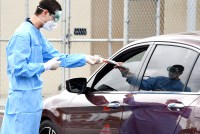
Hisopado bucal tomado por el paciente, próximo paso para detectar el coronavirus
Algunos expertos sugieren que este enfoque de auto recolección puede proporcionar una forma más fácil de tener pruebas masivas en los Estados Unidos.
The Cleveland Clinic reports it is the first to build on an existing tool to its patient portal MyChart. After an initial outreach call giving patients isolation instructions and other vital information, patients engage with the tool. Worsening conditions trigger an alarm detected by medical staff. Other health technology news reports on an easing of rules about data sharing and a rising number of telemedicine visits.
Editorial pages focus on these pandemic issues and other.
Longer Looks: Thinking About The Unthinkable; Florida’s No-Rules Vibe; A Virus Cover Up; And More
Each week, KHN finds interesting reads from around the Web.
News on the global coronavirus outbreak is reported from Bangladesh, India, Thailand, Philippines, Pakistan, Sweden, Italy and China.
Media outlets report on news from Wisconsin, Illinois, Iowa, Nebraska, Louisiana, Kansas, Michigan, Indiana, Virginia, Florida, Texas, New York, Massachusetts, Georgia, Nevada, and Ohio.
At One Meat-Packing Plant In Colorado, Coronavirus Cases Doubled ‘In Number Of Days’
The union for workers at the JBS meat-processing plant also announced another employee died. The meat industry has emerged as a virus hot spot across the country, but with President Donald Trump’s executive order for them to stay open, employees are left with the choice between quitting or putting themselves at risk for infection. Meanwhile, Amazon extends its stay-at-home directive for workers who are able to do so — calling into question how the company plans to keep warehouse workers safe.
At the peak of the outbreak, the number of COVID-19 patients fighting kidney failure led to a soaring demand for dialysis at hospitals around New York City, but treatment was in short supply. Other public health news reports on Facebook’s efforts to quell misinformation, a JAMA report on the hard-hit poor and challenges for ”disconnected” youth, as well.
A Chinese restaurant where some diners got sick and others didn’t has become a prime location for scientists studying whether people can become infected from airborne particles. “If there’s a good ventilation system, you’re not going to get enough exposure to be infected,” infectious disease aerobiologist Dr. Donald Milton told ABC News. “If there isn’t good ventilation, then the data suggests that it’s crowded, poorly ventilated places where there have been outbreaks.” In other news on the science of COVID-19: how long patients test positive, what is happening with immune systems, tracing virus mutations and more.
More Major U.S. Airlines Will Now Require Passengers To Wear Face Masks
American, Delta, Frontier and United airlines all joined JetBlue in announcing the new requirement. The risk of infection on airlines is higher because of how the air is circulated through the cabins. Airlines had been hesitant to require masks since they were hard to come by, but they say times have changed and it’s not the right step to ensure the safety of both their passengers and crews.
An Increased Risk: About 75% Of Health Care Workers In Most Cities Are Women
Health care workers make up a disproportionate number of COVID-19 cases, and many of those on the front line are women. In health care personnel news: home health aides struggle to ensure their own safety, medical staff not exempt from job cuts, unions balk at reused masks and more.
‘Feeling Of Helplessness’: Losses For Florida Produce Growers Top $500M As Vegetables Rot In Fields
With restaurants, canning companies and theme parks closed, many Florida growers are having to plow under their crops after letting hunger relief organizations handpick what they need. News about food scarcity is also on millions of SNAP recipients who can’t use Instacart and distributing PB&Js to hungry New Yorkers.
Unemployment Numbers Are Already Staggering, Yet Experts Say About 50% More Are Uncounted
The sheer volume of claims has so overwhelmed state agencies that not all of those affected by the pandemic are being counted. “It is declining, but the level is still breathtakingly high,” said Ian Shepherdson, an economist. “Claims could stay in the millions for several more weeks, which is almost unfathomable.” Meanwhile, as May 1 rolls around, many Americans are panicked over rent.
House Speaker Nancy Pelosi acknowledged that the funding amount is aspirational, but that it is a good goalpost for the next relief package. Meanwhile, Senate Majority Leader Mitch McConnell’s decision to bring senators back to the Capitol is questioned.
As States Bid Against Each Other For Equipment, Democrats Push For Federal Distribution System
Lawmakers want to give FEMA the responsibility of purchasing the equipment and then distributing it to the states, rather than having the onus be placed on the governors — who then have to fight each other for the needed devices and protective gear. Other preparedness news focuses on ventilators, PPE and ethical guidelines during shortages.