


Latest KFF Health News Stories
The research done to create the life-saving pill was funded by taxpayer money, but talks have stalled about royalties so the government hasn’t been able to collect. For its part, a Gilead spokesman said “there are no ongoing negotiations between Gilead and HHS” about patents owned by the government. In other pharmaceutical news: the fault lines in the Democratic party over drug prices; experts suggest its time to kill off copays; FDA taps a public health expert to lead its regulatory policy office; the FTC sues Surescripts; and more.
The development offers much hope for patients who have lost their ability to speak through strokes, neurodegenerative disorders or accidents.
Thousands upon thousands of public health positions have been eliminated as budgets have been tightened, just as public health threats are steadily increasing. In other public health news: surgical robots, knee injuries, drug recalls, staffing levels, aging, mental health, and more.
New WHO Guidelines On Screen Time: Zip For Infants Under One, One Hour Max For Kids Under Five
In addition to setting harsh guidelines on how much time children spend on devices, the United Nations’ agency recommends high-quality programming and includes advice on physical activity and sleep. Pediatrician groups have previously expressed concerns on the issue, some differing from WHO’s.
Public’s Anger Toward And Loss Of Trust In Big Pharma Is Adding Fuel To The Fire Of Measles Outbreak
An erosion of public trust in anything Big Pharma says is undermining advocates’ efforts to get parents to trust the vaccines that are coming from the companies. Meanwhile, in California legislation moves forward that would remove doctors’ ability to grant exemptions–placing that authority in a state official, instead. News comes out of Oregon, as well.
Officials have long anticipated that this year would surpass past records, but the CDC on Wednesday confirmed that the country now has 695 cases, which tops the 667 cases in 2014. That makes this the nation’s worst year for measles since 1994, with eight months still to go in 2019. There were 963 cases in 1994.
The proposal, dubbed CMS Primary Cares, has generated cautious optimism among many primary care doctors. But the extent of its impact will be determined by an array of details not fully known–including what exactly the financial benefits look like.
The first expected rule would replace an Obama administration policy extending nondiscrimination protections to transgender patients. The National Center for Transgender Equality and other advocacy organizations believe the rules will make it easier for providers or insurers to refuse transition-related care based on religious beliefs. A second rule would finalize broad protections for health workers who cite religious or moral objections to providing services such as abortion or contraception.
Researchers who set the new guidelines for how doctors should prescribe opioids say the providers have wrongly implemented some of their recommendations. They find that some health care players use the guidelines to justify an “inflexible application of recommended dosage and duration thresholds and policies that encourage hard limits and abrupt tapering of drug dosages.” Other news on the crisis comes out of Tennessee, Texas and Louisiana.
Trump Vows To Hold Big Pharma Accountable For Role In Opioid Epidemic As He Touts Progress
President Donald Trump spoke to the Rx Drug Abuse and Heroin Summit in Atlanta about funding for addiction treatment, stronger scrutiny of Big Pharma and tougher interdiction of drugs at the border with Mexico. Experts, however, criticized his administration for falling back on fiery speeches without delivering progress. “It’s like pointing to a burning building, saying there is an emergency, then not calling the fire department,” said Andrew Kolodny, a director of opioid policy research at the Heller School for Social Policy and Management at Brandeis University.
Today’s early morning highlights from the major news organizations.

States Weigh Banning A Widely Used Pesticide Even Though EPA Won’t
The pesticide chlorpyrifos has been linked to developmental problems in children. Some state and federal lawmakers want the chemical banned, but federal regulators are fighting to keep it on the market.

Association Insurance Pushes On Despite Court Ruling
Judge cited an attempted “end-run” around the Affordable Care Act in rejecting large chunks of a new rule expanding access to such plans for small businesses and single proprietors.

Researchers Seek Sage Advice Of Elders On Aging Issues
The Bureau of Sages, a group of frail, older adults, gives feedback to researchers about what matters to older adults.

Pain Clinics’ Doctors Needlessly Tested Hundreds Of Urine Samples, Court Records Show
Whistleblower lawsuits accuse Tennessee chain of bilking millions from Medicare for unnecessary urine drug tests.
Podcast: KHN’s ‘What The Health?’ The Abortion Wars Rage On
Alice Miranda Ollstein of Politico, Kimberly Leonard of the Washington Examiner and Rebecca Adams of CQ Roll Call join KHN’s Julie Rovner to discuss the latest news about women’s reproductive health policy and the latest skirmish in the debate over “Medicare-for-all”: how hospitals should be paid.

En 10 años, adultos mayores de clase media no podrán pagar por atención médica y vivienda
Para 2029, más de la mitad de las personas mayores de ingresos medios tendrán recursos financieros anuales de $60,000 o menos, incluso si se incluye el valor agregado que tengan sus propiedades.
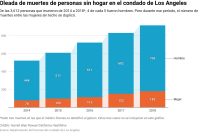
Aumentan las muertes de personas sin hogar en las calles de Los Ángeles
Un análisis de Kaiser Health News de datos oficiales muestra que las muertes han aumentado un 76% en los últimos cinco años, superando el crecimiento de la población sin hogar.
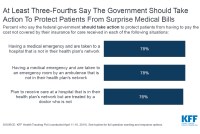
Americans Overwhelmingly Want Federal Protections Against Surprise Medical Bills
Three-quarters of people urge action to keep patients from facing high medical costs when their insurance doesn’t cover the care, according to a Kaiser Family Foundation poll.
In 10 Years, Half Of Middle-Income Elders Won’t Be Able To Afford Housing, Medical Care
An eye-opening study of demographics and income finds that the costs of assisted-living care will soon be out of reach for people on fixed incomes — and their children.