


Latest KFF Health News Stories
AIDS, Health Groups Submit Comments To FDA Prior To Agency’s Review Of PrEP
“In public comments [.pdf] submitted this week, a group of 14 leading HIV/AIDS and health organizations stated their support for Food and Drug Administration (FDA) approval of emtricitabine/tenofovir disoproxil fumarate [TDF/FTC] … as pre-exposure prophylaxis (PrEP) to prevent HIV infection in adult men and women,” a press release from AVAC: Global Advocacy for HIV Prevention states. “Modeling studies have shown that widespread access to PrEP could reduce new HIV infections, and thus the scale of the global HIV epidemic, substantially around the world,” the press release says, adding, “The FDA’s decision on TDF/FTC as PrEP could help pave the way for global health funders and developing countries to step up their planning for implementation” (5/1).
Event Launches Report On U.S. Global Health R&D
A post on the Global Health Technologies Coalition’s (GHTC) “Breakthroughs” blog describes an event to launch a recent report from GHTC and Policy Cures on “data on U.S. investments over the past 10 years in global health research and development (R&D).” The event, co-hosted by Research!America, featured comments from panelists Javier Guzman, director of research at Policy Cures; Lee Hall, chief of the Parasitology and International Programs Branch at the National Institute of Allergy and Infectious Diseases (NIAID); Heather Ignatius, senior manager for policy at the Global Alliance for TB Drug Development; and Eric Easom, program leader for neglected diseases at Anacor Pharmaceuticals, according to the blog (Lufkin, 5/1).
Today’s early morning highlights from the major news organizations, including a report that House Republican lawmakers want to cut bonuses to states for enrolling low-income kids in Medicaid and the Children’s Health Insurance Program.
Advocates Worry States Are Moving Too Fast On Dual Eligibles
Some states likely will begin testing new ways to care for people who qualify for both Medicare and Medicaid early next year—a timeline that has some advocates urging officials to slow down. Finding high-quality, cost-effective ways to care for the 9 million people known as “dual eligibles” is among the brass rings of health policy. […]
Community Health Centers Get $728M Boost To Serve More People
The Obama administration on Tuesday gave out $728 million to expand and modernize 398 community health centers that provide primary care mainly to the poor. The money, made available under the 2010 health law, will help centers in 48 states expand their capacity to serve an additional 900,000 people. Demand for care at the centers […]
Dr. Otis Brawley: ‘The System Really Is Not Failing … Failure Is The System’
The chief medical officer for the American Cancer Society has a powerful message for the country: We’re all responsible for overuse of the health care system.
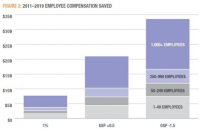
In Massachusetts, Hope For Higher Salaries If Health Care Inflation Slows
As Massachusetts’ state legislators put the finishing touches on a major health care cost-control bill, there is still one big question: How much could it save employers and fatten employee paychecks?
Advocates Worry States Are Moving Too Fast On Dual Eligibles
Some states plan to test new ways to care for people who qualify for both Medicare and Medicaid early next year.
Community Health Centers Get $728M Boost To Serve More People
The funds will help centers in 48 states expand their capacity to serve an additional 900,000 people.
CNN Reports On China’s ‘One-Child Policy,’ Implications For Women
CNN reports on how “[t]he issue of forced abortions — and in some cases, forced sterilizations — in China has seized the spotlight in recent days with news of escaped activist Chen Guangcheng,” who “rose to fame in the late 1990s because of his advocacy for what he calls victims of abusive practices, such as forced abortions, by Chinese family planning officials.” China’s so-called “one-child policy has been blamed for abuses,” the news service reports. The news service writes, “In some cases, advocates say, fetuses identified as female are aborted, … abandoned, left to die or raised as orphans,” as “Chinese traditionally prefer boys over girls.” CNN describes several reports from women’s health advocates working in China of women undergoing forced abortion and sterilization; a report from the Congressional-Executive Commission on China, “created by Congress to monitor human rights and the rule of law in China”; and the State Department’s 2009 Human Rights Report, the news service notes.
Today’s Headlines – May 1, 2012
Good morning! Here are your early headlines: The Associated Press/Washington Post: On Taxes, Health Care And Government’s Role, Obama And Romney Offer Distinct Choices To Voters Those differences surely exist. Obama and his Republican challenger are offering voters a distinct choice on taxes, a sharp disagreement over health care and a classic ideological divide on […]
House Republicans Divided Over How To ‘Replace’ Health Law
But they continue to target the law’s co-op program, among other provisions.
As Voters Weigh Candidates, Romney Seeks Support From Intra-Party Rivals
Although President Barack Obama and GOP presidential hopeful Mitt Romney offer voters “a distinct choice,” Romney is still courting conservatives within his party who have been concerned about his past positions on things such as abortion and health reform.
World Behind On Pledge To Reduce HIV/AIDS Infections, Improve Treatment, U.N. Report Says
“The world is falling behind in its pledge to reduce HIV/AIDS infections and improve treatment, especially in sub-Saharan Africa, according to a U.N. report [.pdf] released Monday” by U.N. Secretary-General Ban Ki-moon, the Associated Press reports. The report to the U.N. General Assembly “said that ‘critical challenges remain’ if the world is to make good on promises made at a U.N.-sponsored meeting on HIV/AIDS in June 2011,” the AP writes (Alt Powell, 4/30). “Among the targets set by the international community at the June 2011 high-level meeting are the elimination of new HIV/AIDS infections in children, cutting sexually transmitted infections by 50 percent, and delivering antiretroviral therapy to 15 million people,” Xinhua/China Daily notes (5/1).
Judge Halts Texas Ban On Planned Parenthood Funding
The federal judge prevented Texas from enforcing the law, which banned Planned Parenthood from the state’s health care program for women, until the legal challenge is concluded.
Hospital Billing Collections Company Seeks Dismissal Of Minn. Lawsuit
The Minn. state attorney general lodged a suit against Accretive Health arguing that it violated privacy laws when an employee lost a laptop computer with medical data of 23,500 patients. In addition, Accretive is also lashing out at publicity about its efforts to get hospital patients to pay their bills.
New Studies Restart Debate About Mammography For Women In Their 40s
Another study in today’s news examines two eye drugs and finds they are comparable, a conclusion that could potentially save Medicare and other insurers millions of dollars.
Painkillers Create Quandary For Physicians
News outlets report on the hazards — both in the ER and in maternity wards — being brought about by painkiller use and abuse.
Calif. Panel Considers Changes In Dental Program
As the state wrestles with budget problems, legislators consider how much coverage to give to children and adults.
‘Taboo’ Surrounding Toilets, Sanitation Hindering Progress Toward Improved Access
“Governments are failing to fund projects to improve access to toilets and other sanitation services in poor countries because the subject remains ‘taboo,’ a director at the Bill & Melinda Gates Foundation said on Monday,” Reuters reports. “About 1.1 billion people across the world still defecate in the open because they have no toilets, according to the United Nations,” Reuters writes. “It’s the last big taboo and as a result more than one million kids die every year. Diarrhea is the second largest cause of death after respiratory infections in young children,” Frank Rijsberman, director of water, sanitation and hygiene at the foundation, said at the Global Water Summit 2012 conference in Rome, the news service notes.