Bush Condemns Human Embryonic Cloning Breakthrough, Calls for Federal Ban on All Cloning
President Bush on Nov. 26 denounced the news that a U.S. biotechnology firm had cloned human embryos, calling the research "wrong" and urging the Senate to pass a ban on all forms of human cloning, the New York Times reports (Stolberg, New York Times, 11/27). "We should not as a society grow life to destroy it ... and this evidence today that they're trying to achieve that objective, to grow an embryo in order to extract a stem cell in order for that embryo to die, is bad public policy," Bush stated (Reuters/Contra Costa Times, 11/26). Advanced Cell Technology Inc., a biotechnology firm in Worcester, Mass., announced on Sunday that it has created cloned human embryos to use as a source of stem cells for a process known as therapeutic cloning. ACT researchers used two techniques, the first technique being "much like the standard approach" used to clone animals and the second relying on chemicals to stimulate an unfertilized egg to divide. Only about 10 of the clones divided successfully before becoming unviable, and none grew enough to yield stem cells (Kaiser Daily Reproductive Health Report, 11/26). In fact, many scientists questioned whether the announcement was "cloning at all." ACT could not "report lasting success" because all of the cloned entities died quickly before yielding stem cells, and the company did not use any "groundbreaking techniques," the New York Times reports. ACT president Dr. Michael West "conced[ed] that the desire to be the first to claim to have created a human embryo by cloning" played a role in the company's decision to publish its findings before having firm results (Kolata/Pollack, New York Times, 11/27). "The chances are they're marking their territory. They know quite well that there are other people working on this," embryologist Steen Willadsen said. Dr. Mark Westhusin, a cloning researcher at Texas A&M University, said the report is "much more of an ethical issue than a scientific breakthrough," adding that ACT officials may have "want[ed] to test the water before they invest millions more" in cloning research (Dembner, Boston Globe, 11/27).
Push for a Ban in the Senate
While some scientists questioned the announcement's scientific significance, the political impact was "profound," the New York Times reports (Kolata/Pollack, New York Times, 11/27). White House spokesperson Ari Fleischer said that Bush hoped "that as a result of this first crossing of the line ... the Senate will act on the House legislation so that this procedure can be banned" (Gribbin, Washington Times, 11/27). In July, the House voted 265-162 to ban all forms of cloning, including the creation of cloned embryos for research purposes, or therapeutic cloning. However, the only restrictions currently placed on cloning research in the United States are applicable to scientists conducting federally funded research. Private companies like ACT face no restrictions (Carter, AP/Philadelphia Inquirer, 11/27). Five states -- California, Rhode Island, Louisiana, Michigan and Virginia -- have some sort of restrictions against human cloning, but most of those regulations apply only to reproductive cloning and do not address therapeutic cloning (Krieger, San Jose Mercury News, 11/26). Sen. Sam Brownback (R-Kan.), a co-sponsor of the Senate cloning ban, said at a Nov. 26 news conference that he will "push" for the Senate to consider a cloning ban before its Christmas recess. If that fails, he will seek a six-month moratorium on cloning research. "You have a president who wants to sign this. You have a House of Representatives that is very interested in getting this through. And now you have an announcement of a human clone," he said (Stolberg, New York Times, 11/27). However, Doug Hattaway, a spokesperson for Senate Majority Leader Tom Daschle (D-S.D.), said Daschle does not plan to bring the cloning bill to the floor until February or March, as agreed to by Brownback in a deal earlier this month (McGinley/Regalado, Wall Street Journal, 11/27). Daschle agreed to bring the bill to the floor at that time in exchange for Brownback's agreement to drop an amendment to the fiscal year 2002 Labor-HHS spending bill that contained "contentious language" related to human cloning and embryo creation. Brownback acknowledged that he agreed to the compromise, but he added that the "events of the past day make it clear that we must act sooner" (Fulton, CongressDaily/AM, 11/27). "We don't know who else in the country is working on the issue of human cloning. This needs to be stopped," he added (Bazinet, New York Daily News, 11/27).
Urging Caution
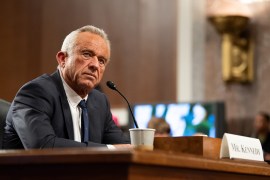
Other lawmakers called for caution before bringing up a vote on a cloning ban. Sen. Edward Kennedy (D-Mass.) said that although he "strongly oppose[s] the use of cloning technology to reproduce a human being," lawmakers must "protect essential areas of medical research involving cloning technology, including stem cell research." Such research "hold[s] enormous promise" for cures for degenerative diseases, he added (Weiss, Washington Post, 11/27). Sen. Arlen Specter (R-Pa.), the ranking Republican on the Senate Appropriations subcommittee that oversees health programs, said he hopes to hold hearings on cloning and stem cell research before the full Senate addresses the issue. "We need to bring some scientific light on this subject. I don't see how it can be accommodated on (this year's) calendar" (Anderson,
Los Angeles Times, 11/27). Specter added that he is "prepared to go to the mat" on the issue of cloning and has already scheduled hearings for early next year. "The scientific community is ready to put forward a very strong case and I think that case will be persuasive to the Congress," he explained (Stolberg, New York Times, 11/27). Although Daschle's representatives said he is unlikely to bring the bill to the floor before the end of this session, Senate GOP sources told CongressDaily that it is "now likely" that the bill will be debated this year "in order to keep pace with new scientific breakthroughs" (Earle/Fulton, CongressDaily, 11/26).
In the Media
Various television and radio programs have addressed the debate over human cloning in the last two days. A summary of some of the major media coverage appears below:
- "Morning Edition," National Public Radio: NPR Science Correspondent Joe Palca explains the difficult concept of human cloning, stating that what cloning actually means is far from clear. NPR's Julie Rovner examines the response in Congress to the cloning announcement. Both reports will be available online later on Nov. 27 (NPR, "Morning Edition," 11/27).
- "Hannity & Colmes," Fox News: Fox News' Sean Hannity and Alan Colmes interviewed Randolfe Wicker of the Reproductive Cloning Network, an association of scientists who "believe cloning should be pursued both as a technology for stem cell research and, also, as a technology to help infertile people and other people to clone themselves" ("Hannity & Colmes," Fox News, 11/26).
- "NewsHour with Jim Lehrer," PBS: "NewsHour" correspondent Susan Dentzer reported last night on ACT's cloning experiment, and Gwen Ifill talked with Ronald Green, head of ACT's ethics advisory board, and bioethicist Leon Kass, chair of the President's Council on Bioethics. A transcript is available online ("NewsHour with Jim Lehrer," PBS, 11/26).
- "Crossfire," CNN: "Crossfire" co-hosts Bill Press and Bob Novak spoke with ACT CEO Michael West and former presidential candidate Gary Bauer, who now heads the conservative organization American Values. A transcript is available online ("CNN Crossfire," CNN, 11/26).