From KFF Health News - Latest Stories:
KFF Health News Original Stories
Medicaid Tries New Approach With Sickle Cell: Companies Get Paid Only if Costly Gene Therapies Work
The government is using sickle cell treatments to test a new strategy: paying only if the therapies benefit patients. With more expensive treatments on the horizon, the program — created by the Biden administration and continued under President Trump — could help Medicaid save money and treat more patients. (Phil Galewitz, 1/21)
Listen to the Latest 'KFF Health News Minute'
The "KFF Health News Minute” brings original health care and health policy reporting from our newsroom to the airwaves each week. (3/24)
Here's today's health policy haiku:
THE STRAIN IS REAL
Uninsured persons.
Do we wonder how they pay?
With their health and lives.
- Catherine DeLorey
If you have a health policy haiku to share, please Contact Us and let us know if we can include your name. Haikus follow the format of 5-7-5 syllables. We give extra brownie points if you link back to an original story.
Opinions expressed in haikus and cartoons are solely the author's and do not reflect the opinions of KFF Health News or KFF.
Are you in a Golden State of mind? Check out our California Weekly Roundup newsletter. Each Wednesday, we’ll feature original reporting from our California Bureau, as well as the latest health headlines from across the state. From Crescent City to Imperial Beach, we’ve got you covered. Sign up here!
Summaries Of The News:
Congress Irons Out A Deal To Fund HHS, But There Still Could Be Wrinkles
The legislation still must pass the Senate and House. Stat noted that many of the health care reforms in the package were part of a deal Congress struck in December 2024 that quickly fell apart after then President-elect Trump and Elon Musk attacked it.
Stat:
Congress Reaches Deal To Avoid Trump Cuts, Boost HHS Spending
Congress has reached a deal on several health care policies, including a crackdown on drug-industry middlemen, transparency measures for hospital billing, pediatric cancer research measures, and Medicare coverage of multi-cancer screening tests. (Wilkerson and Payne, 1/20)
Politico:
Republicans Will Be Hard-Pressed To Pass Trump’s ‘Great Healthcare Plan’
President Donald Trump announced his “Great Healthcare Plan” to little fanfare on Capitol Hill last week. The question now is how willing and able congressional Republicans will be to actually pass any of it into law after stumbling for years over politically toxic plans to undo Obamacare. The prognosis is not encouraging for the White House. (Lee Hill, Guggenheim and Carney, 1/20)
More on health care costs and coverage —
San Francisco Chronicle:
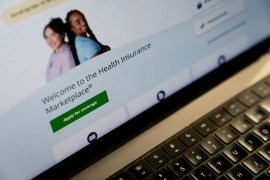
Covered California Policyholders Downgrade Plans As Prices Spike
The number of new Covered California enrollees has plunged about 32% compared with where it stood a year ago, and the state’s Affordable Care Act marketplace is bracing for the eventual loss of 400,000 policyholders, most of whom will be priced out. Tens of thousands of Covered California policyholders are facing skyrocketing costs to maintain the health insurance coverage they held last year, following the end of enhanced federal health care tax credits that the Republican-led Congress and President Donald Trump allowed to expire. (DiNatale, 1/20)
MedPage Today:
CMS Paying More For Medicare Advantage Patients Compared To Traditional Enrollees
The Centers for Medicare & Medicaid Services (CMS) is continuing to pay Medicare Advantage (MA) plans more -- $76 billion more in 2026 -- than if those same patients were enrolled in traditional fee-for-service Medicare. That higher cost comes despite a policy CMS redesigned in 2024 to limit MA plans' ability to exaggerate patients' health risks to garner higher monthly payments. (Clark, 1/20)
KFF Health News:
Medicaid Tries New Approach With Sickle Cell: Companies Get Paid Only If Costly Gene Therapies Work
Serenity Cole enjoyed Christmas last month relaxing with her family near her St. Louis home, making crafts and visiting friends. It was a contrast to how Cole, 18, spent part of the 2024 holiday season. She was in the hospital — a frequent occurrence with sickle cell disease, a genetic condition that damages oxygen-carrying red blood cells and for years caused debilitating pain in her arms and legs. Flare-ups often would force her to cancel plans or miss school.“With sickle cell it hurts every day,” she said. “It might be more tolerable some days, but it’s a constant thing.” (Galewitz, 1/21)
CDC Official Downplays Potential Loss Of Measles Elimination Status In US
Ralph Abraham, principal deputy director of the CDC, claimed the continued spread of the virus is 'just the cost of doing business." As Stat notes, however, elimination status is lost if a country is unable to stop ongoing transmission of the virus and circulation continues for a year or longer.
Stat:
Lost Measles Elimination Status 'A Cost Of Doing Business,' CDC Official Says
With measles transmission in the United States at levels that haven’t been seen in decades, the principal deputy director of the Centers for Disease Control and Prevention said Tuesday that he would not view the loss of the country’s measles elimination status as a significant event. (Branswell, 1/20)
The Hill:
Healthcare Group Projects Anti-RFK Jr. Messages Onto HHS Building
Protect Our Care, a healthcare advocacy group, on Tuesday projected two critical messages onto the facade of the Health and Human Services (HHS) building in Washington, D.C., blaming HHS Secretary Robert F. Kennedy Jr. for policies they say are making Americans sicker. “RFK JR: MAKING AMERICA SICK AGAIN,” read one message, projected outside the building. Another message read: “MEASLES HQ.” (Fortinsky, 1/20)
In related news —
CIDRAP:
South Carolina Measles Outbreak Expands By 200+, Reaches 646 Cases
In the past week, South Carolina officials have confirmed 212 new measles cases, raising the state total to 646 and threatening to overtake last year’s West Texas outbreak as the largest in decades in the United States. There are currently 538 people in quarantine and 33 in isolation, the South Carolina Department of Public Health said today. Six schools have recent public exposures that have resulted in new quarantines. (Soucheray, 1/20)
The Washington Post:
Another Virginia Child Comes Down With Measles After Travel Abroad
A week after reporting a child with measles traveled through the region while contagious, Virginia public health officials on Tuesday reported the case of another young child with the illness and warned of possible public exposures. Both children were 4 or younger and contracted the disease after traveling internationally, but the cases are unrelated, according to the Virginia Department of Health. (Portnoy, 1/20)
KFF Health News:
Listen To The Latest 'KFF Health News Minute'
Jackie Fortiér reads the week’s news: Parents are confused by an overhaul of U.S. childhood immunization guidelines, and while people 65 and older make up the fastest-growing homeless population in the country, traditional homeless shelters often can’t accommodate them. (Cook, 1/20)
In other vaccine news —
Pharmaceutical Technology:
Pfizer And Novavax Ink $530M Vaccine Delivery Licensing Deal
Pfizer has signed a deal worth up to $530M with US-based vaccine technology company Novavax. This agreement will see Pfizer hand over $30M upfront for the non-exclusive rights to Novavax’s proprietary Matrix-M vaccine adjuvant, which is designed to boost and prolong the immune response when added to an injectable formulation. (Allen, 1/21)
MedPage Today:
Ixchiq Vaccine Pulled From U.S. Market Amid Safety Concerns
Vaccine maker Valneva will pull its chikungunya vaccine (Ixchiq) from the U.S. market after the FDA announced it would take further action to investigate the live-attenuated shot. The FDA recently put the investigational new drug application for a post-marketing study on clinical hold while the agency investigated a newly reported serious adverse event in a vaccine recipient abroad, according to Valneva. The company said the event "involved a younger adult who received three concomitant vaccines, including Ixchiq." (Rudd, 1/20)
CIDRAP:
Shingles Vaccine May Slow Biological Aging In Older Adults
In addition to helping protect against a painful viral illness, the shingles (herpes zoster) vaccine may help slow biological aging in older adults, according to a new observational study by researchers at the University of Southern California (USC) Leonard Davis School of Gerontology. Biological age differs from chronological age in that it reflects how well the body’s tissues and organ systems are working. (Bergeson, 1/20)
Lurie Children's Hospital In Chicago Halts Even More Trans Care For Minors
Lurie was one of just a few Chicago-area hospitals that still provided gender-affirming medications to minors. The hospital announced Tuesday that it had been threatened with a federal probe and would no longer offer the meds for those under 18 who hadn't previously been treated at the hospital.
Chicago Tribune:
Lurie Children’s Hospital Scales Back Gender-Affirming Care
Lurie Children’s Hospital is scaling back its gender-affirming care for minors, the hospital said Tuesday, days after a top federal official called for an investigation into the hospital. The hospital will no longer offer gender-affirming medications for patients younger than 18 who have not previously been treated with the medications at Lurie, the hospital said in a statement. (Schencker, 1/20)
More health industry news —
Chicago Tribune:
Lawsuits Allege Shell Corporations Worsen Nursing Home Negligence
Two recent deaths at Chicago-area nursing homes highlight a growing problem not just of poor care, nursing home advocates say, but of difficulty in holding those responsible accountable. (McCoppin, 1/20)
Becker's Hospital Review:
Medical Groups To CMS: Clarify EMTALA Rules, Anti-Violence ED Signs
In a Jan. 20 letter to CMS, 10 national healthcare organizations asked the federal agency to issue clear guidance on emergency department signage that discourages violence against healthcare workers. Hospital surveyors have questioned and cited workplace violence signs as potential violations of the Emergency Medical Treatment and Labor Act, claiming the signs could dissuade patients from continuing care, the letter said. (Twenter, 1/20)
Modern Healthcare:
Why 'Shadow AI' Is Becoming A Growing Issue At Health Systems
Clinicians are using artificial intelligence on the job, whether the tools are endorsed by their employers or not, creating a challenge for health systems trying to oversee its implementation. Despite an abundance of vendor solutions, health systems are not adopting and investing in AI solutions fast enough for a clinician workforce eager to use the tools. As a result, some clinicians are using AI in an unauthorized manner, which has sped up the need for more comprehensive governance. (Perna, 1/20)
Updates on the New York nurses' strike —
AP:
Mayor Mamdani And Sen. Sanders Join Nurses' Strike In Manhattan
New York City Mayor Zohran Mamdani and U.S. Sen. Bernie Sanders rallied with nurses Tuesday in Manhattan during the ninth day of the largest strike of its kind that the city has seen in decades. The democratic socialists, speaking to a boisterous crowd of nurses in front of Mount Sinai West on the Upper West Side, called on hospital executives to return to the negotiating table to resolve the contract impasse that prompted some 15,000 nurses to walk off the job last week. (Marcelo, 1/20)
Inquirer.net:
Pregnant Nurse Loses Health Insurance After Joining New York Strike
Thirty-eight weeks pregnant and bracing for labor, Filipino American emergency room nurse Kaye Tamayao-Miane and her husband, Jo, are walking the picket line instead of walking into a hospital as patients. They have lost the health insurance they were counting on for their baby’s birth. The couple, both nurses at Mount Sinai Presbyterian in Manhattan, said they feared exactly this scenario when a strike vote was called but ultimately joined colleagues in what has become the largest nurses’ strike in New York City, now on its ninth day. (Lugay, 1/20)
Gothamist:
What Happens When NY Nurses Strike? Short-Term Pain And Some Gains, Too, Researchers Say.
Strikes cause mortality rates at hospitals to go up by 19.4%, according to a 20-year study. “ Nurses matter,” Jonathan Gruber, an MIT economist and coauthor of the study, told Gothamist. “And nurses that know the system and know the patients matter, and the displacement that happens when nurses go on strike, it's consequential for patient health.” (Venugopal, 1/18)
West Side Rag:
‘We All Work As A Team’: A Glimpse Inside The Largest Nurses Strike In NYC History
As they marched back and forth in front of the hospital doors on Amsterdam between West 114th and 113th streets, they shook noisemakers and shouted “Safe staffing saves lives!” Some held signs saying “Mount Sinai Unfair!” and “Don’t Mess With Our Benefits.” Many wore bright red beanies, scarves, and headband ear warmers with the New York State Nurses Association logo on them. (Gohn, 1/19)
Vice President Vance And Wife Usha Are Expecting Fourth Child, A Boy
The second family's newest member is due to arrive in July. In other administration news, DOGE did indeed gain access to one of the government’s most protected databases — the one containing Americans' Social Security information. Plus, the toll of ICE actions in Minnesota and Florida.
The Hill:
Usha Vance Announces She's Pregnant With Fourth Child
The second family is expanding: Usha Vance, wife of Vice President Vance, is pregnant. “We’re very excited to share the news that Usha is pregnant with our fourth child, a boy,” the Vances said in a joint statement shared on social media on Tuesday. ... She is believed to be the first vice president’s wife in modern history to be pregnant while her husband was in office. Floride Calhoun, the wife of John C. Calhoun, gave birth to two children, in 1826 and 1829, while her husband was serving as vice president, according to Clemson University. (Kurtz, 1/20)
More from the Trump administration —
The Washington Post:
Trump Administration Admits DOGE Accessed Personal Social Security Data
The Trump administration has acknowledged for the first time in a court filing that members of the U.S. DOGE Service accessed and shared sensitive Social Security data without the awareness of agency officials. The admission comes months after a whistleblower raised concerns that members of DOGE — the government cost-cutting operation founded by Elon Musk — had obtained one of the government’s most protected databases, risking the security of hundreds of millions of Americans’ private Social Security information. The agency had previously denied the whistleblower’s allegations. (Kornfield, 1/20)
The Hill:
Funding Cuts By Trump Leave Researchers Uncertain
After a year of government layoffs and sweeping funding cuts under President Trump, many researchers are hanging on by a thread. The administration has said it is realigning federal spending to match its agenda, but scientists respond that even proposals that advance the White House’s goals have been ignored or cut. Medical advancements, education research, defense priorities — no area has proven safe from frozen funding, which has also come alongside massive reductions in the government agencies that support these areas. (Lonas Cochran, 1/20)
NPR:
U.S. Withdrawal From WHO Is Set For Jan. 22. Will It Happen?
A year ago this week, President Trump initiated a divorce — of sorts. As night fell on his inauguration day activities, he signed an executive order saying: He wants out of the World Health Organization, or WHO. His executive order laid out his displeasures, including "the organization's mishandling of the COVID-19 pandemic that arose out of Wuhan, China, and other global health crises, its failure to adopt urgently needed reforms, and its inability to demonstrate independence from the inappropriate political influence of WHO member states." (Emanuel and Lambert, 1/20)
On the immigration crisis —
The New York Times:
Trump Calls Renee Good Killing A ‘Tragedy’ And Says ICE Agents Will Make Mistakes
President Trump on Tuesday said the killing of Renee Good by an ICE agent in Minneapolis was a “tragedy” about which he “felt terribly,” adding that the immigration agents he has deployed sometimes are “going to make a mistake.” The change in tone was stark for the president, who said he had been told that Ms. Good’s father was a strong Trump supporter. Just hours after she was killed on Jan. 7, Mr. Trump falsely claimed that Ms. Good “violently, willfully, and viciously ran over the ICE officer” and said that she had “behaved horribly.” He later said Ms. Good, a poet and a mother of three, had a “highly disrespectful” attitude toward law enforcement and suggested that it justified her killing. (Patil, 1/20)
Sahan Journal:
Minn. Man Hospitalized With Life-Threatening Injuries After ICE Arrest
According to the lawsuit, Alberto Castaneda Mondragon was taken by ICE officers to Fairview Southdale Hospital in Edina for head trauma within four hours of his arrest. He was then transferred to Hennepin County Medical Center. The lawsuit says he has life-threatening brain injuries, including multiple cranial fractures hemorrhaging in his brain and swelling and bruising around his eye. (Pross, 1/20)
AP:
Doctors Say Minnesota's Immigration Crackdown Elevates Health Crisis For Patients
There was the pregnant woman who missed her medical checkup, afraid to visit a clinic during the Trump administration’s sweeping Minnesota immigration crackdown. A nurse found her at home, already in labor and just about to give birth. There was the patient with kidney cancer who vanished without his medicine in immigration detention facilities. It took legal intervention for his medicine to be sent to him, though doctors are unsure if he’s been able to take it. (Sullivan and Rush, 1/21)
The New York Times:
To Their Shock, Cubans in Florida Are Being Deported in Record Numbers
Heidy Sánchez took her 17-month-old daughter to a routine check-in last April with Immigration and Customs Enforcement in Tampa, Fla. During the appointment, federal authorities told her that she was being detained and that her husband should pick up their daughter, who was still breastfeeding. Two days later, Ms. Sánchez, 44, who worked as a home health aide, was deported. ... As a senator, Secretary of State Marco Rubio, the Trump administration’s most prominent Cuban American, often criticized Cuban immigrants who received government benefits like food stamps and Medicaid, and frequently returned to the island. (Mazzei, 1/19)
Red Cross Asks For Blood Donations As It Declares A Severe Shortage
The American Red Cross says hospital demand is outpacing donor blood supply, which is impacted by factors including inclement weather and the flu season. Other public health news is on cancer research, mental health, and gun violence.
ABC News:
Red Cross Announces Severe Emergency Blood Shortage, Calls On Americans To Donate
The American Red Cross declared a severe emergency blood shortage on Monday and called on people to donate. The humanitarian organization, which says it's the largest supplier of blood products for hospitals and for patient need in the U.S., said the demand from hospitals has outpaced the available supply of blood. Dr. Courtney Lawrence, divisional chief medical officer at American Red Cross, told ABC News that almost one-third of the organization's blood stores across the country have been depleted due to hospital need. (Kekatos, 1/20)
In cancer research —
The Washington Post:
MRNA-Based Cancer Therapy Shows Promise In Treating Melanoma, Study Shows
An experimental drug custom-made to target the genetic mutations of individual tumors showed promise in treating aggressive skin cancer, according to new results from a clinical trial announced Tuesday. The personalized cancer drug is based on the same technology as the leading coronavirus vaccines that helped end the pandemic: sending instructions to the immune system using doses of messenger RNA. (Gilbert, 1/20)
Fox News:
Vitamin A Byproduct Weakens Immune System Against Cancer, Study Finds
A substance the body makes from vitamin A can make the immune system less effective at fighting cancer, a new study reveals. Vitamin A itself is an essential nutrient, but one of its byproducts can accidentally "turn off" parts of the immune response against cancer, according to new research published in Nature Immunology. (Quill, 1/20)
In mental health news —
The New York Times:
Snap Settles Lawsuit On Social Media Addiction, Avoiding A Landmark Trial
Snap reached an agreement on Tuesday to settle a tech addiction lawsuit, ahead of a landmark trial in a case that claims the social media giants engineered products to hook an entire generation of young users. The case is the first of several social media addiction lawsuits that are set to go to trial this year against Meta, Snap, TikTok and YouTube. ... They argue that features like infinite scroll, auto video play and algorithmic recommendations have led to compulsive social media use and caused depression, eating disorders and self-harm. (Kang, 1/20)
MedPage Today:
Air Pollution Tied To Greater ALS Risk, Worse Outcomes
Prolonged exposure to air pollution was associated with a higher risk of motor neuron disease, a group of neurodegenerative disorders mainly involving amyotrophic lateral sclerosis (ALS), in a nested case-control study. (George, 1/20)
The New York Times:
Will ‘Psychiatry’s Bible’ Add A Postpartum Psychosis Diagnosis?
Emily Sliwinski got home from the hospital after giving birth to her first child three years ago, and almost immediately began spiraling. Her thoughts raced; she was unable to sleep; she began hallucinating that her dog was speaking to her. She became obsessed with solving the national shortage of infant formula, covering a corkboard with notes and ideas. About a week later, Ms. Sliwinski, of Greensboro, N.C., went to a hospital emergency room, thinking she would be given medication to help her sleep, she said. She had no history of mental health issues. (Barry and Belluck, 1/20)
On the gun violence epidemic —
The Washington Post:
Walmart Sold A Gun To An Employee Who Shot Himself. Is The Company Liable?
A federal civil trial turns on what managers at a Walmart in Maryland knew about the struggles of a worker who killed himself with a gun the store sold him. (Morse, 1/21)
Politico:
Race Looms Large In Gun-Rights Arguments At Supreme Court
As the Supreme Court debated the constitutionality Tuesday of a Hawaii law that restricts people from carrying guns in some public places, the subject turned again and again to race — specifically, laws passed just after the Civil War aimed at preventing newly freed Black Americans from possessing firearms. The justices traded thinly-veiled accusations of hypocrisy over the relevance of the 19th Century “Black codes” to the current fight over the constitutionality of a law that makes it illegal to take a gun into a business without the owner’s consent. (Gerstein, 1/20)
Prenatal Exposure To Wildfire Smoke Raises Autism Risk, Study In Calif. Says
The risk of autism diagnosis was 10% to 23% higher depending on how many days a pregnant person in the third trimester was exposed to smoke pollution. Plus, Florida moves to woo nurses. More news comes from Hawaii, Wyoming, Missouri, and Maryland. Also, a tuna recall affects nine states.
NBC News:
California Wildfire Smoke Exposure During Pregnancy Linked To Autism Risk In Children
Pregnant women's exposure to wildfire smoke — particularly in the third trimester — may increase the risk of autism in their children, according to new research, which looked at hundreds of thousands of births in Southern California. The study, published Tuesday in the journal Environmental Science & Technology, is the first to examine a potential link between prenatal wildfire smoke exposure and autism. Earlier research has suggested that pregnant women's exposure to air pollution more broadly, including smog spewed by vehicles, smoke stacks and lead, may be linked to the developmental disorder. (Lovelace Jr., 1/20)
More health news from across the U.S. —
Central Florida Public Media:
Gov. DeSantis Announces $20 Million For Nursing Programs
Gov. Ron DeSantis announced additional funding Tuesday for a nursing pipeline program that provides scholarships. The governor said the $20 million will go toward the Linking Industry to Nursing Education, or LINE, program. LINE provides matching funds to educational institutions to boost nursing education and address Florida's nursing shortage. (Prieur, 1/20)
Honolulu Civil Beat:
Game Changer? Free Medical Flights Start For Some Neighbor Island Residents
Boarding an airplane to see a doctor is a widely accepted way of life in rural Hawai‘i. But a drop in the number of airlines that service Moloka‘i and Lana‘i residents has left patients with fewer travel options and, many people say, more frequent flight disruptions that can lead to missed appointments. A $2 million pilot project that launched last week aims to provide a new link to the state’s Honolulu medical hub by chartering flights for Moloka‘i and Lana‘i patients with off-island medical appointments, as well as offering flights to Honolulu doctors willing to travel to Moloka‘i or Lana‘i to provide care. (Lyte, 1/20)
Wyoming Public Radio:
Wyoming Petitions State Supreme Court To Rehear Abortion Case
The state of Wyoming is arguing the state Supreme Court made “mistakes” when it decided two near-total abortion bans are unconstitutional. Earlier this month, the high court struck down Wyoming’s Life is a Human Right Act and “chemical,” or medical, abortion ban, which together ban most abortions with a few exceptions. The majority of justices said those laws violate residents’ constitutional right to make their own healthcare decisions. (Merzbach, 1/20)
KBIA:
Missourians Gather To Support Alpha-Gal Reporting Legislation
More than 50 Missourians gathered at the state capital Tuesday for the first Alpha-Gal Syndrome Advocacy Day to connect and learn more about a bill which would make the reporting of the condition mandatory. (Smith, 1/21)
The Baltimore Sun:
Maryland Students Report Empty Or Missing Menstrual Product Dispensers, Despite State Mandate
Students at 10 Howard County high schools say menstrual product dispensers are “almost never” stocked or are missing altogether, despite a state mandate that public schools must provide and fill them. (Yelenik, 1/20)
Also —
The Hill:
FDA Warns Of Recalled Tuna In Retail Stores
The U.S. Food and Drug Administration is warning consumers that previously recalled canned tuna was recently shipped to retail stores in several states. According to a new recall alert shared by the FDA on Monday, a third-party distributor “inadvertently” shipped quarantined canned tuna that Tri-Union Seafoods recalled roughly a year ago. Officials said the initial recall was issued after the company learned that some of the product’s “easy open” pull tab lids were defective and could cause the cans to leak, “or worse, be contaminated with clostridium botulinum, a potentially fatal form of food poisoning.” (Langenfeld and Bink, 1/20)
Viewpoints: Most Insurance Preapprovals Are Unnecessary; Patients Skip Insurance In A Broken System
Opinion writers delve into these public health topics.
The Boston Globe:
Most Medical Care Shouldn’t Require Insurance Preapproval
[Gov. Maura] Healey’s new rules seek to limit prior authorization. (1/21)
The Boston Globe:
Why More Patients Are Paying Doctors Directly--And What It Says About Our Health System
Patients and doctors are bypassing insurance for faster, simpler care — a trend highlighting a desire for relief from bureaucracy and widening inequities in the health care system. (Shira Schoenberg, 1/19)
The Atlantic:
The Real Reason For The Drop In Fentanyl Overdoses
Drug deaths are finally falling—but the cause may be far outside of U.S. policy makers’ control. (Charles Fain Lehman, 1/20)
Stat:
What PSA Test Reliance Gets Wrong About Prostate Cancer Treatment
In 2002, at age 55, I underwent my first digital rectal exam. The routine check set me on a 15-year path that transformed me from a medical editor on a daily newspaper in Chicago into an international advocate for men navigating the labyrinth of low-risk prostate cancer. (Howard Wolinsky, 1/21)
Stat:
Too Many Doctors Don’t Bring Up The HPV Vaccine
Recently, I walked into my doctor’s office and receive my first dose of the HPV vaccine at 24. I felt a bit ridiculous sitting in the waiting room, a third-year medical student who can discuss the mechanism of E6/E7 over-expression but never got the vaccine that prevents it. (Anamika Shrimali, 1/21)