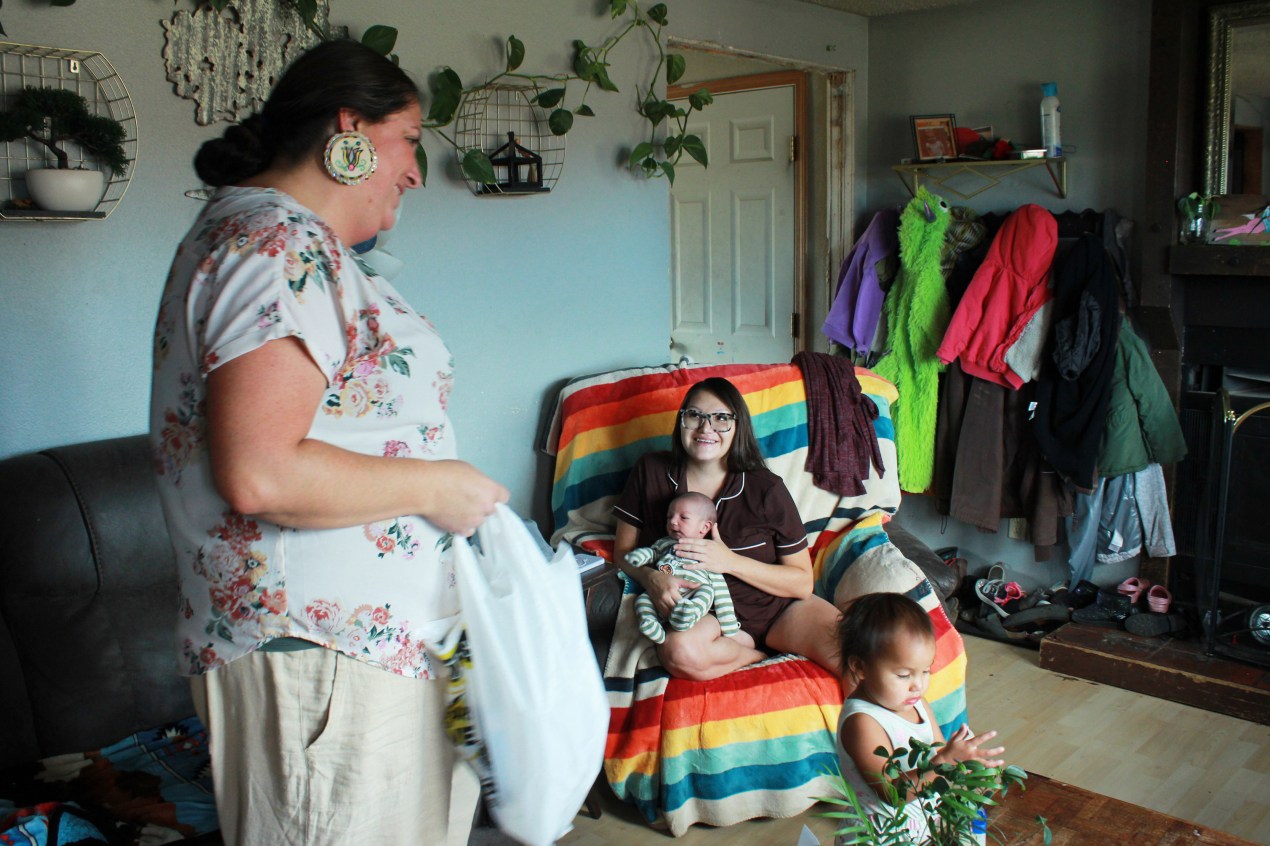
LAME DEER, Mont. — Misty Pipe had about an hour before her shift began at the post office. She used that time to check in on a new mom who lives a few miles outside this town at the heart of the Northern Cheyenne Indian Reservation.
A mom of seven, Pipe is a doula on the reservation who supports new and expectant parents. She does that work free, around her day job. That’s because in this town of about 2,000 people, the closest hospital that delivers babies is 100 miles away.
“Women need this help,” Pipe said.
Doulas ready parents for childbirth, support their deliveries, and can be a steady presence in a baby’s first months. Studies link their work with lower rates of costly birth and postpartum complications — especially in hard-to-reach places like Lame Deer.
But that help can be scarce. As Pipe put it: “Doula doesn’t pay the bills around here.”
Things were supposed to change this year. Montana was set to join at least 25 other states that reimburse doulas through their Medicaid programs to ease gaps in care. Montana lawmakers approved the payments last year, authorizing up to $1,600 per pregnancy. Pipe hoped that money would give her the chance to leave her post office job one day to help more parents.
But the state Department of Public Health and Human Services postponed adding doula services to its Medicaid program in late March, citing a budget shortfall driven in part by higher-than-expected Medicaid costs.
“DPHHS will not be moving forward with the implementation of doula services in the Montana Medicaid benefit package at this time,” department spokesperson Holly Matkin told KFF Health News.
The news caught Pipe by surprise — she hadn’t heard any updates in a while, but the state had finalized its licensing rules for doulas in January. Last year, she supported three people through their deliveries. She doesn’t have time for much more. That weighs on her. Nearly half the people on the Northern Cheyenne Indian Reservation live in poverty, and the people she helps usually can’t afford to pay a doula.
“I was looking forward to serving more people,” Pipe said. “Now that’s not going to happen anytime soon.”
Charlie Brereton, who heads the health department, told state lawmakers in March that the agency projected a $146.3 million shortfall in federal Medicaid funds for this year. Health officials predict another deficit next year as states feel the effects of Republicans’ massive tax-and-spending law, the One Big Beautiful Bill Act. Signed last year, that law is projected to reduce federal Medicaid spending by nearly $1 trillion over 10 years.
Matkin said it’s “unclear” whether the agency can authorize doula coverage this year. The deficit will lead the department to seek supplemental funding from state lawmakers. When an agency makes that kind of request for the first year of the state’s two-year budget cycle, Montana law requires it to create a plan to reduce its spending.
Around the country, optional Medicaid services — such as doula support, home health care, and dental work — are at risk of losing funding as states brace for federal Medicaid cuts to hit their bottom lines. Already, lawmakers in Idaho are considering their own reductions to Medicaid to balance the state’s budget. Missouri officials proposed cutting tens of millions of dollars in services for people with disabilities.
In Montana, doula services are unlikely to be the only Medicaid cutbacks announced. “All options are on the table,” Brereton told lawmakers in March.
Stephanie Morton, executive director of Healthy Mothers, Healthy Babies-The Montana Coalition, said more than half of Montana’s counties are designated as maternity care deserts.
“Budget cuts will continue to diminish the limited services families rely upon in these counties,” said Morton, whose nonprofit had advocated for doula Medicaid reimbursement. “This decision feels like the first of many rollbacks and cuts Montanans will face.”
Laboring Alone
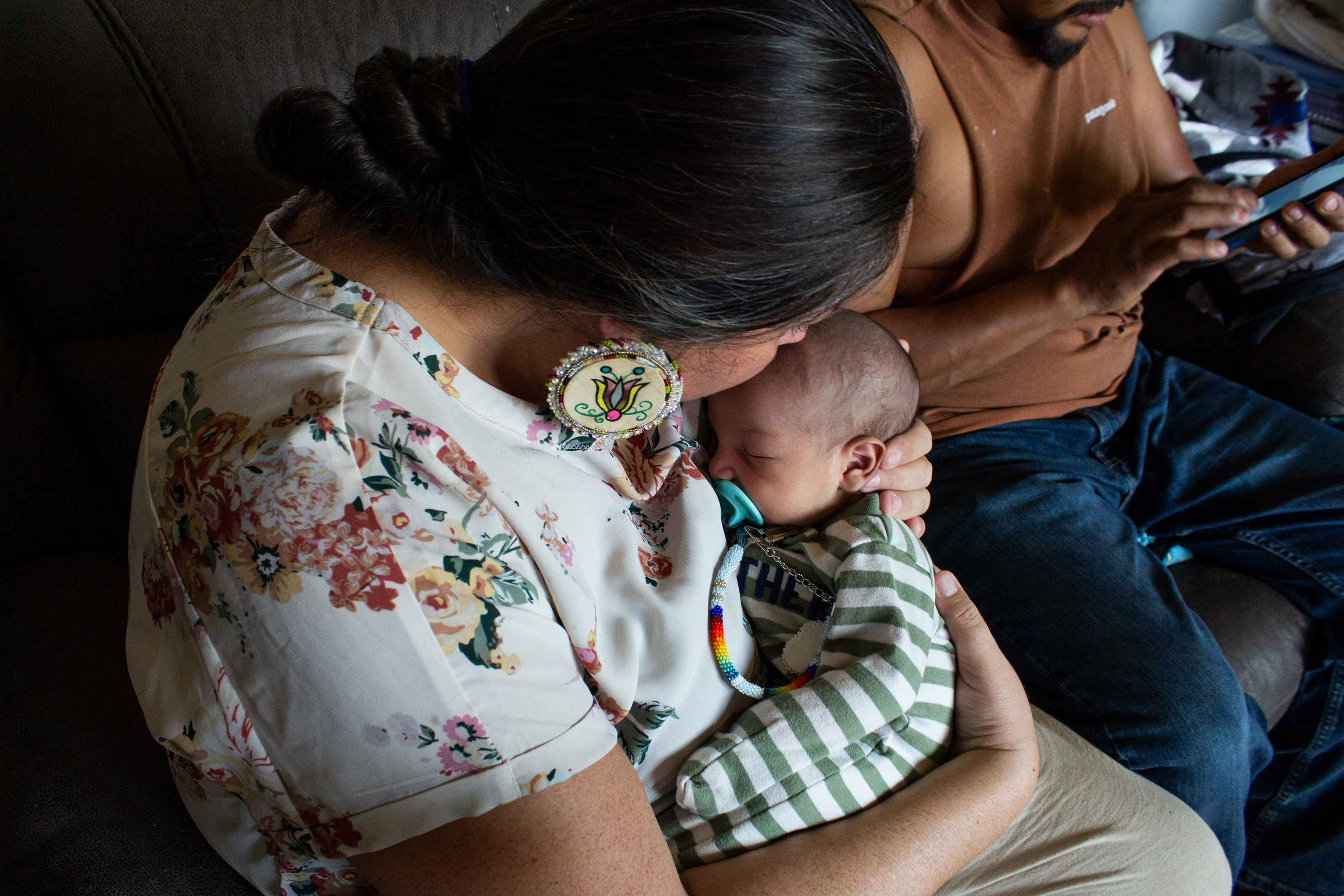
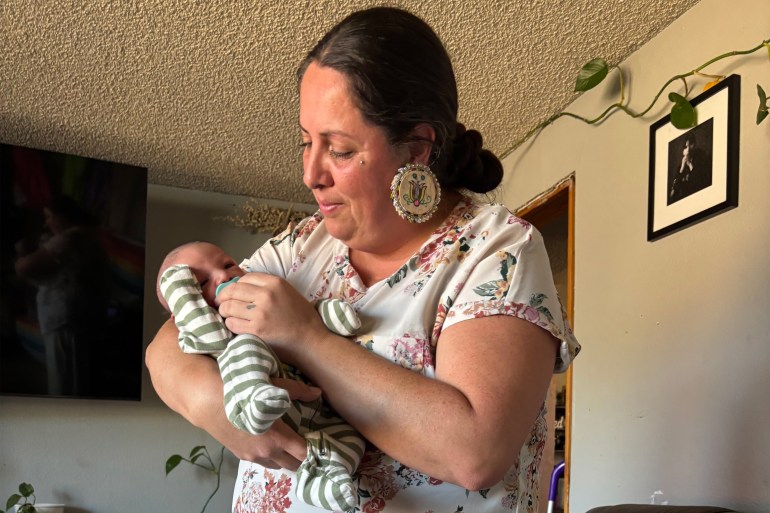
At the check-in just outside town, Pipe handed a waking newborn to his mother and unwrapped a new swaddle for the child. This would have to be a quick visit — she was already late for work.
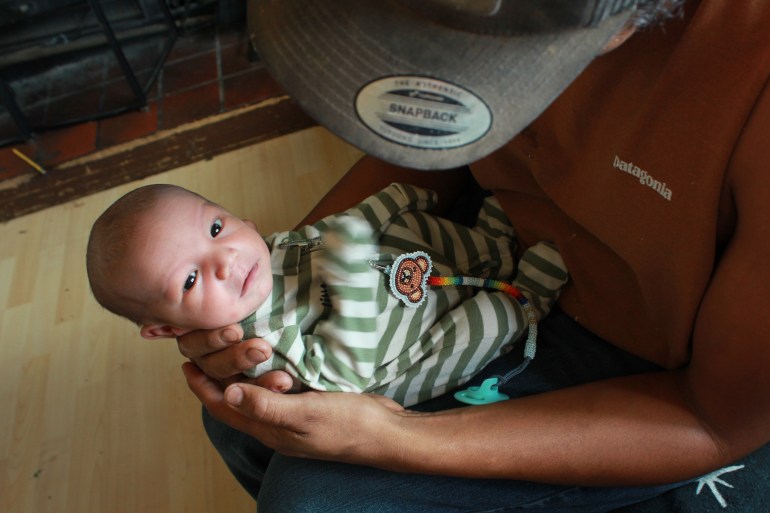
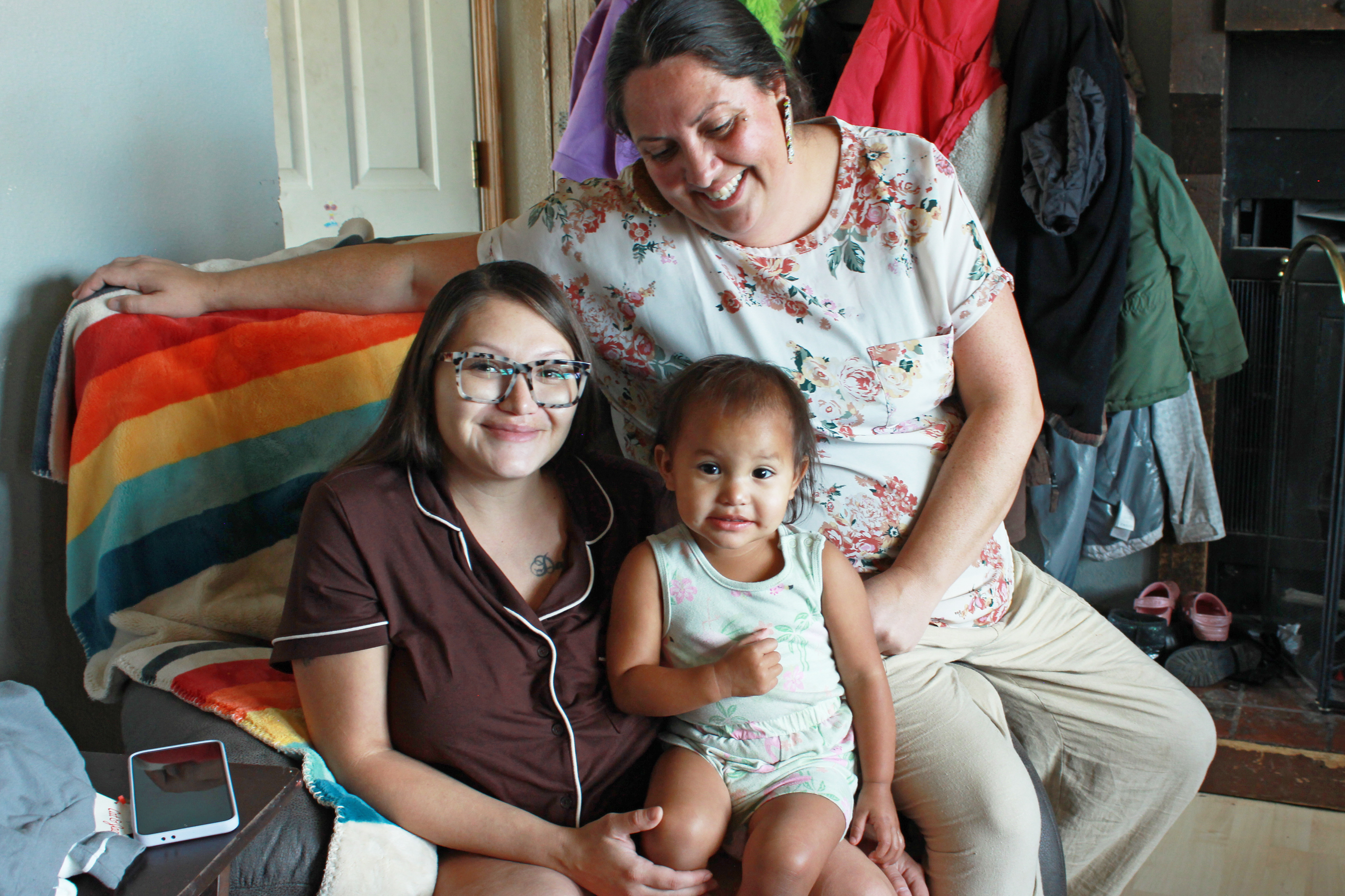
The mother, Britney WolfVoice, held her newborn son as her three young daughters stood close by. Pipe has been with WolfVoice and her husband for the birth of their newborn son and youngest daughter.
She helped them create delivery plans. For the birth of WolfVoice’s youngest daughter a few years ago, Pipe brought cedar oil, a sacred plant used for prayer, and calmed WolfVoice through her contractions. For the recent birth of her son, when hospital backlogs delayed WolfVoice’s induction, Pipe encouraged her to advocate for an earlier appointment by routinely calling the hospital. Doctors had recommended the procedure to avoid complications.
“Misty is one person who I can count on to be my voice,” WolfVoice said.
If someone needs a ride to a doctor’s appointment, Pipe takes time off work to drive them. If a client goes into labor when Pipe’s at the post office, she texts two other free doulas she knows of on the reservation to see if they have time to help until her shift ends. But they also have day jobs.
Pipe herself has ridden that 100-mile stretch between home and the hospital in labor and in the back of an ambulance. Twice, she gave birth in emergency rooms along the way. In one of her pregnancies, she miscarried at home and couldn’t get a doctor appointment for days.
The long distance to receive care often meant her husband had to stay behind to tend to their other children at home.
“I labored alone so many times,” Pipe said. “I just want to make sure no one’s alone.”
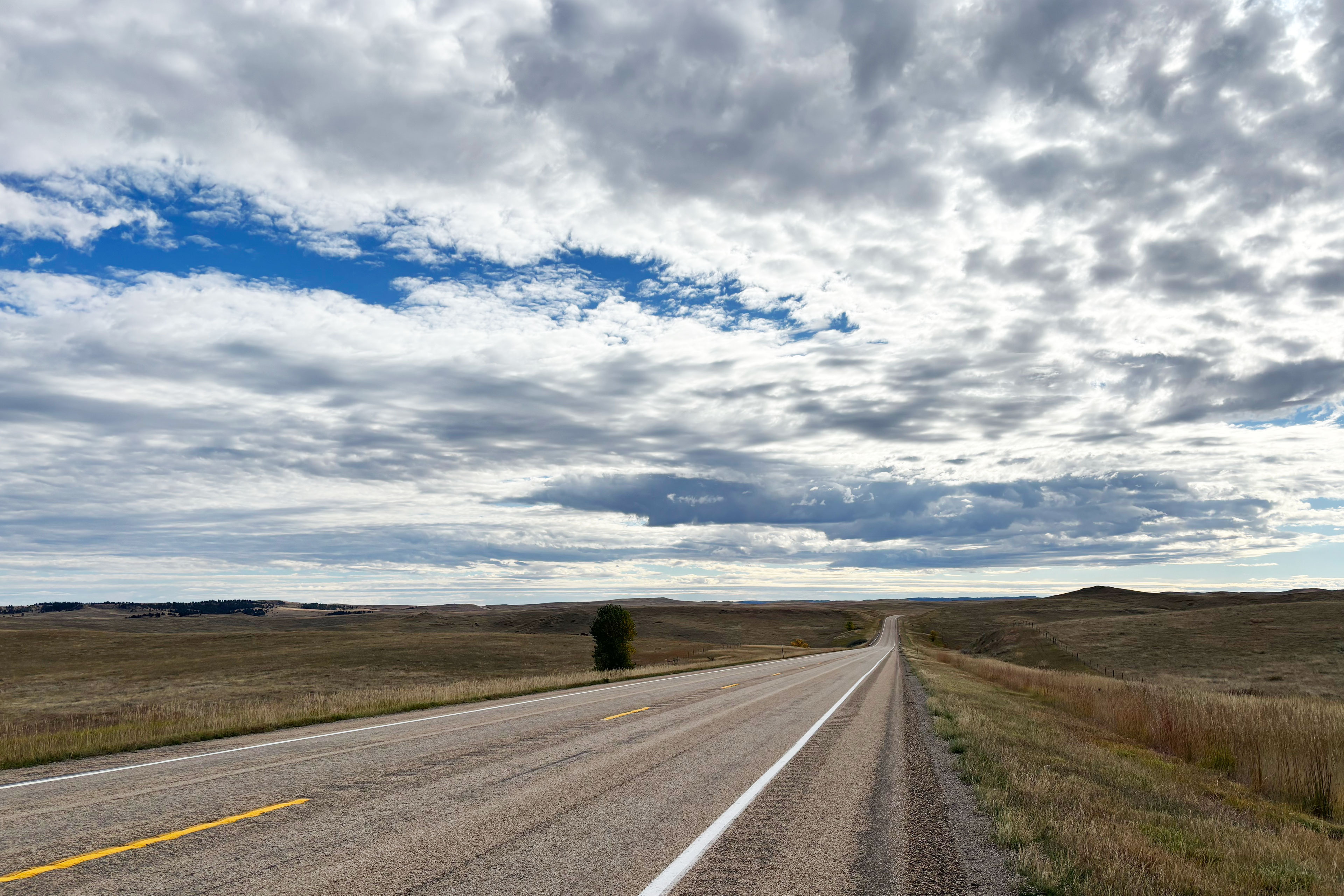
Rural maternity care deserts are a national problem, especially as labor and delivery units continue to shutter. In many tribal communities, a lack of care coincides with long-standing inequities caused by centuries of systematic discrimination.
Predominantly Indigenous communities face the longest distances to obstetric facilities compared with all other racial and ethnic groups, according to a 2024 report from the March of Dimes. That’s part of the reason Indigenous women are far more likely to get sick from pregnancy and at least twice as likely to die as white women.
Indigenous patients are supposed to be guaranteed access to health care through the federal Indian Health Service. But the chronically underfunded agency has severe gaps. A small fraction of its hospitals and clinics offer labor and delivery. As of 2024, only seven states had either an IHS or tribal birth facility, the agency reported. To help fill in those shortfalls, Medicaid is the main source of health coverage for many Native Americans, according to KFF.
Even where care exists, Native women can experience a distrust of health systems, according to Pipe and other health workers. The U.S. government has a long history of removing children from tribal homes and forcing Native American women to undergo sterilization.
Emily Haozous of the Pacific Institute for Research and Evaluation’s Southwest center has studied premature deaths among Native Americans. A member of the Fort Sill-Chiricahua-Warm Springs-Apache Tribe, Haozous said data on maternal health disparities in pregnancy and postpartum often misses a key point.
“It’s not that women are just not taking care of themselves,” Haozous said. “The system is set up for them to not have access to care.”
On top of funding cuts, the One Big Beautiful Bill Act will add more frequent eligibility checks and work requirements to access Medicaid. Those changes, when they take effect later this year and next, will lead an estimated 5.3 million people to lose their coverage by 2034.
Native Americans are exempt from some of the law’s new rules, such as the work requirements. Even so, tribal patients can get tangled in administrative hurdles. That includes struggling to enroll in the first place or to prove their tribal status. A full-time college student, WolfVoice said that when she got pregnant, it took about six months to enroll in the state’s Medicaid program.
Despite Montana’s long struggle with a backlogged Medicaid system, state officials aim to implement work requirements this summer, well before the federal deadline.
‘Moccasins on the Ground’
As Pipe pulled into her driveway one day after a full shift at the post office, her kids ran to her. She was also greeted by Felicia Blindman, a 63-year-old public health nurse who used to work for the tribe. The two sat in lawn chairs into the night and brainstormed ways to connect more women to services — such as free prenatal classes.
Pipe’s four youngest children played around them. Her 14-year-old daughter is already certified as an Indigenous doula. Her 8-year-old daughter has begun helping Pipe pick up prescriptions for moms without a car who live out of town. Pipe hopes one day they could do that work full-time, if they want to.
Because of the lost Medicaid payment, Pipe said, she will continue to balance her job with her birth work, even if it means persuading more people to become doulas, such as family and respected community members, to cover more ground.
“It’s not going to stop me from training more birth workers, more young people, more aunties,” Pipe said. “For now, I guess it’s more about grassroots, moccasins on the ground, helping each other.”
She said that means telling pregnant people who walk into the post office she’s there to help if they need support. At least, as long as she’s not at her day job.