Latest KFF Health News Stories
Biden Administration Nibbles at the Maternal Health Crisis
Choosing where to give birth typically comes down to what hospital is most convenient to your home, where your obstetrician practices and your insurance company’s provider network. Now, the Biden administration has given expectant parents another factor to consider: whether their hospital has won the government’s new “birthing friendly” designation. But don’t worry — a […]

Most States Ban Shackling Pregnant Women in Custody, Yet Many Report Being Restrained
Advocates for pregnant people in police custody say repeated incidents show prohibitions on handcuffs and other restraints are little more than lip service.
What the Health? From KFF Health News: Congress Kicks the (Budget) Can Down the Road. Again.
Congress narrowly avoided a federal government shutdown for the second time in six weeks, as Democrats came to the rescue of divided House Republicans over annual spending bills that were supposed to be finished by Oct. 1. But the brinksmanship is likely to repeat itself early in 2024, when the next temporary spending patches expire. Meanwhile, a pair of investigations unveiled this week demonstrate how difficult it still is for seniors to get needed long-term and rehabilitation care. Alice Miranda Ollstein of Politico, Rachel Cohrs of Stat, and Joanne Kenen of Johns Hopkins University and Politico Magazine join KFF Health News’ Julie Rovner to discuss these issues and more.
Abortion “Until the Day of Birth” Is Almost Never a Thing
It’s one of the most frequent claims made by antiabortion lawmakers: That abortion rights supporters favor allowing abortions literally until the end of pregnancy. “Frankly I think it’s unethical and immoral to allow for abortions up until the day of birth,” Sen. Tim Scott (R-S.C.) said at last week’s GOP presidential primary debate. At that […]
What the Health? From KFF Health News: A Very Good Night for Abortion Rights Backers
Abortion rights backers won major victories in at least five states in the 2023 off-year elections Nov. 7, proving the staying power of abortion as a political issue in the wake of the Supreme Court’s 2022 decision overturning Roe v. Wade. Meanwhile, the National Institutes of Health finally has a new director, after Democrats temporarily blocked President Joe Biden’s nominee over a mostly unrelated fight about prescription drug prices. Alice Miranda Ollstein of Politico, Tami Luhby of CNN, and Sandhya Raman of CQ Roll Call join KFF Health News’ Julie Rovner to discuss these issues and more. Also this week, Rovner interviews KFF Health News’ Julie Appleby, who reported and wrote the latest “Bill of the Month” feature.

Another GOP Primary Debate … Another Night of Verbal Clashes
In a faceoff that took some strange turns, five presidential hopefuls focused on foreign affairs and inflation but still revealed the party’s political struggles over its abortion position. Once again, former President Donald Trump did not appear on the debate stage.

Ohio votó a favor del aborto. Podrían seguir otros 11 estados el próximo año
El impulso para llevar el polémico tema a los votantes llega después de la serie de victorias en las votaciones del año pasado a favor del derecho al aborto en seis estados: California, Kansas, Kentucky, Michigan, Montana y Vermont.
Ohio Voted on Abortion. Next Year, 11 More States Might, Too.
Ohio is the latest state where voters have directly weighed in on abortion, and the next wave of such ballot measures is in the works in at least 11 other states, including Missouri.
Ohio Votes on Abortion Rights Today. Eleven States May Follow in 2024.
Voters in Ohio are deciding whether to add abortion rights protections to the state’s constitution today. The vote comes on the heels of last year’s string of ballot measure wins for abortion rights in six states: California, Kansas, Kentucky, Michigan, Montana and Vermont. But this is just the start. Next year, 11 more states could see abortion-related […]
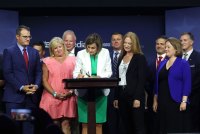
Iowa’s Governor Opposes Abortion — And Has Final Say on Whether Medicaid Pays for It
The federal government requires state Medicaid programs to pay for abortions in limited circumstances, but Iowa hasn’t done so for years. No providers seek Medicaid payments, which require the approval of the governor, an anti-abortion Republican.
What the Health? From KFF Health News: For ACA Plans, It’s Time to Shop Around
It’s Obamacare open enrollment season, which means that, for people who rely on these plans for coverage, it’s time to shop around. With enhanced premium subsidies and cost-sharing assistance, consumers may find savings by switching plans. It is especially important for people who lost their coverage because of the Medicaid unwinding to investigate their options. Many qualify for assistance. Meanwhile, the countdown to Election Day is on, and Ohio’s State Issue 1 is grabbing headlines. The closely watched ballot initiative has become a testing ground for abortion-related messaging, which has been rife with misinformation. This week’s panelists are Mary Agnes Carey of KFF Health News, Jessie Hellmann of CQ Roll Call, Joanne Kenen of the Johns Hopkins Bloomberg School of Public Health and Politico, and Rachana Pradhan of KFF Health News.
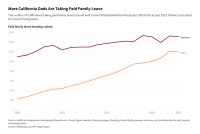
Dads Drive Growth in California’s Paid Family Leave Program
The number of men in the state taking paid family leave to bond with a new child has risen nearly 20% since the start of the pandemic.
Watch: California and Feds Invest in Health Care for Homeless People
KFF Health News senior correspondent Angela Hart discusses big developments in street medicine, both statewide and nationally.

California Expands Paid Sick Days and Boosts Health Worker Wages
Gov. Gavin Newsom signed legislation expanding paid sick leave to five days, extending bereavement leave to miscarriages and failed adoptions, and approving an eventual $25-an-hour health care minimum wage. Still, in a possible sign of national ambitions, the Democrat vetoed free condoms in schools and refused to decriminalize psychedelic mushrooms.
What the Health? From KFF Health News: The Open Enrollment Mixing Bowl
Open enrollment for Medicare beneficiaries with private health plans began Oct. 15, to be followed Nov. 1 by open enrollment for Affordable Care Act plans. The selection for both is large — often too large to be navigated easily alone. And people who choose incorrectly can end up with unaffordable medical bills. Meanwhile, those on both sides of the abortion issue are looking to Ohio’s November ballot measure on abortion to see whether anti-abortion forces can break their losing streak in statewide ballot questions since the overturn of Roe v. Wade in 2022.

Feds Try to Head Off Growing Problem of Overdoses Among Expectant Mothers
Homicides, suicides, and drug overdoses have driven rising rates of pregnancy-related death in the U.S. This fall, six states received federal funding for substance use treatment interventions to prevent at least some of those deaths.

Abortion Coverage Is Limited or Unavailable at a Quarter of Large Workplaces
A KFF survey of employer health benefits shows that 28% of large U.S. companies have limited or no access to abortion under company health insurance.

Pregnant and Addicted: Homeless Women See Hope in Street Medicine
As homelessness explodes across California, so does the number of expectant mothers on the streets. Street medicine doctors are getting paid more by Medicaid and offering some of those mothers-to-be a chance to overcome addiction and reverse chronic diseases so they can have healthy babies — and perhaps keep them.
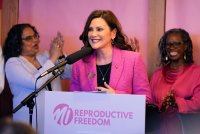
Michigan Voters Backed Abortion Rights. Now Democrats Want to Go Further.
Michigan is one of the few remaining abortion havens in the Midwest. But getting an abortion in that state is still more difficult than it should be, providers say.

Epidemic: Bodies Remember What Was Done to Them
Trust is hard to build and easy to break. In Episode 6 of the “Eradicating Smallpox” podcast, meet Chandrakant Pandav, a health worker who used laughter and song to try to rebuild trust with communities harmed by India’s sometimes violent and coercive family planning campaign.