Latest KFF Health News Stories
KHN’s ‘What the Health?’: Manchin Makes a Deal
In a rare surprise for official Washington, Senate Majority Leader Chuck Schumer and Sen. Joe Manchin (D-W.Va.) announced a deal to expand the planned health bill in the Senate to include provisions raising taxes and addressing climate change. The measure would include a third year of expanded subsidies for the Affordable Care Act, but not health care coverage for people left out of Medicaid in states that failed to expand the program. Meanwhile, the ACA goes back to court, and the Biden administration restores anti-discrimination protections for LGBTQ+ people that were rolled back by the Trump administration. Joanne Kenen of the Johns Hopkins Bloomberg School of Public Health and Politico, Sarah Karlin-Smith of the Pink Sheet, and Alice Miranda Ollstein of Politico join KHN’s Julie Rovner to discuss these issues and more. Also this week, Rovner interviews Dr. Céline Gounder of KHN about the latest on the monkeypox outbreak.

Post-‘Roe,’ People Are Seeking Permanent Sterilizations, and Some Are Being Turned Away
Doctors in states where abortion is or could be banned say more patients are seeking permanent sterilization procedures, but some patients are reporting that providers are unwilling to operate on people of childbearing age.
KHN’s ‘What the Health?’: Life After ‘Roe’ Is … Confusing
A rapidly changing landscape for abortion has left patients, providers, employers, and lawmakers alike wondering what is and is not legal and what to do next. Meanwhile, Democrats in Congress have resumed negotiations on legislation to lower drug prices and, potentially, continue expanded insurance subsidies for the Affordable Care Act. Alice Miranda Ollstein of Politico, Tami Luhby of CNN, and Sandhya Raman of CQ Roll Call join KHN’s Julie Rovner to discuss these issues and more. Plus, for extra credit, the panelists recommend their favorite health policy stories of the week they think you should read, too.

The Push for Abortion Lawmaking After ‘Dobbs’ Is Unique, Legal and Political Experts Say
The surge of calls for special legislative sessions to pass abortion laws is an unusual occurrence in modern U.S. history, according to experts — one caused by the Supreme Court’s decision to give states more power to regulate abortion.

Montana Clinics That Provide Abortions Preemptively Restrict Pill Access for Out-of-State Patients
Montana is an island of legal abortion, but three of the state’s five clinics are limiting access to abortion pills for out-of-state patients in an effort to protect themselves and patients from legal attacks.

‘My Body, My Choice’: How Vaccine Foes Co-Opted the Abortion Rallying Cry
Anti-vaccine advocates discovered a catchy, succinct, and potent slogan. Its unlikely source: the abortion rights movement.

Big Employers Are Offering Abortion Benefits. Will the Information Stay Safe?
Work-based benefits may expand access to abortion for people who live in areas where the service is unavailable, but experts warn that claiming benefits could create a paper trail for law enforcement officials to follow.
KHN’s ‘What the Health?’: A World Without ‘Roe’
The Supreme Court’s decision overturning Roe v. Wade has created far more questions than it has answered about the continued legality and availability of abortion, as both abortion rights supporters and anti-abortion activists scramble to put their marks on policy. Meanwhile, Congress completes work on its gun bill and the FDA takes up the problem of the next covid-19 booster. Margot Sanger-Katz of The New York Times, Sarah Karlin-Smith of the Pink Sheet, and Victoria Knight of KHN join KHN’s Julie Rovner to discuss these issues and more. Also this week, Rovner interviews KHN’s Angela Hart, who reported and wrote the latest KHN-NPR “Bill of the Month” episode about two identical eye surgeries with very different price tags.

‘American Diagnosis’: Indigenous Advocates Work for Better Reproductive Care
From forced sterilizations in the 1960s to scant access to abortion care today, barriers to health care threaten Native people’s reproductive autonomy. Episode 7 explores efforts to protect and expand Native Americans’ access to comprehensive reproductive and sexual health care.
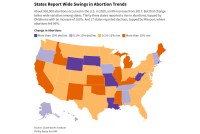
Three-Year Abortion Trends Vary Dramatically by State
About 930,000 abortions occurred in the U.S. in 2020, an 8% increase from 2017. But that nationwide figure belies dramatic variation among states — disparities expected to magnify in the wake of the Supreme Court’s decision to strike down Roe v. Wade.

Genetic Screening Results Just Got Harder to Handle Under New Abortion Rules
Most prenatal genetic tests aren’t performed until after 11 weeks’ gestation, and the time between drawing a sample and getting results may be additional weeks. But new abortion restrictions prevent parents from choosing an abortion when they find out their child has a genetic disease, and make the already difficult decision for them.
KHN’s ‘What the Health?’: Supreme Court Overturns ‘Roe’
It was expected, but the reality was still jarring: The Supreme Court has formally overturned Roe v. Wade, erasing the nearly 50-year-old guarantee of abortion rights nationwide. Joanne Kenen of the Johns Hopkins Bloomberg School of Public Health, Sarah Varney of KHN, and Laurie Sobel, associate director for women’s health policy at KFF, join KHN’s Julie Rovner for this special episode to talk about the decision and what happens next for reproductive health care.

‘It’s Not a Haven’: With Limited Capacity for Abortion Care, Minnesota Clinics Brace for Influx
In Minnesota, where abortion rights are protected by the state’s constitution, legal doesn’t necessarily mean accessible. The state has just eight clinics that provide abortions, and both providers and advocates say resources available aren’t enough to meet demand as nearby states reduce abortion access.

Five Things to Know Now That the Supreme Court Has Overturned Roe v. Wade
By undoing that landmark decision, the law of the land since 1973, the court has empowered states to set their own abortion restrictions — so where people live will determine their level of access.

A Post-‘Roe’ World in Georgia Will Mean More Restrictions — And More Political Battles
Abortion will almost certainly face new restrictions in Georgia. Patients will have a harder time finding services, and providers will have to figure out how to navigate the new landscape. Meanwhile, abortion opponents see the moment as an opportunity to put further restrictions on the procedure.

Conservatives on Supreme Court, as Expected, End Nationwide Right to Abortion
The 6-3 decision, telegraphed in May by an unprecedented leak of a draft opinion, eliminates the right to abortion as if it never existed at all.

Tribes Show Little Interest in Offering Abortions on Reservations Despite Speculation They Could
The notion that Native American nations could use tribal sovereignty to bypass state restrictions on abortion if Roe v. Wade falls is an idea largely proposed by non-Native groups.

Medi-Cal Will Cover Doulas at More Than Twice California’s Initial Proposed Rate
Under a budget passed by California lawmakers, the state will pay nonmedical workers who assist in pregnancy and labor up to $1,154 per birth through Medi-Cal, which is up significantly from Gov. Gavin Newsom’s initial offer of $450. Though it’s more than what most other states pay, many doulas say it falls short of the $3,600 they sought.

Two Tennessee Abortion Clinics, Awaiting High-Court Ruling, Grapple With Uncertainty
The landmark Roe v. Wade decision could soon be overturned. Two Knoxville-based providers of reproductive health care wonder how — and if — they will continue to serve their patients.
KHN’s ‘What the Health?’: Taking a Shot at Gun Control
The U.S. House passed a package of bills seeking to keep some guns out of the hands of children and teenagers, but its fate in the Senate remains a big question mark. Meanwhile, the Federal Trade Commission takes on drug and hospital prices. Alice Miranda Ollstein of Politico, Anna Edney of Bloomberg News, and Joanne Kenen of the Johns Hopkins Bloomberg School of Public Health and Politico join KHN’s Julie Rovner to discuss these issues and more. Also this week, Rovner interviews Cori Uccello of the American Academy of Actuaries about the most recent report from Medicare’s trustees board.