Latest KFF Health News Stories
Perhaps the political and media elite shouldn’t wait for an impending presidential election to pay attention to what Iowa has to say.
Getting The Bugs Out Of Health Reform
When it comes to making medical care not only cheaper but also better, reducing hospital infections is among the easiest changes to make–something reform really should be able to do, even in this political universe of such limited possibility.
About 11 percent of people ages 60 and older suffer from some kind of abuse every year. But as a part of health care overhaul legislation, lawmakers are taking steps that would for the first time establish a federal beachhead in fighting such abuse.
Evidence-Based Medicine: Hard For Some To Swallow
Patients often find it difficult to base medical decisions on study results. This story comes from our partner NPR News.
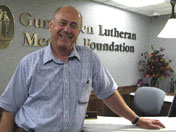
Why A Little City In Wisconsin Is The Best Place To Die
Nearly all adults who die in La Crosse, Wisconsin, have filled out “advance directives” – explicit instructions on what treatments they do and don’t want at the end of life. The medical ethicist who started the program says “We believe it’s part of good patient care.”
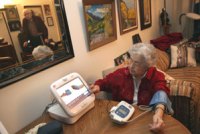
New Technology Helps Elderly Stay Healthy At Home
Devices that measure blood pressure and other health information may help the elderly and people with chronic conditions stay in touch with doctors while remaining at home. The technology could cut health spending by catching problems before they escalate into crises.

In Rural Kentucky, A Surprising Twist On The Health Debate
The people in Southeastern Kentucky have the poorest health in the country. Yet the area is rich with medical facilities. Health reform bills are unlikely to change much: One doctor says: “We have to transform the way we take care of people.”
Health Care In Hazard: Annie Fox
Health care has to be looked at in context, according to Annie Fox and Teana Burns of “Harlan Countians for a Healthy Community” in Kentucky.
Health Care In Hazard: Beverly May
Family nurse practitioner Beverly May, of the Kentucky Mountain Health Alliance, treats many patients with chronic diseases.
Health Care In Hazard: Gerry Roll
Gerry Roll says people don’t understand the health problems in southeastern Kentucky: “You can get whatever you need as far as traditional medical care goes. Yet we have the highest levels of chronic disease in the nation. So when I hear people talking about access to health care being a problem, I am livid.”
Health Care In Hazard: Cathy Nance
Six years ago, Cathy Nance had to have open heart surgery. Later, she had kidney cancer. Because of poor health and inability to work, she became homeless, until she was helped by Harlan Countians for a Healthy Community.

Tulsa Hospital Gives Medicare Patients Cash Back For Surgery
At Hillcrest Medical Center, which is testing a “bundled” Medicare payment system, some seniors get paid up to $1,157 for having surgery. The pilot program aims to save money and improve care by paying doctors and hospitals a lump sum and rewards the patients with part of the savings.
How Health Reform Bills Would – And Wouldn’t – Affect Illegal Immigrants
This brief explainer examines the number of uninsured illegal immigrants, where they go for health services and how they would fare if current health reform proposals pass.
Attacking Dartmouth Atlas Is Off-Target
Trying to discredit the Dartmouth data is a distraction from the real work that’s needed to understand and remedy the extraordinary amount of money spent on care that does not appear to make a difference in health.
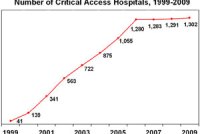
Lawmakers to Fight for Rural Hospitals Despite Budget Concerns On Reform
The finances of Hillsboro Medical Center in North Dakota improved after it got a “critical access” designation. Sens. Conrad, D-N.D., Wyden, D-Ore., Pryor, D-Ark., and Brownback, R-Kan., want to make it easier for other rural hospitals to get the designation as part of health reform.
Health Reform Proposals Enhance Children’s Dental Care
All of the Democratic health proposals would expand children’s dental care – a serious need. Currently about twice as many children are without dental coverage as those without medical coverage. At the same time, some insurance experts worry that the legislation may have unintended consequences, disrupting adult coverage.
Children’s Dental Health, By The Numbers
A list of some vital statistics about children’s oral health and dental insurance.
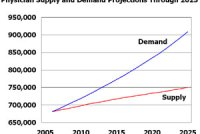
Health Bills In Congress Won’t Fix Doctor Shortage
Even as Congress moves to expand health insurance coverage to millions of Americans, it’s doing little to ensure there will be enough primary care doctors to meet the expected surge in demand for treatment. One prediction: the shortage of family doctors will reach 40,000 by 2019, as medical schools send about half the needed number of graduates into primary care medicine.
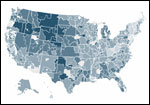
Why Are Health Costs So High? The System Pushes Doctors To Give Unnecessary Care
In the mid-1970s, an unconventional researcher named Jack Wennberg discovered an unusually high rate of hysterectomies in Lewiston, Maine. That was just one of a series of studies that led to a very surprising conclusion about health care: a large portion of the medical care Americans get is unnecessary.
‘Facility Fees’ Are Surprise Cost For Many Patients
Facility fees, charged to patients who get treatment in hospital-owned outpatient clinics, are used defray to hospital overhead, pay salaries and meet stringent standards, hospital officials say. Critics say the fees are a way to increase the cost of care when patients can least afford it.