Latest Morning Briefing Stories

Must-Reads Of The Week From Brianna Labuskes
Newsletter editor Brianna Labuskes wades through hundreds of health care policy stories each week, so you don’t have to.
KHN’s ‘What The Health?’: Could The ACA Really Go Away?
Is the entire Affordable Care Act unconstitutional? That was the question before a federal appeals court in New Orleans this week. Two of the three judges on the panel seemed inclined to agree with a lower court that the elimination of the tax penalty for failure to maintain coverage could mean the entire health law should fall. Also this week, President Donald Trump wants to improve care for people with kidney disease. Joanne Kenen of Politico, Kimberly Leonard of the Washington Examiner and Alice Miranda Ollstein of Politico join KHN’s Julie Rovner to discuss this, plus courts blocking efforts to require drug prices in TV ads and to kick Planned Parenthood out of the federal family planning program. Plus, Rovner interviews University of Michigan law professor Nicholas Bagley about the latest legal threat to the ACA.
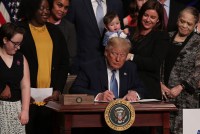
Using Obamacare Authority, Trump Aims To Shift Dialysis Care To Patients’ Homes
Only about 12% of dialysis patients get their treatment at home and the initiative aims to dramatically increase that number and move patients out of costly dialysis centers. It would also add provisions to boost the annual number of kidneys available for transplants.

Listen: Black Pharmacists Are Helping Close A Cultural Health Care Divide
KHN Midwest correspondent Cara Anthony is interviewed on Illinois Public Media’s “The 21st” by Niala Boodhoo about how black pharmacists are helping fill a void for African American patients seeking culturally competent care.

KHN filed multiple Freedom of Information Act requests over months, and the FDA responded Wednesday saying the data about device malfunctions is now publicly available online.

American Medical Students Less Likely To Choose To Become Primary Care Doctors
Only 41.5% of internal medicine positions were filled by U.S.-trained fourth-year students getting traditional medical degrees, the lowest share on record. Similar trends were seen this year in family medicine and pediatrics.
KHN’s ‘What The Health?’: All About ‘Medicare for All’
Need to know more about “Medicare for All?” It’s a top issue in the Democratic presidential primary campaign. This holiday week, we are rerunning our explainer on the subject. But first, KHN’s “What the Health?” host Julie Rovner talks to KHN’s Shefali Luthra about how health played out in the first Democratic candidate debates last week.

Have Cancer, Must Travel: Patients Left In Lurch After Hospital Closes
As the rural town of Fort Scott, Kan., grapples with the closure of its hospital, cancer patients face new challenges as they try to continue their treatments in different locations.
Must-Reads Of The Week From Brianna Labuskes
Newsletter editor Brianna Labuskes wades through hundreds of health care policy stories each week, so you don’t have to.
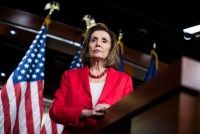
Pelosi Aims For Feds To Negotiate Drug Prices, Even For Private Insurers
A draft plan spearheaded by House Speaker Nancy Pelosi would allow the federal government for the first time to negotiate prices for 250 drugs for Medicare and apply those prices to all payers, including employers and insurers.

Delaney’s Debate Claim That ‘Medicare For All’ Will Shutter Hospitals Goes Overboard
At the first Democratic presidential primary debate, former U.S. lawmaker John Delaney outlined his opposition to “Medicare for All” by claiming it would prove fatal for hospitals. It’s really not that simple.
KHN’s ‘What The Health?’: Dems Debate Health Care
Democratic presidential candidates disagreed on how to fix health care in their first debate Wednesday, although they all called for boosting insurance coverage and lowering prices. Meanwhile, the Trump administration is keeping health care in the news, too, with a new plan to make medical prices more available to the public. Stephanie Armour of The Wall Street Journal, Rebecca Adams of CQ Roll Call and Anna Edney of Bloomberg News join KHN’s Julie Rovner to discuss this, plus the latest in news about bipartisan progress on catch-all legislation to address “surprise” medical bills. Plus, Rovner interviews NPR’s Jon Hamilton about the latest KHN-NPR “Bill of the Month” installment.

‘Medicare For All’ Emerges As Early Divide In First Democratic Debate
On the first of the Democrat’s two-night debate, only New York City Mayor Bill de Blasio and Massachusetts Sen. Elizabeth Warren offered full support for a single-payer system that would banish private health insurance.
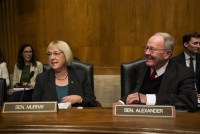
Senate Panel Makes Surprisingly Fast Work Of ‘Surprise Medical Bills’ Package
The measure also includes a range of provisions designed to address health care costs.

Middlemen Who Save $$ On Medicines — But Maybe Not For You
Guess who’s back grabbing headlines? Pharmacy benefit managers — those companies that serve as middlemen in the prescription drug pipeline.
Must-Reads Of The Week From Brianna Labuskes
Newsletter editor Brianna Labuskes wades through hundreds of health care policy stories each week, so you don’t have to.

Surgeons’ Opioid-Prescribing Habits Are Hard To Kick
A new data analysis by KHN and Johns Hopkins researchers shows that even as the CDC issued warnings, surgeons handed out many times the number of opioid pills needed for post-op pain.

Opioid Operators: How Surgeons Ply Patients With Painkillers
Even as awareness of the opioid crisis grew, prescribing habits of surgeons changed very little from 2011 to 2016, found a data analysis by KHN and Johns Hopkins Bloomberg School of Public Health. Use this interactive tool to search by doctor or practicing hospital.
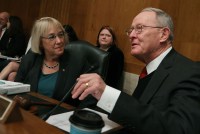
Sen. Alexander Details His Plan To Fix Surprise Medical Bills
A legislative package from Sens. Lamar Alexander (R-Tenn.) and Patty Murray (D-Wash.) would handle surprise medical bills by having insurers pay them the “median in-network rate,” meaning the rate would be similar to what the plan charges other doctors in the area for the same procedure.

Senators Agree Surprise Medical Bills Must Go. But How?
The Senate Health, Education, Labor and Pensions Committee is scheduled next week to mark up a massive legislative package on curbing health costs, but some of the details remain unresolved, including what formula to use to pay doctors and hospitals involved in surprise medical bills.