


Latest KFF Health News Stories
The drafters of the legislation, facing fierce opposition, had to make some compromises that led the public option to being much more moderate than originally intended. As the rest of the country starts to shift toward universal health care as a goal, there can be lessons learned about what kind of obstacles states and federal lawmakers will face. In other state insurance news: health law insurers are still making money off the exchanges, a church pays off medical debt, a look at Blue Shield’s decision to cover digital coaches, and more.
Major Hospital Systems In South Dakota, Iowa To Merge To Create Another Regional Giant
The deal between Sanford Health and UnityPoint Health is just the latest big merger in the industry. Deal-making is remaking the landscape by consolidating local hospital markets, forming regional powerhouses and creating new national giants. Hospital news comes out of Washington, Illinois, Florida and Texas.
Democrats Target Trump Administration’s Handling Of Medicaid With New Investigation
House Energy and Commerce Committee Chairman Frank Pallone Jr. (D-N.J.) is questioning CMS’ push for changes such as block grants and per-person spending caps.
FDA Issues Warning That Medtronic Insulin Pumps Are Vulnerable To Potential Hacks
Medtronic began notifying patients about the issue Thursday, saying a hacker could potentially connect wirelessly to a nearby insulin pump to change settings or control insulin delivery.
Gilead has said it will donate 2.4 million bottles per year of Truvada for PrEP to the effort, and has previously denied accusations that the negotiations to do so have any connections to patents. But on Thursday Rep. Elijah E. Cummings (D-Md.) demanded details from Gilead’s discussions with the U.S. government over the deal.
Ex-FDA Head Scott Gottlieb Takes Seat On Pfizer’s Board Of Directors
After resigning as FDA commissioner in March, Scott Gottlieb now joins the pharmaceutical industry he once regulated. In other pharma news: details emerge about House Speaker Nancy Pelosi’s drug pricing proposal; a few states explore importing drugs from outside the U.S.; the future of biologics; and more.
Doctors, lawyers and other advocates are suing the Trump administration over what they say is inhumane treatment for young immigrants in U.S. custody.
House Speaker Nancy Pelosi (D-Calif.) announced that in an effort to get the aid to the children at the border, she would give up her push to get the Senate to compromise on the Democrats’ demands. The decision came after an hour-long phone call with Vice President Mike Pence, who agreed that lawmakers would be notified within 24 hours after the death of a child in custody and to a 90-day time limit on children spending time in an influx facility, according to a source familiar with the agreement.
Multiple candidates spoke up about the need for gun control, including Rep. Eric Swalwell (D-Calif.), who decried the fact that parents now have to remember what their children are wearing when they set off for school, in case they have to identify their bodies later. Former Vice President Joe Biden suggested smart guns should be the way to go, while Sen. Bernie Sanders (I-Vt.) promised to “ban the sale and distribution” of assault weapons. South Bend Mayor Pete Buttigieg also took responsibility for the turmoil in his city in recent days stemming from the fatal shooting of a black man by a white police officer. Other health news out of the debate focuses on drug prices and ageism.
Immigration was a hot topic at the second night of debates as the crisis at the border escalates amid troubling reports of inhumane treatment. When asked if they would support granting health care coverage to U.S. residents, regardless of immigration status, all candidates raised their hands. Meanwhile, fact checkers call the candidates out on their rhetoric about babies being kept in cages.
“When we beat President Trump and Mitch McConnell walks into the Oval Office to do negotiations, who do you want when that door closes to fight for women’s rights?” Sen. Kirsten Gillibrand (D-N.Y.) asked during the second night of the Democratic debate. While she didn’t name former Vice President Joe Biden, her rival has gotten flak in recent weeks over his position on the Hyde amendment.
On the second night of the 2020 Democratic debates only Sens. Bernie Sanders (I-Vt.) and Kamala Harris (D-Calif.) raised their hands when asked if they would get rid of private insurance in favor of “Medicare for All.” Sen. Kirsten Gillibrand (D-N.Y.) said she supported Sanders’ plan, but added the stipulation that there would need to be a transition period built in. Others on stage, including former Vice President Joe Biden, championed universal care, but wouldn’t abolish the private insurance industry to get there.
Today’s early morning highlights from the major news organizations.
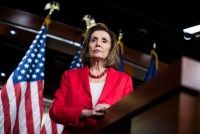
Pelosi Aims For Feds To Negotiate Drug Prices, Even For Private Insurers
A draft plan spearheaded by House Speaker Nancy Pelosi would allow the federal government for the first time to negotiate prices for 250 drugs for Medicare and apply those prices to all payers, including employers and insurers.
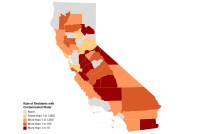
A Million Californians Don’t Have Clean Drinking Water. Where Do They Live?
More than 10% of residents in 12 California counties don’t have safe drinking water, according to a California Healthline analysis of state water data. State lawmakers have pledged $130 million a year to help bring clean drinking water to Californians who need it.

Trump Has Blessed States’ Exploration Of Importing Drugs. Will It Catch On?
Colorado, Florida and Vermont — with the support of President Donald Trump — are exploring plans to bring drugs across the border from Canada to help lower costs.

Health Care Gets Heated On Night 2 Of The Democratic Presidential Debate
Though the candidates tended to agree on the end goal of universal coverage, differences emerged over how to get there.
Media outlets report on news from New York, Michigan, North Carolina, California, Colorado, Wisconsin, Delaware, Arizona, Virginia, Missouri, Massachusetts and Maine.
Researchers worry that hate speech spread on social media is having an impact. “We count on the narrative that young people are more progressive and tolerant,” John Gerzema, CEO of The Harris Poll, told USA Today. “These numbers are very alarming and signal a looming social crisis in discrimination.” Also in public health news today: the sober movement, stem cells, and the growing phenomenon of retired people still taking care of their parents.
The decision comes several weeks after the company recalled 4.7 million Rock ‘n Play inclined sleepers because that product was associated with more than 30 baby deaths. No deaths or injuries have been attributed to the product recalled Thursday, but the company cited “safety concerns raised about inclined sleep products.” Consumer advocates and pediatricians have called for a ban on inclined sleep products.