


Latest KFF Health News Stories
The surprising request from one of the most conservative circuit courts in the country suggests that the judges who will hear the case over the health law’s constitutionality could toss out the appeal on procedural grounds. In that scenario, the lower court ruling overturning the law would stand. Legal experts have long-thought that the case would fail eventually and that the health law would prevail, but this move calls into doubt that prediction.
Hope For Unresponsive Patients: New Test Could Detect Consciousness, Predict Brain Recovery
Specialized computer analysis of routine EEG recordings will likely help guide treatment decisions in the excruciating first days after a brain injury, experts said. Public health news also focuses on lead exposure, low sperm count’s link to junk food, an AIDS documentary, breast cancer, the upside of foot calluses, safe grilling, a new scabies treatment, CBD and more.
Each year in the U.S., about 17,500 women and 9,300 men get HPV-related cancer through sexual activity. Previously the vaccine was recommended only for preteen girls and boys to protect them before exposure to the virus, with catch-up vaccinations through age 26. The CDC usually accepts the recommendations of its Advisory Committee on Immunization Practices.
A suit filed against the University of Chicago Medical Center and Google demonstrates the difficulties technology companies face in handling health data as they forge ahead into one of the most promising — and potentially lucrative — areas of artificial intelligence: diagnosing medical problems.
Beyond ‘Medicare For All’ Squabbles: Candidates Talk Drug Prices, Abortion And Immigration
The candidates on the first night of the Democratic debates vied to be the one who voters would believe could take on Big Pharma. The Democrats also touched on abortion rights, but did avoid some of the hot-button topic’s more controversial points. Other health care issues like immigration also made an appearance on Wednesday night. Meanwhile, Thursday brings Night Two of the crowded debates.
Sen. Elizabeth Warren (D-Mass.) was quick to defend “Medicare for All” and attack the insurance industry, saying that the other Democratic presidential candidates who argue it is impossible are just not willing to fight for it. Some of the more centrist candidates, including Minnesota Sen. Amy Klobuchar and former Maryland Rep. John Delaney, pushed back on Warren’s stance. “I think we should be the party that keeps what’s working and fixes what’s broken,” Delaney said.
Today’s early morning highlights from the major news organizations.

How Black Pharmacists Are Closing The Cultural Gap In Health Care
Independent black-owned pharmacies fill a void for African American patients looking for care that’s sensitive to their heritage, beliefs and values.
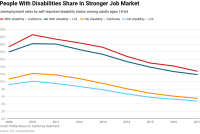
As The Economy Surges, A Dramatic Drop In Workers On Disability
Experts credit the lowest U.S. unemployment rate in 50 years, along with a more flexible work culture and tighter oversight of who qualifies for federal disability benefits.
Five Things We Found In The FDA’s Hidden Device Database
The Food and Drug Administration released two decades of previously hidden data containing millions of injuries or malfunctions by medical devices. Here’s what we’ve learned so far.

More Seniors Are Dying In Falls. Doctors Could Do More To Reduce The Risk.
Doctors should assess older adults for the risk of falling, come up with individualized plans and refer seniors to physical therapists, occupational therapists and evidence-based programs.

‘Medicare For All’ Emerges As Early Divide In First Democratic Debate
On the first of the Democrat’s two-night debate, only New York City Mayor Bill de Blasio and Massachusetts Sen. Elizabeth Warren offered full support for a single-payer system that would banish private health insurance.
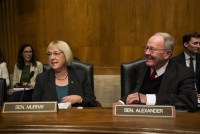
Senate Panel Makes Surprisingly Fast Work Of ‘Surprise Medical Bills’ Package
The measure also includes a range of provisions designed to address health care costs.
Opinion writers weigh in on these health care issues and others.
Different Takes: Push Back On Marijuana Legislation Tells Story Of Parents’ Concerns For Their Teens
Editorial pages focus on the marijuana legislation and its impact on public health.
Media outlets report on news from Alaska, New York, Florida, Minnesota, Arizona, Louisiana, North Carolina, Massachusetts, Rhode Island, Georgia, Iowa, Texas and Michigan.
Background checks can help authorities discover guns that aren’t registered with the state, gun safety advocates say, adding that the program could have prevented last week’s fatal shooting of rookie Sacramento police officer Tara O’Sullivan. Meanwhile, gun owner groups complain about the new ID requirement. News on gun violence is from Missouri, as well.
Many of the leaders of the gay rights movement during the Stonewall Riots have been denied the benefits of the revolution. Also, members of the LGBTQ community discuss the successes and failures of the movement with PBS.
As many as 31 million women might have had a traumatic brain injury and 21 million might have had multiple mild ones. Yet there’s little research on the lasting effects in women. In other public health news: worker safety, burnout, genetic testing, wildfires, heart attacks, menstrual products, and anger.
Link Between Common Class Of Drugs, Increase In Dementia Risk Deepened With Wide-Ranging Study
The researchers looked at anticholinergic drugs that work by blocking a chemical called acetylcholine, which acts as a neurotransmitter and is involved in many nervous system functions including muscle movements, heart rate, the widening of blood vessels, respiratory functions and muscle contractions in the stomach during digestion. Previous research has found a link between the drugs and dementia, but a new study strengthens those findings.