- KFF Health News Original Stories 3
- FDA Panelists Questioned Antidepressants in Pregnancy. But Doctors Call Them a Lifeline.
- How To Pick Health Insurance — In the Worst Year Ever
- Journalists Talk Increasing Insurance Costs, From Marketplace Plans to Employer Coverage
From KFF Health News - Latest Stories:
KFF Health News Original Stories
FDA Panelists Questioned Antidepressants in Pregnancy. But Doctors Call Them a Lifeline.
Participants in an FDA panel discussion warned the public about risks from using antidepressants in pregnancy. But mental health issues, including suicide and overdoses, are the leading cause of maternal death in the United States. Antidepressants are a safe, well-studied way to help prevent those deaths, medical experts say. (Lisa Rab, 12/15)
An Arm and a Leg: How To Pick Health Insurance — In the Worst Year Ever
As millions face skyrocketing health insurance premiums, the “An Arm and a Leg” team navigates their own limited options. (Dan Weissmann, 12/15)
Journalists Talk Increasing Insurance Costs, From Marketplace Plans to Employer Coverage
KFF Health News journalists made the rounds on national and local media recently to discuss topical stories. Here’s a collection of their appearances. (12/13)
Here's today's health policy haiku:
CONGRESS SHOULD FEEL IT, TOO
Rate hikes run amok.
Can reduce by canceling
Congress coverage!
- Philippa Barron
If you have a health policy haiku to share, please Contact Us and let us know if we can include your name. Haikus follow the format of 5-7-5 syllables. We give extra brownie points if you link back to an original story.
Opinions expressed in haikus and cartoons are solely the author's and do not reflect the opinions of KFF Health News or KFF.
Summaries Of The News:
With Clock Ticking Down On ACA Subsidies, Congress Is Still Deadlocked
The House will take up health care measures this week, but none of them will offer a straight, multiyear extension on enhanced Obamacare tax credits. Plus, more about the politics of Obamacare subsidies and what that could mean for U.S. health care.
Axios:
House Dems Face Choice On ACA Compromises
The House is teeing up a series of health care votes this week as Democrats face a choice on their willingness to back anything but a straight extension of enhanced Affordable Care Act subsidies. (Sullivan, 12/15)
The Baltimore Sun:
Rand Paul Has A Plan To Lower Health Care Costs
The Baltimore Sun recently sat down with Kentucky Republican Sen. Rand Paul in his Russell Senate office for a wide-ranging conversation that touched on childhood and COVID vaccine mandates, the power of federal health agencies, the influence of Big Pharma, the future of the Affordable Care Act, and his proposals to lower healthcare and insurance costs. The interview has been edited for clarity. (Williams, 12/15)
The Hill:
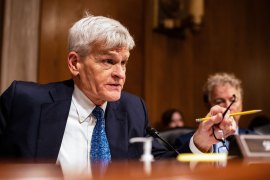
Cassidy Says ‘I Don’t Care Who Gets The Credit’ On ACA Subsidies Extension
Sen. Bill Cassidy (R-La.) called on Congress to pass legislation addressing expiring subsidies offered under the Affordable Care Act (ACA), regardless of who gets the credit. “Good policy is good politics,” Cassidy told host Chris Stirewalt on NewsNation’s “The Hill Sunday.” “Let’s not have a Republican plan or a Democratic plan, let’s have an American plan. If we address it, I don’t care who gets the credit.” (Rego, 12/14)
Politico:
15 Years Into Obamacare, The GOP Health Care Message Is As Muddled As Ever
With key Obamacare tax credits set to expire within weeks, Democrats have unified behind a simple message: extend the subsidies and keep health insurance premiums from spiking for more than 20 million Americans. Republicans, meanwhile, have engaged in a wide-ranging blame game while scrambling to coalesce behind an easily digestible plan to lower health care costs. That struggle comes to a head this week as House leaders move to put what they hope will be a consensus GOP plan up for a vote. (Carney, Lee Hill and Wu, 12/15)
The Guardian:
Obamacare Expiration Will Have ‘Death Spiral’ Effect On US Healthcare – Experts
With subsidies for Affordable Care Act (ACA) health insurance set to expire, Americans who rely on them will probably switch to plans with lower monthly premiums and high deductibles or decide not to purchase any coverage, which will have a serious and damaging impact on the entire sector, according to healthcare policy experts. The average amount ACA plan enrollees pay annually for premiums is estimated to more than double, from an average of $888 this year to $1,904 in 2026, according to a KFF analysis. (Berger, 12/14)
AP:
Without Subsidies, Health Care Will Get Costlier For These 3 Families
For one Wisconsin couple, the loss of government-sponsored health subsidies next year means choosing a lower-quality insurance plan with a higher deductible. For a Michigan family, it means going without insurance altogether. For a single mom in Nevada, the spiking costs mean fewer Christmas gifts this year. She is stretching her budget already while she waits to see if Congress will act. (Swenson, 12/13)
Also —
Axios:
Unresolved Health Policies Leave Billions In Spending Hanging
In a year dominated by vaccine policy, Medicaid and the Affordable Care Act, the Trump administration has set in motion other policy changes that are still in the works and could influence billions of dollars in health spending. (Goldman, 12/15)
KFF Health News:
KFF Health News’ ‘An Arm and a Leg’: How To Pick Health Insurance — In The Worst Year Ever
As health insurance premiums skyrocket in both employer-based plans and Affordable Care Act marketplaces, millions face worse choices than ever during this open enrollment.The team behind “An Arm and a Leg” examines their own limited options, walking through how they approached reading the fine print to weed out the worst choices — and potentially save thousands of dollars. (Weissmann, 12/15)
KFF Health News:
KFF Health News’ ‘On Air’: Journalists Talk Increasing Insurance Costs, From Marketplace Plans To Employer Coverage
KFF Health News chief Washington correspondent Julie Rovner discussed Affordable Care Act subsidies on Crooked Media’s What a Day on Dec. 10 and on Slate’s What Next on Dec. 9. (12/13)
Provision To Withhold Funding For Planned Parenthood Upheld In Court
The provision of the tax law enacted in July requires the government to stop making Medicaid reimbursements to a subset of the nation’s largest abortion providers, which Planned Parenthood says singled them out, The New York Times reports. The lawsuit will now return to a lower court.
The New York Times:
Government Can Withhold Funds From Planned Parenthood, Appeals Court Rules
A federal appeals court on Friday allowed the Trump administration to continue withholding funding from Planned Parenthood as mandated in the tax and domestic policy bill President Trump signed in July. The provision requires the government to stop making Medicaid reimbursements to a subset of the nation’s largest abortion providers, in a manner so narrowly defined that Planned Parenthood claimed it had been deliberately singled out. The decision clears the way for the provision to stay in effect and sends the group’s lawsuit back to a lower court to untangle. (Montague, 12/12)
Minnesota Public Radio:
Minnesota Planned Parenthood Faces Staff Complaints As Politics Add Financial Pressure
Nearly every week for three years, as the morning light crept over the horizon, Addie Evans climbed into her Subaru Outback, iced coffee in hand. The Cranberries played through the speakers as she turned up the volume and set off on the familiar drive north, leaving behind the rolling hills of Mankato for the Twin Cities metro. The Subaru was more than just Evans’ transportation. It also doubled as a mobile office, packed full of lists, a journal, her laptop, gloves, birth control pills, condoms and packages of misoprostol, a medication that can be used to end a pregnancy. (Zurek, 12/15)
More news on the Trump administration —
CNN:
Democratic States Sue Trump Administration Over New $100,000 Fee For H-1B Visas
A coalition of blue states is suing the Trump administration over its fee of $100,000 for H-1B Visas, several Democratic attorneys general announced on Friday. The Trump administration announced in September that it would be implementing the fee for H-1B visas, citing that the program for the visas is overused. California Attorney General Rob Bonta, joined by Massachusetts Attorney General Andrea Joy Campbell and New York Attorney General Letitia James and others, is leading the suit. (Gannon, 12/12)
The New York Times:
Trump’s Diversity Rollback Ends Crucial Aid For Deafblind Children Like Annie Garner
A program for deafblind children helped 3-year-old Annie Garner, born with poor vision and no ears, learn to communicate. The Trump administration cut the program’s funding over diversity goals. (Rao, 12/15)
The Washington Post:
What Rescheduling Of Marijuana Would Mean For Americans
As President Donald Trump prepares a historic relaxation of marijuana restrictions, Americans may wonder what it means for buying and using the country’s most popular illicit drug. The answer: Not that much. Reclassifying the drug from its status as the most tightly regulated Schedule I substance would not legalize or decriminalize cannabis. You won’t see it start to appear in pharmacies or liquor stores. (Hatzipanagos and Portnoy, 12/12)
The 19th:
There’s A Testosterone Crisis, The FDA Says — For Cisgender Men
The problem, the experts said, is that nobody has been listening to men. For too long, hormone therapy has been inaccessible for cisgender men who need it — or so said clinicians, professors and a pharmaceutical CEO gathered this week by the Food and Drug Administration (FDA). Testosterone, a controlled substance, should be deregulated and patients should be able to access it at pharmacies without stigma, they said. Low testosterone in men is not just a cosmetic issue, they claimed — it’s an American health crisis. (Rummler, 12/12)
Illinois Enacts Medical Aid-In-Dying Law Despite Controversy, Protests
Gov. JB Pritzker, a Democrat, said the legislation will help terminally ill patients "avoid unnecessary pain and suffering at the end of their lives." More news comes out of California, North Carolina, and Pennsylvania.
Chicago Tribune:
Gov. JB Pritzker Signs Illinois Medical Aid-In-Dying Law
Gov. JB Pritzker on Friday signed into law a measure that would allow doctors to help terminally ill people end their lives after the controversial bill barely cleared the Senate during the fall legislative session, where one skeptic said it could bring “a culture of death” to Illinois. (Gorner and Olander, 12/12)
Chicago Tribune:
Law To Make It Easier To Find Therapists Who Take Insurance
It may soon be easier for Illinois residents to find therapists who accept their insurance, after Gov. JB Pritzker signed a bill into law Friday taking aim at insurance reimbursement rates for behavioral health services. (Schencker, 12/12)
Health news from California, North Carolina, and Pennsylvania —
The New York Times:
California Hires Former C.D.C. Officials Who Criticized Trump Administration
Gov. Gavin Newsom plans to announce on Monday that California has hired two former leaders of the Centers for Disease Control and Prevention who accused the Trump administration of abandoning scientific standards. One is Susan Monarez, a former director of the C.D.C., who was fired by the White House in late August after Health and Human Services Secretary Robert F. Kennedy Jr. tried to remove her from her position and she resisted leaving. The other is Dr. Debra Houry, a former chief medical officer of the C.D.C., who quit partly in protest over the firing of Dr. Monarez. Both will now serve as consultants for the California Department of Public Health. (Rosenhall and Mandavilli, 12/14)
San Francisco Chronicle:
UCSF IBD Clinic Serves Adults 65+ With Specialized Care
A growing group with unique medical needs — older adults living with inflammatory bowel disease — now have a practice tailor-made for them: a UCSF clinic in San Francisco focusing exclusively on patients 65 and older. Among them is 81-year-old Peter Milkie. Every four weeks, he goes to an infusion center at UCSF Mount Zion for about an hour, where he gets a dose of a medication that helps with bloating, cramping and other symptoms of ulcerative colitis. (Ho, 12/14)
North Carolina Health News:
To Control Costs, State Health Plan Looks To Invest In Members’ Health
North Carolina Treasurer Brad Briner has made waves during his first year in office among state employees, who will see a sharp uptick in their health insurance premiums starting next month. Briner says the increase is necessary to address a shortfall in the North Carolina State Health Plan he found when he arrived. (Hoban, 12/15)
The New York Times:
A Powerful New Drug Is Creating A ‘Withdrawal Crisis’ In Philadelphia
Medetomidine, a veterinary sedative mixed into fentanyl, has sent thousands to hospitals, not only for overdose but for life-threatening withdrawal. It is spreading to other cities. (Hoffman, 12/15)
Measles Detected In Connecticut; US On Cusp Of Losing Elimination Status
An unvaccinated child traveler starting showing symptoms of the virus soon after returning home from abroad. As South Carolina becomes the latest hot spot, disease experts criticize the Trump administration — specifically HHS Secretary Robert F. Kennedy Jr. — for continued transmission.
The Hill:
Connecticut Reports First Measles Case In Years
Connecticut health officials on Thursday reported the state’s first case of measles since 2021 after an unvaccinated child traveled internationally. The case was detected in a child younger than 10 years in Fairfield County, according to a statement from the Connecticut Department of Public Health (DPH). (Mancini, 12/12)
The Hill:
US Set To Lose Measles Elimination Status; Experts Blame RFK Jr.
Measles outbreaks are spreading across the U.S., and the nation is likely to lose its status as a country where the disease is eliminated, something that infectious disease specialists say is directly related to President Trump’s appointment of Robert F. Kennedy Jr. as secretary of the Department of Health and Human Services (HHS). South Carolina this week quarantined at least 254 people after confirming more than two dozen measles cases in the state. It’s the latest in what has been the worst year for measles in the U.S. in recent history. (Choi, 12/13)
Politico:
This Vaccine Adviser To RFK Jr. Has Some Choice Words For His Critics
“Reckless” and “dangerous” were just two of the broadsides American medical groups lobbed at Robert F. Kennedy Jr.’s vaccine advisers after they recommended ending universal vaccination at birth for hepatitis B, the virus that causes liver failure and cancer. Retsef Levi, one of the advisers, has some choice words for the critics: They’re conflicted. They’re misleading the public. They’re party to gross, even criminal negligence, he says. (Röhn, 12/14)
The 19th:
Trump Points To Other Countries On Childhood Vaccines. The U.S. Isn’t Comparable.
President Donald Trump is showing increasing interest in reducing the number of routine childhood vaccines in the United States. As part of that justification, he and anti-vaccine activists are pointing to what’s recommended in other countries — an idea that medical and public health experts say ignores key differences about the United States’ health care system. (Rodriguez, 12/12)
NBC News:
At Meeting On Florida's Plan To End School Vaccine Mandates, Skeptics And Doctors Stand Off
The heated debate over Florida’s plan to revoke some school vaccine mandates was on full display Friday when state officials held a meeting for the public to weigh in on the proposed changes. The current plan, according to officials at the Florida Department of Health, is to eliminate requirements that children be vaccinated against hepatitis B, chickenpox and haemophilus influenza type B (Hib) in order to attend private or public schools in the state, including prekindergarten. (Bendix, 12/13)
On unhealthy air —
AP:
Ways To Improve Indoor Air Quality During The Holiday Season
The warm spices in gingerbread, the woodsy aroma of pine and fir trees, and the fruity tang of mulled wine are smells synonymous with the holiday season. Many people enjoy lighting candles, incense and fireplaces in their homes to evoke the moods associated with these festive fragrances. Burning scented products may create a cozy ambiance, and in the case of fireplaces, provide light and heat, but some experts want people to consider how doing so contributes to the quality of the air indoors. All flames release chemicals that may cause allergy-like symptoms or contribute to long-term respiratory problems if they are inhaled in sufficient quantities. (Mumphrey, 12/14)
Undark:
Amid A Satellite Boom, Scientists Warn Of Emissions Risks
Astronomers have been calling attention to whether so much activity high above might compromise their opportunities to study distant objects in the night sky. At the same time, other scientists have concentrated on the physical dangers. Several studies project a growing likelihood of collisions and space debris — debris that could rain down on Earth or, in rare cases, on cruising airplanes. More recently, however, scientists have become alarmed by two other potential problems: the emissions from rocket fuels, and the emissions from satellites and rocket stages that mostly ablate (that is, burn up) on reentry. (Gertner, 12/15)
GAO Report Indicates FDA Rarely Pulls Defective Medical Devices Off Market
The Government Accountability Office's new report says the FDA's understaffing means it has difficulty ensuring companies are taking critical steps to protect patients.
ProPublica, Pittsburgh Post-Gazette:
FDA Rarely Forces Companies To Recall Defective Devices: GAO Report
The Food and Drug Administration rarely uses its authority to pull dangerous medical devices off the market and is so poorly staffed that it’s sometimes unable to make sure companies are taking critical steps to protect patients during health emergencies, according to a new report by the Government Accountability Office. The inquiry by the congressional watchdog was requested nearly two years ago by top members of the Senate in the wake of an investigation about the 2021 recall of breathing machines that threatened the health of millions of Americans. (Hamill, Dai and Medill Investigative Lab, 12/12)
More pharmaceutical updates —
MedPage Today:
Anticoagulant Reversal Drug Pulled From U.S. Market
Andexanet alfa (Andexxa) will officially be taken off the U.S. market this month as an emergency reversal medication for contemporary blood thinners. "The Biologics License Application for Andexxa has been withdrawn for commercial reasons, effective December 22, 2025," a spokesperson from drugmaker AstraZeneca said in an email to MedPage Today. (Lou, 12/12)
Bloomberg:
Sanofi MS Drug Takes Double Hit With FDA, Trial Setbacks
Sanofi’s experimental multiple sclerosis drug got hit with two setbacks on Monday: a regulatory delay in the US as well as a failure in a late-stage clinical trial. The US Food and Drug Administration decision on the medicine, called tolebrutinib, to treat an advanced form of multiple sclerosis will likely be delayed, with further guidance from the regulator at the end of the first quarter, the French drugmaker said. The shares plunged as much as 6.4% in early Paris trading, the biggest decline in more than three months. (Furlong, 12/15)
Bloomberg:
Novo’s High-Dose Wegovy Gets Green Light From EU Drug Panel
Novo Nordisk A/S said its high-dose version of blockbuster Wegovy has been cleared by the European Union’s drug advisory board, opening the way for use of a shot that delivers more weight loss than the standard dosage. The European Medicines Agency’s drug review committee recommended allowing the new high-dose shot based on the results from large clinical trials in people with obesity, with and without diabetes, Novo said in a statement. The committee’s backing means the shot could be available early in the new year, pending final approval from the European Commission, Novo said. (Kresge, 12/12)
The Washington Post:
Demand Climbs For Trump-Boosted Autism Treatment, But Doctors Are Divided
Pediatrician Kristin Sohl has lost count of how many times parents of children with autism have asked her for a prescription for leucovorin — the drug thrust into the spotlight after President Donald Trump touted it at a White House event this fall. Since September, despite the rising queries, Sohl has typically told her patients no. Early clinical trials of the drug showed hints of promise in boosting communication and cognition for some children with autism. But the studies have been small, often just a few dozen participants. (Eunjung Cha, 12/14)
KFF Health News:
FDA Panelists Questioned Antidepressants In Pregnancy. But Doctors Call Them A Lifeline
Before giving birth to her second child, Heidi DiLorenzo was anxious. She worried about her blood pressure, and the preeclampsia that prompted her to be hospitalized twice during the pregnancy. She worried that some terrible, unnamed harm would come to her 3-year-old daughter. She worried about her ability to love another baby as much as she loved her first. But DiLorenzo, an attorney in Birmingham, Alabama, did not worry about taking Zoloft. She had used the medication to treat anxiety before she had her first child, and she continued it throughout that pregnancy and this latest one. (Rab, 12/15)
In other health care industry news —
The New York Times:
Private Equity Finds a New Source of Profit: Volunteer Fire Departments
Rural departments have long relied on cheap software solutions to keep their operations running. But fire chiefs report sharp price increases as investors have entered the market. (Baker, 12/14)
Modern Healthcare:
Mass General Brigham Launches AI Spinoff Company AIwithCare
Mass General Brigham has launched a spinoff artificial intelligence company, the system said Friday. AIwithCare, developed by researchers at Mass General, aims to speed up the process of finding patients for clinical trials. It offers a tool, the RAG-Enabled Clinical Trial Infrastructure for Inclusion Exclusion Review, that the health system said streamlines finding eligible clinical trial participants and enrolling them faster than using standard manual entry procedures. (DeSilva, 12/12)
Modern Healthcare:
CMS’ ACCESS Model Has Headspace, Cadence Cautiously Optimistic
Health tech companies are eager to see if they will benefit from a new payment model designed to reward providers that improve outcomes for traditional Medicare beneficiaries with chronic conditions. Earlier this month, the Center for Medicare and Medicaid Innovation announced the creation of its ACCESS (Advancing Chronic Care with Effective, Scalable Solutions) Model. The agency is looking for Medicare Part B-enrolled organizations that offer tech-enabled care that may include remote patient monitoring, wearables, coaching, behavioral support, patient education and medication management. (Perna, 12/12)
Tanning Bed Use Causes Significant Skin Cell Damage, Study Finds
The Northwestern Medicine study showed that tanning bed use not only increases skin cancer risk but also damages skin cell DNA. The study was prompted by recurrent melanoma in a high number of women under 50. Also: cervical, ovarian, and breast cancer; mental health; and gun violence.
Chicago Tribune:
Tanning Bed Use Damages DNA Of Skin Cells, New Study Finds
Though tanning may be far from the minds of chilly Illinois residents at the moment, a new study out of Northwestern Medicine is highlighting the risks of tanning beds, and showing how they can lead to skin cancer. Not only is the use of tanning beds associated with nearly triple the risk of developing melanoma, but heavy users of tanning beds also had more damage to the DNA of their skin cells, according to the study published Friday in the peer-reviewed journal Science Advances. (Schencker, 12/12)
More about cancer —
The Baltimore Sun:
Maryland Researchers' System Could Wipe Out Cervical Cancer Worldwide
Researchers at the University of Maryland, College Park, tested a program they say could eliminate cervical cancer by analyzing and recommending improvements to national vaccination strategies for the virus that causes the cancer. (Hille, 12/12)
The Washington Post:
Risk-Based Screenings Could Beat One-Size-Fits-All Yearly Mammogram, Study Says
A new study suggests that tailoring breast cancer screening to a woman’s individual risk can be as safe as yearly mammograms while reducing unnecessary testing for some and better targeting of care for others. Breast cancer is one of the leading causes of cancer death for women around the world, affecting about 1 in 8 women in the United States. (Johnson and Eunjung Cha, 12/12)
AP:
Jury Awards $40M In Case Alleging Johnson's Baby Power Caused Cancer
A Los Angeles jury awarded $40 million on Friday to two women who claimed that talcum powder made by Johnson & Johnson caused their ovarian cancer. The giant health care company said it would appeal the jury’s liability verdict and compensatory damages. The verdict is the latest development in a longstanding legal battle over claims that talc in Johnson’s Baby Powder and Shower to Shower body power was connected to ovarian cancer and mesothelioma, a cancer that strikes the lungs and other organs. (12/13)
On social media and mental health —
The Washington Post:
TikTok Algorithm Favors Mental Health Content, Analysis Finds
TikTok’s algorithm favors mental health content over many other topics, including politics, cats and Taylor Swift, according to a Washington Post analysis of nearly 900 U.S. TikTok users who shared their viewing histories. The analysis found that mental health content is “stickier” than many other videos: It’s easier to spawn more of it after watching with a video, and harder to get it out of your feed afterward. (Merrill, Hunter, Fox and Shapiro, 12/12)
On the gun violence epidemic —
The Washington Post:
She Survived A School Shooting In High School. It Happened Again At Brown.
In 2019, a 16-year-old student at Saugus High School in Santa Clarita, California, pulled a gun from his backpack and opened fire on his classmates in the school quad. Mia Tretta, then a 15-year-old freshman, was shot in the abdomen and hospitalized. Her best friend was killed. The shooting shaped Tretta’s decision to attend Brown University, in a state she deemed to have strong gun laws and located far away from home, on the opposite coast from the trauma that upended her time in high school. (Wu, 12/14)
NPR:
What To Know About The Brown University Shooting
A gunman remains at large, two days after opening fire inside a Brown University academic building, killing two students and injuring nine others. Officials in Providence, R.I., said Sunday evening that police are releasing a man in his 20s who was briefly held as a person of interest. His release leaves authorities without any known suspect. "We have a murderer out there," Attorney General Peter Neronha said at a news conference late Sunday. (Hernandez and Rosman, 12/15)
Bloomberg:
Father, Son Blamed For Bondi Beach Massacre That Killed 16
Australian Prime Minister Anthony Albanese and state leaders pledged to strengthen gun laws a day after a father and son killed 15 people in the nation’s deadliest terror attack. The National Cabinet has tasked police ministers and attorneys-general to explore options including caps on the number of firearms an individual can hold, limits on open-ended licenses, stricter rules on the allowed types of guns and modifications, and a requirement that license holders be Australian citizens. (Chandler and Whitley, 12/15)
Viewpoints: Employers Can Ensure Fair Access To GLP-1s; Testosterone Won’t Stop Aging Or Menopause
Editorial writers delve into these public health issues.
The Washington Post:
Here's The Key To Making GLP-1s More Affordable
To democratize access to these weight-loss drugs, we need flexible, employer-driven solutions. (Roger W. Ferguson Jr. and Grant Verstandig, 12/15)
Bloomberg:
Testosterone Isn’t A Magic Cure-All For Menopause Or Aging
In the last year or so, health influencers — and a lot of women on social media — have talked up testosterone therapy as a kind of perimenopausal panacea. They promise boundless energy, crisper thinking, better sleep — and, most of all, a roaring libido. Sounds awfully tempting. (Lisa Jarvis, 12/13)
The Atlantic:
Obamacare Changed The Politics Of Health Care
Here are some data points that Republicans ought to bear in mind as they contemplate their health-care strategy. (Jonathan Chait, 12/12)
Stat:
Metabolism Should Be A First-Class Target In Cancer Treatment
In oncology we return, again and again, to first principles. The cell is our unit of life and of medicine. When a normal cell becomes malignant, it does not merely divide faster; it eats differently. It hoards glucose, reroutes amino acids, siphons lipids, and improvises when a pathway is blocked. We have learned to poison its DNA, to derail its signaling, to enlist T cells as sentinels. We have been slower to ask a simpler question that sits at the cell’s kitchen table: What if we change what a tumor can eat? (Siddhartha Mukherjee, 12/15)
Stat:
Brain Death Doesn't Always Look Like Death
Bullets tore through Michael Thompson’s car at a stop sign, ending the life of a 35-year-old father in an instant. Just minutes earlier, he had dropped his 8-year-old daughter, Emma, at dance class, her pink tutu bouncing as she waved goodbye. (Raya Elfadel Kheirbek, 12/15)