Latest KFF Health News Stories
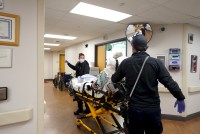
As Hospitals Fill Up, Paramedics Spend More Time Moving Patients, Less on Emergencies
Gunnison paramedics cover the largest response zone in Colorado. Because of covid and the lack of nearby hospital beds, patients increasingly are transported long distances, leaving few ambulances to respond to emergencies.
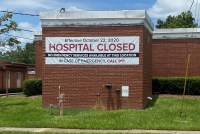
A Rural Georgia Community Reels After Its Hospital Closes
A record number of hospitals closed in rural America last year. For the residents of Cuthbert, Georgia, the loss has meant many problems, including delayed care for emergencies that can turn deadly.

The ER Charged Him $6,500 for Six Stitches. No Wonder His Critically Ill Wife Avoided the ER.
With few options for health care in their rural community, a Tennessee couple’s experience with one outrageous bill could have led to a deadly decision the next time they needed help.
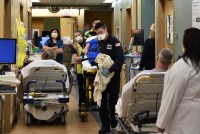
ERs Are Swamped With Seriously Ill Patients, Although Many Don’t Have Covid
Certain patients who couldn’t get in to see a doctor earlier in the pandemic, or were avoiding the covid risks inside hospitals, have become too sick to stay away. Many ERs now struggle to cope with an onslaught of demand.
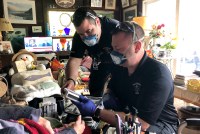
In Maine, Vaccine Mandate for EMTs Stresses Small-Town Ambulance Crews
The covid vaccination rate for first responders in the state is more than 95%. But it’s lower in more rural areas, where ambulance crews can’t function if even just a few people quit.

Q&A: How Will California’s New 988 Mental Health Line Actually Work?
California Assembly member Rebecca Bauer-Kahan, who authored legislation to create and fund the state’s new 988 phone line for mental health emergencies, spoke with KHN about the effort and what more will be needed to create a full-fledged response network for people experiencing mental health crises.
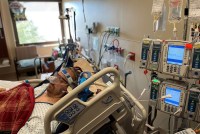
ICUs Are Filled With Covid — And Regret
Unvaccinated people are filling intensive care beds and dying of covid in record numbers in Tennessee and other Southern states. Many tell their nurses and doctors they regret the decision not to get the vaccine when they could.

Telehealth’s Limits: Battle Over State Lines and Licensing Threatens Patients’ Options
Televisits took off during the worst days of the pandemic, but states are now rolling back the temporary rules that facilitated them. That’s adding fuel to debates about states’ authority over medical licensing.

From Uber Rides to Patient Advocates: What It Takes to Increase ER Addiction Treatment
Despite widespread consensus on the importance of addiction treatment in the ER, many hospitals fail to screen for substance use, offer medications to treat opioid use disorder or connect patients to follow-up care. But some are working to change that.

How a Hospital and a School District Teamed Up to Help Kids in Emotional Crisis
A Long Island, New York, school system has partnered with a hospital to create a mental health safety net for children. The heart of the initiative is a new behavioral health center, which the hospital opened to help children avoid unnecessary hospitalization.

At Urgent Care, He Got 5 Stitches and a Big Surprise: A Plastic Surgeon’s Bill for $1,040
The Biden administration is weighing how to treat urgent care clinics as part of broad regulations banning surprise, out-of-network medical bills. At the heart of the matter: What counts as an emergency?

Watch: Cyclist Hits Olympic-Size Medical Bills After Crash
KHN Editor-in-Chief Elisabeth Rosenthal appears on “CBS This Morning” to discuss the latest installment of the KHN-NPR Bill of the Month investigative series.

A Chilling Cure: Facing Killer Heat, ERs Use Body Bags to Save Lives
Doctors in Washington state used human body bags filled with ice and water to rapidly cool the sickest patients affected by record heat last month.
Hospital ‘Trauma Centers’ Charge Enormous Fees to Treat Minor Injuries and Send People Home
Only severely injured patients are supposed to be billed for “trauma team alert” fees that can exceed $50,000.

How ERs Fail Patients With Addiction: One Patient’s Tragic Death
Two intractable failings of the U.S. health care system — addiction treatment and medical costs — come to a head in the ER, where patients desperate for addiction treatment arrive, only to find the facility may not be equipped to deal with substance use or, if they are, treatment is prohibitively expensive.
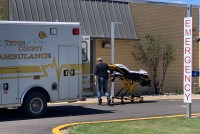
Rural Ambulance Services Are in Jeopardy as Volunteers Age and Expenses Mount
Experts say rural communities must find new models to keep emergency services afloat as more 911 calls go unanswered.

‘An Arm and a Leg’: Tips for Fighting Medical Bills from ProPublica’s Marshall Allen
Veteran health journalist Marshall Allen has been exposing health care grifters for years. Now he’s written a book about how to fight them. Host Dan Weissmann spoke with Allen about some of the best tips from “Never Pay the First Bill: And Other Ways to Fight the Health Care System and Win.”

A Hospital Charged $722.50 to Push Medicine Through an IV. Twice.
A college student never got an answer for what caused her intense pain, but she did get a bill that totaled $18,736 for an ER visit. She and her mom, a nurse practitioner, fought to understand all the charges.
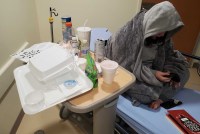
No Vacancy: How a Shortage of Mental Health Beds Keeps Kids Trapped Inside ERs
What’s known as emergency room boarding of psychiatric patients has risen between 200% and 400% monthly in Massachusetts during the pandemic — and the problem is widespread. The CDC says emergency room visits after suicide attempts among teen girls were up 51% earlier this year as compared with 2019.

In Alleged Health Care ‘Money Grab,’ Nation’s Largest Hospital Chain Cashes In on Trauma Centers
HCA charges patients an “activation fee” of up to $50,000 for trauma teams at centers located in half its 179 hospitals — and they often don’t need trauma care, an analysis of insurance claims data shows.