Latest KFF Health News Stories
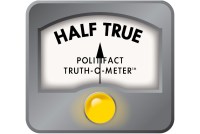
Oncology Doctors Say the Build Back Better Act Will Slash Cancer Care Funding — A Skewed Argument
The Community Oncology Alliance is targeting the prescription drug provisions of the Build Back Better Act, saying they will trigger deep cuts in oncologists’ pay, causing clinics to close and health care costs to rise. But it leaves out some important details.

Florida Sen. Rick Scott Off Base in Claim That Rise in Medicare Premiums Is Due to Inflation
The Republican senator says President Joe Biden’s “inflation crisis” caused Medicare to raise monthly premiums, which will add hundreds of dollars to beneficiaries’ costs. But Medicare experts say inflation was not to blame and most beneficiaries will shoulder a much smaller increase than what Rick Scott claims.
KHN’s ‘What the Health?’: Boosting Confusion
Federal health officials appear poised to extend a recommendation for covid boosters to all adults, following moves by some governors and mayors to broaden the eligible booster pool as caseloads rise. Meanwhile, the Food and Drug Administration finally has a nominee to head the agency: former FDA chief Robert Califf. And Medicare premiums for consumers will likely rise substantially in 2022, partly due to the approval of a controversial drug to treat Alzheimer’s disease. Tami Luhby of CNN, Sarah Karlin-Smith of the Pink Sheet and Rachel Cohrs of Stat join KHN’s Julie Rovner to discuss these issues and more. Also this week, Rovner interviews Dan Weissmann, host of the “An Arm and a Leg” podcast.

Journalists Offer Primers on Medicare Open Enrollment and Death Benefits Amid Covid
KHN and California Healthline staff made the rounds on national and local media this week to discuss their stories. Here’s a collection of their appearances.

La inscripción de Medicare es temporada abierta para estafadores
Funcionarios federales dicen que están aumentando las quejas de personas mayores engañadas para que compren pólizas sin su consentimiento, o atraídas por información cuestionable, que pueden no cubrir sus medicamentos ni incluir a sus médicos.
KHN’s ‘What the Health?’: Why Health Care Is So Expensive, Chapter $22K
Congress is making slow progress toward completing its ambitious social spending bill, although its Thanksgiving deadline looks optimistic. Meanwhile, a new survey finds the average cost of an employer-provided family plan has risen to more than $22,000. That’s about the cost of a new Toyota Corolla. Alice Miranda Ollstein of Politico, Anna Edney of Bloomberg News and Rebecca Adams of CQ Roll Call join KHN’s Julie Rovner to discuss these issues and more. Also this week, Rovner interviews Rebecca Love, a nurse academic and entrepreneur, about the impending crisis in nursing.
Medicare’s Open Enrollment Is Open Season for Scammers
Medicare officials say complaints are rising from seniors lured into private plans with misleading information or enrolled without their consent. In response, officials have threatened to penalize the private companies selling Medicare Advantage and drug plans if they or agents working on their behalf mislead consumers.

Researcher: Medicare Advantage Plans Costing Billions More Than They Should
Some insurers pocketed ‘eye-popping’ overpayments, billing records show.

La catarata de información sobre la inscripción a Medicare no explica bien las opciones de Medigap
En parte porque las políticas sobre el acceso y los costos de Medigap cambian dependiendo del estado, o por la información confusa, muchos beneficiarios no eligen lo que más les conviene.
Medicare Enrollment Blitz Doesn’t Include Options to Move Into Medigap
TV ads and mailings targeting seniors tout Medicare Advantage plans this time of year, but millions choosing traditional Medicare make a costly and difficult decision about Medigap coverage, which gets much less attention.

Investigaciones han demostrado que la pérdida de la audición puede socavar la calidad de vida de las personas mayores, lo que conduce a la soledad, el aislamiento, la depresión, y trastornos de la comunicación.

La nueva legislación bajaría dramáticamente el precio de la insulina, y lograría que el impacto de los precios astronómicos no recaigan en el consumidor.
Democrats Plan to Expand Medicare Hearing Benefits. What Can Consumers Expect?
KHN answers questions for seniors about how this new benefit might work.
Despite Restraints, Democrats’ Drug Pricing Plan Could Still Aid Consumers
A last-minute agreement among lawmakers restored a provision seeking to hold down rising costs of prescription medicines. Although details on which drugs will be targeted remain sketchy, the legislation would help patients buying insulin and cap Medicare beneficiaries’ out-of-pocket drug costs at $2,000 a year.
KHN’s ‘What the Health?’: Compromise Is Coming — Maybe
Democratic negotiators on Capitol Hill appear to be nearing a compromise on President Joe Biden’s social spending agenda, spurred partly by Democratic losses on Election Day in Virginia. Meanwhile, the Supreme Court hints it might allow abortion providers to sue Texas over its restrictive new ban. But the relief, if it comes, could be short-lived if the court uses a second case, challenging a law in Mississippi, to weaken or overturn Roe v. Wade. Alice Miranda Ollstein of Politico, Margot Sanger-Katz of The New York Times and Mary Ellen McIntire of CQ Roll Call join KHN’s Julie Rovner to discuss these issues and more. Also this week, Rovner interviews KHN’s Rae Ellen Bichell, who reported and wrote the latest KHN-NPR “Bill of the Month” feature about an emergency bill for a nonemergency birth.
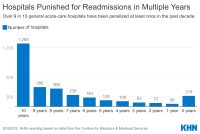
Few Acute Care Hospitals Escaped Readmissions Penalties
More than 9 in 10 general acute-care hospitals have been penalized at least once in the past decade.
Journalists Explore Shadow Pandemics of Hospital Violence and Grieving Children
KHN and California Healthline staff made the rounds on national and local media this week to discuss their stories. Here’s a collection of their appearances.

If Congress Adds Dental Coverage to Medicare, Should All Seniors Get It?
Health equity advocates see a once-in-a-generation opportunity to provide a dental benefit to millions of older Americans as Congress considers expanding Medicare services. But complicating that push is a debate over how many of the more than 60 million Medicare recipients should receive dental coverage.

What’s Scarier Than Covid? Halloween Health Haikus
A huge thank you to our readers who participated in our third annual KHN Halloween Haiku Contest. Based on a review by our expert panel of judges, we unmask the winner and serve a sampling of finalists.

Medicare Punishes 2,499 Hospitals for High Readmissions
The federal government’s hospital penalty program finishes its first decade by lowering payments to nearly half the nation’s hospitals for readmitting too many Medicare patients within a month. Penalties, though often small, are credited with helping reduce the number of patients returning for another Medicare stay within 30 days.