Latest KFF Health News Stories

New Round of Medicare Readmission Penalties Hits 2,583 Hospitals
Starting today, Medicare is keeping half a billion dollars in payments from 83% of general hospitals for having too many patients come back.

Pediatricians Stand By Meds For ADHD, But Some Say Therapy Should Come First
The American Academy of Pediatrics is out with new guidelines on ADHD that some hoped would boost the role of behavioral interventions before medications. But the AAP stuck by its recommendation that children 6 and older should be given medicine combined with therapy after diagnosis.

Her Biopsy Report Was Benign. But The Bill Is A Spot Of Contention.
After a test to rule out cancer, Brianna Snitchler faced a $2,170 facility fee for the hospital’s radiology room used that day.

States Target Vaping With Bans. In California, The Action Is Local.
Several states have adopted bans on vaping products, but California isn’t going that far. Instead, cities and counties in the Golden State are stepping in to prohibit the sale of flavored tobacco products within their jurisdictions — or ban the sale of e-cigarettes altogether.

KHN Files Lawsuit To Force Feds To Disclose Medicare Advantage Audits
The Freedom of Information Act lawsuit could spur the Centers for Medicare & Medicaid Services to release audits that document up to $650 million in overcharges.

Insurers Test New Way To Cut Maternity Care Costs: Bundling
More insurers are experimenting with paying health care providers one lump sum to cover the cost of maternity care. Physicians and insurers hope the model — known as bundled payments — will help improve health outcomes.
KHN’s ‘What The Health?’: Impeachment And The Health Agenda
Washington is abuzz with impeachment talk, but what impact would such a move have on congressional action on prescription drug prices and surprise bills? Also, a study out this week shows that health insurance costs for both employers and workers continue to rise. This week, Joanne Kenen of Politico, Paige Winfield Cunningham of The Washington Post and Rebecca Adams of CQ Roll Call join KHN’s Julie Rovner to discuss these issues and more.

Uber And Lyft Ride-Sharing Services Hitch Onto Medicaid
Ride-sharing companies promise better service for enrollees and lower costs for states. But the services are not for everyone on Medicaid.

The Delicate Issue Of Taking Away A Senior’s Smartphone
Knowing when — and how — to limit a loved one’s access to digital devices is akin to taking their car keys.

In Tiny Doses, An Addiction Medication Moonlights As Treatment For Chronic Pain
Naltrexone, commonly used for opioid and alcohol use disorders, may also help patients with chronic pain — when prescribed in low doses. But few doctors or patients seem to know about it.
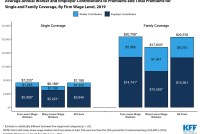
As Health Care Costs Rise, Workers At Low-Wage Firms May Pay A Larger Share
People at companies with large numbers of people earning $25,000 or less faced bigger deductibles for single coverage and were asked to pony up a larger share of their income in premiums than those at other firms.

Meet The Health Officials Who Alerted The World To The Alarming Vaping Illness
Without the teamwork, communication and quick action of several veteran health officials in Wisconsin, the world might not know about the vaping illness the U.S. is battling today. This is their story.

College Won’t Be Fun If You’re Not Healthy. Take This Advice About Health Insurance.
As you enter college this fall, health insurance may not be at the top of your mind. But it’s important to have coverage if you have a chronic condition or if something unexpected happens. Luckily, college students have several options.

5 Takeaways From Court Arguments On Trump’s New Abortion Referral Rule
The legal fight over the Trump administration’s new rule barring health clinics that receive federal family planning grants from referring women for abortion services played out before a divided federal appeals court Monday. Here are key takeaways.
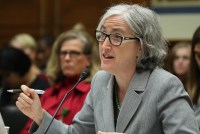
At Raucous Hearing, No Unity On Vaping Issues
A hearing before a House Oversight and Reform Committee panel on how to address the crisis of respiratory injuries related to vaping turned surprisingly partisan.

As Off-Label Use Spreads, Supplies Of Niche Drugs And Patients’ Patience Grow Short
The reasons behind one particular shortage of a therapy known as IVIG are complicated, stemming from increased demand and the medication’s long production window.

It’s Not Just Insulin: Diabetes Patients Struggle To Get Crucial Supplies
The latest technology makes managing Type 1 diabetes much easier. But managing insurance company rules for the supplies is a big obstacle for some patients.

Want To Reduce Suicides? Follow The Data — To Medical Offices, Motels And Even Animal Shelters
An Oregon epidemiologist is using data to find patterns in suicides, then offering prevention training at the motels where people keep taking their lives, the animal shelter where they give away their pets, the pain clinics where patients struggle. Her model is spreading to New York, California and elsewhere.
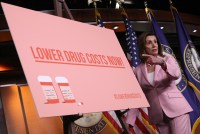
Hill Hodgepodge: Pelosi Draws From Democrats, GOP And Trump For Drug Plan
The House speaker announced her plan for lowering drug prices, which includes negotiations between drugmakers and federal health officials.
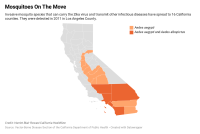
Invasive Mosquitoes Plunge Deeper Into California
Invasive mosquito species capable of carrying dangerous viruses such as Zika, dengue and yellow fever have been detected in 16 California counties. There’s no evidence the mosquitoes have transmitted these diseases within the state, but health officials urge residents to take steps to slow their spread.