Latest Morning Briefing Stories

Abortion Debate Ramps Up in States as Congress Deadlocks
Abortion is a top issue for state lawmakers meeting for their first full sessions since Roe v. Wade was overturned.

Watch: Anti-Abortion Activists Rally in DC in a Watershed Moment for Their Movement
Friday’s annual March for Life rally in Washington, D.C., held for the first time since Roe v. Wade was overturned, signals a new chapter in the anti-abortion movement.

The ‘KHN Health Minute’ Debuts on CBS News Radio
Launched Jan. 12, the “Health Minute” brings original health care and health policy reporting from the KHN newsroom to the airwaves each week.

NFL Has Been Slow to Embrace Mental Health Support for Players
The shocking on-field cardiac arrest of Buffalo Bills safety Damar Hamlin traumatized some players and underscores the need for more consistent mental health support in a league whose athletes are trained to show no weakness.

Luring Out-of-State Professionals Is Just the First Step in Solving Montana’s Health Worker Shortage
Two proposals would make it easier for professionals with out-of-state licenses to work in Montana, but that tactic likely won’t be enough to fill the demand for mental health providers.
The debt ceiling crisis facing Washington puts Medicare and other popular entitlement programs squarely on the negotiating table this year as newly empowered Republicans demand spending cuts. Meanwhile, as more Americans than ever have health insurance, the nation’s health care workforce is straining under the load. Joanne Kenen of the Johns Hopkins Bloomberg School of Public Health and Politico, Tami Luhby of CNN, and Victoria Knight of Axios join KHN’s chief Washington correspondent Julie Rovner to discuss these topics and more. Plus, for extra credit, the panelists recommend their favorite health policy stories of the week they think you should read, too.

A $30 Million Gift to Build an Addiction Treatment Center. Then Staffers Had to Run It.
Howard Buffett, son of billionaire investor Warren Buffett and chairman of his own charitable foundation, gave $30 million to build an addiction treatment center in the central Illinois community where he farms. But the money was a one-time gift for infrastructure, so the clinic is on its own to keep it running.

Readers and Tweeters Diagnose Greed and Chronic Pain Within US Health Care System
KHN gives readers a chance to comment on a recent batch of stories.

After a Brief Pandemic Reprieve, Rural Workers Return to Life Without Paid Leave
Coastal and politically progressive states have passed stronger paid sick and family leave policies, but many workers in rural America are left out, facing tough decisions when choosing between caring for themselves or sick family members or keeping their jobs.

What Older Americans Need to Know About Taking Paxlovid
Covid-19 continues to hit seniors with disproportionate severity. Experts say Paxlovid is an effective therapy that is being underprescribed for people 65 and older.
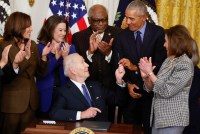
Numbers Don’t Lie. Biden Kept His Promise on Improving Obamacare.
KHN has teamed up with our partners at PolitiFact to monitor 100 key promises made by Joe Biden during the 2020 presidential campaign — including those surrounding the Affordable Care Act.

The Biggest, Buzziest Conference for Health Care Investors Convenes Amid Fears the Bubble Will Burst
This year’s JPMorgan confab, the first since covid’s chilling effect on such gatherings, was full of energy and enthusiasm. But it was also marked by questions about the future of health care investment.

Rural Seniors Benefit From Pandemic-Driven Remote Fitness Boom
When the pandemic began, senior service agencies hustled to rework health classes to include virtual options for older adults. Now that isolation has ended, virtual classes remain. For seniors in rural areas, those classes have broadened access to supervised physical activity.

Ending Involuntary Commitments Would Shift Burden of Dementia Care to Strapped Communities
Health department officials anticipate having to transfer two dozen patients from the Montana State Hospital to another state-run facility if a bill to end involuntary commitments passes.
Ask Voters Directly, and Abortion Rights Wins Most Ballot Fights
Anti-abortion candidates have fared well in recent elections. But decades of ballot initiatives — including a half-dozen measures considered after the Supreme Court overturned Roe v. Wade last June — show that when voters are asked directly, they usually side with preserving abortion rights.

California Attorney General Sues Drugmakers Over Inflated Insulin Prices
California Attorney General Rob Bonta is taking three major drugmakers and three distributors to court, alleging the companies illegally raised prices at the expense of diabetes patients.
What the Health? From KFF Health News: GOP House Opens With Abortion Agenda
Leaders of the new Republican-led U.S. House kicked off their legislative agenda with two bills supported by anti-abortion groups. While neither is likely to become law, the move demonstrates how abortion will continue to be an issue in Washington. Meanwhile, as open enrollment for the Affordable Care Act nears its end in most states, the number of Americans covered by the plans hits a new high. Margot Sanger-Katz of The New York Times, Alice Miranda Ollstein of Politico, and Sarah Karlin-Smith of the Pink Sheet join KHN’s Julie Rovner to discuss these topics and more. Plus, for extra credit, the panelists recommend their favorite health policy stories of the week they think you should read, too.

Bleeding and in Pain, a Pregnant Woman in Louisiana Couldn’t Get Answers
How one Louisiana woman experiencing a miscarriage sought care amid a climate of fear and confusion among doctors fueled by that state’s restrictive abortion law.

Despite Doctors’ Concerns, University of California Renews Ties With Religious Affiliates
The public university’s health system is renewing contracts with outside hospitals and clinics even as some doctors and faculty say clearer language is needed to protect physicians performing abortions and gender-affirming treatments.

The Decision of Where to Seek Care Is Complicated by the Multitude of Options
The proliferation of care options — particularly urgent care centers and free-standing emergency departments — can make the head spin. Facilities have little incentive to clear up the confusion of where to go. But for patients, the wrong choice can mean big bills and possibly poor health outcomes.