- KFF Health News Original Stories 3
- They Need a Ventilator To Stay Alive. Getting One Can Be a Nightmare.
- Feds Promised ‘Radical Transparency’ but Are Withholding Rural Health Fund Applications
- RFK Jr. Wants To Delay the Hepatitis B Vaccine. Here’s What Parents Need To Know.
- Political Cartoon: 'A Beak Job?'
From KFF Health News - Latest Stories:
KFF Health News Original Stories
They Need a Ventilator To Stay Alive. Getting One Can Be a Nightmare.
Few nursing homes are set up to care for people needing help breathing with a ventilator because of ALS or other infirmities. Insurers often resist paying for ventilators at home, and innovative programs are now endangered by Medicaid cuts. (Jordan Rau, 12/2)
Feds Promised ‘Radical Transparency’ but Are Withholding Rural Health Fund Applications
Proposals from states that have shared their applications to a new $50 billion rural health program include using drones to deliver medication, installing refrigerators to expand access to healthy produce, and bringing telehealth to libraries, day cares, and senior centers. (Sarah Jane Tribble and Arielle Zionts, 12/2)
RFK Jr. Wants To Delay the Hepatitis B Vaccine. Here’s What Parents Need To Know.
A CDC panel is reconsidering the birth dose of the hepatitis B vaccine. Renewed doubt could lead to fewer kids getting vaccinated, leaving them vulnerable to an incurable, preventable virus that can be acquired by indirect contact with infected blood. (Jackie Fortiér, 12/2)
Political Cartoon: 'A Beak Job?'
KFF Health News provides a fresh take on health policy developments with "Political Cartoon: 'A Beak Job?'" by Mike Shiell.
Here's today's health policy haiku:
A PRIVACY PREDICAMENT
Ice chips by bedside
give comfort. Not so much ICE
agents in my room.
- Philippa Barron
If you have a health policy haiku to share, please Contact Us and let us know if we can include your name. Haikus follow the format of 5-7-5 syllables. We give extra brownie points if you link back to an original story.
Opinions expressed in haikus and cartoons are solely the author's and do not reflect the opinions of KFF Health News or KFF.
Are you in a Golden State of mind? Check out our new newsletter, California Weekly Roundup. Each Wednesday, we’ll feature original reporting from our California Bureau, as well as a roundup of the latest health headlines from across the state. Sign up here!
Summaries Of The News:
UK's Zero-Tariff Deal On Pharma Will Bring More Jobs To The United States
The agreement “strengthens the global environment for innovative medicines and brings long-overdue balance to U.S.–U.K. pharmaceutical trade,” Health and Human Services Secretary Robert F. Kennedy Jr. said. Meanwhile, the American Hospital Association has filed a lawsuit to try to block the 340B discount program.
AP:
UK And US Agree On A 0% Tariff On Pharmaceuticals
The U.K. has secured a 0% tariff rate for all U.K. medicines exported to the U.S. for at least three years, officials said Monday, in return for the U.K. spending more on new medicines. Under the deal, the U.S. agreed to exempt U.K.-origin pharmaceuticals, pharmaceutical ingredients, and medical technology from import taxes. The Trump administration said in return U.K. drugs firms committed to invest more in the U.S. and create more jobs. (12/2)
Stat:
Hospital Groups Sue Trump Administration To Halt 340B Pilot Program
The American Hospital Association and several hospital systems have filed a lawsuit seeking to halt an upcoming pilot program that would alter payments for medicines purchased through a controversial federal drug discount program. (Silverman, 12/1)
Bloomberg:
Eli Lilly Cuts Low-Dose Zepbound Price Up To 20% For Cash-Pay Buyers
Eli Lilly & Co. is cutting the price for introductory doses of its weight-loss drug Zepbound again, as competition heats up with rival Novo Nordisk A/S. Starting Monday, the lowest dose vial will cost $299 a month for those who pay cash, Lilly said in a statement, a discount of about $50. The next higher dose will cost $399 a month, roughly 20% less than the previous self-pay price. Lilly is also slashing the cost of higher doses by about $50. (Muller, 12/1)
In other news about weight loss drugs —
ABC News:
World Health Organization Issues First-Ever Guidelines For Use Of GLP-1 Weight Loss Medications
The World Health Organization on Monday released new guidance on GLP-1 medications for adults with obesity, recommending their long-term, continuous use when clinically appropriate. The medications covered include semaglutide (Wegovy), liraglutide (Saxenda) and tirzepatide (Zepbound). The recommendations, published in the medical journal JAMA, emphasize that these medications alone are not a solution to treating the global obesity epidemic. (Neporent and Montgomery, 12/1)
Politico:
Doctors Call Ozempic A Miracle Drug. Medicaid Officials Aren’t So Sure.
States are choosing not to cover the new weight-loss drugs, sacrificing a chance to stem cancer, diabetes and heart disease. (Hooper, 12/2)
Congress May Punt Funding Bills To January As Another Shutdown Looms
Meanwhile, House Minority Leader Hakeem Jeffries (D-N.Y.) appeals to centrist Republicans in an effort to extend ACA subsidies before they expire at the end of the month.
Politico:
Thune Casts Doubt On Passing Government Funding Bills Before Christmas
Senate Majority Leader John Thune acknowledged Monday that his chamber might not have time this month to pass another package of government funding bills, after trying for more than two weeks to fire up debate. Faced with another looming shutdown threat on Jan. 30, Thune has been seeking approval from all 100 senators to bundle together a slate of spending measures for floor consideration. But objections from individual lawmakers have hindered progress on another grouping of bills to fund most federal agencies through next September. (Carney and Scholtes, 12/1)
The Hill:
Jeffries Seeks To Raise Pressure On GOP Centrists Over Expiring Health Care Subsidies
House Minority Leader Hakeem Jeffries (D-N.Y.) is pressing centrist Republicans to help Democrats extend ObamaCare tax credits before they expire at the end of the month. Jeffries has offered a discharge petition to force a vote on a three-year extension of those subsidies even in the face of opposition from the GOP leaders who control the House floor. Without congressional action, more than 20 million Americans are facing a spike in out-of-pocket health care costs at the start of next year. (Lillis, 12/1)
Politico:
Senate Barrels Toward Failure On Health Care
Senators have about a week before they’re set to vote on soon-to-expire Affordable Care Act subsidies. Most of them already believe the chances for a bipartisan breakthrough by then are roughly zero. There’s no clear momentum for any plan that would avoid a lapse in tax credits that could raise insurance premiums for 20 million Americans. House and Senate members involved in the talks said Monday they are still trading ideas, and Congress is in the dark about whether President Donald Trump will roll out an 11th-hour framework for an extension, which could help provide a needed boost. (Carney, Razor and Lee Hill, 12/1)
Roll Call:
Democrats Winning On Health Care Post-Shutdown, Some Analysts Say
Democrats emerged from the shutdown empty-handed on a health care subsidy extension, but the party is well-positioned for messaging ahead of next year’s midterms, according to analysts and early polling data. Putting the focus squarely on health care could force Republicans into a binary choice — either they reach a compromise that achieves some Democratic goals or the GOP majority is unable to put forth anything on rising heath care costs. Though it’s early for such predictions, either could boost Democrats next November. (DeGroot, 12/1)
More legislative news —
The Washington Post:
GOP Lawmaker Seeks Answers On American Medical Association Practices
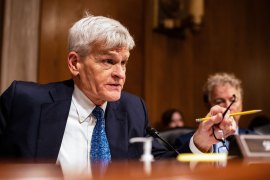
Sen. Bill Cassidy (R-Louisiana) is demanding answers from the American Medical Association about how it helps devise physician payment rates. (Diamond, 12/2)
The Guardian:
Republican Whose Child Has Down Syndrome Opposes Redistricting After Trump’s Ableist Slur
An Indiana Republican lawmaker whose child has Down syndrome has promised to oppose efforts to redraw the state’s congressional map to favor his party after Donald Trump aimed a slur for people with intellectual disabilities at a political opponent. Michael Bohacek, a member of Indiana’s state senate, wrote Friday on Facebook that he has been “an unapologetic advocate for people with intellectual disabilities” since one of his daughters was born with Down. Referring to how the president used an ableist slur to insult Tim Walz, the Democratic Minnesota governor, a day earlier, Bohacek’s post added, “His choices of words have consequences.” (Antonio Vargas and Leingang, 12/1)
Trump Signs Into Law Measure Funding Drug Addiction Recovery
The measure renews a public health program brought in during the first Trump administration. It includes services to help with drug addiction and mental health. Also in the news: A well-known vaccine critic is the new chief science officer at HHS.
Bloomberg:
Trump Signs Law To Unlock Billions For Drug Addiction Recovery
President Donald Trump on Monday signed into law a measure authorizing billions of dollars in federal funding to help prevent drug overdoses and aid patients recovering from addiction, according to the White House. The measure effectively reauthorizes a public health program that was first established under Trump in 2018 and expired five years later. Included are a raft of services designed to combat drug addiction and address mental health, as well as initiatives to bolster research and repay loans for professionals treating substance abuse. Funding generally will still be subject to future appropriations by Congress. (Dlouhy, 12/1)
In related news —
AP:
More Of Maine's Oldest Residents Are Struggling With Drug Addiction, And Seeking Medical Treatment
Megan Harrigan hurried around the Union Street Brick Church in Bangor in September, gathering clients and bringing them to the back corner of the church where there was a makeshift clinic of folding tables and metal chairs. Each client was homeless, and most had an opioid addiction. Harrigan knew them all by name. Between helping patients get referrals for opioid treatment medication, providing care for wounds that can come with opioid use, checking on clients she hadn’t seen in a while, and joking with other staff of the street medicine team, Harrigan talked with a Maine Monitor reporter about a shift she has witnessed in recent years: more older adults are doing harder drugs. (Lundy, 12/1)
In vaccine news —
The Hill:
Vaccine Critic Martin Kulldorff Joins HHS In Chief Science Officer Role
The chair of a federal vaccine advisory committee, himself a well-known vaccine critic, will be moving to an official role within the Department of Health and Human Services (HHS), the agency announced Monday. HHS announced Martin Kulldorff was appointed to be chief science officer for the Office of the Assistant Secretary for Planning and Evaluation (ASPE). Kulldorff, a Swedish biostatistician, served as chair of the Advisory Committee on Immunization Practices (ACIP) at the Centers for Disease Control and Prevention earlier this year after HHS Secretary Robert F. Kennedy Jr. fired and remade the entire committee with many known vaccine skeptics and critics. (Choi, 12/1)
KFF Health News:
RFK Jr. Wants To Delay The Hepatitis B Vaccine. Here’s What Parents Need To Know
Working out of a tribal-owned hospital in Anchorage, Alaska, liver specialist Brian McMahon has spent decades treating the long shadow of hepatitis B. Before a vaccine became available in the 1980s, he saw the virus claim young lives in western Alaskan communities with stunning speed. One of his patients was 17 years old when he first examined her for stomach pain. McMahon discovered she had developed liver cancer caused by hepatitis B, just weeks before she was set to graduate from high school as valedictorian. She died before the ceremony. (Fortiér, 12/2)
The Colorado Sun:
CU Anschutz Settles For $10 Million In COVID Vaccine Mandate Case
The University of Colorado Anschutz will pay more than $10 million to settle a lawsuit brought by students and staff who sued in 2021 after being denied religious exemptions to the campus’s COVID-19 vaccination mandate, according to a group that represented the plaintiffs. (Ingold, 12/2)
Bloomberg:
China’s 78-Cent Flu Shots Show Price Squeeze For Vaccine Makers
Chinese vaccine makers are caught in a steep downturn, as intensifying competition pushes prices lower and erodes profits, underscoring the far-reaching deflationary pressure across the world’s second-largest economy. Two of the country’s biggest vaccine makers — Chongqing Zhifei Biological Products Co and Beijing Wantai Biological Pharmacy Enterprise Co — posted their first nine-month losses since going public in 2010 and 2021, respectively. Meanwhile, other vaccine producers reported their weakest quarterly earnings in years, with profits plunging by 36% or more. (Tong, 12/1)
In other Trump administration news —
The Hill:
Trump Admin To Review Miners' Silica Dust Health Rule
The Trump administration says it will reconsider aspects of a rule that aims to protect miners from exposure to cancer-causing silica dust on the job. In a court filing last week, the Trump administration said that the Labor Department plans to “reconsider” portions of the rule that are the subjects of an ongoing legal fight. It did not specify what exactly it plans to reconsider about the rule, and a spokesperson did not immediately respond to questions from The Hill. (Frazin, 12/1)
Undark:
A Cadre Of EPA Scientists Move To The Private Sector
The country's highest-achieving scientists have been leaving the Environmental Protection Agency in droves for the private sector. It’s exactly what President Donald Trump’s administration said it was going to do: shrink the agency’s scientific research apparatus. It’s also an outcome that could come back to bite the EPA in times of crisis, departing researchers say. (Kramer, 12/2)
Stat:
CDC Employees Say No Clarity About Reasonable Accommodation Requests
The Centers for Disease Control and Prevention is asking employees seeking telework as a reasonable accommodation to return to the office until their requests can be processed under a new Health and Human Services policy that is yet to be rolled out across the CDC. (Broderick, 12/2)
Stat:
FDA Offers Staff 'Agentic AI' To Support Pre-Market Reviews, Other Tasks
The Food and Drug Administration on Monday announced plans to offer its employees a broader set of artificial intelligence tools to use in premarket reviews and for other purposes amid persistent concerns that the technology can behave unpredictably. (Aguilar, 12/1)
The New York Times:
After Trump’s M.R.I. Claim, His Doctor’s Memo Offers Little Clarity
The White House released a letter from President Trump’s physician on Monday about the results of “advanced imaging tests.” The statement, by Dr. Sean P. Barbabella, said the tests on his cardiovascular system and abdominal region showed the president “remains in excellent overall health.” Some medical experts said it was unclear what tests doctors conducted, why they were done or what the results mean. And, they said, a person without symptoms would not have imaging tests as part of a routine medical exam under ordinary medical circumstances. (Kolata, 12/1)
KFF Health News:
Feds Promised ‘Radical Transparency’ But Are Withholding Rural Health Fund Applications
Medication-delivering drones and telehealth at local libraries are among the ideas state leaders revealed in November for spending their share of a $50 billion federal rural health program. The Trump administration, which has promised “radical transparency,” said in an FAQ that it plans to publish the “project summary” for states that win awards. Following the lead of federal regulators, many states are withholding their complete applications, and some have refused to release any details. (Tribble and Zionts, 12/2)
US Opts Out Of World AIDS Day, Frustrating Activists On The Front Line
Other countries marked the day with public health declarations and commemorative ceremonies, while the Trump administration stayed silent about the epidemic. "I think it's emblematic of an administration that doesn't seem to care," one activist said.
NPR:
Why Is The U.S. Not Commemorating World AIDS Day This Year?
The State Department issued a terse statement last week saying, "an awareness day is not a strategy." The result is that on December 1, the United States is not commemorating World AIDS Day. It's the first time the U.S. has not participated since the World Health Organization created this day in 1988 to remember the millions of people who have died of AIDS-related illnesses and recommit to fighting the epidemic that still claims the lives of more than half a million people each year. By contrast, last year former President Joe Biden held a ceremony on the South Lawn of the White House with the AIDS Memorial Quilt — with coffin-shaped patches each honoring someone who had died of AIDS-related causes — spread out on the grass. (Emanuel, 12/1)
San Francisco Chronicle:
UCSF Therapy Helps Control HIV Without Meds For Months
Seven people with HIV were able to control the virus without medication for several months — and in one case for more than a year — after undergoing complex immune therapy at UCSF, results that scientists say could be a critical step in eradicating an infection that’s killed tens of millions globally. A paper published Monday in the journal Nature outlined the aggressive treatment protocol, which included delivering a vaccine, antibodies and other immune-boosting therapies over a period of months before taking people off of daily antiretroviral medication. Ten volunteers participated in the study. (Allday, 12/1)
In other health and wellness news —
The Baltimore Sun:
Focused Ultrasound Improves Survival Odd For Deadliest Brain Cancer
Patients who received a focused ultrasound treatment to aid drug delivery increased their odds of surviving the deadliest form of brain cancer by nearly 40%, according to a study led by University of Maryland School of Medicine researchers. (Hille, 12/1)
MedPage Today:
Corticosteroids May Boost Short-Term Survival In Pneumonia, ARDS
Corticosteroids may cut short-term mortality in patients with severe pneumonia or acute respiratory distress syndrome (ARDS), but evidence backing a long-term mortality benefit remains murky, according to a meta-analysis of randomized trials. (Rudd, 12/1)
Becker's Hospital Review:
Flu Activity Low But Rising: 5 Virus Updates
Flu activity remains low but is increasing nationwide, particularly among children and young adults, new CDC data shows. Outpatient visits and hospitalizations for flu have risen in recent weeks, according to the CDC’s latest FluView update published Dec. 1. In the week ending Nov. 22, the U.S. reported 3,264 flu-related hospitalizations, marking a 39% increase from the week prior. (Bean, 12/1)
AP:
Exemptions For ADHD Drugs In MLB Drop To Record-Low 54
A record low 54 major league players were given permission to use medication for attention deficit hyperactivity disorder, down from 61 last year and 119 in 2013. The total was revealed Monday in the annual report of Thomas M. Martin, the independent program administrator of the drug program for Major League Baseball and the players’ association. The most-used medications to treat ADHD are Adderall, Ritalin and Vyvanse. (12/1)
CMS To End Medicare Experiment Meant To Fix Kidney Dialysis Shortage
The trial, which will end Dec. 31, studied whether giving financial incentives to providers would move more patients with end-stage kidney disease onto home dialysis and through the transplant process, Stat reports. That approach was not proven to work.
Stat:
Medicare’s Experiment To Fix Kidney Failure To End Early
The Centers for Medicare and Medicaid Services will cut short a big experiment to try and change the way dialysis is done in the U.S. The agency, led by Mehmet Oz, will end its End-Stage Renal Disease Treatment Choices (ETC) model on Dec. 31, according to a final rule published in the Federal Register last week. (Cueto, 12/1)
In other news from CMS —
Modern Healthcare:
Medicare Home Health Pay To Be Cut 1.3% In 2026 Under CMS Rule
Medicare reimbursements to home health providers will dip 1.3% next year under a final rule the Centers for Medicare and Medicaid Services published Friday. The pay cut is substantially smaller than the 6.4% reduction the agency proposed in June. Under the Patient-Driven Groupings Model for home health, Medicare reimburses based on patient characteristics, rather than volume of visits. CMS asserts this policy, which it began implementing in 2020, is necessary to curb “upcoding” by providers. (Early, 12/1)
Fierce Healthcare:
CMMI Debuts ACCESS Model To Spur Use Of Tech For Chronic Disease
The CMS Innovation Center has debuted a new model to encourage the use of technology to treat chronic diseases that could be a boon for health tech companies that have struggled with reimbursement. The Advancing Chronic Care with Effective, Scalable Solutions (ACCESS) Model is a 10-year payment program that would offer stable, recurrent payment for technology used to treat diabetes, hypertension, chronic kidney disease, obesity, depression and anxiety. (Beavins, 12/1)
More health industry developments —
The Boston Globe:
Genesis HealthCare Sparks Outrage In Selling Company To Itself
Genesis HealthCare, a large, troubled nursing home chain with 49 facilities across New England and a history of serious health violations, succeeded in an unusual legal action — selling the chain to itself in bankruptcy court, according to documents made public Monday. The complex and controversial move, if approved on Dec. 10 by a judge in the Texas bankruptcy proceedings, would wipe out much of the liability claims against the company, which has roughly 175 facilities nationwide. Many of those claims are from families who accused Genesis facilities of negligent care that harmed patients or resulted in their death. (Lazar, 12/1)
AP:
$50M Gift Covers Some University Of Washington Tuition For Medical System's 'Unsung Heroes'
An anonymous donation expected to exceed $50 million is helping cover tuition costs for medical laboratory science students at the University of Washington for the next half-century. The dean of the university’s School of Medicine, Dr. Tim Dellit, made the surprise announcement Monday to about 30 grateful undergrads, who will each see two quarters’ worth of tuition covered for their senior-year clinical rotations, The Seattle Times reported. “I’m really shocked,” said Jasmine Wertz, eyes filling with tears. “Overwhelmed. Extremely grateful.” (12/2)
Minnesota Public Radio:
COVID-19 Pandemic Narrowed Health Care Industry Pay Gap, New Study Finds
A new study finds that the COVID-19 pandemic narrowed the wage gap between high and low paid workers in the health care industry, as the lowest earners saw the biggest boost in pay in the years since the pandemic began. The findings show a sharp disruption of a decades-long trend in which the wage gap had consistently widened, with high income earners enjoying the biggest pay gains. (Work, 12/1)
Chicago Tribune:
Former Hospital Counselor Charged With Sexual Assault
A former mental health counselor at a Chicago behavioral health hospital has been charged with sexually assaulting five boys during his time there, according to the Cook County state’s attorney’s office. (Schencker, 12/1)
Stat:
Contributors To Top Psychiatry Journals Fail To Disclose Industry Payments
Amid ongoing concern over conflicts of interest that may affect medical practice, a new study found that 14% of the $4.5 million paid to authors in two leading psychiatry journals was undisclosed and nearly all of the payments were made to researchers conducting randomized controlled trials for pharmaceuticals. (Silverman, 12/1)
KFF Health News:
They Need A Ventilator To Stay Alive. Getting One Can Be A Nightmare
On vacation in Mexico last year, Michael DiPlacido passed out twice while scuba diving and again in his hotel. Back in St. Louis, doctors diagnosed him with amyotrophic lateral sclerosis, or ALS, an incurable disease that often requires mechanical ventilation. When his son Adam DiPlacido tried to find a permanent place to care for his father, who now needed a ventilator to breathe through a tracheostomy tube, he discovered none of Missouri’s nearly 500 nursing homes could take him. (Rau, 12/2)
Also —
CNN:
Opening Of Luigi Mangione’s Multi-Day Hearing Reveals New Details About The 911 Call That Led To His Arrest
Alleged gunman Luigi Mangione will be back in court Tuesday for a second day of testimony as the judge overseeing his state murder case weighs whether to throw out key evidence. (Scannell and Brown, 12/2)
Supreme Court To Review Case On Disclosure Of Anti-Abortion Donors
In 2023, New Jersey's attorney general subpoenaed the names of donors to First Choice Women’s Resource Centers as part of an investigation into whether the organization was misrepresenting itself. Today, the Supreme Court will hear arguments in the case.
The New York Times:
Supreme Court To Hear Dispute Over Anti-Abortion Center Donor Records
The legal fight involves an attempt by New Jersey’s Attorney General to subpoena crisis pregnancy center records. (VanSickle, 12/2)
The 19th:
New Law Aims To Stop Doctors From Sending Abortion Pills To Texas
Texas’ massive new abortion law taking effect this week could escalate the national fight over mailing abortion pills. (Luthra, 12/1)
More on women's health and children's health —
Missouri Independent:
Undocumented Moms In Missouri Navigate Pregnancy Under ICE Threats
Oscarina spent the first week of her son’s life moving between his bassinet in the neonatal intensive care unit and her small apartment to care for her 6-year-old daughter. She is sore. She is tired. And she is alone. Oscarina and her husband escaped violence in Venezuela and moved 2,000 miles north to Missouri in 2023, seeking more stable housing and a better future for their daughter. Neither have permanent legal status in the United States, and when she learned she had a second child on the way, Oscarina wondered how they could afford to raise another baby. (Spoerre, 12/2)
MedPage Today:
No-To-Low Risk For Gestational Diabetes With Oral Corticosteroids
Gestational diabetes was not linked with oral corticosteroid (OCS) use during pregnancy, although there was a small risk increase during early pregnancy, according to a nationwide cohort study of more than a million women. (Robertson, 12/1)
MedPage Today:
AI Model Outperformed Density Assessment In Stratifying Breast Cancer Risk
An image-only artificial intelligence (AI) model recently authorized by the FDA conferred more precise risk stratification in predicting the 5-year risk of breast cancer compared with radiologist-based breast density assessments, a large-scale analysis indicated. (Henderson, 12/1)
CIDRAP:
Early-Infancy RSV Infection, Inherited Allergy May Amplify Risk Of Childhood Asthma
Respiratory syncytial virus (RSV) infection in early infancy may significantly raise the risk of childhood asthma, particularly for children whose parents have asthma or allergy, Belgian and Danish researchers wrote last week in Science Immunology. (Van Beusekom, 12/1)
In news about men's health —
MedPage Today:
FDA OKs Blood-Based Test To Help Detect High-Grade Prostate Tumors
The FDA approved Cleveland Diagnostics' blood-based test to help diagnose high-grade prostate tumors and aid in biopsy decisions, the company announced. Dubbed IsoPSA, the in vitro diagnostic kit is indicated for men ages 50 and older with an elevated prostate-specific antigen (PSA) level. According to the company, the blood-based test analyzes the PSA isoform composition in blood to better determine whether or not elevated PSA comes from cancer cells. (Bassett, 12/1)
Fox News:
'Beer Bellies' Increase Heart Damage Risk In Men, New Study Finds
People with "beer bellies" may have an increased risk of heart damage, raising fresh concerns about the health risks tied to extra weight around the midsection. German researchers found that men with fat deposits around the abdomen showed clear signs of early heart damage, even when their overall weight wasn’t especially high. Scientists wanted to better understand whether abdominal fat — the kind stored deep around internal organs — is more harmful to the heart than general body fat. (Quill, 12/1)
Also —
Bloomberg:
China Adds Tax To Condoms As It Works To Boost Birth Rates
China will impose a value-added tax on contraceptive drugs and devices — including condoms — for the first time in three decades, its latest bid to reverse plunging birth rates that threaten to further slow its economy. Under the newly revised Value-Added Tax Law, consumers will pay a 13% levy on items that had been VAT-exempt since 1993, when China enforced a strict one-child policy and actively promoted birth control. (Kan, 12/2)
Opinion writers tackle these public health issues.
The Washington Post:
Democrats Won An Opening On Health Care. Here's How They Can Use It.
While Trump and the Republicans dither, Democrats can seize the advantage and craft a more comprehensive health care affordability bill. These five reforms can be immediately implemented to control costs. (Ezekiel J. Emanuel, 12/2)
The Boston Globe:
Pharmacy Deserts Make Staying Healthy Harder
One way to prevent closures is through payment reform to ensure that insurers compensate pharmacists - regardless of whether they are independent or part of a chain - a fair amount for dispensing drugs. (11/30)
Stat:
Health Care Workers Are Too Fast To Say A Black Patient Is A ‘Hard Stick’
I was moments away from a routine screening colonoscopy when it happened again. The warm and professional pre-procedure nurse began preparing for intravenous insertion. She tied the tourniquet loosely around my arm, took a quick glance, and untied it within seconds. “I can’t find a vein. You must be dehydrated,” she said, moving immediately to the back of my hand. (Jahidah La Roche, 12/2)
Stat:
States Must Require Better Cannabis Product Safety Warnings
The legalization of recreational marijuana has become widespread in the U.S. since Colorado’s adoption in 2012. Today, 24 states and the District of Columbia have legalized cannabis products. But none of these jurisdictions require adequate product warnings, calling into question state commitment to informing the public about the health risks of a now widely available drug, as is already done for alcohol and tobacco. (Howard Husock, 12/2)
Chicago Tribune:
How To Help Those Living With Dementia Beyond Awareness And Education
The United Nations recently announced a plan to address major neurological disorders, such as dementia. This is particularly significant because many countries do not always understand or treat the condition, which affects more than 57 million people worldwide. (Kevin Jameson and Jeannine Forrest, 12/1)