Latest KFF Health News Stories
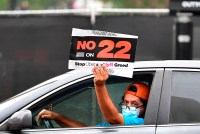
App-Based Companies Pushing Prop. 22 Say Drivers Will Get Health Benefits. Will They?
Ride-sharing and delivery services such as Uber, Lyft, DoorDash and Instacart are bankrolling California’s Proposition 22, which would keep their drivers classified as independent contractors, not employees. But health benefits? That’s something of a stretch.
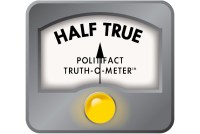
Arguing to Undo the ACA. Harming Medicare. Do They Go Hand in Hand?
A Biden campaign ad out this month attacks President Donald Trump for pushing to slash Medicare benefits. A campaign spokesperson said the claim comes from the administration’s support for a legal challenge to the Affordable Care Act that seeks to nullify the entire law.
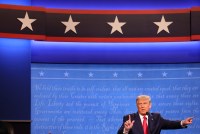
Did Trump Confuse the Public Option With ‘Medicare for All’?
President Donald Trump was off the mark when he said Vice President Joe Biden’s health plan — which includes a public options — will terminate the private insurance of 180 million people.
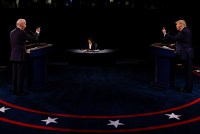
In Tamer Debate, Trump and Biden Clash (Again) on President’s Pandemic Response
Trump claims the U.S. is “rounding the corner” on COVID, while Biden predicts a “dark winter.” On another front, Trump warns Biden’s health care plan will lead to socialized medicine; Biden promises private insurance isn’t going anywhere.
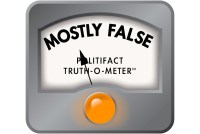
Trump Says He Saved 2 Million Lives From COVID. Really?
The number is taken from a hypothetical modeling scenario that doesn’t offer a realistic comparison.
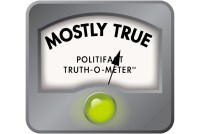
Progressive Group Highlights Trump, Tillis Weakness on Insulin Price Tags
The progressive Change Now PAC launched a campaign ad, which also circulated on Facebook, criticizing President Donald Trump and Sen. Thom Tillis (R-N.C.) for not “fighting” for people with diabetes who struggle with the high cost of insulin.
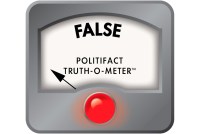
No, the WHO Didn’t Change Its Lockdown Stance or ‘Admit’ Trump Was Right
The World Health Organization has been consistent throughout the pandemic in communicating that lockdowns should be employed only when COVID-19 cases are high — to give governments and health systems time to redouble efforts. Forced closures should not be the primary strategy to combat coronavirus transmission.
Pence Said Biden Copied Trump’s Pandemic Response Plan. Pants on Fire!
The vice president went on to point out the underlying philosophical differences between President Donald Trump and Joe Biden regarding their approaches to COVID-19.

In Debate, Pence and Harris Offer Conflicting Views of Nation’s Reality
During this, the first and only vice presidential debate of the 2020 election season, the two candidates clashed over the coronavirus and other health care issues, as well as a range of other topics.
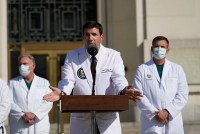
Does the Federal Health Information Privacy Law Protect President Trump?
The president’s doctors have used HIPAA — the Health Insurance Portability and Accountability Act — as a shield to avoid questions about the president’s COVID-19 diagnosis.
Fighting for Patient Protections While Attacking ACA — Hard to Have It Both Ways
Montana’s Matt Rosendale and many other Republican congressional candidates face the challenge of convincing voters they support safeguards on preexisting conditions even as they oppose the Affordable Care Act, which codifies those safeguards.
Trump’s COVID Program for Uninsured People: It Exists, but Falls Short
The help is real — but access to it isn’t easy.
Biden’s in the Ballpark on How Many People Have Preexisting Conditions
A wide range of people — from 54 million to 135 million — could be affected if the provision in the Affordable Care Act were eliminated.
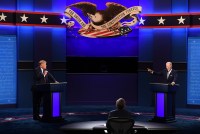
The First Presidential Debate: A Night of Rapid-Fire Interruptions and Inaccuracies
Tuesday night’s presidential debate offered voters their first side-by-side comparison of the candidates, President Donald Trump and former Vice President Joe Biden.

What We Know About the Airborne Spread of the Coronavirus
The Centers for Disease Control and Prevention has gone back-and-forth on this issue. One thing remains clear: Though science is evolving, indications do point toward the potential for airborne transmission.
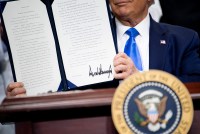
Trump’s Executive Order on Preexisting Conditions Lacks Teeth, Experts Say
President Donald Trump’s executive order says that people with preexisting conditions can get affordable insurance. But it doesn’t explain how.
Cory Gardner’s Bill Has as Much to Do With Politics as Preexisting Conditions
The legislation falls short of the big challenge.

What Is the Risk of Catching the Coronavirus on a Plane?
Florida Gov. Ron DeSantis says airplanes are not vectors for the spread of COVID-19 and that flying is “something that is safe for people to do.” Is the evidence really so clear?

Republican Convention, Day 4: Fireworks … and Shining a Light on Trump’s Claims
Donald Trump accepted his party’s nomination to seek reelection for a second term as president in front of a partisan audience that appeared to largely lack masks and opt against social distancing.
Pence Praises Trump’s ‘Seamless’ COVID Response, Leaves Out His State Feuds
Early in the pandemic, Trump feuded with governors over whose responsibility it was to secure supplies and states sometimes found themselves competing with each other and the federal government for scarce personal protective equipment and testing materials.