Latest Morning Briefing Stories

Lead Contamination Surfaces in Affluent Atlanta Neighborhood
The Environmental Protection Agency recently confirmed high lead levels in an upscale Atlanta neighborhood. The location stands in contrast to many polluted sites investigated by the federal Superfund program — often in former industrial or waste disposal areas where environmental racism has left marginalized groups at risk.
What the Health? From KFF Health News: Health Programs Are at Risk as Debt Ceiling Cave-In Looms
A warning from the Treasury Department that the U.S. could default on its debt as soon as June 1 has galvanized lawmakers to intervene. But there is still no obvious way to reconcile Republican demands to slash federal spending with President Joe Biden’s demand to raise the debt ceiling and save the spending fight for a later date. Meanwhile, efforts to pass abortion bans in conservative states are starting to stall as some Republicans rebel against the most severe bans. Joanne Kenen of the Johns Hopkins Bloomberg School of Public Health and Politico, Rachel Cohrs of Stat, and Alice Miranda Ollstein of Politico join KFF Health News chief Washington correspondent Julie Rovner to discuss these issues and more.

Colorado Becomes the First State to Ban So-Called Abortion Pill Reversals
The controversial practice of administering progesterone to people after they have taken the abortion pill mifepristone may be coming to an end in Colorado. Pills have emerged as the latest front in the war over abortion since the U.S. Supreme Court overturned Roe v. Wade last summer.

Gun Assault Rates Doubled for Children in 4 Major Cities During the Pandemic, New Data Shows
A study of roughly 2,700 shootings in Chicago, Los Angeles, New York, and Philadelphia found that racial disparities in gun injuries and deaths widened during the covid-19 pandemic. Researchers looked only at assaults, excluding accidents or incidents of self-harm.

Biden Administration Issues New Warning About Medical Credit Cards
Americans paid an estimated $1 billion in deferred interest on medical debt in just three years, the Consumer Financial Protection Bureau reports. The agency warns against medical credit cards, which are often pitched right in doctors’ offices.

Ask a Chatbot: ‘What’s for Dinner?’
The AI program ChatGPT can save time and energy spent meal planning, especially for people with dietary restrictions. But be sure to double-check its work, users say.

Federal Rules Don’t Require Period Product Ingredients on Packaging Labels. States Are Stepping In.
New York and California have passed laws requiring disclosure of ingredients on menstrual product packaging. Advocates want more transparency across the U.S.
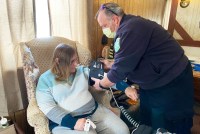
Community Paramedics Don’t Wait for an Emergency to Visit Rural Patients at Home
Community paramedicine is expanding nationwide, including in rural areas, as health care providers, insurers, and state governments recognize its potential to improve health and save money.

The Nation’s Health Secretary Has This Doctor on Call
Carolina Reyes, a physician who specializes in high-risk pregnancies, says providers and health systems have a role in tackling systemic racism. She’s also married to U.S. Health and Human Services Secretary Xavier Becerra.
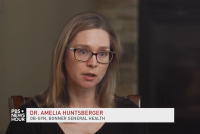
After Idaho’s Strict Abortion Ban, OB-GYNs Stage a Quick Exodus
At least two Idaho hospitals are ending labor and delivery services, with one citing the state’s “legal and political climate” and noting that “recruiting replacements will be extraordinarily difficult” as doctors leave.

Listen: How Are States Spending Money From the Opioid Settlements? It’s Not Easy to Know
KFF Health News senior correspondent Aneri Pattani appeared on NPR’s “1A” on May 1 to discuss issues related to how opioid settlement funds are being distributed.

Millions Are Stuck in Dental Deserts, With No Access to Oral Health Care
Vulnerable and marginalized communities are getting left behind in dental deserts, where patient volume exceeds provider capacity or too few dentists are willing to serve the uninsured or those on Medicaid.

For California Teen, Coverage of Early Psychosis Treatment Proved a Lifesaver
A Medi-Cal patient illustrates how early schizophrenia treatments can yield big benefits. Advocates want California to expand such services to more people living with severe mental illness, which they argue will not only improve lives but also save money over time.

How to Grow Your Social Network as You Age
As your circle of close friends shrinks, there are ways to rebuild — but not replace — the social network you had when you were younger.

Some Private Companies Charge Hefty Fees to Help Veterans With Disability Claims
Unaccredited companies promise to help veterans file for disability benefits. But unlike the thousands of service representatives who have been vetted and approved by the Department of Veterans Affairs to provide aid, these “medical consultants” or “coaches” operate with no restrictions on how much they can charge.

Readers and Tweeters Defend the Rights of Adults With Disabilities
KFF Health News gives readers a chance to comment on a recent batch of stories.
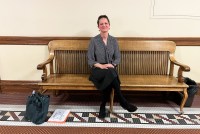
Montana Considers Requiring Insurance to Cover Fertility Preservation for Cancer Patients
Young cancer patients must act quickly to preserve their sperm and eggs once they get their diagnosis, and many can’t afford the cost.
What the Health? From KFF Health News: Dancing Under the Debt Ceiling
House Republicans passed their plan to raise the nation’s debt ceiling, along with major cuts to health (and other domestic) programs. Unlikely to become law, it calls for new work requirements for adults on Medicaid. Meanwhile, state efforts targeting trans people bear a striking resemblance to the fight against abortion rights. Jessie Hellmann of CQ Roll Call, Shefali Luthra of The 19th, and Sarah Karlin-Smith of the Pink Sheet join KFF Health News chief Washington correspondent Julie Rovner to discuss these issues and more. Also this week, Rovner interviews Renuka Rayasam, who reported the latest KFF Health News-NPR “Bill of the Month” feature, about a specialist’s demand to be paid as much as $15,000 before treating a woman’s serious pregnancy complication.

As US Life Expectancy Falls, Experts Cite the Health Impacts of Incarceration
In a nation with one of the highest incarceration rates in the world, imprisonment speeds the aging process, research shows. Some experts complain the federal government isn’t collecting or releasing data that could identify disease patterns and prevent deaths.

Expectant Mom Needed $15,000 Overnight to Save Her Twins
Doctors rushed a pregnant woman to a surgeon who charged thousands upfront just to see her. The case reveals a gap in medical billing protections for those with rare, specialized conditions.