


Latest KFF Health News Stories
The prior record was 2,569, reported the day before. COVID-19 is on pace to become the largest single killer of Americans, given the normal number of deaths in an April week. Meanwhile, most experts agree it’s hard to get an accurate count due to spotty testing and the actual number of both cases and deaths are likely higher.
Texas Becomes Mail-In-Voting War’s Next Battleground
As Texas Democrats push for mail-in-voting, Texas Attorney General Ken Paxton issued a letter saying someone already ill with COVID-19 could vote by mail, but that the mere fear of contracting the illness wouldn’t qualify. Across the country, tensions are rising as states and election officials try to ensure voters will be able to safely made their voice heard in November.
Midwest States Are Latest Regional Area To Form Coalition To Reopen Economy
Seven Midwestern governors are banding together to plan a way to gracefully restart their economies, stressing that they’ll take “a fact-based, data-driven approach.” The neighbors’ partnership is just the latest — following in the footsteps of West and East Coast states — in a tacit agreement that disease knows no state boundaries. Meanwhile, some Americans grow weary of the shutdown, but a majority worry that states will reopen too soon.
By Keeping Conversations Informal With Economic Panel, Trump Can Circumvent Transparency Laws
The Federal Advisory Committee Act requires outside advisory committees to hold open meetings and issue public reports, but since the conversations with members of the economic panel are being characterized as casual, they don’t have to be recorded. Notably, the White House also avoided the term “committee” in its announcement. In other news on the Trump administration’s to the crisis: the president’s WHO decision draws backlash, Trump’s former personal attorney released from prison early amid virus fears, Dr. Anthony Fauci’s popularity soars, and more.
Trump Releases 3-Phase Plan To Reopen Country, But Admits Governors Are At The Wheel
“We are not opening all at once, but one careful step at a time,” President Donald Trump said. The plan leans heavily on the idea that some states that have not been as hard-hit can reopen quicker than hot spots. Trump also walked back prior claims that he has “total” authority on lifting shut-down measures. “You’re going to call your own shots,” he told governors on a call to discuss the guidelines.
Opinion writers weigh in on these pandemic topics and others.
Today’s early morning highlights from the major news organizations.
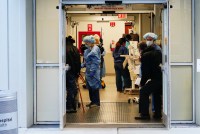
NYC Nurse Says He’s Not Scared: ‘I Am Only Doing My Job’ For COVID-19 Patients
Francisco Díaz ordinarily works educating seniors about their diabetes, but he has moved to the emergency room, on the front line in the battle against coronavirus. He said his Latino background helps him communicate with the many Spanish-speaking patients and understand their culture.
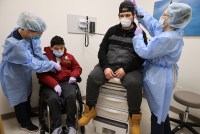
California Shies Away From Calls To Eliminate Restrictions On Nurse Practitioners
Many states are dramatically loosening regulations on nurse practitioners as the coronavirus pandemic increases demand for health care workers. But not California.
En NYC, enfermero de ER dice: “no tengo miedo. Solo ayudo a pacientes con COVID-19”
En la Ciudad de Nueva York, ha habido más muertes de latinos por el virus que de otras razas o etnias, según revelan datos preliminares del departamento de salud local.

‘It’s Not Over Until It’s Over’: 5 Things To Know About Hitting The COVID-19 Peak
President Donald Trump says the country has seen a peak in new cases, but that doesn’t mean the end of the pandemic, experts say. Buckle in — we could be social distancing into 2022.

As Ventilators Become Crucial In Saving Lives, Repair Roadblocks Remain
With hospitals struggling to get more ventilators, they must ensure every ventilator they have is ready for service. But manufacturers limit who can repair them.

Obama: GOP’s Stance On Preexisting Conditions Off-Base, Especially During Pandemic
The former president’s statement highlights a clear difference of opinion that will likely come up often on the campaign trail.

The COVID-19 Bailout That’s Left Every Hospital Unhappy In Its Own Way
Despite intense lobbying for a piece of the $100 billion bailout pot, big New York hospitals and rural systems alike say they aren’t getting a fair share.
KHN’s ‘What The Health?’: How Will We Reopen The Economy?
The politics of COVID-19 are pretty polarized, but health experts across the ideological spectrum agree: The U.S. will need more robust testing before it’s safe to relax social-distancing requirements. Meanwhile, President Donald Trump, Congress and the nation’s governors continue to spar over who should be responsible for what. Kimberly Leonard of Business Insider, Tami Luhby of CNN and Anna Edney of Bloomberg News join KHN’s Julie Rovner to discuss this and more. Also, for extra credit, the panelists suggest their favorite health policy stories of the week they think you should read, too.

With Federal Nod, Consumers Could Lose The Boost They Get From Drug ‘Coupons’
The proposal being weighed by federal officials would allow employers and insurers to decide that drug companies’ assistance doesn’t count toward their members’ deductible or out-of-pocket maximum spending limits. If plans opted for that approach, only payments made by patients themselves would be included in the calculation toward reaching those limits.

Big Brother Wants To Track Your Location And Health Data. And That’s Not All Bad.
Big data plays a critical role in the success of current public health efforts to control the spread of the coronavirus. Privacy advocates, though, are watching closely.

Liberan a miles de presos para prevenir brotes de coronavirus
Las cárceles estatales y de los condados confinan a los presos muy cerca uno del otro, tanto que es casi imposible seguir las pautas establecidas por los CDC.
Each week, KHN compiles a selection of recently released health policy studies and briefs.
Race For A Cure Is So Scattershot And Rushed That It Could Backfire, Experts Warn
Scientists around the world have dropped everything to work on a COVID-19 cure, but that’s not always the most successful strategy. “It’s a cacophony — it’s not an orchestra. There’s no conductor,” said Derek Angus, chair of the department of critical care medicine at University of Pittsburgh School of Medicine. In other news, a potential treatment sets off a diplomatic war and doctors start focusing on blood clots’ role in the disease.