FDA Has Delayed Abortion Pill Safety Study Until After Midterms: Report
A Health and Human Services Department spokesperson said, "FDA’s comprehensive scientific reviews take the time necessary to get the science right.” Also: States are more divided over abortion than ever; IVF expansion is stripped from Congress' annual defense policy bill; and more.
Bloomberg:
FDA Slow Walking A Long-Awaited Abortion Pill Safety Study
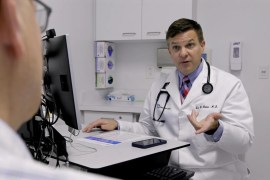
The Food and Drug Administration has delayed a promised review of safety data for the abortion drug mifepristone at Commissioner Marty Makary’s request to put it off until after the midterm elections, according to people familiar with the matter. Makary and Health and Human Services Secretary Robert F. Kennedy Jr. have told lawmakers and state attorneys general for months that they are actively conducting a review of mifepristone. But behind the scenes, Makary has told agency officials to delay the safety review, people familiar with the discussions said. (Gorrivan, Griffin and Cohrs Zhang, 12/8)
The New York Times:
Three Years After Dobbs, The State Divide Over Abortion Deepens
“The U.S. is becoming a tale of two countries in terms of abortion access and abortion policy,” said Dr. Ushma Upadhyay, a professor and a public health scientist at the University of California, San Francisco. But, she added, “All of this legislation will never take away from the fact that women will continue to need abortion care, and continue to get abortion care.” (Karlamangla, 12/9)
In other reproductive health news —
The Hill:
Johnson Slammed After Military IVF Expansion Dropped From Defense Bill
Congress’s annual defense policy bill does not include a provision expanding coverage of assisted reproductive technology for military members, including in vitro fertilization, sparking the ire of lawmakers and advocates. Currently, service members’ Tricare insurance only covers fertility services for military members whose infertility was caused by a serious or severe illness or injury while on active duty. (Weixel, 12/8)
The Washington Post:
‘Forever Chemicals’ Could Cause More Infant Deaths And Preterm Births
Mothers in New Hampshire who were downstream of sites contaminated with “forever chemicals” experienced triple the rate of infant deaths and had more premature births or babies with low birth weights, according to a new study released Monday. The analysis by a team of economists, published in the journal Proceedings of the National Academy of Sciences, sampled data from more than 11,000 births between 2010 and 2019. Researchers looked at how per- and polyfluoroalkyl substances, also known as PFAS, affected fetal health after these chemicals contaminated the drinking water supply. (Ajasa, 12/9)
The 19th:
Why Are So Many Americans Worried About Falling Birth Rates?
Half of Americans think we should be at least somewhat worried about the impact of falling birth rates on society, according to the 2025 19th News/SurveyMonkey Poll fielded in September. Mary Aured, a 65-year-old based in Florida, indicated in the poll that she was “very worried” about the country’s falling birth rate and told The 19th: “I’m desperately afraid that there will not be a generation that can support the generation above it.” (Padilla and Mithani, 12/8)
Also —
Post-Tribune:
Experts Debate New Infants In The Workplace Policy In Indiana Government
Taking care of a newborn child is a “full-time job,” said a women’s health professional. “Coupling that with returning to work could be really difficult for some people to do,” said Usha Ranji, associate director of KFF’s Women’s Health Policy Program. “Getting work done while you’re caring for anything is difficult.” Indiana Gov. Mike Braun, on Tuesday, announced a “Family First Workplace” policy that would allow some state employees to bring their infants to work until they are six months old. (Wilkins, 12/6)
CNN:
Babies As Young As 7 Months Now Have Access To ‘Transformative’ Cochlear Implants
Ben Summers lights up with a smile the moment he talks about the “Batman” theme song or the afternoons he spends playing the piano at his grandmother’s house. Just a few years ago, Ben could not hear music, laughter or any sounds at all. But today, the 6-year-old revels in the melodies from his favorite action hero movies, thanks to a cochlear implant he received at just 9 months old. He proudly calls the device his “ears.” (Howard, 12/5)