The GOP Still Can’t Agree on a Health Plan
The Host
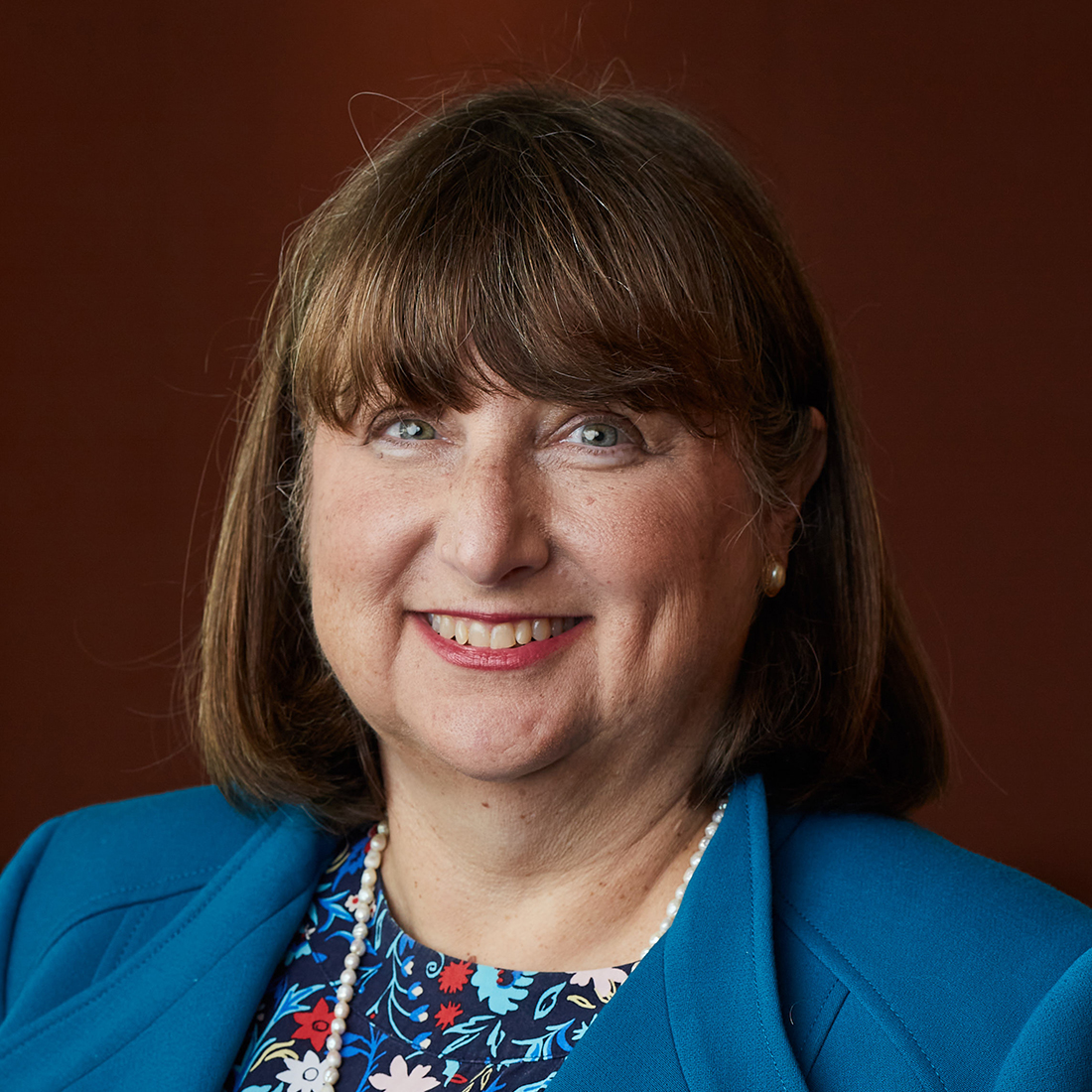
Julie Rovner
KFF Health News
Julie Rovner is chief Washington correspondent and host of KFF Health News’ weekly health policy news podcast, "What the Health?" A noted expert on health policy issues, Julie is the author of the critically praised reference book "Health Care Politics and Policy A to Z," now in its third edition.
The Senate is scheduled to vote in the coming days on a Democrat-led plan to extend the temporary additional subsidies that have lowered out-of-pocket costs for Affordable Care Act health plans. But even with the vote approaching, Republicans in the House and Senate are divided over what, if any, alternative plan they should offer.
Meanwhile, anti-vaccine forces at the Centers for Disease Control and Prevention and the Food and Drug Administration have both agencies in disarray.
This week’s panelists are Julie Rovner of KFF Health News, Paige Winfield Cunningham of The Washington Post, Joanne Kenen of the Johns Hopkins Bloomberg School of Public Health and Politico Magazine, and Alice Miranda Ollstein of Politico.
Panelists


Joanne Kenen
Johns Hopkins University and Politico

Among the takeaways from this week’s episode:
- Republican lawmakers are struggling to reach consensus on a health care plan as the Senate prepares to vote on the fate of enhanced ACA premium subsidies. Many broadly oppose Obamacare and argue Democrats deserve the blame for the rising cost of health care, while some Republicans facing tough reelection fights next year are advocating for renewing the more generous subsidies. New polling shows that even most supporters of President Donald Trump favor keeping the subsidies.
- It’s not just ACA plan-holders who are learning their out-of-pocket costs will rise next year. Premium payments for those who rely on the Federal Employee Health Benefits Program are going up again, with those plans among the many reporting out-of-pocket cost increases.
- The federal Advisory Committee on Immunization Practices is meeting this week. Earlier this year, Health and Human Services Secretary Robert F. Kennedy Jr. replaced the panel’s members, adding noted vaccine critics. At this meeting, the panel is discussing past recommendations on the birth dose of the hepatitis B vaccine and on the childhood vaccine schedule.
Also this week, Rovner interviews Aneri Pattani of KFF Health News about her project tracking the distribution of $50 billion in opioid legal-settlement payments.

Email Sign-Up
Subscribe to KFF Health News' free Morning Briefing.
Plus, for “extra credit” the panelists suggest health policy stories they read this week that they think you should read, too:
Julie Rovner: The New York Times’ “These Hospitals Figured Out How To Slash C-Section Rates,” by Sarah Kliff and Bianca Pallaro.
Joanne Kenen: Wired’s “A Fentanyl Vaccine Is About To Get Its First Major Test,” by Emily Mullin.
Paige Winfield Cunningham: The New York Times’ “A Smartphone Before Age 12 Could Carry Health Risks, Study Says,” by Catherine Pearson.
Alice Miranda Ollstein: The Independent’s “Miscarriages, Infections, Neglect: The Pregnant Women Detained by ICE,” by Kelly Rissman.
Also mentioned in this week’s podcast:
- Politico’s “Why Republicans Aren’t Eager To Cut an Obamacare Deal,” by Alice Miranda Ollstein and Robert King.
- KFF’s “2025 KFF Marketplace Enrollees Survey,” by Lunna Lopes, Grace Sparks, Mardet Mulugeta, Isabelle Valdes, and Ashley Kirzinger.
- KFF Health News’ “After Shutdown, Federal Employees Face New Uncertainty: Affording Health Insurance,” by Phil Galewitz.
- The Washington Post’s “Why Health Savings Accounts Aren’t the Fix Republicans Hope For,” by Paige Winfield Cunningham.
- KFF Health News’ “Trump Wants Americans To Make More Babies. Critics Say His Policies Won’t Help Raise Them.” By Stephanie Armour and Amanda Seitz.
click to open the transcript Transcript: The GOP Still Can’t Agree on a Health Plan
[Editor’s note: This transcript was generated using both transcription software and a human’s light touch. It has been edited for style and clarity.]
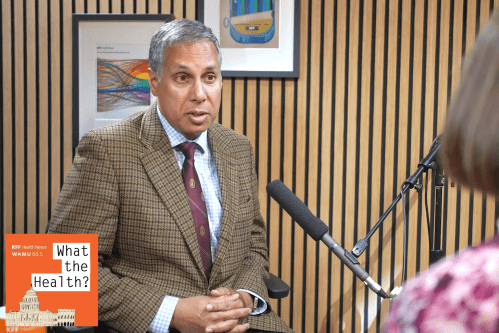
Julie Rovner: Hello from KFF Health News and WAMU Public Radio in Washington, D.C. Welcome to “What the Health?” I’m Julie Rovner, chief Washington correspondent for KFF Health News, and I’m joined by some of the best and smartest health reporters in Washington. We’re taping this week on Thursday, Dec. 4, at 10 a.m. As always, news happens fast, and things might have changed by the time you hear this. So here we go.
Today, we are joined via video conference by Paige Winfield Cunningham of The Washington Post.
Paige Winfield Cunningham: Hi, Julie.
Rovner: Alice Miranda Ollstein of Politico.
Alice Miranda Ollstein: Hello.
Rovner: And Joanne Kenen of the Johns Hopkins Bloomberg School of Public Health and Politico Magazine.
Kenen: Hi, everybody.
Rovner: Later in this episode, we’ll have my interview with my KFF Health News colleague Aneri Pattani about her project tracking how the $50 billion in opioid settlement money is being spent. But first, this week’s news.
So, another week, another scramble by Republicans to find a health plan they can agree on before next week’s likely Senate vote to extend the ACA’s enhanced tax credits. That’s the vote that was promised to Democrats in exchange for their votes to reopen the government last month. So far, Republicans can’t seem to reach agreement on whether to extend the credits — which, if allowed to expire, could balloon premium payments for lots of voters, including lots of Republican voters — or whether to stick to their guns in opposing the Affordable Care Act in general. Alice, you wrote a new take on why Republicans might just be happy to let the extra credits expire. Tell us about it.
Ollstein: Yeah. So there’s less one overarching reason, and more of a grab bag of reasons. It depends who you ask. But suffice it to say, there are a lot of Republicans who would be fine with letting these subsidies die. If you wanted to nail down the most common reason we’re hearing right now, it’s just that they oppose Obamacare. They’ve always opposed Obamacare. They’re not about to suddenly become different people and start supporting it now. They voted a bazillion times to repeal it. They didn’t vote to create these subsidies in the first place, or to extend them the first time. And they’re not eager to suddenly start now. They say this is a problem of Democrats’ making. Democrats created this entire structure, and set the expiration date. We can talk about why they did that.
Rovner: Because they didn’t have the votes to make it any longer.
Ollstein: Yeah. And because it kept the cost down of the overall bill. They say, Why should we bail out the Democrats? Now, of course, there are other Republicans who say, Look, this is going to hurt us politically. We’re the party in power, and people are going to start getting these higher bills, and guess who they’re going to blame? They’re going to blame the party in power. And so there are a lot of divisions up on Capitol Hill right now, and [we’re] not really seeing any consensus emerge. It seems like the Democrats are going to put forward a clean extension that will fail and not pass. And the Republicans are either going to put up something that also won’t pass or they won’t put up anything. It’s not really clear yet.
Rovner: And just to clarify, because I feel like we have to say this every week, the base tax credits that were created by the Affordable Care Act are not going away. It’s just these extra tax credits that were put into place in 2021 that are set to expire at the end of the year. But Alice, I would say I was really struck by something in your story where you said Republicans are more afraid of being punished by primary voters than punished by general-election voters if they vote to extend the subsidies as opposed to if they let them expire.
Ollstein: Yeah. So you have an interesting primary versus general election problem, which of course plagues both parties in every single election. But yes, there is a lot of fear of being primaried from the right, and being attacked for supporting Obamacare in any way, shape, or form, even if it’s a short-term extension with conservative reforms, which is what a lot of folks are talking about. There is more fear of that than of being attacked for allowing people’s premiums to rise by letting the subsidies expire. Of course, it totally varies by district. You have people in these very, very red districts who that’s what they’re more afraid of. And then you have these swing district folks who are more afraid of being punished by voters for letting the subsidies expire. So it’s just really all over the place. You also have an interesting individual versus collective divide, where for some members it could be better just for their own personal political survival to let the subsidies die — even if the GOP as a whole party is worried about this.
Winfield Cunningham: And well, just in the issue of [the] primaries thing they’re worried about is if they vote for extending the subsidies without the Hyde [Amendment] language, then the anti-abortion groups are all going to come out and say that they voted for taxpayer funding of abortion, which is not the message that you want to be up against if you’re running in a primary with [an] opponent to the right of you.
Rovner: And just a reminder that the whole Affordable Care Act very nearly died over whether or not these subsidies could be used to pay for plans that include abortion coverage. And that was just Democrats fighting about it. But for Republicans, this is harder. Because it’s important to remember that the Hyde Amendment, as we think of it, is something that is renewed every single year in a spending bill in the Labor HHS [Health and Human Services] appropriations bill. Putting Hyde language into something like this would make it permanent. And that’s something that is a complete nonstarter for the Democrats. Joanne.
Kenen: There are two things that occurred to me. The KFF poll that came out this morning on how people feel about these subsidies. It was really striking at how many Republicans actually do blame the Democrats. So as long as Republicans don’t think it’s their lawmaker’s fault, and they’re willing to accept that this is all [Joe] Biden legacy, or [Barack] Obama legacy, or whatever one is not theirs, that also makes it easier politically. But also the math. If you’re in a really, really, really, really red district, and you have a 25% margin, and some of your voters lose their insurance and get mad at you, you still can win. Whereas [with] the swing voters, it’s a lot tougher.
Rovner: And yet we saw Marjorie Taylor Greene [Republican representative from Georgia], who of course is now leaving Congress.
Kenen: There’s a lot of other things going on with Marjorie Taylor Greene.
Rovner: That’s true. There are. But this was the thing that she mentioned.
So about that poll that came out this morning, I have some numbers. Seventy-two percent of Republicans, and 72% of self-described MAGA [Make America Great Again] supporters say they favor extending these additional tax credits. And more marketplace enrollees would blame President [Donald] Trump or Congressional Republicans if the additional subsidies expire than would blame Democrats, as Joanne just said. Is there any sign that folks are shifting as more people actually see how big these payment increases could be come January? I was on a call-in radio show earlier this week, and there was just a string of people from all kinds of different states with actual numbers of I’m paying $400 a month now, and it’s going up to $1,800 a month. At some point … even if, as you guys say, it’s only a minority of their voters, they’re going to have to respond to that.
Kenen: In a House race, some of them can lose some voters. They want a big win. They want to be the less vulnerable, the better. But we also are so baked in that everybody blames everything on the other side. One of the problems has nothing to do with specifically this particular issue. It’s that health care costs keep rising, and insurance — including outside. My premiums are going up next year, and actually my employer — I’m at Hopkins — they’re paying the bulk of it. But the cost of insurance is going up quite a bit again, and again, and again. So there [are] other issues about affordability — which is with the word of the day, or the word of the year, or whatever, that remains to be seen — that there’s a whole lot of layers of why costs are going up. Obviously, this is an acute piece of it. People who are losing subsidy is a tax credit is a big piece of it. But the whole issue of even if you’re not in the ACA, you’re going to see higher costs.
Rovner: And we’ll get to that in a second. But before we do, Paige, you wrote one of my other favorite stories of the last two weeks on why the Republican’s favorite alternative — giving money that’s now going directly to insurance companies to the consumers directly — instead might not be the best answer. Tell us about that.
Winfield Cunningham: The HSA [health savings account] idea comes up over and over. You guys all probably recall that both the House and Senate reconciliation bills in 2017 would’ve increased the amount of money people can contribute. I actually was going to say, from what I’m hearing on the Hill, it seems most likely that the Senate and maybe the House Republicans are going to vote on that bill I wrote about in the story, the [Louisiana Republican Sen. Bill] Cassidy proposal, which would basically take those extra subsidies and dump them into these tax-free individual accounts, these HSAs.
Rovner: HSAs stand for health savings accounts for those who don’t know.
Winfield Cunningham: Health savings accounts. That’s right. And just on the politics of it, I was going to say, I think what they do — and I know it’s risky to predict anything on the Hill, so who knows? — but it’s seeming most likely right now that they vote on this bill to put the subsidies in the HSAs. It gives them something next year. They can say, We passed a health care bill. Democrats didn’t join us in it. And then they go on to blame Obamacare for ruining health care and spiking costs, and that’s on the politics of it. But on the policy of it, I think that Republicans always run into problems because, fundamentally, they are less willing than Democrats to spend money on health care. And so what they revert to is just, Oh, let people use their own money, tax-free, the way that they want to so that they can shop around for health care.”
And in that way, you’re going to create incentives to lower costs, and people aren’t going to get unnecessary care. But the problem is that this is more of a little boost for people versus an overall solution for health care. Because if you don’t have the money to put into HSAs to begin with, then you’re not going to be able to afford the tens of thousands of dollars every year that you’re going to need if you develop cancer, or diabetes, or something like that. And then, of course, Republicans try to get their measure scored at the CBO [Congressional Budget Office]. And the CBO says, Guess what? Your bill’s actually going to result in fewer people having health coverage. And that doesn’t play politically very well either. But you see them returning to this again, because no one knows how to really solve the health care cost problem. And so Republicans return to their free-market solutions. But yeah, it’s more of a Band-Aid than anything else. But I wouldn’t be surprised if that’s what they end up voting on next week or the week after.
Rovner: Well, and as Joanne previewed, it’s not just Affordable Care Act premiums that are going up. My colleague Phil Galewitz has a story this week about an average 12% premium increase for federal workers and retirees, which I will link to in the show notes. Medicare Part B premiums are also rising next year from $185 a month to nearly $203 a month, starting in January, with even bigger boosts for those who earn more than $109,000 per year and are subject to the income-based additional premiums. And as we reported in October, KFF’s annual employer survey finds average family premiums in the private sector rising an average of 6%. Is Congress and the administration missing the forest for the trees here, focusing on this fight about the ACA when the real problem is rising health spending and prices across the board?
Ollstein: Well, part of Republicans’ argument against the subsidies is that the subsidies expiring is only a small sliver of the overall insurance affordability problem. Now, of course, it compounds the other problems. So, people are both seeing their base premiums rise, but they’re also being exposed to more of that cost. They’re less shielded from it because of the subsidies expiring. And so, these are things that augment each other and make it worse for a lot of people — like you said, including a lot of Republican voters. We saw huge increases in Obamacare enrollment in some of these Republican states that never expanded Medicaid, especially like Florida.
Rovner: And Georgia and Texas.
Ollstein: Yep. Yep.
Rovner: Right. Well, speaking of Medicare, while we’re hearing a lot about the Affordable Care Act these days and how much federal money is being shoveled to big insurance companies, the administration this week also quietly changed some Medicare Advantage rules that will — let me check my notes here — quietly shovel more federal money to big insurance companies, many of the same ones that are getting the ACA money. This is something that’s gone on for years now. Republicans complain about overpaying for ACA, which was passed with only Democrat support, but not for Medicare Advantage, which was passed with mostly Republican support. Well, Democrats complain about overpaying for a Medicare Advantage, but not for the ACA. I can’t help but think that we’re not going to solve the health spending problem until both parties realize they’re being at least a little bit hypocritical here.
Kenen: The Medicare Advantage overpayment. Medicare Advantage, its predecessor was Medicare Part C or whatever it was called in the ’90s, and then it was relaunched as part of the Medicare drug bill in 2003, and I think it went into effect in 2006. That provision may have been a year earlier, I don’t remember. But roughly 20 years ago.
Rovner: Yeah, that sounds right.
Kenen: And it was designed to create competition. And a lot of people like Medicare Advantage. That’s a choice people are making.
Rovner: Yes, they like it because the federal government is overpaying for it, so they offer extra benefits.
Kenen: But the idea was [to] create two layers of competition: an alternative to compete with traditional Medicare, and then competition within the Medicare Advantage market, these private insurance plan markets. But from the beginning, Medicare Advantage was created to save money. But just to spell this out, they’re paying more per patient to the private insurers who run these Medicare Advantage plans than they are to traditional Medicare. This has been going on for approximately 20 years, and there’s no sign that they’re going to stop it. They are, in fact, giving our tax dollars to private insurance to cover Medicare patients — with high satisfaction rates in many cases — but for more money than they would have if they were just in plain old vanilla Medicare, which itself is pretty expensive when you add up all the things that the consumer — the patient — has to pay. So no, if you were coming at this for the first time — which we are not, and most of our listeners probably are aware of this — but it’s pretty high on the What? list of American health care.
Rovner: Yeah. In the meantime, let us turn to vaccines. As we are taping this morning, the Centers for Disease Control and Prevention’s Advisory Committee on Vaccine [Immunization] Practices is getting underway with its latest meeting. You may recall that Health and Human Services Secretary RFK Jr. [Robert F. Kennedy Jr.] fired all the vaccine experts on the panel and replaced them with anti-vaccine activists, and vaccine skeptics. This meeting includes a discussion of the hepatitis B vaccine, which is currently recommended to be given at birth and which has been shown to lower the incidence of chronic hepatitis B, which in turn can cause cancer, and other liver disease in adolescents by 99% since 1991.
Vaccine opponents say there’s no point in giving a birth dose because hepatitis B is largely sexually transmitted, particularly if the mother’s already been tested and found negative. But those who back the vaccine say hepatitis B can also be spread through household contact, and its record of success is so strong, there’s no need to change it. Meanwhile, the panel’s also going to be looking at the entire childhood vaccine schedule writ large at this meeting. Right, Paige?
Winfield Cunningham: Yeah. I was listening to some of the meeting this morning, and the members said that this is going to be a discussion of risks first versus benefits, which is true with any vaccine. But they had actually planned on voting on the hep B vaccine back in September, and then they said they needed to collect more data. And what I was struck by this morning is, there was this safety presentation by actually this anti-vaccine activist. And I didn’t get to watch all of it, but it sounds like they weren’t able to come up with any real evidence or examples of serious negative side effects for giving newborns this vaccine. And that’s what you hear over and over again when you talk to pediatricians and pediatric vaccine experts that they’ve administered thousands of these doses to newborns in the hospital. And it’s just a really, really safe vaccine.
So later today, they’re supposed to vote on removing that recommendation to get the vaccine if the mother is negative. Although it’s maybe under what’s called shared clinical decision making, which is where they would recommend that it would be a conversation between the doctor and the patient. But I think the other thing that’s interesting is the whole argument for lightening this requirement is made from a very individual perspective. The Kennedy supporters have argued that this is a one-size-fits-all policy, and there’s this deep frustration that you should be recommended to get this vaccine if you’re negative for hep B, because it is highly unlikely that your baby would get the virus. But that’s just not how public health recommendations are made. They’re made by looking at, on the whole, what happens to infection rates if you institute this universal recommendation. And so that’s just not a perspective that I think a lot of members of this panel seem to be holding, at least from the discussion as it’s playing out today.
We’ll see what happens later on today. But there was a lot of resistance by [H.] Cody Meissner, one of the panel members who voted against changing the vaccine recommendations for a couple other vaccines in September. He’s really been pushing back strongly against this suggestion that there’s any downside to giving newborns this vaccine. We’ll see how it plays out for the rest of the day.
Kenen: And remember, it sort of gets lost in the conversation. It’s a recommendation. It’s not a requirement. There are families that opt out, or decide to wait. When you have an itsy-bitsy newborn, it is upsetting to parents. That’s part of the emotional underplaying here, that the first thing they experience is a shot. The recommendations are science-based, but parents can in fact either delay it, or not have it. So, the recommendation is because this protects a kid from a really bad disease. And that’s why the recommendation has been there. But it gets talked about as though it’s binding, and it is not binding.
Rovner: And Paige, they’re going to talk about the rest of the childhood vaccine schedule also at this meeting, right?
Winfield Cunningham: Yeah. Tomorrow they’re supposed to discuss broadly the schedule at large, and I’m sure the idea will come up that we have too many vaccines. I would note that the agenda was posted last night, and it prompted a stronger condemnation by Sen. Cassidy than we’ve ever seen before. Of course, he’s been the lone Republican who has called out Kennedy for some of these anti-vaccine views. And he wrote this morning that ACIP is totally discredited and not protecting children because Aaron Siri, who’s the top attorney for the anti-vax moment, apparently is going to be giving this two-hour presentation tomorrow to the panel. But I think Joanne makes a really strong point. I don’t know that practically there’s going to be a huge effect from them tweaking the recommendations today, but I think the bigger effect is that parents do have a very emotional response to vaccines. And when they hear that the recommendation was rolled back, if they already had some fears about giving their newborn a shot, this may stoke those fears. And that’s what a lot of experts are worried about.
Kenen: And we’re just seeing more and more parents across the board opting out of vaccines. So this is one more, and they’re opting out of recommended vaccines. And again, these recommendations have been tested over and over again. These are not things that somebody just pulled out of the air yesterday. And that’s the fight.
Rovner: So normally, ACIP recommendations go from the committee to the head of the CDC, who generally approves any changes that the committee recommends. But the CDC currently has no director after Susan Monarez was fired just before the last ACIP meeting for refusing to rubber-stamp the panel’s recommendations in advance. And the acting head of the CDC, Jim O’Neil, is neither a doctor nor a public health professional. He’s actually the HHS deputy secretary. Are we reaching a point where the CDC’s official recommendations are going to be ignored, or even refuted by the rest of the medical community? I see my mailbox is full of all of these briefings by the American Academy of Pediatrics and other agencies basically saying, You know what the CDC is saying right now? They’re wrong. Ive been doing this 40 years, and I have never seen anything quite like this before.
Winfield Cunningham: Yeah, this is one of those things where there’s about 4,000% more people who want to talk to reporters about this than you even have time to talk to. But yeah, the American Academy of Pediatrics said this week that they’re going to maintain the current hep B recommendation regardless of what the panel does. And I think increasingly, when I talk to public health experts, they are just seeing CDC and ACIP as discredited and not legitimate. And I think the decision by the panel to invite some of the folks with anti-vax history to present both today and tomorrow is just going to heighten that criticism, and add fuel to the fire.
Rovner: All right. Well, we’re going to take a quick break. We will be right back.
So, we’ve talked about the vaccine news from the CDC, but there’s vaccine news from the Food and Drug Administration, too. Vinay Prasad, who was the top FDA vaccine regulator, then he wasn’t, then he was again, sent a memo on the day after Thanksgiving asserting, without full evidence, that the covid vaccine caused the deaths of at least 10 children, and that as a result, the agency will change the way it regulates vaccines. There’s not a lot of detail yet, but apparently the information comes from the FDA’s adverse event database, which anybody can file to without proof. It’s supposed to be an early warning system for possible vaccine side effects.
So, doctors can put in reports, parents can put in reports if they see something that might need looking into. In response to this, 12 former FDA commissioners from both parties published an open letter in the New England Journal of Medicine pronouncing themselves, “Deeply concerned by sweeping new FDA assertions about vaccine safety and proposals that would undermine a regulatory model designed to ensure that vaccines are safe, effective, and available when the public needs them most.” The FDA regulates 25% of all products in the United States. At some point, aren’t the companies that it regulates going to stand up and say they can’t function if the FDA can’t function? I see frowning around the table.
Kenen: Yes. People want products that are safe, right? Well, many people want products that are safe. Some people prefer to do their own research, as they say. But basically, medications, vaccines, over-the-counter products, even all sorts of stuff, it’s food and drugs. This is a regulatory agency that is supposed to protect us. What’s come out about these supposed 10 deaths? It’s not that these kids may not have died, but from what? That’s the question. Was it the vaccine? I am not a biostatistician, and none of us are, but there’s some really easy questions to ask. First of all, was it caused by the vaccine? Because VAERS [Vaccine Adverse Event Reporting System] is not reliable. You don’t know that’s really what caused the death. So, we don’t know much about why the FDA is saying these deaths were caused by the vaccine.
But beyond that, 10 out of how many people had children [who] got the vaccine and it was safe — if it was even 10. And this whole thing I’m saying is: We don’t know how they’re defining the causation of those 10. How many lives were saved? How many kids, if there wasn’t vaccination, might have died? The whole sort of context of it, when you hear 10 dead kids, it’s scary. But they’re not in a vacuum. There [are] many questions about what does that number mean?
Rovner: I’m really curious though. We were just talking about the CDC and how the American Academy of Pediatrics, and other public health groups are stepping up. The companies that are regulated by the FDA basically can’t be in business unless the FDA functions properly. I’m not seeing the kind of reaction that I would expect to see from those regulated companies. Maybe they’re afraid of getting punished by the FDA if they speak up?
Winfield Cunningham: I don’t know. There’s a lot at stake here for them, obviously. I’m waiting on more details from the FDA about what this is going to mean. Talking to my colleagues who cover FDA more closely, it sounds like the thought is that this requirement for extra studies and evidence would apply to new drugs going forward. But my overall question, going at what Joanne said, is that the measurement of whether a vaccine should be recommended, did it cause any adverse events? Did fewer people die, or were harmed with the vaccine than without the vaccine? So let’s say hypothetically, maybe they’re right. What if the covid vaccine did cause 10 deaths? Even under that umbrella, you may not even have a strong case for rolling it back, because presumably, I don’t know how many deaths giving kids the covid vaccine prevented. I assume it’s more than 10. So if that basic way of evaluating the effectiveness of a vaccine is changes, that I think is going to be really significant.
Rovner: And we do know that there are risks with vaccines. That’s why we have the vaccine compensation program that RFK Jr. is also trying to roll back, but there’s no news on that this week. I am curious. I’m seeing a lot of FDA reporters talking about this, and also about the continuing personnel carousel with people leaving and coming back, and leaving and coming back, and FDA not meeting its deadlines, and trying to basically oust career people. We’ve talked about Marty Makary at FDA and RFK wanting to maybe bring somebody in to try to right the ship. If the FDA truly falls apart, that would be a very bad thing, I would think, for everybody involved.
Kenen: You’re right, Julie. We’re not seeing the industry pushback. We don’t know what’s being talked about, or planned, or done behind the scenes because we do live in a vituperative, retaliatory environment. I agree with the point you make: Where are they, and why aren’t we hearing from them? The FDA and the CDC have lost tons of people? It’s not just the people leaving and coming back. There are a lot of people just leaving, and many years of experience. Either they’ve been forced out, or some have just quit because they don’t feel like they can do their jobs. At the top leadership levels as well as rank and file, there’s just been a lot of tumult, and a loss of expertise.
Rovner: And we will keep an eye on that. Finally this week, still more reproductive health news. The Supreme Court — remember the Supreme Court? — heard a case this week that made unlikely allies of pregnancy crisis centers, those anti-abortion agencies, and the American Civil Liberties Union. Alice, please explain.
Ollstein: This was a case that was pretty narrow and wonky on the surface, but could have much broader implications. This is about [the] New Jersey attorney general’s attempt to obtain documents and investigate this chain of crisis pregnancy centers. These are faith-based, anti-abortion clinics. Some offer legitimate health services, some don’t. It’s a real variety around the country of these kinds of places. So, the New Jersey government was attempting to figure out if they were presenting misleading information both to their patients, and to their donors. And he was seeking the records of their donors. Now, the center wanted to challenge that investigation and stop it, and they wanted to do that in federal court, where they thought they would have a better chance than in state court. But this is drawing interest from groups like the ACLU [American Civil Liberties Union] and even a bunch of other progressive groups, because they say that upholding New Jersey’s ability to demand these documents could put all kinds of nonprofits around the country at risk, including those that are more progressive.
There could be demands for their donors from red state governments. That was the concern there. And that did come up during the arguments. The ACLU and some of these progressive groups wrote amicus briefs. But I would say the point might be moot, because based on how the arguments went, it really does seem like the court is going to rule for the crisis pregnancy centers. And so those fears, in particular, might not be as immediate, although of course that opens up a whole other set of implications potentially for crisis pregnancy centers around the country and states’ ability to regulate them.
Rovner: Yeah, we will see. Well, and there was lower federal court action this week, too. The on-again, off-again, on-again defunding of Planned Parenthood, at least in some states, is off again, right? What’s the latest on that?
Ollstein: It’s not off again quite yet. There’s a window where the government can appeal — and probably will — and a higher court could step in and say, No, Planned Parenthood has to stay defunded. But this is one of several cases about this. So this one is coming from Democratic state attorneys general. There’s another one pending coming from Planned Parenthood and some of its affiliates. And so there’s just going to be ping-ponging back-and-forth in the courts for a while on this of whether the defunding that was passed this past summer is allowed to be upheld. Now, a bunch of states have put up their own money to backfill the lost money. They say that’s been a burden on them. They also say it’s a burden on the states to have to do the work of implementing the defunding, and ensure that no money goes to Planned Parenthood clinics. Again, this is for non-abortion services, things like STI [sexually transmitted infection] testing, contraception for Medicaid recipients. I expect this will continue to go back and forth for a while. But a point that I really wanted to make in my coverage of it is that even if Planned Parenthood prevails in the end, it’s too late for a lot of places. A lot of clinics have already shut down, and you can’t just reopen them at the drop of a hat even if the federal money is restored.
Winfield Cunningham: The only thing I’d add on that is that on July 1, the ban actually ends because Congress only did a one-year ban. And it seems highly questionable at this point that Republicans are going to be able to get together enough votes to do another reconciliation bill, and pass another ban. So maybe it ends on July 1. Alice said there’s been irreparable harm to them in having to close a lot of clinics, but the issue could to some degree be moot in July.
Rovner: Yeah. We saw this back in, I think it was 2016, when Texas put in an early version of an abortion ban that was ultimately struck down. But so many clinics had closed at that point that they just never did reopen. So sometimes it’s easier to cut off money than to restart it. All right. Well, on the let’s-have-more-babies beat, this week computer billionaire Michael Dell and his wife Susan announced they’re donating $6 billion to help seed those Trump accounts for newborns. Basically, the Dells will be providing $250 each to 25 million children in addition to the $1,000 that President Trump is proposing.
But at the same time, my colleagues Stephanie Armour and Amanda Seitz have a story showing how the administration’s cuts to other programs that help care for moms and kids — including Medicaid, the Children’s Health Insurance Program, and Head Start — along with cuts to reproductive rights, like we were just talking about with Planned Parenthood, are doing more to deter women from having children than encouraging them to have more. Not to mention the increasingly out-of-reach costs for housing, food, and child care. This feels like a bit of an uphill battle here if the U.S. really wants to increase the birth rate, right?
Ollstein: Well, we’ve also seen in other countries that these kinds of arguably quite small financial incentives don’t really move the needle. Giving birth alone, let alone raising a child for more than a decade, costs just an unbelievable amount of money, as the parents on this very panel can attest.
Kenen: It doesn’t stop when you think it should either.
Ollstein: And so even a few thousand dollars isn’t going to change a lot of minds on that front. It could make it easier for the people who already have decided to go ahead and have kids, but the experience of other countries that have piloted some of these programs have found that it doesn’t really make people want to have kids who are deciding not to.
Rovner: Yeah. I think first they would like to be able to buy houses, many of them. All right, that is this week’s news.
Kenen: Which is one of the costs as a parent that you end up helping with if you can, right?
Winfield Cunningham: Or you just put three children in one bedroom for a while, as we did. We live in a bigger house now, though.
Rovner: All right. That is this week’s news. Now we’ll play my interview with KFF Health News’ Aneri Pattani, and then we will come back and do our extra credits.
I am pleased to welcome back to the podcast my KFF Health News colleague Aneri Pattani. Aneri has been tracking where those billions of dollars states are getting from the pharmaceutical industry for its culpability in the opioid crisis are going. Aneri, welcome back.
Aneri Pattani: Thanks for having me.
Rovner: So it’s been a while since we last had you on. Remind us how much money we’re talking about, how these settlements came to be, and what the money is supposed to be spent for.
Pattani: Right. So we’re talking about more than $50 billion here. It’s a good chunk. And it’s coming from lots of different companies that either made or distributed opioid painkillers. Purdue Pharma is really well-known, but there’s also Johnson & Johnson, Walgreens, CVS, several others. Basically, thousands of states, and counties, and cities sued these companies for aggressively marketing the pills, and claiming that they were not addictive when we know they were. The companies basically settled, and now they’re going to be paying out for nearly two decades. Governments are supposed to take that money and basically use it to address the problem, right? Do things that fix the current addiction crisis, or prevent a future one from happening.
Rovner: So is there anyone who’s supposed to be keeping track of where this money is going, and how it’s being spent? I covered the similar settlements from the tobacco industry in the late 1990s and early 2000s. And there were lots of stories about that money being used for things that were completely unrelated to getting people to stop using tobacco products, things like paving roads and whatnot.
Pattani: Yeah. And essentially, no. There’s not an entity to track this money, either. People are always surprised when I tell them there’s no federal agency or national entity in charge of overseeing this opioid settlement money, or making sure that it’s spent correctly. There are some guidelines out there. There are some states that have their own efforts, but they tend to be kind of small. With the tobacco settlement, we saw the campaign for tobacco-free kids came in as this nonprofit to collect annual data and have some public information and accountability on the funds. And with the opioid settlement money, we essentially tried to replicate that. We teamed up with researchers at the Johns Hopkins Bloomberg School of Public Health, and Shatterproof, which is this national nonprofit that works on addiction issues. And we gather data and create databases to show the public how this money is being spent across the country.
Rovner: So we are the database. Tell us about the database that we have built here at KFF Health News.
Pattani: We just published our second database. We do this hopefully every year. So far, we’ve done it two years. And basically this year we had more than 10,500 examples of how states or cities or counties have spent this money. We get all the information from public records — either they’re already online, state budgets, we put in record requests — and then we categorize each of the expenditures into things like prevention, or treatment. And that way we can give the public a bird’s-eye view of how this money is being spent.
Rovner: And just to be clear, these 10,000 are not necessarily inappropriate ways. This is how the money is being spent.
Pattani: Exactly. They’re just anywhere that we can find an example of the money being used. We’re collecting it. It doesn’t mean it’s being used well. It doesn’t mean there’s research, or evidence to support it. It just means it’s being used.
Rovner: So tell us about some of the things that you have found using the database.
Pattani: I always want to start with the good news. And the good news is that lots of the money is going to stuff that addiction experts say is needed: treatment, housing for people with addiction, buying overdose reversal medications. But there’s also the not-so-great news, which is that there are spending examples that lots of people find questionable. There are two big buckets of those. The first is law enforcement gear. We saw money being spent on gun silencers, drones, police cruisers, where the folks who are making those decisions say, Well, police and law enforcement are the front lines of the addiction crisis. But you have a lot of folks saying, We already invest a lot in that. It hasn’t made a difference, and we need to be investing in medical and social services instead. Then you have my second questionable category, which is things aimed at preventing youth from developing addictions in the first place.
So I think really well-intentioned a lot of times. But researchers have looked at some of these examples and said, It’s just not going to do what you think it is. So one Connecticut town threw a ’50s-style sock hop where they had kids and seniors take pledges to be drug-free. A West Virginia community hired a drug-awareness magician. And there’s just no evidence that that’s actually going to do anything.
Rovner: But I bet it was entertaining.
Pattani: It was entertaining to read about it, too.
Rovner: So this money is obviously more important than ever in fighting addiction because of cuts to other government programs that were doing some of this work, right?
Pattani: Absolutely. Medicaid is the biggest payer of addiction care in the country. With the cuts that are coming forth for that, a lot of people are anticipating having trouble getting treatment. And so there’s a real need, but the opioid settlement money is also not anywhere near enough to fill that gap. We talked about … it’s more than $50 billion, but spread over two decades. Medicaid paid $17 billion for addiction care in one year alone. So it’s not going to make the gap. And some people are worried that all the opioid settlement money will be poured into trying to fill up the federal gaps, leaving nothing for trying something new or being innovative.
Rovner: So, some of this money is supposed to be used to compensate individuals who have been hurt by the opioid crisis. But that’s not always happening either, is it?
Pattani: Unfortunately not. Most of the people who were personally harmed are not getting any money. The way a lot of these settlements worked out is that they were directly with states. And so there wasn’t really an avenue for individuals to get paid. The few settlements that can pay people are giving out small amounts. I talked to one guy in Maine. He had been prescribed painkillers, was addicted for then 10 years of these ups and downs. He was part of the Mallinckrodt settlement. He got a few hundred dollars from them. It wasn’t even enough for one month’s rent. Purdue Pharma, which just settled, is one of the bigger ones. Some individuals may get up to $16,000 from them. But you’re talking about $16,000, you take out the lawyer’s fees, you take out other things, it’s really minimal. And so I think that’s why people care so much about the money that the governments are getting, and how they use it, because that is the one opportunity to improve services, to improve the system of care.
Rovner: What’s next for this project?
Pattani: I am already filing public-records requests for how the money is being used for our next year of tracking. We will have another annual report out next year talking about how this money continues to be spent, and hopefully providing some accountability for where it’s going.
Rovner: Aneri Pattani, thank you for staying on top of it.
Pattani: Thank you.
Rovner: OK. We’re back. It’s time for our extra credit segment. That’s where we each recognize the story we read this week we think you should read, too. Don’t worry. If you miss it, we’ll put the links in our show notes on your phone, or other mobile device. Paige, why don’t you go first this week?
Winfield Cunningham: I was struck by a story that is quite personal to me because I have an 11-year-old, and it is called “A Smartphone Before Age 12 Could Carry Health Risks, Study Says” at The New York Times by Catherine Pearson. She addresses this question that I think a lot of parents have, which is what is the correct age for kids to get a smartphone? She cites this study published this week that showed … there was a correlation between having a cell phone by age 12 and having higher risk of depression, obesity, and insufficient sleep. And it seems like this is piled onto the mounting pile of evidence that giving your kid a smartphone has a lot of negative drawbacks.
The thing my husband and I have been talking about is: A lot of parents, they know the negative effects of phones, but they start feeling a lot of pressure from other parents. Because if other kids at their school have the smartphone, then their kid is feeling left out of things. So, I really feel like for things to change, parents and schools are going to have to band together, and recognize that this is having a real toll on kids. And we’ve already seen some schools — I know at least in northern Virginia — have instituted a no-cell-phones policy. And I just have to think that that’s probably going to have long-lasting health benefits. I thought this was a really important article for discussing that.
Rovner: Yeah, I did, too. Joanne.
Kenen: This is from Emily Mullen in Wired: “A Fentanyl Vaccine Is About To Get Its First Major Test,” So it’s still quite preliminary. There are some scientific questions … that they still have to establish that it’s safe and effective. … Yes, it’s a vaccine, which as we’ve been talking about, is a whole other issue. So first of all, if it works in these trials, and it doesn’t interfere with painkillers, or anesthesiology, or things like that of people who may need that, there are a lot of questions about who gets it, and when. It’s going to be a whole bioethics debate, and a political debate. And there’s a debate over harm reduction, per se, but it’s actually really an interesting scientific tool that even if we fight about if it does work — and this is a trial to see — could be another tool in saving lives if we can ever agree on all the fighting about who would get it and when. But it’s interesting.
Rovner: And get it through ACIP.
Kenen: Right. It wouldn’t be for kids. It would be for —
Rovner: For adults.
Kenen: It could be for teens, I suppose. But it’s an interesting scientific development with potential. If we can stop the fighting, it could save lives.
Rovner: Alice.
Ollstein: I have a pretty harrowing story from The Independent by Kelly Rissman [“Miscarriages, Infections, Neglect: The Pregnant Women Detained by ICE”]. It is about the rise in detentions of pregnant women for immigration violations. And reports from attorneys and human rights groups of really abysmal conditions that women are being held in that in some cases they’ve documented have caused miscarriages. People are not getting adequate food. They’re being kept in very cold, or very hot conditions. They’re not being given access to medical care when requested, and/or they’re being subject to medical exams that they don’t consent to. They’re not being provided translators, so they don’t know what’s going on. Really scary stuff. And something I thought the article should have mentioned, but didn’t, is that ICE [Immigration and Customs Enforcement] has dismantled some of its own internal oversight offices that maybe would’ve looked into and addressed some of this stuff in the past. So I think there’s an ongoing lawsuit over those oversight bodies. That’s one place to pay attention to on this unfolding story.
Rovner: Well, I have actually a little bit of good news for a change from the reproductive health realm. It’s from our former podcast panelist Sarah Cliff, along with Bianca Pillaro at The New York Times, and it’s called “These Hospitals Figured Out How To Slash C-Section Rates.” It’s about just that: how some hospitals are bucking the trend of rising surgical baby deliveries with some deceptively small changes, including using more midwives, changing financial incentives to deliver via C-section, and reminding doctors and nurses that labor often takes longer for first time moms. It’s one of those relatively small but ultimately really important cultural shifts that can make health care both safer and cheaper. See? There are people working to make the system better.
All right, that is this week’s show. Thanks as always to our editor, Emmarie Huetteman, and our producer engineer, Francis Yang. A reminder: “What the Health?” is now available on WAMU platforms, the NPR app, and wherever you get your podcasts, as well as, of course, at kffhealthnews.org. Also, as always, you can email us your comments or questions. We’re at whatthehealth@kff.org. Or you can find me still on X @jrovner, or on Bluesky @julierovner. Where are you folks hanging these days? Alice?
Ollstein: I’m mostly on BlueSky @alicemiranda, and also on X @AliceOllstein.
Rovner: Joanne.
Kenen: I’m on X @Joanne Kenen. And I’m using LinkedIn. more, also @JoanneKenen.
Rovner: Paige.
Winfield Cunningham: I’m on X @PW_Cunningham, and I’m also on BlueSky @Paige Cunningham.
Rovner: We will be back in your feed next week. Until then, be healthy.
Credits
Francis Ying
Audio producer
Emmarie Huetteman
Editor
Click here to find all our podcasts.
And subscribe to “What the Health? From KFF Health News” on Apple Podcasts, Spotify, the NPR app, YouTube, Pocket Casts, or wherever you listen to podcasts.
Related Topics
More from KFF Health News

Why Young Americans Dread Turning 26: Health Insurance Chaos
By Elisabeth Rosenthal and Hannah Norman
Aug. 11, 2025