Latest KFF Health News Stories
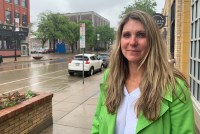
In Wisconsin, Women’s Health Care Is Constricted by an 1849 Law. These Doctors Are Aghast.
From the front lines of Wisconsin’s abortion battle, obstetricians describe patients who cannot comprehend having to carry nonviable pregnancies. And only one pharmacist in town can be found who will fill prescriptions for abortion pills.
What the Health? From KFF Health News: Another Try for Mental Health ‘Parity’
President Joe Biden is kicking off his reelection campaign in part by trying to finish a decades-long effort to establish parity in insurance benefits between mental and physical health. Meanwhile, House Republicans are working to add abortion and other contentious amendments to must-pass spending bills. Joanne Kenen of the Johns Hopkins Bloomberg School of Public Health and Politico, Anna Edney of Bloomberg, and Sarah Karlin-Smith of the Pink Sheet join KFF Health News’ chief Washington correspondent, Julie Rovner, to discuss these issues and more. Also this week, Rovner interviews KFF Health News’ Céline Gounder about her podcast “Epidemic.” The new season focuses on the successful public health effort to eradicate smallpox.

Congress Considers Easing Regulations on Air Transport of Donated Organs
A little-noticed provision of sweeping legislation to reauthorize the Federal Aviation Administration would make it easier to fly human organs from donor to recipient.
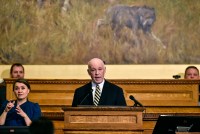
A Plan to Cut Montana’s Medicaid Waiting List Was Met With Bipartisan Cheers. Then a Veto.
Republican Gov. Greg Gianforte’s veto disappointed and bewildered those seeking to address low-income residents’ long wait for assisted living or in-home care.

An Arm and a Leg: Wait, What’s a PBM?
Pharmacy benefit managers, or PBMs, are companies that negotiate the prices of prescription drugs. Hear about their role in raising drug prices and the ongoing efforts to regulate this complex industry.

With More People Giving Birth at Home, Montana Passed a Pair of Laws to Make It Easier
The state now requires Medicaid to cover midwife services and has expanded the list of prescription drugs midwives can administer.

Proposed PFAS Rule Would Cost Companies Estimated $1B; Lacks Limits and Cleanup Requirement
A proposed Environmental Protection Agency rule calls for companies to disclose PFAS manufactured or imported since 2011. The chemical industry is upset because such compliance would cost an estimated $1 billion, while environmental health advocates worry because the rule wouldn’t ban the chemicals outright.

Montana Adds Protections for Kids in Private Residential Treatment Programs
Programs in the so-called troubled teen industry will be required to provide a 24-hour hotline and unmonitored video calls with family and be subject to more inspections under a new Montana law.

Más estados legalizan la venta de leche sin pasteurizar, a pesar de las advertencias sanitarias
La pasteurización, desarrollada en el siglo XIX, consiste en someter la leche a un tratamiento de calor para eliminar las bacterias.
More States Legalize Sales of Unpasteurized Milk, Despite Public Health Warnings
Distrust of public health authorities, who say drinking raw milk is dangerous, fuels demand for unpasteurized milk products, leaders on both sides of the issue say.

A New Law Is Supposed to Protect Pregnant Workers — But What If We Don’t Know How?
During pregnancy, workers often face hazardous circumstances, including breathing toxic chemicals. On June 27, the Pregnant Workers Fairness Act began requiring employers to provide “reasonable accommodations.” But the new law has a big hole: Not nearly enough is known about which chemical exposures are dangerous for pregnant workers.

More States Drop Sales Tax on Disposable Diapers to Boost Affordability
Last month, Florida joined a growing number of states in banning sales taxes on diapers to make them more affordable for older adults and families with young children. Though diapers are essential for many, they are not covered by food stamps. Nor are incontinence products for older adults typically covered by Medicare. The cost can easily add up on a fixed income.

Malpractice Lawsuits Over Denied Abortion Care May Be on the Horizon
Physicians and attorneys say it’s a question of when — not if — a pregnant person dies from lack of care in a state with an abortion ban, potentially setting the stage for a malpractice lawsuit that could pressure providers to reconsider delaying or denying care.

Familias huyen de los estados que niegan atención de salud a las personas trans
Más de una cuarta parte de los adultos trans encuestados por KFF y The Washington Post a fines del año pasado dijeron que se mudaron a otro vecindario, ciudad o estado en busca de un ambiente más tolerante.
Medical Exiles: Families Flee States Amid Crackdown on Transgender Care
As more states restrict gender-affirming care for transgender people, some are relocating to more welcoming destinations, such as California, Illinois, Maryland, and Nevada, where they don’t have to worry about being locked out of medical care.
What the Health? From KFF Health News: Slow Your Disenroll
More than a million Americans have lost Medicaid coverage since pandemic protections ended. The Biden administration is asking states to slow disenrollment, but that does not mean states must listen. Meanwhile, a Supreme Court decision gives Medicaid beneficiaries the right to sue over their care, and a new deal preserves coverage of preventive services nationwide as a Texas court case continues. Rachel Cohrs of Stat, Alice Miranda Ollstein of Politico, and Sandhya Raman of CQ Roll Call join KFF Health News’ Mary Agnes Carey to discuss these issues and more. Also this week, KFF Health News’ Julie Rovner interviews Dan Mendelson, CEO of Morgan Health, a new unit of JPMorgan Chase, about employers’ role in insurance coverage.

California Confronts the Threat of ‘Tranq’ as Overdose Crisis Rages
California officials are stepping up efforts to combat the spread of xylazine, a powerful animal sedative that’s increasingly being used by people, often with devastating results. It’s mostly been an East Coast phenomenon, but ‘tranq,’ as it is known, is beginning to appear in the Golden State.

Will a ‘National Patient Safety Board,’ Modeled After the NTSB, Actually Fly?
A push is underway to create a National Patient Safety Board modeled after the National Transportation Safety Board, an independent federal agency that investigates plane crashes and other transportation disasters. But unlike the NTSB, some patient safety advocates say, the current proposal is toothless and wouldn’t provide transparency about the nation’s hospitals.

More States OK Postpartum Medicaid Coverage Beyond Two Months
Montana, Alaska, Mississippi, Missouri, South Dakota, Texas, Utah, and Wyoming are among the latest states moving to provide health coverage for up to a year after pregnancy through the federal-state health insurance program for low-income people.

Mood-Altering Mushroom Sales Bloom Despite Safety Concerns
The well-known “Amanita muscaria” mushroom is legal to possess and consume in 49 states. The market for gummies, powders, and capsules containing extracts of the fungus is raising eyebrows, though, amid concerns from the FDA and in the absence of human clinical trials.