The Return of ‘Medicare for All’
The Host
Julie Rovner
KFF Health News
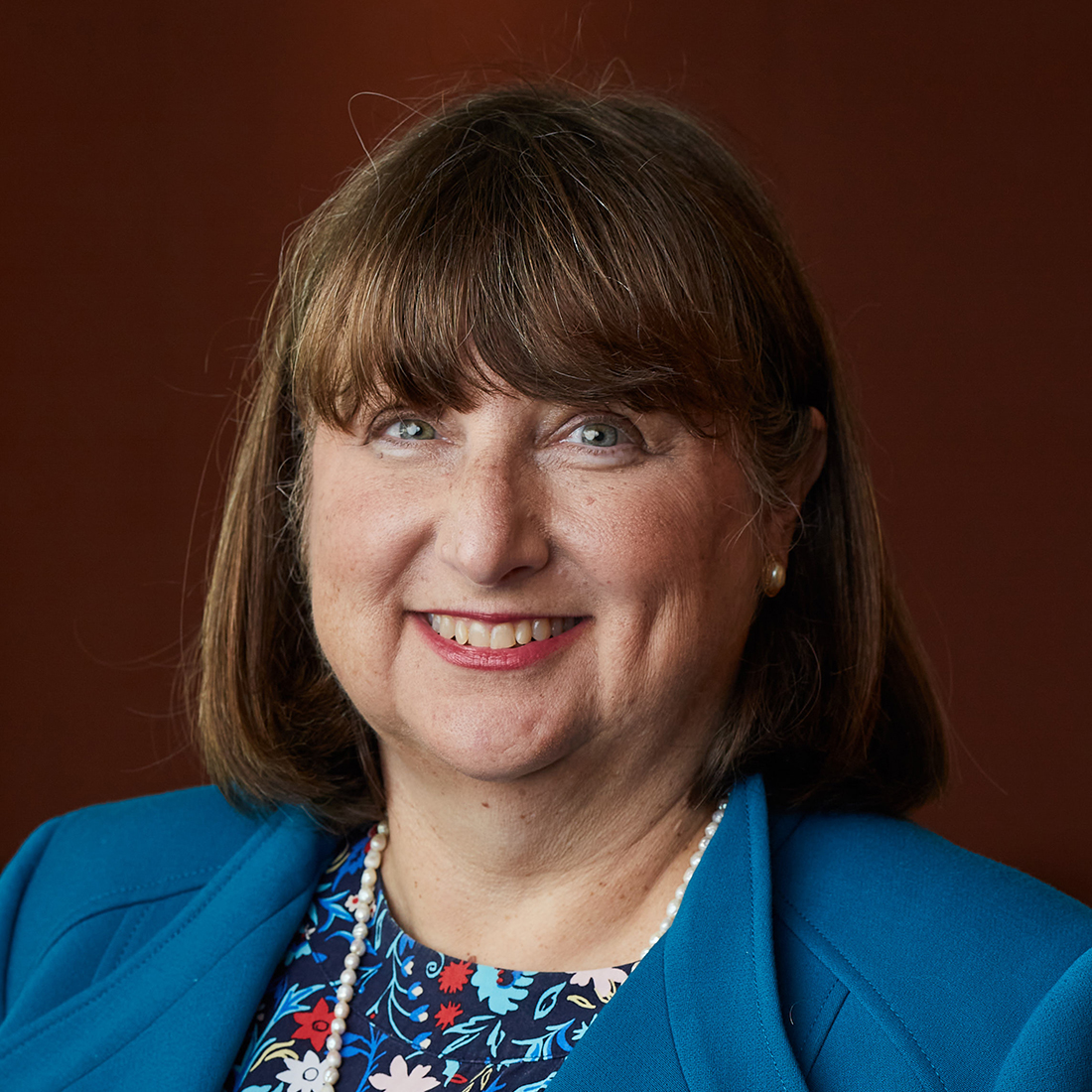
Julie Rovner is chief Washington correspondent and host of KFF Health News’ weekly health policy news podcast, "What the Health?" A noted expert on health policy issues, Julie is the author of the critically praised reference book "Health Care Politics and Policy A to Z," now in its third edition.
Democratic primary voters in Michigan chose former Detroit public health director Abdul El-Sayed as their Senate nominee this week. El-Sayed is one of several high-profile candidates around the country who have been pushing “Medicare for All,” again elevating the issue, at a time when millions of Americans are losing their health coverage because of high costs.
Meanwhile, the Senate this week confirmed Erica Schwartz to lead the Centers for Disease Control and Prevention, which has been without a permanent leader for almost a year. But it remains unclear whether her support for childhood vaccinations will run afoul of her boss, Health and Human Services Secretary Robert F. Kennedy Jr.
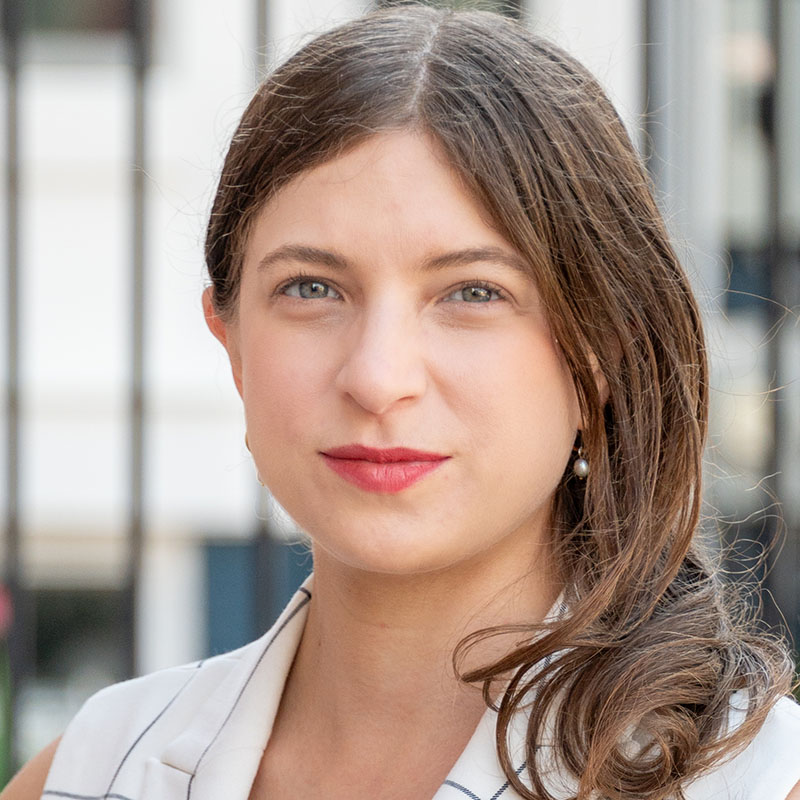
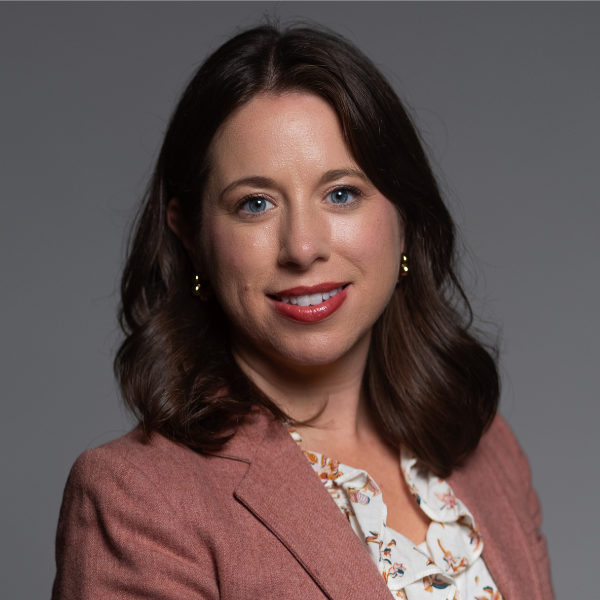
This week’s panelists are Julie Rovner of KFF Health News, Joanne Kenen of the Johns Hopkins Bloomberg School of Public Health and Politico Magazine, Alice Miranda Ollstein of Politico, and Amanda Seitz of KFF Health News.
Panelists

Among the takeaways from this week’s episode:
- El-Sayed’s primary victory in Michigan means a vocal supporter of Medicare for All will be on the ballot this fall. Progressives again are rallying behind universal healthcare as costs spike and more people lose their coverage — although there are few details so far to explain how they would implement such a policy.
- New polling shows more people are experiencing “job lock” because of limited options to obtain healthcare coverage outside employer-sponsored insurance. Meanwhile, more hospitals are reporting a sharp rise in the number of uninsured and in the costs to cover them.
- A federal judge recently declined to halt the implementation of Medicaid work requirements while considering a case brought by several states challenging the policy’s burden on sick people. And early reports out of Nebraska, the first state to implement the work requirements, show eligible people are losing coverage for administrative reasons.
- Kennedy sat down for an interview with CNN, during which he could not articulate specific plans to address disease outbreaks — as multiple outbreaks are ongoing. And a Senate committee voted along party lines Thursday to hold former public health official Anthony Fauci in contempt of Congress over his appearance before the committee last week.
Also this week, as part of the “How Would You Fix It?” series, Rovner interviews Sen. Andy Kim (D-N.J.), who has a new bill that would provide universal health coverage for all children.

Email Sign-Up
Subscribe to KFF Health News' free Morning Briefing.
Plus, for “extra credit” the panelists suggest health policy stories they read this week that they think you should read, too:
Julie Rovner: The New York Times’ “Spotlight on Fauci Said To Boost Book Sales for Kennedy and His Publisher,” by Sheryl Gay Stolberg.
Alice Miranda Ollstein: NOTUS’ “Rand Paul’s Fauci Diary Dump Exposed People’s Medical Histories,” by Margaret Manto.
Joanne Kenen: The New York Times Magazine’s “The U.S. Relies on Family Caregivers. Millions of Them Are Kids,” by Helen Ouyang.
Amanda Seitz: The Wall Street Journal’s “A Florida Surrogate, a Father in China, and the Babies Caught Between,” by Katherine Long.
Also mentioned in this week’s podcast:
- The Bulwark’s “The ‘Medicare for All’ Test for Michigan Democrats,” by Jonathan Cohn.
- The New York Times’ “Uninsured Patients Rise Sharply, Hospitals Report, Citing Obamacare Cuts,” by Reed Abelson.
- Politico’s “Blanche Assures Anti-Abortion Supporters That Dobbs Will Be ‘Permanent in Every Single State,’” by Alice Miranda Ollstein and Josh Gerstein.
- Underlying Conditions’ “RFK Jr. on CNN: Fact-Checking the Measles and Autism Claims,” by Céline Gounder.
Click to expand the transcript Transcript: The Return of ‘Medicare for All’
[Editor’s note: This transcript was generated using transcription software. It has been edited for style and clarity.]
Julie Rovner: Hello, from KFF Health News and WAMU Public Radio in Washington, D.C. Welcome to What the Health? I’m Julie Rovner, chief Washington correspondent for KFF Health News. And, as always, I’m joined by some of the best and smartest health reporters covering Washington. We’re taping this week on Thursday, Aug. 6, at 10 a.m. As always, news happens fast, and things might have changed by the time you hear this. So here we go. Today we are joined via video conference by Alice Miranda Ollstein of Politico.
Alice Miranda Ollstein: Hello.
Rovner: Joanne Kenen of the Johns Hopkins Bloomberg School of Public Health and Politico Magazine.
Joanne Kenen: Hi, everybody.
Rovner: And my KFF Health News colleague Amanda Seitz.
Amanda Seitz: Hi, great to be here.
Rovner: Later in this episode, we’ll have excerpts of my “How Would You Fix It?” interview with New Jersey Democratic Sen. Andy Kim, who’s proposing universal coverage starting with all American children. But first, the freight train of health news continues.
We’re going to start this week in Michigan with that very closely watched Senate primary to fill the seat being vacated by the retiring Democrat Gary Peters. We’ve known for months the Republican candidate will be former congressman Mike Rogers, who narrowly lost to Sen. Elissa Slotkin two years ago. And now we know he will face Abdul El-Sayed, an MD epidemiologist and former public health director of Detroit. El-Sayed, who ran on a platform emphasizing “Medicare for All” and has even written a book about it, narrowly defeated four-term Democratic congresswoman Haley Stevens, who had a gigantic cash advantage, mostly provided by supporters of Israel. Now, the fight over Israel in Gaza is for some other podcast to get into, but I do think that this underscores the increasing popularity of Medicare for All in the base of the Democratic Party. What does El-Sayed’s primary win tell us? And can someone from the more progressive wing of the Democratic Party win in a very purple state like Michigan?
Ollstein: Well, I also want to point out, like, this isn’t an outlier. It was really notable to me that during the Maine rushed, redo primary they just had for the Democratic Senate candidate to take on Susan Collins, everyone in that race was endorsing Medicare for All and calling for it. And Maine is also a very purple state with an older electorate, and, you know, not raging progressive. And so I think it is notable that this isn’t just in the big blue cities anymore. This is a growing drumbeat within the party, and, you know, of course it comes as we’re seeing a lot of people lose their health insurance, which we’re going to talk about. We’re seeing costs go way up, and so there’s just this wellspring of frustration that I think is fueling some of this.
Seitz: Oh, I was just going to say I would caution, though, how big of a win this is for progressive Democrats. You know, they’ve won the battle, and I’ll say it has built quite a strong coalition. But this was a really narrow primary win, and that is not the situation you want to be in when you have two diametrically opposed candidates from the same party running in a primary in a very purple state headed into the midterm elections.
Rovner: Yeah, well, let us talk a little bit more about Medicare for All because it’s a trendy moniker for something that’s not really all that specific. Some people think it’s just shorthand for “everyone gets government-provided health insurance.” Some think it’s actually socialized medicine. And some think it’s literally just an extension of today’s Medicare program, which is itself a very public-private hybrid. My friend Jonathan Cohn over at The Bulwark, who happens to live in Michigan, has a really good story this week that I will link to about how consideration of Medicare for All looks different in 2026 than it did in 2016 or even in 2009, when they were doing the Affordable Care Act. Where do you guys think we are on Medicare for All? I would remind that what was in the 2020 campaign, every candidate, every Democratic running except for Joe Biden said they were for Medicare for All, and yet Joe Biden is the one that came out of the primaries.
Kenen: I think Kamala Harris was for “Medicare for All Who Wanted It.” She had some strange hybrid of it, but that is part of our past. I mean, Medicare for All is something you hear about from the Democratic Party, a segment of the Democratic Party, in pretty much every election with more or less intensity. And more so [with] Bernie Sanders running against Hillary [Clinton], it was a much more pronounced debate. In Michigan, I don’t think this is the defining issue. I mean, I think that global politics in the Middle East, and given the demographics of Michigan, and what the race is focused on, and points of contention are, it’s pretty easy to talk about wanting everybody to be covered, and it’s a lot harder to get there, as we all know, because we’ve been talking about it for decades. So I think you’ll hear about it from Democrats — I’m not sure in Michigan and elsewhere, but I’m not sure how specific a plan or a definition it is, sort of this holy grail that nobody knows quite what it looks like.
Ollstein: But that also makes sense. I mean, it’s not really in their interest to put out detailed policy plans that people can pick apart at this phase of things. And so it makes sense that we’re in the grand, sweeping, dreams phase of things, and not in the …
Rovner: We’re in the slogan phase.
Ollstein: Exactly, exactly right. Because, you know, as soon as Democrats put out an actual bill, a draft bill, then the vultures will descend and point out all the downsides, and that doesn’t help them heading into, you know, a major midterm election. So we imagine that work is going on behind the scenes, because they want to have something ready to go if and when they have control in Congress. But what exactly that is, we don’t know.
Kenen: But I also think there’s pressure for the Democrats to be — in the best-case scenario, if you had a united Democratic Party where they all wanted Medicare for All and they all agreed on what that meant, you don’t press a button and get there. It would be some kind of incremental phase, and it’s not going to be, like, OK, today we have this and tomorrow we have Medicare for All. So I think, in the short term, less controversial and maybe more urgent is affordability and access right this minute. We are going to talk about the coverage decline and affordability and just access on a day-to-day … even if you are able to afford your care and even if you have pretty good insurance, getting into a doctor when you need to has become really frustrating. Even if you’re sick and already know that doctor. So even if you’re a pretty health-savvy consumer, the way all of us are, we see this in our friends and family, and we understand the system — sort of, like “the system” in quotes. So I mean, I think there’s the Medicare for All, you know, Democratic dream, and it — I don’t mean it’s not sincere; I mean, that’s what many people want — but I also think you’re going to see a lot more nuts and bolts: What has happened in the last two years, and how do we fix it?
Rovner: I’m interested in the fact that Republicans who are already sort of ginning up their talking points against the, you know, wave of progressive candidates like El-Sayed, although he’s not as progressive as, you know, the [Zohran] Mamdanis and, you know, some of the other avowed socialists. They’re talking about socialism and communism, and they’re talking about all kinds of things. They don’t seem to be talking about healthcare, which suggests to me that Republicans are kind of aware that things are not going well, and that, Joanne, as you point out, I mean, you know, it used to be let’s see if we can fix the health system without messing up the people who are happy. There are fewer and fewer people who are happy right now with how the health system is falling apart.
Kenen: Including the doctors, right?
Rovner: Right. Oh, absolutely.
Kenen: Nobody’s happy.
Rovner: Well, well, let us move on to all of the ways in which the healthcare system is falling apart. Item one is a new Gallup-West Health poll that found nearly a quarter of workers surveyed said they were staying in a current job that they otherwise wanted to leave only to retain their health insurance. That was up 8 percentage points since the last time they’d asked in 2021. Now “job lock,” as this is called, is something that HIPAA was supposed to address back in 1996. The “P” in HIPAA stands for Portability. It was the Health Insurance Portability [and Accountability] Act. How is this still a thing 30 years later, that people feel stuck because they can’t change health insurance?
Ollstein: This was also a big driving force behind the argument for Obamacare. The argument was: We’re going to free up all these people by creating this individual market, we’re going to unleash American ingenuity, and we’re going to have entrepreneurs and people starting their own businesses and experimenting and trying things that they wouldn’t feel able to do because they’re so afraid of …
Rovner: Shark Tank for All!
Ollstein: … losing their health insurance. And so I think the way the Trump administration has targeted some key pieces of Obamacare, you know, they obviously, as we know, failed to get rid of the whole thing, but they are chipping away at the subsidies, which has caused a lot of people to drop their coverage; they’re going after the Medicaid expansion piece of Obamacare, and so I think that’s driving some of this return to, you know, clinging to the job you have in order to maintain your health insurance. Although, going back to the point that nobody’s happy, employer health insurance, while it may be better than a lot of the other options, is, you know, people aren’t thrilled either. The costs are still quite high for both employers and employees.
Rovner: And employers are looking for ways to cut back. Go ahead, Joanne.
Kenen: I was also wondering, as I read those numbers about job lock — and we should also remember, even though it wasn’t in that particular story, there’s also something called “marriage lock,” where people stay in marriages they don’t really want to be in because they wouldn’t have, they fear they wouldn’t have coverage. But one thing I just sort of wondered about is I wonder how many people realize that they might, in fact, qualify for the Affordable Care Act. I think people are still confused about the ACA, as well as they’re confused about a whole laundry list of things that we could spend a year talking about. People aren’t always paying attention, so some of the people who are afraid that if they change jobs or think they have to stay in their job think that Obamacare is for somebody else. So I don’t know.
Rovner: They wrongly think they’re in job lock.
Kenen: Right, right. So, but it still affects the behavior. If you feel that way — you’re anxious and insecure and unhappy — then you’re anxious, insecure, and unhappy. Whether you are aware of there’s an alternative or not, it doesn’t affect how you feel now, which is, you know, grumpy. That’s not the right word, but you know what I mean.
Rovner: I know what you mean.
Seitz: Yeah, well, and I think that that’s what I found fascinating, too, is like when we look back at 2022, there was a lot of head-scratching as to how Democrats performed so well in the midterm elections. But you look back at that time, and people —it was the peak of the Great Resignation — people were leaving their jobs. They were able to get big raises for the first time in a while. Unemployment was extremely low, so you had, like, an electorate that was pretty happy and didn’t have that anxiety. And now you’re staring down a situation where people are afraid to leave their jobs. They’re afraid to lose their health insurance, and the social safety net is deteriorating at the behest of the Trump administration. And I think that’s not a very good situation to have a lot of Americans in, as you head to a midterm election.
Rovner: Well, item two: Several outlets, including The New York Times, reported last week that hospital systems are seeing what the Times’ Reed Abelson described as, quote, an “unexpectedly sharp rise in uninsured patients and the costs associated with treating them.” We are starting to hear this in earnings reports from for-profit chains and anecdotally from nonprofits. Now, this was something that we saw coming. People can no longer afford their ACA plans and drop them, or as they can no longer afford the premiums without the expanded subsidies and had to buy down to less-generous plans with larger deductibles, which they then can’t cover when they end up in the hospital. This would suggest the Trump administration’s claim that the drop in ACA coverage is all due to fraudulently enrolled people with zero claims might not actually be the case.
Seitz: I question how much, like, the Trump administration realizes they’re playing with fire here. And I think in part because during the first Trump administration, you saw a few hundred thousand people disenroll from the ACA. They kind of let it to languish, but there was also a lot of question about the ACA marketplaces’ ability to survive. This time around is so much different. You’re talking about millions of people losing coverage within the first year. The Trump administration came in; they had record enrollment in the program. So these are real losses. These are real hospitals, and these are going to be real headlines of real people experiencing these real misfortunes. And you’re going to have either taxpayers eating the cost of the care through emergency Medicaid, or you’re going to have people winding up with really big medical bills that they can’t pay. And again, those are going to be real stories. And the Trump administration is going to find that they can’t just continue to yell fraud to cover all that up.
Ollstein: Yeah, to Amanda’s point, I think this message could definitely backfire politically. Nobody likes to be told that they are a fraudster or don’t exist when they are losing their health insurance. And this is hitting red-state hospitals just as much as blue states, if not more. And so, I think going into the midterm election, sticking by this line and not admitting who is being harmed is definitely risky.
Rovner: Yeah, it’s worth pointing out that, I mean, it does hit red states harder because the red states that didn’t expand Medicaid ended up with bigger enrollment in the ACA when they expanded the subsidies …
Seitz: Florida’s the biggest.
Rovner: … and so those people are now losing coverage. Yeah, Florida, Georgia, Texas. Those are the places where the hospitals are going to see it first when people are showing up who can’t pay their bills.
Kenen: And those are the states that already have a lot of rural hospital closures. There are rural hospital closures and hospital closures across the country, but the rate of closures is much more acute in the states that did not expand Medicaid. So now you’re going to have more hospitals in jeopardy. It is not a healthy situation.
Rovner: Well, related to this, we have the impending cuts to Medicaid. A federal judge appointed by Bill Clinton declined to block the Medicaid work rules from taking effect as scheduled Jan. 1. This was in a lawsuit filed by Democrat-led states. But there could still be some delay, right? I know doctor groups are completely freaked out by having to potentially write notes for tens of thousands of patients who may or may not be too medically frail to work. There’s still a lot of sort of panic, if you will, in the states about what’s going to happen to people if they can’t meet these work requirements.
Ollstein: Yeah, and I want to make sure people know that the judge [who] ruled in this case, he said you shouldn’t take this ruling to mean that I think the states are wrong in challenging this policy. They could very well prevail eventually and strike it down. He just said, basically, this isn’t ripe. You don’t have enough evidence right now of harm to the states because the policy hasn’t officially started yet. Although it has in a couple states that weren’t part of the lawsuit, which we can get into. But this particular piece of the story is not over. Also, people should know that what was being challenged in court was not the entirety of the work requirements; it was just the piece requiring sick people on Medicaid to prove that they are too sick to work, prove beyond just having a diagnosis of cancer or an autoimmune disease or something. Just the diagnosis is not enough; they have to have some kind of proof. It’s not totally clear what kind of proof will count. And, to your point, they’re worried that it’s going to end up being individual doctors’ notes, which will completely overwhelm the system. Doctors don’t have the capacity to see all these people to document this and provide care.
Rovner: And doctors don’t have the training to determine, you know, who’s disabled and who isn’t. That’s why we have these, you know, special masters for disability programs. Your average doctor is not really in a position to say, “Well, so-and-so can work this month but not next month.” Really, I mean, doctor groups really are legitimately worried about that this is going to fall to them.
Kenen: And also, like, an awful lot of the people on Medicaid who would be affected … this is the Medicaid expansion population. It’s not all of Medicaid. But a lot of this population has chronic disease. And chronic disease is often sort of on and off, right? You’re doing OK for a while. You can work, and then kaboom, you have an exacerbation. You have a setback. You have an episode. Whatever your disease is, there are different things that happen, and then you can’t work. And doctors don’t know — I mean, mental illness is clearly one of the things where people could be stable for a long time and then crash and then recover and stabilize again. Cancer, you can be doing fine, on chemo for a certain amount of time, and then your body just says, you know, I’ve had enough chemicals pumped into it. Or you have … every chronic disease is pretty much … every one I can think of is an up-and-down, on-and-off … like how bad do you feel or how good you feel at any given time. And they certainly don’t have — then you’re out of compliance. You know, well, you’re healthy enough to work. Why aren’t you working? You know, bye-bye healthcare. So it’s really a complicated mess. The only little thing that may buy the states some time, in addition to whatever happens in the court, is for the first year and only the first year, people will be allowed to self-attest, meaning I’m just going up and saying I’m, you know, here’s my diagnosis, and I’m too sick to work. That is not likely to be extended. It’s unclear how that will play. I’ve written about it in somewhat detail about one state. I’m not exactly sure how it’ll run out in all 50, but it is part of the current rule that, this controversial rule that was dropped on June 1, that made this all sort of more complicated and more difficult. That self-attestation would be available on Jan. 1 for a limited period of time.
Ollstein: But not in every state. So CMS [the Centers for Medicare & Medicaid Services], the federal government, said states can accept self-attestation. Several states are saying no thanks. We’re going to start requiring proof right away. No self-attestation allowed. So this is yet another sort of natural experiment where we’re going to see, you know, the differences between these states with these different policies, and how many people lose coverage as a result.
Kenen: But it’s going to be way more than we thought at the beginning. I mean, the difference in this medical frailty rule versus what CMS was telling states until a few weeks ago versus, kaboom, on June 1, it is a much more cumbersome process. I mean, nobody thinks the old estimates of coverage loss are accurate anymore. I mean, there’s always a lot of guesswork in that, right? None of us know exactly how many people will lose coverage, but it looks like a lot more than we thought.
Rovner: So we already have one of these natural experiments going on in Nebraska, which volunteered to implement its work rules first. The state is now getting ready to disenroll the first Medicaid patients who have failed to meet the requirements. Clearly, some of those people are still eligible, including a pregnant woman reported on by Nebraska Public Media who showed up for an appointment and was denied coverage because apparently the state missed the fact that she was pregnant and therefore eligible. I imagine we’re expecting more of this, right, Alice? We’ve seen this movie before?
Ollstein: Yes, so we’re getting a sneak preview in Nebraska of what could happen in the rest of the states that expanded Medicaid come Jan. 1. A couple other states are also starting early, although they have different rules about when the penalties kick in and when the enforcement kicks in. But yes, you know we’re seeing a lot of confusion, people losing coverage who are technically eligible for coverage, and basically everything that providers and community groups and patient advocates predicted would happen.
Kenen: And we know from Georgia, which does have work requirements already, they’re not a full-expansion state. They have their own version of a partial expansion, but it’s still, the law still applies to them. And they’ve had a lot of people losing coverage who probably are still eligible. We know from Arkansas’ experiment in, I believe was 2018, tons of people — I think it was 17,000 or 18,000 — who lost coverage, and most of them actually qualify. In fairness, the technology since 2018 and 2027 … and learning from Arkansas’ mistakes. … I think it’s important to be aware of how flawed and problematic Arkansas was. I don’t think it necessarily means that everything will be exactly that bad because, you know, there’s more broadband access in rural America, etc. We don’t have to go into all that. But it’s not a great precedent in terms of smooth rollouts.
Seitz: And we also know it from the Medicaid unwind during the pandemic, too. We saw these errors and the initial estimates of how many people would be removed from coverage after the federal government said, OK, you can’t allow continuous enrollment anymore. They blew past those initial estimates. So, to your point, Joanne, earlier about how we are going to see much greater disenrollment than was initially predicted.
Rovner: All right, we’re going to take a quick break. We will be right back.
We are back, turning to abortion. Alice, you were part of a big scoop this week about U.S. Attorney General nominee Todd Blanche and something he promised to anti-abortion groups. Tell us what he said.
Ollstein: Yes, so this was on a private call that the White House Faith Office did with what they said were thousands of faith leaders around the country. And they, you know, said over and over on this call, this is private, this is off the record, this is not for the news, and then they posted it on YouTube for some reason and on some other places online. Explain that. Anyways, it’s been taken down since our story published, but we have the audio saved. So Blanche was basically promising that not only would he take action to restrict mail delivery of abortion pills and curbing abortion access in other ways, if confirmed, he sort of went beyond that and said that policies are already in the works. There’s already discussions going on between the White House, DOJ [Department of Justice], FDA, all of these different agencies sort of pledged to stop the ability of patients in red states to order abortion pills online and get them delivered by mail, which is, you know, a key line of access that patients have turned to in this post-Roe era of bans. It was not clear from the audio that we obtained how he plans to go about doing that. I also imagine if, you know, the FDA does come out and change its policy, that his remarks could be used to challenge that and say, you know, this was not based on science. This was based on ideology and religious opposition to abortion, which is not what the FDA is supposed to base its drug access policies on. So this was really fascinating, particularly because it did not really jive with what he said publicly in his confirmation hearing, where he sort of hemmed and hawed and said, “Oh, I can’t speak to that because there’s ongoing litigation,” and sort of made — yes, this was more specific promise of action than we’ve heard from him publicly.
Rovner: And just to be clear, I think I have this right: Even if the FDA doesn’t change its policy, the DOJ could decide We’re going to enforce the Comstock Act — that 1873 law that bans the mailing of abortion drugs. And that would sort of leave FDA out of the entire equation, right? I mean, in theory, he could do that.
Ollstein: Yes, and a lot of anti-abortion activists are very frustrated that the administration has not done that yet. They could have done that a year ago, theoretically put out a new OLC memo. Of course …
Rovner: OLC, the Office of Legal Counsel.
Ollstein: Yeah, which the Biden administration used to say that the Comstock Act cannot be used for cracking down on mail delivery of abortion pills. Of course, even if that happened — and there’s no sign that that’s necessarily imminent or something the administration would want to do ahead of the midterms potentially — but, you know, I think it’s notable to ask: How would they enforce that? This is private mail going to people’s private homes — short of mass surveillance and looking at everyone’s mail. I mean, logistically and constitutionally, it raises a lot of questions.
Rovner: It does. Well, and now Sen. Susan Collins has cited it as one of the reasons that she’s going to vote against Blanche’s confirmation. Although I will quickly add that once Susan Collins announces she’s voting against something controversial, that usually means Republicans already have the votes they need and can let her go. … I see nodding. Do we think that’s the case here?
Kenen: She’s always in tight races. For the past 30 years, she’s won. But you know, Maine is really obviously in play this year. None of us have a good enough crystal ball to know how this plays out. But the issue for her, in many ways, is just her [Supreme Court Justice Brett] Kavanaugh confirmation vote. So anything she does seen as further eroding abortion could really tip the election for her. So I’m not positive that this goes through. I think it’s likely, but [Sen. Bill] Cassidy, I don’t believe, has said what he’s going to do. [Sen. Lisa] Murkowski hasn’t said … if someone has more recent information, please update me. But my understanding …
Rovner: As of this morning, Cassidy and Murkowski are still holdouts.
Kenen: Right. And I’m not 100%, even though [Sen. John] Cornyn and [Sen. Thom] Tillis got him out of committee, they’re watching. They’re seeing, you know, what’s going on. Abortion is not the issue for them, but the weaponization, you know, what did he really mean by, you know, does his memo really stop it? What else are they going to do? I don’t think this is a done deal, as opposed to getting closer to being a done deal. But there’s no question that Collins had to vote against this.
Rovner: We will see. All right. Well, over at the Department of Health and Human Services, things continue to be messy, which is also the description of an interview that Secretary Robert F. Kennedy Jr. gave to CNN’s Dana Bash on Sunday. Here’s how my colleague Céline Gounder put it in her Substack. I don’t think I can improve on this. “This morning, HHS Secretary Robert F. Kennedy Jr. sat down with Dana Bash on CNN’s State of the Union, and for 20 minutes it went about the way you’d expect. Both of them raised their voices, each accused the other of attacking them. He told her she’d committed press malpractice and that scaring people was the job of CNN. She told him he was causing inaccurate information to circulate. By 9:20 a.m. they were calling each other parrots.” By the way, this week saw publication of yet another large-scale study, 2.5 million children large, that found no association between autism and the measles, mumps, and rubella vaccine. But it raises the broader question: Does giving the secretary a mainstream platform like this actually make the media complicit in spreading the misinformation that he likes to spew?
Ollstein: Things like this are such a Rorschach test because you had everyone on the left describing it as a crash out and, you know, a meltdown and something that made the secretary look really terrible, and you had people on the right who support him sharing it widely and saying, “Oh, he really gave it to the evil mainstream media.” And so, in terms of, you know, value to the public, I’m not sure.
Seitz: I think you’re totally right, Alice. But what was really revealing is we have a health secretary who could not articulate what his plan is for any sort of outbreak, as there are multiple infectious disease outbreaks exploding throughout the country. And the one thing that he said he would do repeatedly was he would listen to doctors. Well, doctors on the front line of emergency rooms are saying, We are overwhelmed with measles. We are overwhelmed with infectious disease. Please, promote vaccines more. Please get your children vaccinated. So I think that was really just revealing. And again, it’s really troubling to see because everyone’s going to walk away from that conversation viewing it one way or the other, and not agreeing on anything, it seems.
Rovner: Yeah, I will say, I mean, I watched it live. It was hard to watch. I don’t think it covered anybody with any kind of glory. Well, earlier this morning, speaking of breaking news, Kentucky Sen. Rand Paul’s Homeland Security and Governmental Affairs Committee voted to hold former NIH [National Institutes of Health] institute director and White House science adviser Anthony Fauci in contempt of Congress for pleading the Fifth, rather than answering their questions at a hearing last week. As former Trump surgeon general Jerome Adams quipped on X: “Your healthcare costs are exploding and the entire U.S. financing system is collapsing in real time… Meanwhile Congress is spending more energy debating whether to lock up an 85-year-old over his private journal entries about Barbra Streisand. Priorities.” At the same time, Politico is reporting that a top candidate for Fauci’s old job, running the National Institute of Allergy and Infectious Diseases, is a pharma executive who co-authored a book arguing that covid came from a lab leak and that fact was covered up by U.S. scientists. Steven Quay, who’s the nominee, has no training in infectious disease and was not selected for an interview by NIH staff for the NIAID job, but was instead handpicked by RFK Jr. Institute directors, I would hasten to add, are not usually political positions, unlike the director of NIH as a whole. So, what does this all suggest?
Kenen: More of the same and worse. The Fauci situation is mind-boggling, even to people whose minds are now frequently boggles. Right? It’s … I think it’s safe to guess that he regrets writing certain things down on a government computer. And now they’ve got his phone. Sen. Johnson has his phone … or a copy of what his phone is. So I don’t know what’s going to come out about that, and how it will be interpreted. Remember that the measures that people are so angry about, several years later, were actually done during the Trump administration. They were not implemented by Biden. The national rules set at the, you know, the “six weeks to stop the spread” — that was Trump. Later regulations about opening restaurants and so forth, and other businesses and schools, and schools being the most contentious — churches are also contentious — that was done at the state level. Anthony Fauci did not go around the country locking churches. So public health made mistakes. But what people are forgetting about is that public health made mistakes dealing with a completely unprecedented and extremely complicated disease, which we still don’t understand all the sequel, all the stuff that people are still dealing with post-covid, right? And under emergency circumstances, in a politically volatile environment. And what we’re also forgetting is mistakes were made on the other side too. People were spreading quote-unquote “facts” that harmed people, that killed people. … I don’t mean they went out and murdered people, but things that led to unnecessary and avoidable deaths. So the whole debate, I mean, you can tell I’m — I’ll stop. Tony Fauci was not single-handedly making every decision, and the people trying to make public health decisions in a difficult environment were doing their best to save lives. And … it doesn’t matter what he said about Barbra Streisand.
Rovner: And I would just add that it is Congress’ job to do things like examine the mistakes that were made and how things could have been done better, how communication could have been better. And I feel like, you know, Congress is just is so busy finding a scapegoat that it is not doing what could be a really useful exercise in an after-action report. Because there will be another pandemic, and, you know as we’ve said, we are having smaller-scale public health emergencies even as we speak, and nobody is dealing with it well.
All right, moving on. Finally, this week, the House has decamped for its August recess, but the Senate is still here on Capitol Hill, trying to get a pretty ambitious list of things passed before it leaves at the end of the week, starting with a continuing resolution to keep the government open when the new fiscal year begins Oct. 1. The House passed a CR to run until after the midterms before it left in July. The Senate’s CR is similar with one big change that we have actually discussed lately. It would block, at least temporarily, a controversial rule from the Office of Management and Budget that would further politicize the grant-making process by allowing political appointees to decide whether individual grants conform to the president’s agenda. Can this get back through the House, assuming the Senate passes it when the House comes back in September? Or is this going to come down to the wire and we’re going to have a fight over it as we approach Oct. 1?
Kenen: Well, the other question that some researchers, you know, when I when I talk to some people about, well, they — and remember they’re not killing this rule; they’re halting its implementation.
Rovner: They’re delaying it, right?
Kenen: Right. You know, one of the scientists’ first response was, “Yeah, well, just because Congress passes a law doesn’t mean the administration will respect it.” There are other ways to politicize, and I mean, they’ve been cutting funding and stopping grants and virtually shutting down agencies. Science has already been hurt. So whatever happens in the House, which, and I think Julie is right, I don’t think they just come back and say, “OK, we’re going to just agree.” I think there’ll be some kind of fight — how it fits into other trade-offs between the House and the Senate. And there are things other than health that we don’t pay as much attention to that are also out there, including a couple of wars. So yes, there’ll be some fighting about it. No, we don’t know how it turns out. But at the end of the day, if the administration really wants to further politicize an already politicized grant-making process, they will probably find a way of doing so.
Rovner: Well, speaking of which, the administration has figured out other ways to effectively gut programs. Case in point: Head Start, which is a bipartisanly popular preschool education, nutrition, and healthcare program for low-income kids, just this morning, HHS is dropping new rules that would basically eliminate many of the required standards for Head Start programs, including things like teacher-to-student ratios. This administration is nothing if not creative, because this is not — you know, last year they were delaying the money going out for Head Start. Now they’re just going to say, Well, we’re just going to take away the rules, and you can sort of take this money and do whatever you want. Amanda, you’re nodding.
Seitz: Yeah. Well, I found this really striking because I was with Secretary Kennedy a few months ago at a Head Start in Toledo, [Ohio], where he talked about the importance of the program, that it was inspired by his uncle, and he he said he really stood up against the White House to make sure … it was still funded last year, and he demanded that. And the other thing that really struck me about that visit is the Head Start’s owner had flown in from New York in this tailored suit to take photos with Kennedy and greet him personally. And I was a little confused why this person from New York is owning this Head Start. And it turns out a lot of private equity firms have been buying up daycares across the country, and this was the case for this Head Start. So, you know, pulling back the regulations of Head Start around class sizes — that seems like it would benefit more the private equity firms than the teachers and the children in the classrooms.
Rovner: Fancy that! All right. Well, finally, finally, one of the things the Senate has managed to do this week is confirm Erica Schwartz as the director of the Centers for Disease Control and Prevention. That agency has been operating without a Senate-confirmed head since the departure of Susan Monarez last August, just weeks after she had been confirmed over differences with Secretary RFK Jr. over vaccine policy. How confident are we that Dr. Schwartz, who is a retired rear admiral in the U.S. Public Health Service Commissioned Corps and a self-proclaimed vaccine supporter, will last longer than her predecessor?
Seitz: I think that is a huge question. I mean, we’re now on our third CDC nominee of this administration, second confirmed candidate, and we know that Secretary Kennedy and Susan Monarez never really got along. It was not, she was not his first choice. That has been made very clear with Schwartz as well, when he said that he was not even consulted really about the pick. So I think the big question is: Can these two work together, and how quickly will that potentially deteriorate?
Rovner: Yeah, well, the clock is about to start. I guess as soon as she is sworn in. … She was just confirmed on Wednesday, so I don’t think she’s been sworn in yet. Alice, you want to add something?
Ollstein: Yeah, I did think it was interesting, though. On Capitol Hill, you heard from some senators that, you know, they did have concerns about her ability to stand up to RFK and advocate for evidence-based medicine science, you know, particularly on the vaccine front. But because there hasn’t been a leader at this crucial agency for a year now, they wanted to vote to confirm her just for some stability and some leadership. I mean, look, we’ve got diarrhea lettuce, we’ve got salmonella eggs, we’ve got measles. We’ve got a lot of problems, and it’s never a great time to not have a leader of the CDC, but right now is really not a good time to not have a leader of the CDC.
Rovner: Yeah, I think that’s what Tim Kaine of Virginia, a Democrat, said. I think he was the only Democrat that voted for her. More important to have somebody at the CDC leading it.
All right, that is this week’s news, or as much of this week’s news as we could get to. Now we’ll play my “How Would You Fix It?” interview with New Jersey Democratic Sen. Andy Kim. Then we’ll come back with our extra credits.
I am pleased to welcome New Jersey Democratic Sen. Andy Kim to “How Would You Fix It?” Sen. Kim’s a member of the Senate Health, Education, Labor, and Pensions Committee, and just introduced legislation to guarantee health coverage to every child up to age 26. Sen. Kim, welcome.
Andy Kim: Yeah, thanks for having me. It’s a pleasure.
Rovner: As I hope this series is highlighting, it appears the country is moving, albeit kind of slowly, towards another major debate over healthcare coverage and cost. What made you decide to step into these very choppy political waters?
Kim: Well, first of all, I’ll say it is because of healthcare that I ran for Congress to start with. So, you know, eight years ago or so, when I first started running, it was because I had a little baby boy who had some real health issues right there as he was born, and I was one of those very scared, anxious parents trying to figure out what kind of care could my kid get. Meanwhile, we saw a debate in Congress where the Republican-led Congress in 2017 was trying to gut the Affordable Care Act. So that was why I actually got engaged in politics, [because] my congressman was leading that charge on trying to cut preexisting condition protections.
The other aspect of this is right now things are just moving in the wrong direction. We have upwards of, you know, 1.75 million to 2 million more kids losing Medicaid over the last year and a half. We see the numbers already atrocious. You know, 4.4 million children in this country without health insurance, 23 million kids that are underinsured, which means they have coverage that doesn’t cover their full needs. I’m appalled by that. I’ll be honest with you. Like, you know, we’re the richest, most powerful country in the world. I’m here at the Capitol, where we’re right now having these debates about, you know, a $1.5 trillion defense budget and other things that, you know, just are pushing forward. Yet we are just for some reason just OK with, or at least just allowing this type of void when it comes to our healthcare. I just find it to be — I mean, just appalling and a real dereliction of our duty that we have not found a way to be able to ensure that every child is able to go see a doctor when they need to without breaking the bank. So I think, for me, this has just been years in the making, and right now I wanted to introduce this because I can’t just be talking about what I’m against. I have to be talking about what I’m for. What is the vision for this country? Not just to reverse things that I think are wrong from what this administration has done, but I owe it to my constituents and to the American people to lay out a vision forward for us to try to think through where we go from here.
Rovner: So, how would this bill work?
Kim: First of all, the bill is called MediKids. So, as you said, it would be a guarantee of healthcare from birth to 26. I think one of the more novel parts of this that is different from what we see right now is that there’s an automatic enrollment upon birth into MediKids, which is a foundation built upon Medicaid. So the idea right now is we’re seeing so many kids and families losing Medicaid or potentially losing Medicaid in part because of just the onerous paperwork, the bureaucracy, the different types of things that are meant right now, just the twice-annual requirements to be able to recertify. That’s what’s standing in the way here and preventing so much of the progress that we need. So I wanted to really tackle that and be able to make sure that people can be able to get the care that they need.
And another part of it is that I chose to put the platform upon Medicaid because Medicaid, in many ways, was designed for kids. You know, when it comes to the early and periodic screenings and diagnostics and treatment, that whole system is, as I’ve looked at it, really the most comprehensive system for kids. What healthcare experts have really shared with me over the years, as I taught talk them, is we can’t just think of kids as little adults. But instead, like, having a system that is designed for kids, that is designed to be able to have the screenings at the appropriate times and age intervals, to be able to have that requirement, to be able to treat any and all problems that are determined, and to think about this as comprehensively — not just like healthcare here, dental and vision, but to think about it across all of it. All of that is necessary for kids because their bodies are developing, their brains are developing well into their 20s, which is why, again, I pushed meta kids out into the 20s. It’s like you want to make sure that all of these kids are able to get the care that they need, and that you don’t see the kind of withdrawal of or restriction of care that could have real consequences down the road. So that’s really what we were trying to do.
Rovner: So, as you well know, Democrats have been fighting for decades now over whether to try for a really comprehensive overhaul of the nation’s healthcare system or something more incremental. Obviously, the Affordable Care Act was something more incremental, but also fairly comprehensive. Is that how you envision this? Where do you fall on the “Let’s pull it up and start over from scratch,” and the “Let’s try to fix it one step at a time” debate?
Kim: Well, yeah. Well, look, I want to be bold, and I want something that can really push forward. Because look, I’ll be honest: The American people want something bold. Like, the problems that we are facing are enormous. No one is happy with the status quo, so we need to have that change. But I was also thinking through how to design something that I think will have enormous impact upon healthcare, but doing it in a way that is implementable. You know, so with MediKids, I’m not creating some new bureaucracy. I’m not creating some new agency or new department. I am taking something that is already, frankly, covering a large percentage of children in this country already, and I’m trying to make it available for everybody through that automatic enrollment, and taking something that is proven to be able to have that comprehensive approach and use that as a foundation. I really tried to design this in a way that is implementable. As I’ve been in Congress now for eight years, I see the types of bills that can get through parliamentarians and get through into passage, and I’ve really tried to design something that hits that sweet spot while still fundamentally reshaping how healthcare in this country will be attained by people. And I really do think that it will have a sizable impact tremendously. Not just in terms of providing that care for kids, but everyone knows healthier kids means healthier adults, which means a healthier workforce, which means a stronger economy, which means lower healthcare costs. The knock-on effects are so strong. So many of the challenges that we see amongst adults when it comes to chronic illnesses and other challenges are often things that have been exacerbated because of the lateness of diagnosis or the lack of treatment early on. So those are the things that we’re really trying to think through when it comes to this approach.
Rovner: Back in 1994, when the Bill Clinton plan went down, the first big health reform that I covered, there was an effort, mostly spearheaded by Sen. Tom Harkin of Iowa, that they called “Kids First.” They said, well, let’s just cover kids. It still took three years, a lot of fighting, and sort of they luckily found a tobacco tax to help pay for it. But it was bipartisan. Do you have any thoughts that Republicans are going to maybe have some renewed interest in increasing healthcare coverage?
Kim: Well, what I will say is, first of all, if ever there was an issue that should be bipartisan or, frankly, nonpartisan, it should be about our kids, right? And that’s why I wanted to focus on this too. I think it’s the strongest argument that we have in our country when it comes to guaranteed healthcare. I get it, eyes wide open, I was on the Senate floor last year when I saw my colleagues vote to cut Medicaid at such a dangerous level, so I have my eyes wide open. But what I will say is, I’ve gone around the Senate over the last period of time, like the last two weeks since I’ve introduced, is that it is sparking that conversation. And whether or not my colleagues on the other side of the aisle or both sides of the aisle agree with all the different principles and proposals that I have in MediKids, it is creating this dialogue and this debate about healthcare for our kids. And that’s what I want. Yeah, that’s what I want us to be able to do. And you’re right. Like, we’ve seen bipartisan support in the past for CHIP [the Children’s Health Insurance Program], for healthcare for kids in different ways, and I just saw that going in the wrong direction last year, which is why I wanted to release this now to try to move it back into the fold. I saw a real deprioritization of concerns raised by parents of kids with disabilities that were worried about how these Medicaid cuts would affect them. It’s not good enough for them to just get, like, a wink and a “trust us” type of message. We really need to make sure that we just never have parents with that type of anxiety about whether or not they’re going to lose care for their child. So, well, we’ll see going forward. But at least my early conversations with my colleagues from both sides of the aisle, certainly around the overarching principles of care for kids, is promising. And I’m hopeful to be able to make some gains as we move forward in both the Senate, as well as in the House, as we start to push forward on that debate there too.
Rovner: Well, we’re all about keeping the conversation going forward. Sen. Andy Kim, thank you so much.
Kim: Yeah, thanks so much for having me.
Rovner: OK, we’re back. It’s time for our extra-credit segment. That’s where we each recognize a story we read this week we think you should read, too. Don’t worry if you miss it. We will post the links in our show notes on your phone or other mobile device. Joanne, why don’t you go first this week?
Kenen: OK. This is a story that’s up online in The New York Times, and I believe it’ll be in the Sunday Magazine this weekend. It’s by Dr. Helen Ouyang, whose name I don’t know how to pronounce, so I’m just going to apologize for not knowing how to pronounce it. The story is “The U.S. Relies on Family Caregivers. Millions of Them Are Kids.” For me, it’s not great because I was working on the same story, talking to some of the same people, and you know that’s not going to happen now. But something like she used the number 4 million, and it’s probably closer to 6 million, kids, between roughly the ages of like 10 and 18 or 19, are in fact the major caregiver for a sick parent or grandparent, and they are trying to juggle some kind of attendance at school and then doing medically complicated things, plus the psychological burden and not being able to be a normal teen. And these are largely poor kids. They are disproportionately Black and Hispanic kids. We do not have a system for helping them. The answer is not let them be caregivers because no one would be a caregiver. The person would have no care. The question is, really, how do we support them? Make it easier. Make sure they’re connected to whatever community resources or state resources or health resources that are available. Make sure they’re maxing out on that. But it’s a really disturbing and very moving story what these kids go through, because even those of us who are adults who’ve taken care of grandparents or parents, it’s really hard. And if you’re 15 or 10, it’s even harder.
Rovner: Yeah, and taking care of siblings too in a lot of cases. Amanda.
Seitz: My pick this week is “A Florida Surrogate, a Father in China, and the Babies Caught Between,” by Katherine Long of The Wall Street Journal. This is a story about a surrogate who agreed to carry what ended up being triplets for a father overseas in China. What I just found really remarkable about the reporting is that it takes this really horrible case — these children have essentially been left in the U.S. with the surrogate mother because the father from China hadn’t been able to come over due to visa issues. And, but it takes this really complicated story and looks at just the overall perils of the surrogacy industry that has exploded while being completely unregulated, and how all of these cases are largely playing out in courts and being complicated by the immigration policies of the Trump administration. So it was just a really fascinating read.
Rovner: Other things that policymakers could be doing with their time. Alice.
Ollstein: My pick is from NOTUS. It is called “Rand Paul’s Fauci Diary Dump Exposed People’s Medical Histories.” So we talked about the vote to hold Fauci in contempt, but this is a look at what inadvertently, I guess, happened as a result of Rand Paul, who, let’s remember, is a doctor himself as well as a senator, releasing a huge tranche of private documents from Fauci and not redacting people’s personal medical information about their diagnoses. And this article talks about how that happened and how little recourse the people involved have about their information being exposed, and how this is a pattern with the administration of failing to redact people’s sensitive information when they do these big document dumps.
Rovner: Oops. Yeah. Well, my extra credit this week is also about the Fauci affair. It’s from our podcast pal Sheryl Gay Stolberg at The New York Times, and it’s called “Spotlight on Fauci Said To Boost Book Sales for Kennedy and His Publisher.” And wouldn’t you just know it, but it turns out that HHS Secretary RFK Jr. and one of his sons, and Kentucky Republican Sen. Rand Paul, have all published books accusing Tony Fauci of various crimes and misdeeds, and that after last week’s hearing, sales of those books jumped. Wrote Sheryl, “Ethics experts say that Mr. Kennedy, his son and Mr. Paul did not cross any legal or ethical lines, but several said the secretary and the senator did cross a threshold for hypocrisy by using their platforms to sell books about Dr. Fauci while accusing the scientist of profiting from his own public service.” I will let you all draw your own conclusions.
All right, that is this week’s show. Thanks to our editor, Emmarie Huetteman, and our producer-engineer, Francis Ying. We also had production help this week from Taylor Cook. A reminder: What the Health? is now available on WAMU platforms, the NPR app, and wherever you get your podcasts — as well as, of course, kffhealthnews.org. Also, as always, you can email us your comments or questions. We’re at whatthehealth@kff.org. Or you can still find me on X @jrovner, or on Bluesky @julierovner. Where are you folks hanging these days. Alice?
Ollstein: On Bluesky @alicemiranda, and on X @AliceOllstein.
Rovner: Joanne.
Kenen: I’m mostly on Bluesky and on LinkedIn @JoanneKenen.
Rovner: Amanda.
Seitz: And I am still tweeting from X on @AmandaSeitz.
Rovner: We’ll be back in your feed next week. Until then, be healthy.
Credits
Francis Ying
Audio producer
Taylor Cook
Audio producer
Emmarie Huetteman
Editor
Click here to find all our podcasts.
And subscribe to “What the Health? From KFF Health News” on Apple Podcasts, Spotify, the NPR app, YouTube, Pocket Casts, or wherever you listen to podcasts.
Related Topics
ElectionsHealth IndustryHealthcare CostsInsuranceMedicaidMedicarePublic HealthAbortionAffordable Care ActCDCChildren's HealthChronic Disease CareCMSDoctorsHHSHospitalsMedicaid ExpansionMultimediaPodcastsReproductive HealthTrump AdministrationU.S. CongressUninsuredVaccinesAgency WatchWhat the Health? From KFF Health News
More from KFF Health News