Latest KFF Health News Stories
Americans Like Their Health Care, But Think The System Stinks
A majority of Americans give the country’s health system barely passing grades. Most people choose a hospital based on someone’s personal experience than looking at quality ratings. Yet when it comes to surgeons, people are evenly split on whether experience or data is the best guide.

Health Overhaul Could Double Community Health Centers’ Caseload
The centers, designed to help low-income and uninsured people, offer an affordable option for care, but it can also be tough to get an appointment.

Patient Safety Expert Says Law Could Lead To Overuse Of Medical Care: The KHN Interview
Rosemary Gibson, who has led national efforts to improve health care quality and safety, is concerned about 32 million newly insured Americans being exposed to too much treatment.
Hospitals And Insurers Face Growing Antitrust Scrutiny
Recent lawsuits show the government is cracking down on suspected anti-competitive actions in the health care and insurance industries.
Some Doctors Ask Patients To Sign ‘Pain Contracts’ To Get Prescriptions
Critics say the agreements, designed to help educate consumers about the dangers of opiods, invade patient privacy and damage trust.
New ACO Rules Outline Gains And Risks For Doctors, Hospitals
As many as 4 million Medicare beneficiaries could end up in new model of health care, but initial savings for government are small.
Transcript: Understanding The New HHS ACO Rule
KHN’s Jordan Rau explains how the Obama administration envisions accountable care organizations, which are designed to help hospitals and doctors form new networks to coordinate patients’ care.
Video: Understanding The New HHS ACO Rule
KHN’s Jordan Rau explains how the Obama administration envisions accountable care organizations, which are designed to help hospitals and doctors form new networks to coordinate patients’ care. Officials estimate that the ACOs could save Medicare up to $960 million over three years. ACOs are a feature of the new health law.
Demand Grows For Palliative Care
Seriously ill patients, even when not facing death, can benefit from better pain and symptom management, care coordination and help setting goals from specially trained teams, which typically include a doctor, a nurse, a social worker and a spiritual counselor.
Who Should Get Pediatric Palliative Care?
Pediatric palliative care is for children who are living with very serious and complex illness. They do not have to have a life expectancy of only a few months.
Palliative care takes an interdisciplinary approach similar to hospice

Health Care Expands For Ex-Offenders In California
The health overhaul law is spurring a major expansion of programs that will benefit ex-offenders and other indigent people in California beginning this summer.
Special Needs, Special Care: Palliative Care Helps Families Navigate Unfamiliar Medical Terrain
Dr. Joanne Wolfe, of Children’s Hospital Boston, talks about her approach to helping children live with serious or life-limiting illness and how many need an interdisciplinary approach to care to make sense of the maze of medical treatment.

Palliative Care Can Help Children And Families Navigate Bewildering Medical Terrain
About 1.3 million children live with serious or life-limiting illness and many need an interdisciplinary approach to care to help their families make sense of the maze of medical treatment.

Housing Bust Hurts County Health Efforts
As property tax revenues have fallen, many cities and counties have been forced to cut health services.
For People With Mental Health Issues, Care Is Often Elusive
The wait for an appointment with an expert can be long, and psychiatrists especially are in short supply. Psychologists seek to expand their role by prescribing drugs.
Maternity Wards, NICUs Face Budget Scrutiny
State health officials, searching for solutions to Texas’ budget shortfall, are eying neonatal intensive care units, which they fear are being overbuilt and overused by hospitals eager to profit from the high-cost care.
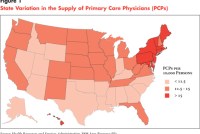
Doctor Shortages Under Health Law May Depend On Geography
Study suggests that areas with low rates of primary care physicians, such as the South and Mountain West, could struggle as they see a surge in Medicaid enrollments and federal incentives for doctors may not be much help.
Medicine’s Rising Costs Put Hippocratic Oath At Risk
A health policy analyst and physician says doctors are under pressure to ration care.
The ‘Missing Link’ In ACOs: Patients
Is it realistic to leverage the success of accountable care organizations on physician incentives alone? In other words, what about patients? Might they be that mysterious point that determines the effectiveness of ACO evolution?