Latest Morning Briefing Stories

Journalists Talk Hot Health Topics: Urgent Care Clinics Performing Abortions and Doulas’ Pay
KFF Health News journalists made the rounds on national and local media recently to discuss topical stories. Here’s a collection of their appearances.

New Federal Medicaid Rules Require One Month of Work. Some States Demand More.
Starting next year, about 18.5 million adults will be subject to new Medicaid work rules in 42 states and Washington, D.C. Applicants must show they’ve been working for at least a month before receiving benefits. Some Republican-controlled states want to triple the required work period.

Medi-Cal Immigrant Enrollment Is Dropping. Researchers Point to Trump’s Policies.
A KFF Health News analysis found Medi-Cal lost almost 100,000 immigrants without legal status in the second half of 2025. California officials say it’s not clear if immigrants are losing coverage faster than other populations, but researchers said the most obvious driver is fear of the Trump administration’s immigration policies.

Las agencias estatales de Medicaid pueden tener dificultades para mantener suficiente personal que ayude a las personas a inscribirse en los beneficios. La salud puede estar en peligro.
Rovner Recaps Medicaid Cuts’ Impact on Hospitals and Fields Caller Questions on Affordability
KFF Health News chief Washington correspondent Julie Rovner recently made the radio rounds to discuss topical stories. Here’s a collection of her appearances.
What the Health? From KFF Health News: Abortion Pills, the Budget, and RFK Jr.
This week, the Trump administration won a court battle to delay a ruling on access to the abortion pill mifepristone, angering its own anti-abortion allies. Meanwhile, the president’s budget arrived on Capitol Hill, where lawmakers are unlikely to agree to its proposed cuts to Health and Human Services programs. Lauren Weber of The Washington Post, Alice Miranda Ollstein of Politico, and Maya Goldman of Axios join KFF Health News’ Julie Rovner to discuss these stories and more.
States Face Another Challenge With Medicaid Work Rules: Staffing Shortages
Some states already don’t have enough staff to quickly process Medicaid applications and answer enrollees’ phone calls. Researchers say they may not be prepared to handle new Medicaid work rules, predicting people will lose coverage as a result.
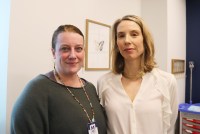
Urgent Care Clinics Move To Fill Abortion Care Gaps in Rural Areas
When the only clinic that offered abortions in Michigan’s rural Upper Peninsula closed, an urgent care facility stepped in to fill the gap. Now, others are considering similar moves as brick-and-mortar clinics close in blue states.

This Northern Cheyenne Doula Was About To Start Getting Paid — Then Medicaid Cuts Hit
Montana was on track to start reimbursing doulas, who support new and expectant parents, through Medicaid this year. But state officials halted that plan amid a budget shortfall. Other such services deemed optional under Medicaid are at risk nationwide as states brace for federal cuts.

La búsqueda de Trump de inscritos indocumentados en Medicaid arroja muy pocos infractores
Siete meses después, los resultados de cinco estados compartidos con KFF Health News muestran que las revisiones han encontrado poca evidencia de que este sea un problema generalizado.

How Medicaid Contractors Stand To Gain From Trump’s Policy
Get our weekly newsletter, The Week in Brief, featuring a roundup of our original coverage, Fridays at 2 p.m. ET.
What the Health? From KFF Health News: GOP Mulls More Health Cuts
Despite public opposition to the cuts they made to federal health programs in 2025, Republicans reportedly are considering more cuts to help pay for the war in Iran. Meanwhile, the Supreme Court ruled that Colorado cannot ban “conversion therapy” for LGBTQ+ minors. Jessie Hellmann of CQ Roll Call, Alice Miranda Ollstein of Politico, and Sandhya Raman of Bloomberg Law join KFF Health News’ Julie Rovner to discuss these stories and more. Also this week, Rovner interviews KFF Health News’ Elisabeth Rosenthal, who wrote the last two “Bill of the Month” stories.

State-Run Insurance Plans for Foster Kids Leave Some of Them Without Doctors
North Carolina rolled out a $3.1 billion insurance plan for kids in foster care, but many doctors did not accept patients on the plan. The state is one of several experimenting with a model that has left kids’ guardians scrambling to find health care providers.

Trump’s One Big Beautiful Bill Act Darkens Outlook for Government-Backed Clinics
About 17,000 federally funded health clinics stand to collectively lose $32 billion under GOP-backed fiscal policies in the next five years — just as more uninsured patients will rely on them for low-cost care.

Readers Sound Off on Wage Garnishment, Work Requirements, and More
KFF Health News gives readers a chance to comment on a recent batch of stories.
Trump’s Hunt for Undocumented Medicaid Enrollees Yields Few Violators
Federal health officials have ordered states to reverify the immigration status of hundreds of thousands of Medicaid enrollees. After seven months, findings from five states show the reviews have uncovered few immigrants without legal status who are improperly receiving benefits.
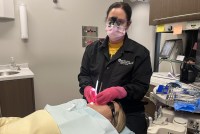
States Pay Deloitte, Others Millions To Comply With Trump Law To Cut Medicaid Rolls
The One Big Beautiful Bill Act will add red tape and restrictions for those seeking Medicaid and SNAP benefits. And the costs to update computer systems that determine eligibility for those programs will be steep.
What the Health? From KFF Health News: A Headless CDC
The Trump administration faces the challenge of naming a new director of the Centers for Disease Control and Prevention who can both satisfy the Make America Healthy Again movement and get confirmed by the Senate. Meanwhile, a new Senate bill to rescind the approval of the abortion pill mifepristone is again elevating the abortion debate, which some Republicans would prefer to stay on the back burner until after the midterms. Shefali Luthra of The 19th, Lizzy Lawrence of Stat, and Rachel Cohrs Zhang of Bloomberg News join KFF Health News’ Julie Rovner to discuss the news. Also this week, Rovner interviews Georgetown University Law Center’s Katie Keith about the state of the Affordable Care Act on its 16th anniversary.

Oz Escalates Medicaid Fraud Claims Against States After Focus on Minnesota
The Trump administration’s unprecedented actions targeting Medicaid funding in Minnesota are part of what could become a playbook as officials turn pressure toward California, Florida, Maine, and New York.
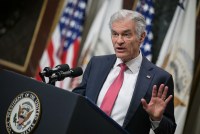
Oz Says California’s Not Fighting Health Care Fraud, but Data Shows It’s Part of a Larger Battle
Trump administration officials say the state allows rampant fraud and have promised to investigate, blaming the “Russian, Armenian mafia” in the hospice and home health care industry. But data shows hotbeds of health care fraud throughout the country, with California outperforming most other states in recovering fraud dollars.