


Latest KFF Health News Stories
First Edition: October 24, 2018
Today’s early morning highlights from the major news organizations.

States Explore Paths To Pay Their Share For Medicaid Expansion — Using Political GPS
The state-federal health insurance program is more popular than ever. Now, states that want to expand eligibility are devising new strategies to pay for it — creating, in many red states, a significant political challenge.
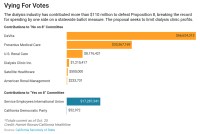
Spending Against Dialysis Ballot Measure In California Breaks Record
Dialysis companies have contributed more than $110 million to defeat an initiative on California’s Nov. 6 ballot that would limit their profits — breaking the $109 million record set by the pharmaceutical industry in 2016.
Editorial pages focus on these health care topics and others.
Media outlets report on news from California, New Hampshire, Connecticut, Florida and Texas.
While saying the punitive damages had been set too high, the judge rejected a request from the agribusiness for a new trial. A jury had ruled in favor of a groundskeeper who said his exposure to the glyphosate-based weed-killer caused his non-Hodgkin lymphoma. Monsanto still plans to appeal the verdict.
If patients select inadequate plans, they can end up with a surprising amount of out-of-pocket costs. Experts provide tips for making the smart choices during the open enrollment session that runs into early December.
New research highlights a failure to address post-depression “flourishers”: the 10 percent of patients who are diagnosed with depression and have gone on to thrive a decade later. Understanding these patients could help others, researchers say. Other public health news also focuses on Ebola, plastic invasion of the gut, organic foods, lavender scents, eating well, flu vaccines and more.
The drugs can have serious side effects, and there has been little research to determine whether they were actually effective. A new study calls into question their widespread use in hospitals. As many as one in four hospital patients become delirious, with the risk increasing for older patients and those who have had surgery.
Opioid Fatalities Are Finally Falling, But Experts Caution That Trend Could Just Be A Blip
“After 40 years of this predictable growth pattern, we can hope that the curve is finally bending downward for good,” Dr. Donald Burke, the dean of University of Pittsburgh’s Graduate School of Public Health, told Stat. “But history tells us to interpret these wobbles cautiously.” News on the national drug crisis comes out of California, New Hampshire and Massachusetts, as well.
‘Top To Bottom’ Review Of Refugee Resettlement Program To Be Conducted By HHS
The refugee resettlement office has been criticized recently because of its “zero tolerance policy” at the border and the director’s efforts to prevent teen migrants from getting abortions. Meanwhile, court filings reveal that authorities have held some immigrant teens for months, violating a 20-year-old court order on how long minors can be detained.
The measures are being watched closely as a method to expanding Medicaid in states with resistant legislatures. Ballot initiatives “are so powerful because they strip away from the partisanship and the tribalism that dominates so much of our politics,” said Jonathan Schliefer, executive director of The Fairness Project. “When it comes to health care, the biggest gap isn’t between Republicans and Democrats. It’s between politicians and everyone else.” Meanwhile, The Washington Post fact checks campaign ads that claim Republicans will get rid of Medicare.
The report that the Trump administration would define gender at birth has rankled scientists who study sex, gender identity and gender expression.
Advocates for transgender and other LBGTQ community rights organized a fast and furious campaign after it was revealed that the Trump administration is considering a new federal definition of gender that would effectively deny legal recognition and civil rights protections to transgender Americans.
Trump Plan Targets Restrictions On Health Reimbursement Options For Small-Business Employers
The administration is proposing regulations to expand so-called “health reimbursement arrangements,” which are employer-funded, tax-advantaged accounts that employees can use to cover health costs. Critics say the move could allow employers to devise strategies for shifting workers with high health care costs off their corporate plans.
States, for example, would be able to subsidize short-term plans that don’t offer the comprehensive coverage that is guaranteed under the Affordable Care Act. The timing of the announcement just weeks before the midterms, when Republicans have been playing defense over preexisting conditions protections, raised some brows among experts.
First Edition: October 23, 2018
Today’s early morning highlights from the major news organizations.

Gavin Newsom Is Bullish On Single-Payer — Except When He’s Not
The front-runner in the California governor’s race, known for his political audacity, has officially endorsed the controversial move to create one public insurance program for all Californians. Yet he also faces formidable challenges, and liberal critics fear he’ll retreat.

Fixing Obamacare’s ‘Family Glitch’ Hinges On Outcome Of November Elections
This gap in the 2010 health law means health insurance remains unaffordable for millions of Americans. For now, relief is hard to come by.

Marketplace Subsidies May Be Option In 2020 For Plans That Skirt Obamacare
The new guidance allows states to ask for waivers from provisions in the Affordable Care Act governing not only subsidies, but also the benefits insurers must offer in all their plans.