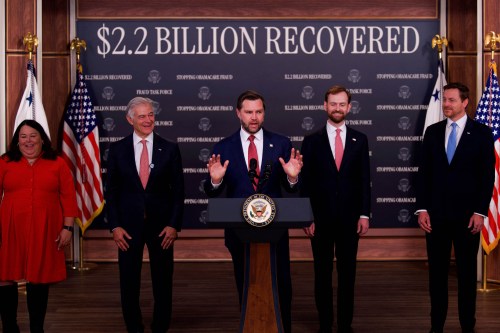
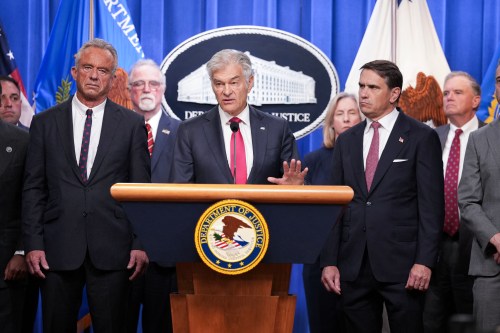
The Trump administration views its focus on fraud in federal health programs as a message that will resonate with voters in the midterm elections and perhaps help Republican candidates close a gap with Democrats, who have traditionally had an advantage on healthcare issues in general.
About 44% of voters — and 54% of Republican voters — say fraud in government programs is “extremely important” for candidates to talk about, according to a KFF poll conducted in mid-September, suggesting the fraud focus might be connecting with the GOP base. Such fraud is also the top issue rural Republican voters want candidates to talk about, based on a separate survey by KFF and The Associated Press.
But Republican efforts to talk this talk have also opened a broader political fight over the extent of potential abuses and the administration’s response to it.
Democrats contend the administration has relied on insufficient evidence to target blue states and cut programs Republicans have long tried to shrink. But President Donald Trump’s pardons of executives convicted of healthcare fraud and his administration’s moves to weaken some protections against abuses stand in contrast with the administration’s proclaimed fraud-fighting goals.
The GOP focus, Democrats say, is a cover — a counternarrative — for the Trump administration’s weakening of safety net programs.

Email Sign-Up
Subscribe to KFF Health News' free weekly newsletter, "The Week in Brief."
Most recently, the Centers for Medicare & Medicaid Services booted about 760,000 people from Affordable Care Act plans, saying they’re probably “phantom” customers in many cases, fraudulently enrolled by unscrupulous brokers. Some, though, have already been reenrolled.
“This is yet another attempt by the Trump administration to kick hundreds of thousands of vulnerable Americans off their healthcare,” Rep. Melanie Stansbury (D-N.M.) posted on the social media site X. “Millions are already struggling to access healthcare — and this is their plan?”
GOP candidates have pounced on the investigations and allegations. In Minnesota, Republican gubernatorial candidate Lisa Demuth, who is speaker of the Minnesota House, released a September ad claiming that her Democratic opponent, U.S. Sen. Amy Klobuchar, “has never done anything to stop the fraud here in Minnesota.” Klobuchar has said that as governor she would “launch a top-to-bottom audit of state government to root out fraud.”
The Trump administration says its actions are necessary because fraud diverts taxpayer money from people who legitimately qualify for government programs. Democrats say that’s a facade.
“It’s really a way to distract and reframe the cuts in a different way, to say it’s part of an anti-fraud effort,” said Anthony Wright, executive director of Families USA, an advocacy group focused on expanding health coverage. “Fighting fraud shouldn’t result in people losing coverage.”
The anti-fraud efforts highlight a broader political fight ahead of the midterms. Republicans say they’re protecting taxpayer dollars by going after bad actors. Democrats contend the administration is — with insufficient evidence — targeting blue states to cut programs the GOP has long sought to shrink.