
A Shrinking Safety Net
The Host
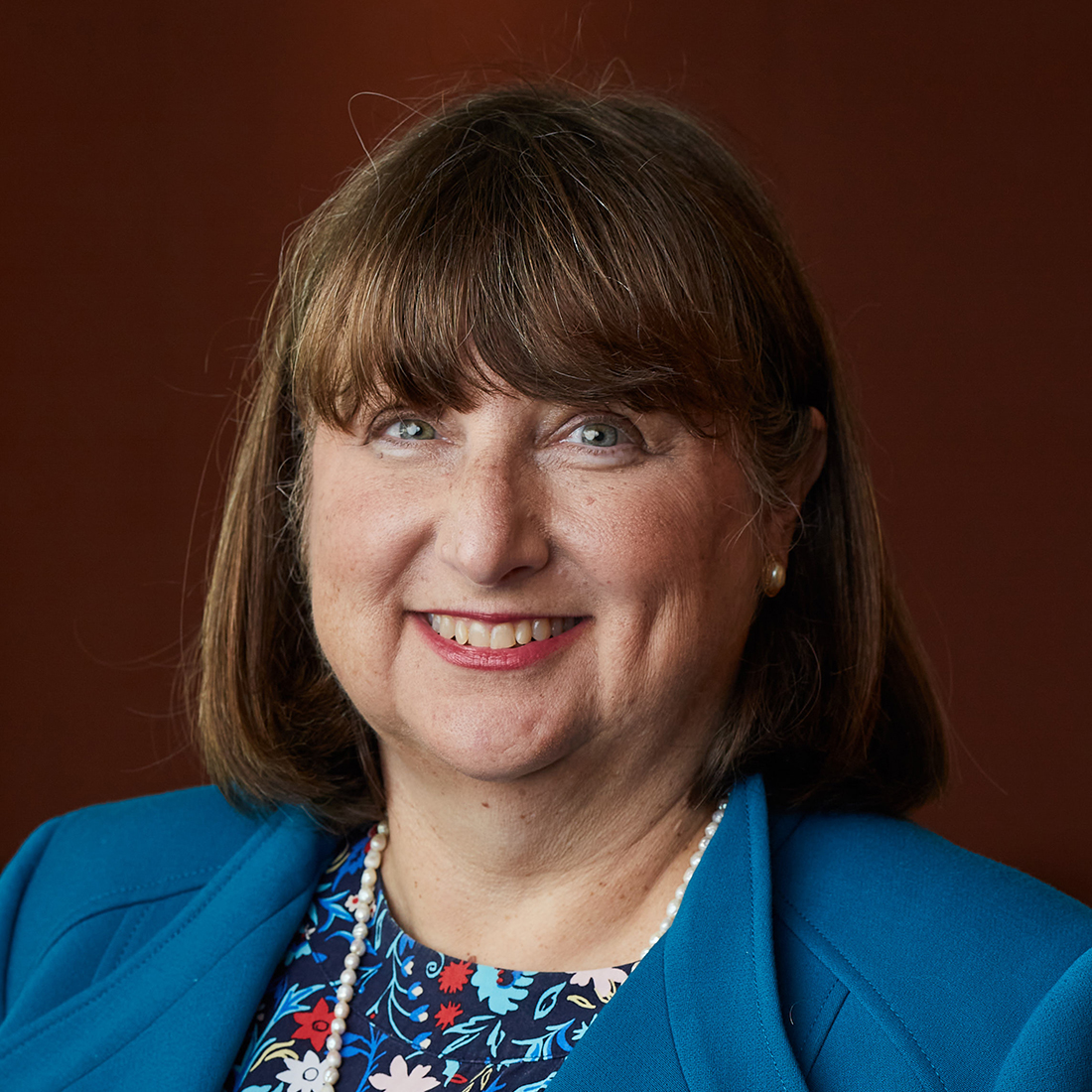
Julie Rovner
KFF Health News
Julie Rovner is chief Washington correspondent and host of KFF Health News’ weekly health policy news podcast, "What the Health?" A noted expert on health policy issues, Julie is the author of the critically praised reference book "Health Care Politics and Policy A to Z," now in its third edition.
Enrollment in the federal food stamp program — the Supplemental Nutrition Assistance Program, known as SNAP — is down by more than 10% nationally, according to a new report, and in some states by as much as half. Those numbers are falling as states enact changes ordered by the GOP budget bill passed in 2025. The drop is much steeper than was predicted and could portend a similar fate for those on Medicaid, as states prepare to implement many of the same changes ordered for SNAP.
Meanwhile, amid a rise in reported cases of the gastrointestinal ailment caused by the parasite cyclospora, federal public health officials once again struggle to explain to a confused populace how to stay safe.
This week’s panelists are Julie Rovner of KFF Health News, Joanne Kenen of the Johns Hopkins Bloomberg School of Public Health and Politico Magazine, Alice Miranda Ollstein of Politico, and Margot Sanger-Katz of The New York Times.
Panelists

Joanne Kenen
Johns Hopkins University and Politico


Among the takeaways from this week’s episode:
- Participation in the nation’s food stamp program is down, with children representing nearly half of those losing benefits, according to a recent analysis. Some states are showing much larger drops than others. The GOP-passed budget law imposes penalties for errors, leaving states spooked about the possibility of losing funding — and suggesting problems ahead for the full rollout of Medicaid work requirements next year.
- President Donald Trump’s immigration crackdown is increasing pressure on the health system, in particular on the availability of home-based and long-term care workers — including those who fill critical roles such as serving food and driving patients to medical appointments. Research has shown that the presence of immigrant workers has a protective effect on the health of their charges.
- Responding to revelations that doctors are reaping large payouts from the surprise-billing arbitration process, the Trump administration this week released information showing a spike in such payments and noted the need for changes to the law — without specifying what kind of changes. That law, the No Surprises Act, took effect in 2022 with the primary intention of shielding patients from big bills when they unknowingly receive out-of-network medical care.
- In other news, the Pentagon is imposing testosterone tests for many service members. The cyclospora outbreak continues. And the Trump administration announced plans to withhold Medicaid funding from California and Minnesota over accusations of fraud.
Also this week, Rovner interviews Sen. Bill Cassidy (R-La.), chairman of the Senate Health, Education, Labor, and Pensions Committee, as part of the “How Would You Fix It?” series.

Email Sign-Up
Subscribe to KFF Health News' free Morning Briefing.
Plus, for “extra credit,” the panelists suggest health policy stories they read this week that they think you should read, too:
Julie Rovner: The New York Times’ “The Fake Influencers Selling Wellness on Your Feed,” by Arijeta Lajka, Isabelle Niu, Mark Boyer, James Surdam, and Dan T. Peters.
Joanne Kenen: Stat’s “A Most-Wanted Fugitive Appears To Have Been Secretly Working as a Biotech Executive,” by Adam Feuerstein.
Margot Sanger-Katz: NPR’s “Amid Nurse Shortage, a University Rolls Out the Welcome Mat for Men,” by Andrea Hsu.
Alice Miranda Ollstein: Roll Call’s “Trump Administration Puts Kibosh on HIV Prevention Funding,” by Ariel Cohen.
Also mentioned in this week’s podcast:
- KFF Health News’ “Doctors ‘Cringe’ at Possibility of Documenting Which Medicaid Enrollees Too Sick To Work,” by Sam Whitehead.
- KFF Health News’ “A Deloitte-Run System Denied Medicaid Benefits for Michigan’s Disabled. Now Trump’s Law Piles On,” by Rachana Pradhan, Samantha Liss, and Kate Wells.
- The New York Times’ “Senior Living Facility in Distress as Immigrant Caregivers Are Forced Out,” by Miriam Jordan.
- The Wall Street Journal’s “Medical Billing Arbitration Paid Out $15 Billion to Providers in Surprise Bill Disputes,” by Anna Wilde Mathews and Tom McGinty.
click to open the transcript Transcript: A Shrinking Safety Net
[Editor’s note: This transcript was generated using transcription software. It has been edited for style and clarity.]
Julie Rovner: Hello, from KFF Health News and WAMU Public Radio in Washington, D.C. Welcome to What the Health? I’m Julie Rovner, chief Washington correspondent for KFF Health News. And, as always, I’m joined by some of the best and smartest health reporters covering Washington. We’re taping this week on Thursday, July 23, at 10:30 a.m. As always, news happens fast, and things might have changed by the time you hear this. So, here we go.
Today we are joined via video conference by Margot Sanger-Katz of The New York Times.
Margot Sanger-Katz: Hello.
Rovner: Alice Miranda Ollstein of Politico.
Alice Miranda Ollstein: Hi, Julie.
Rovner: And Joanne Kenen of the Johns Hopkins Bloomberg School of Public Health and Politico Magazine.
Joanne Kenen: Hi, everybody.
Rovner: Later in this episode, we’ll have our “How Would You Fix It?” interview with Louisiana Republican Sen. Bill Cassidy, chairman of the Senate Health, Education, Labor, and Pensions Committee. But first, this week’s news. I want to start this week with what I’m calling the “Shrinking Safety Net.” The Center on Budget and Policy Priorities is reporting that overall participation in SNAP [Supplemental Nutrition Assistance Program], the nation’s food stamp program, is down by more than 4½ million people. That’s about 11% between last year’s enactment of the Republican budget bill and this past April. In Arizona, nearly half the recipients have left the rolls, and in Louisiana, Florida, and Oklahoma, it’s closer to 20%. Nearly half of those losing benefits are children, according to the analysis, and this is before some of the biggest cuts to the program even take effect. What does this mean, and what does it portend for Medicaid cuts that the SNAP declines are so much larger than were anticipated when this bill was passed in 2025?
Sanger-Katz: The Republican bill put a lot of new burdens on states that to administer SNAP, and it created these penalties that if they had a lot of errors, then they were going to end up having to pay a much larger percentage of that total bill. And I think what’s happened is that that sort of spooked a bunch of states, and I think Arizona in particular, is facing some complicated politics around the program. And so I think in their effort to reduce the error rate, they’ve created a lot more paperwork for beneficiaries to prove that they’re eligible, because the state doesn’t want to take a chance that if they go back and check later, that there will be some mismatch and they will get dinged for making an error. So I think there are real lessons for what’s going to happen in Medicaid. The SNAP changes are happening a little faster than the changes to Medicaid. But I think there are a lot of the same incentives. There also are going to be increased penalties for states that have a high error rate in Medicaid, and there are going to be additional paperwork requirements added to Medicaid for people to prove that they’re complying with the work requirement and certain other things that didn’t exist before.
Rovner: And as we’ve said a bunch of times before, states who are anticipating these cuts are already making cuts because they have to do budgets before some of these cuts take effect. Joanne, you wanted to say something?
Kenen: No, I think that Medicaid changed suddenly on June 1, right? I mean, the coverage losses were expected under the legislation. That’s how the money was saved. CBO says people will lose coverage, and that’s where the savings were, by and large. The interim final rule that dropped — but we didn’t know how bad it would be. We didn’t know how many people, partly because states had a fair, they had certain things they had to do, but they had a lot of flexibility in how to do them. So that the coverage losses were an unknown, right? They might have been as bad as the liberal critics said, and they might not have been as bad as some of the defenders of the law said. It was a wait-and-see. On June 1, as we’ve talked about before on the podcast, CMS [Centers for Medicare & Medicaid Services] dropped an interim final rule, and it changed things a lot. And it basically took away a lot of the state flexibility. And instead of letting states say, “OK, you have such-and-such a disease. We know you have such a disease. We have your medical records. We have the coding from the bills from Medicaid. This is, clearly, you can’t work.” That’s no longer good enough. You can’t use their medical history. Every single person who’s sick on Medicaid, who can’t work, who contends they can’t work, has to go for a workup by a physician. Right now we’re not sure if it’s other health providers, who really isn’t trained in disability medicine. Manatt just came out with a study just a day or two ago saying that the coverage losses are going to be much higher than anticipated. And there’s a lot of hurdles for individuals, and there’s a lot of costs for the states. So, like, the SNAP is now, like, OK, that was SNAP, and this is Medicaid. Now it’s just much more alarming to watch what happened in SNAP.
Sanger-Katz: I think another lesson from SNAP is that we’re going to see a lot of state variability in the outcomes. You know, these are both programs, they’re federally funded, but they’re administered by states, and states have different capacities. They have different bureaucracies. They have different tolerances for spending money on these programs. And we’re seeing, even in SNAP, there’s kind of like people are losing coverage everywhere. But like in Arizona, it’s like half of the people. And I think that what we’re likely to see something similar play out in Medicaid, where some states either are just not willing to spend the money, or they’re very scared of penalties, and so they’re like really have very strict criteria. And other ones just, like, won’t be good at it, and they’ll make a lot of mistakes, and that will cause people to lose coverage too. I think every state is different. Every state is building this from the ground up, and there are going to be different levels of policy planning, risk tolerances, and just like general glitchiness as they roll it out. And I think we’re seeing that in SNAP. It’s a lesson of what we’re seeing now that will carry over almost certainly.
Ollstein: And to that point, I think, in some places, like Joanne said, you are going to have to, you know, basically get a doctor’s note in order to keep your Medicaid coverage. But other states are trying right now to come up with some kind of formula to make that not have to happen. So saying, you know, if you have X many inpatient visits per year and Y many outpatient visits per year, or you have this many drugs that you’re on, then that is enough proof that you are too medically frail to work part-time. And so they’re trying to come up with ways to just pull it from data and not have to rely on patients and providers and give them this extra burden. But we’ll see if that’s approved by CMS. We’ll see if that’s successful. I mean, CMS’ guidance left states a little bit in the dark about how to operationalize this.
Rovner: Well, that is the perfect setup, I would say, for my next question, which is we have a couple of stories from my colleagues here at KFF Health News about complications to come from the Medicaid cuts, particularly the work requirements that states need to have in place by next Jan. 1. One of the stories, by Sam Whitehead, is about doctors who are worried about being swamped by patients who need medical documentation that they’re too frail to be subject to the work rules. Said one doctor in the story. “We’re trained to learn about someone’s symptoms, make diagnoses, treat them. We are not trained to make these kinds of work determinations.” The other story, by Rachana Pradhan, Samantha Liss, and Kate Wells, is about how an automated eligibility system from IT giant Deloitte is rejecting eligible people with disabilities in several states, including Michigan, Tennessee, and Texas. Deloitte works on Medicaid eligibility systems in more than half the states. It’s heavily involved in creating these IT systems for their work rules. Fair to say, both of these things, as you guys were all leading up to, do not bode well for what’s about to happen to Medicaid.
Kenen: No, and an additional factor, it’s not just Deloitte. I mean, states had contracted with the vendors. They didn’t have a lot of time. This bill was signed into law just about a year, almost exactly a year, ago, and they had 18 months to get ready. It’s Jan. 1, 2027. This June change to the rules means they have to really rework a lot of the tech they were doing, and they were given seven months. So is this as big as healthcare.gov? No, but it’s complicated, and the sort of blueprint and tech plans they were doing now have to be modified. And they’re still waiting on more guidance. There are still unknowns.
Rovner: For those who don’t remember healthcare.gov …
Kenen: How can anybody not remember healthcare.gov?
Rovner: There were people who were not around in 2013, Joanne, when healthcare.gov rather dramatically failed to launch. Sorry, Alice, I interrupted you.
Ollstein: Yeah, no, we did some reporting about this weeks ago, and basically experts told us, Look, it’s problematic if these determinations are left up to individual physicians. There can be biases. Physicians aren’t trained to make these kind of determinations, like you said. People might not even be able to reach a doctor and make an appointment to get that outcome. But they’re saying if it’s not up to physicians, that could be even worse. If it’s up to some sort of algorithm or some sort of state bureaucratic office that never even meets the person and just makes a determination, and they may not know how to appeal it. And so states are worried about it being a lose-lose situation.
Rovner: Yeah, well, in the Deloitte story, that’s exactly what it was. It was, you know, it was basically an automated system that was bouncing eligible people, either bouncing them out or putting them in inappropriate programs for which they weren’t eligible. They were having trouble finding a real person to fix what was obviously a mistake.
Sanger-Katz: And I think one thing that both of these stories really emphasized to me is that whatever you think about the merits of this policy change, you know, like I think there are lots of Americans who think that it is reasonable to have a work requirement for Medicaid. And I also think there are lots of people who think that you shouldn’t just get out of that because you have a medical diagnosis. That there should be some reason why you can’t work. If we’re requiring people to work, maybe we want to require people to demonstrate that they can’t work, to get an exception. But whatever you think about the merits of those arguments, this is a monumentally difficult task for states to implement. This is not an easy policy. There is no all-knowing eye that can sort of look over the Medicaid population and decide who is eligible or not eligible according to these criteria. States have to create rules. They have to create what kinds of proof they’ll allow. They have to build computer systems that can sort people and that can make these determinations. And all of that is new and is very difficult. And is very slow. States, in most cases, don’t even build their own computer systems. They work with these contractors that do it for them, and the contractors have a mixed track record in really executing in a really clean way. So, I just think, you know, when you talk to people about this, I feel like we always talk about this in healthcare. There’s like the legislation. There’s like the idea, and Congress is trying to get the idea. These are the people that we want to get Medicaid, and these are the people that we want to encourage to work in order to maintain Medicaid. I think on the theoretical level, there’s that. But then there’s like the nitty-gritty implementation, and that’s like the regulatory process, that’s the state government, that’s the procurement, that’s the contracting. And I just think there’s a lot of sand in the gears of that. This is actually not easy for states to do, and even the states that are devoting a lot of resources to it and want to get it right, and even the states that really believe in the goals of the policy are probably like just bumping into a lot of the difficulties now.
Kenen: And many of the people affected have chronic diseases; they’re up and down. You can have good periods when you’re working. You can have bad periods when you can’t, and that’s the nature of chronic diseases for many, many, many individuals. It’s inconsistent. So if you go to the doctor on Jan. 1, that doctor really doesn’t know. I mean, this is true of mental health as well. You know, how long can you work? How consistently you work? There’s just going to be all sorts of problems, and I promise to stop there.
Rovner: OK. Well, also this week there are two immigration-related safety net stories. First, the Trump administration has officially rescinded the Biden administration’s rewrite of the so-called public charge rules, which are designed to ensure that legal immigrants are financially self-sufficient. The new rules, or the lack thereof, give immigration agents far more leeway to decide on their own who might or might not become dependent on government benefits. Alice, you covered this back in Trump I. It ended up with lots of people who were actually eligible for benefits not using them because they feared becoming or being deemed a public charge when applying for a green card or more permanent immigration status. Any reason to think the same thing isn’t about to happen again?
Ollstein: No, there is no reason to think that history will not repeat itself. Although I will say that the policy now is not exactly the same as it was during the first Trump administration. The new policy just gives a lot of discretion to individual immigration officers to make a determination, looking at, like, the totality of someone’s circumstances. And so, you know, Medicaid and some of these other safety net programs that people are legally eligible for didn’t used to count against someone when they were applying for a green card, and now they could. Again, it’s not mandatory that, Oh, if you’re enrolled in Medicaid, automatically you’re barred. But it is something that an immigration officer would be allowed to consider. And so, yeah, a lot of concern not only from the immigrant ICE [Immigration and Customs Enforcement] community, but from states. I mean, this could affect state budget if people are going to need to turn for uncompensated care to other providers. There’s concern from the public health community about if people don’t have coverage to get vaccinated and to get checkups. It’s not like there are islands of immigrants. This is folks [who] are incorporated into our society. We live in a society, as we discovered during covid, and what impacts some people impacts everybody.
Rovner: Yeah, and, I think as Margot said, it’s one of these things where the concept sounds great, and the carrying it out is a lot harder. Well, also a couple of weeks ago, we talked about how nursing homes and assisted living facilities are freaking out about the repeal of temporary protected status for immigrants from Haiti and Syria because so many of them work in the long-term care space. This week, The New York Times has a story about how this immigration crackdown is reaching even further, to seniors who don’t yet need medical services but still require help with routine activities, who live in these, you know, senior buildings. There’s already a labor shortage for home health aides and others in eldercare, which is generally very hard work for very low pay. This could spiral into a real crisis. We’re going to end up with Gen X and millennials having to take care of their own baby boomer parents.
Sanger-Katz: There was a really interesting study that was published a few months ago from Jonathan Gruber, the economist at MIT, and some of his colleagues that basically found that increases in the population of immigrants in a given place actually reduced mortality among Medicare beneficiaries. It seems really clear that immigrants are a really important part of the caregiving workforce in America right now. And, as you said, Julie, it’s home health workers, it’s nursing home employees, it’s people who work in hospitals, and it’s also people who are doing some of this kind of, like, informal elder care, helping out in assisted livings, helping people at home. You know, they may not be providing healthcare services, but they are helping elderly people who have healthcare needs.
Rovner: It’s the people who work in the dining rooms. It’s the custodians in these senior buildings. I mean, it’s the people who, you know, who help people get around and drive them to doctor’s appointments.
Sanger-Katz: I felt like that study — I was really struck by, because you get the sense that it’s not just that we see these people in these jobs, but that having more of them around actually seems to have a health protective effect for the people that live there. Because I think it does make it easier to staff all of these jobs and to staff them with people who are competent and who want to do that kind of work.
Kenen: And who have language skills. There’s actually been studies showing that it helps to have more Spanish-speaking staff in nursing homes and rehab facilities.
Rovner: All right. Well, meanwhile, Margot, since you are here, let us talk about surprise medical bills. A few weeks ago, we talked about the blockbuster story you wrote with Sarah Kliff about how some doctors were getting gigantic multiples of what Medicare or private insurance would have paid through the negotiation system that was set up to settle claims between insurers and providers. Now the administration says they may need to fix it? Catch us up.
Sanger-Katz: Yeah, I mean this was a bit of a surprise to me, I will say. Yesterday there was data that was published that sort of gave us a sense of the scope of the system. Wasn’t hugely surprising, but the top-line numbers are. It looks like the amount of money that this system has awarded to doctors and other healthcare providers increased from around $4 billion in 2024 to $14 billion in 2025. So you can just like really see there’s been a huge growth in the number of cases, but it also seems like doctors are winning higher awards per case. And so, what’s happening is that the overall cost of the system has really ballooned. The Trump administration has said very little about this. They did finalize one regulation that had been proposed in the Biden administration that was kind of technical fixes. And yesterday they said that people are gaming the system and that they need to, quote, “clean it up.” So I do think this is the first indication we’ve seen that there is concern by Trump officials that there may be a problem with this arbitration system that doctors are using to resolve these disputes. But they provided no specifics at all about what they will do, what policy avenues they will pursue, and, you know, in a lot of my conversations with the players in this system, people have not identified, like, really obvious, easy places where the regulators can make big changes. I think there are some small changes that the regulators can make, but almost everyone that I talk to about this problem seems to think that Congress probably has to make changes to address some of the excessive spending that we’re seeing. And there seems to be very little appetite for that. So I’m really looking forward to seeing what it is the Trump administration has in mind, what kinds of policies they will pursue here. But, based on what they’ve said so far, I don’t know what they’re going for. And I would say, based on what I know about this topic, it is not obvious to me what the easy levers are for them to pull.
Rovner: And I will add that I … in my interview with Sen. Cassidy, I asked him about this, and he kind of demurred, suggesting that, as you will hear, that, Well, if we can fix problems with price transparency in general, that could fix this problem. Because then people won’t end up going to the doctors who are going to go to arbitration and win, you know, multi-$100,000 awards from these arbitrators. But I think you’re right, Margot. I think we’ll see.
Sanger-Katz: I will just say, to push back on what Sen. Cassidy apparently told you, is one thing that really has worked about this law is patients are completely protected. In these situations where these large arbitration awards are being generated, patients are never asked to pay more than they’re in network cost sharing. And so I don’t know how realistic it is to ask patients to change their shopping behavior in order to resolve these high payouts. I think that the incentives probably really have to be focused much more on the insurance companies and the healthcare providers themselves.
Rovner: Yeah, well, we will see how that goes. All right, next: testosterone testing at the Department of Defense/War. Really. Secretary Pete Hegseth has ordered that male service members over age 30 will be required to be screened for, quote, “testosterone deficiency” annually, although testosterone replacement therapy, if a deficiency is found, will be voluntary. Hegseth said this is necessary for troops to operate, quote, “at their absolute best.” But doctors warn that rather than maintain military readiness, inappropriate hormone therapy can cause infertility or increase the chance of heart rhythm changes and bone fractures, and that screening at age 30 is inappropriate anyway. And in addition to everything else, isn’t this basically gender-affirming care? I thought this administration was against that.
Ollstein: So basically, everything that is getting restricted for trans people is much more widely used by cisgendered people. So most young people who are put on puberty blockers are not trans. Most people who get top surgery are not trans. And most people who, you know, use these hormone treatments are not trans. And so, yes, this is an example of that double standard that, you know, is seen in other areas of medicine coming into play for sure. Not to mention the medical risks that you point out. It’s just sort of a cartoonish idea of what masculinity entails and what contributes to it that doesn’t really align with science.
Rovner: Yeah, I’ve seen just an enormous amount of head-scratching about this whole thing, I mean, I’m just wondering, is he trying to deflect attention from other things going on at his department?
Kenen: No, there’s a whole subculture that’s all about more testosterone. We should be clear that there’s some people who do, medically, have low testosterone, just like there’s some people who medically have low thyroid or other endocrine problems. I mean, you … and there’s medication for that, and it’s appropriate if you are clinically, you know, in that category.
Rovner: Right. And having low testosterone can cause medical problems that can be addressed.
Kenen: Right. So if you are really low — like not, sort of, what the “Bro World” says is low — but if you’re what, you know, a medical lab says is low, yes, that’s an appropriate, it’s an appropriate treatment. But there’s this whole sort of cultural thing that more testosterone is better. And it’s just one of these things — like with many other supplements, but this is a little bit more complex — it has taken off and sort of taken a cultural thing of its own. I mean, I saw a quote and I wrote it down, and I forgot to write down where I saw it, so I apologize for that. It might have been The Times, but I don’t know. And it’s a great quote from a physician who said, “If you just dole out the testosterone, the testes will shrink, and you can’t reliably count on them coming back.” That’s just sort of, like, that’s not penetrating the cultural idea to start T-maxing.
Rovner: Right, more testosterone is better.
Sanger-Katz: Although I think our Health and Human Services secretary has also said that he himself takes testosterone, so I think it’s not just the defense secretary. I think there are a number of high-level Trump officials who seem to be enthusiasts for this particular kind of treatment.
Rovner: All right, we’re going to take a quick break. We will be right back.
So the public health panic of the week concerns cyclospora, a parasite that’s hard to detect, hard to get rid of, and causes a very nasty gastrointestinal illness. Cyclosporiasis, which is the ailment the parasite causes, is more common in the summer because it tends to infect fresh produce, mostly lettuce and herbs, and thin-skinned fruit like berries. But this summer, we’ve seen an explosion of cases (pun intended): more than 11,000 in 41 states. It’s maybe up by the time I’m even saying this. Normally, the FDA and the CDC [Centers for Disease Control and Prevention] would be all over this, trying to trace back where the infected food came from. But we know that both agencies have lost a lot of scientific staff in the past year. Over the weekend, the FDA announced that it had detected the parasite in lettuce from Mexico that wasn’t part of an initial lettuce recall that was linked to Taco Bell and many large grocery chains. Then the FDA backtracked, saying, “Yeah, it was a false positive.” But apparently, that doesn’t mean that the Mexican lettuce from produce giant Taylor Farms is not implicated. Now everybody is confused about what’s safe to eat. Joanne, you wrote an entire book about public health communication. How are we still so bad at communicating this kind of thing?
Kenen: This is a really difficult thing, right? It’s very hard to track because it takes about two weeks for you to get symptoms. And then now, if people are sick, they’re going to sort of think that might be what they have. But you know, a few weeks ago, before there was publicity, you know, we all get tummy aches, right? And you don’t necessarily seek medical care. In this case … it can really go on and be very severe and can last, and people will seek medical care. But for some people, it’s not as — we don’t really know how many people are affected, and we also don’t know how many people are currently infected and … not yet showing symptoms. It’s big; it’s thousands. But the confusion here, I mean, first of all, you know, as you noted, CDC and FDA have both had cutbacks. There’s fewer staff. There’s fewer resources. This is really confusing, and it’s been made more confusing by absolutely everybody. There have been people who … there’s been political contacts. Taylor Farms has contacted the White House. … When the FDA found that false sample, they really did not communicate it that well. They didn’t say, This is one sample that might have led us to find yet another source, but what we’ve told you is already true. And follow our advice. They just … made it sound like it really wasn’t Taylor Farms. Then there was another thing where Taylor Farms said the FDA apologized. The FDA said they didn’t apologize, and then the Taylor Farms got a lot of attention because it deleted its social media posts. But I went onto their website last night, and it’s still there. They’re still saying that the FDA apologized. It’s confusing, too, because it’s primarily iceberg lettuce, but every summer there’s some of this, and it’s from cilantro, it’s from basil, it’s from raspberries is a biggie. So the CDC isn’t saying, OK, a lot of this is coming from Taylor Farms, but really be careful about these other things because we’re still investigating. I actually saw, I won’t identify the reporter or the publication, but in a major national report, major national paper, once the lettuce was identified at Taco Bell, this person said, “Oh, I’ve had these raspberries in my refrigerator. I’m glad I can eat them now.” Well, we don’t know that they can eat them now, you know. And then there’s the usual rumors that … everywhere there’s rumors, right? I mean, you can’t stop them. They just proliferate. So I think everybody has made a communication mistake every single step of the way. And then you have you know conspiracy theories about absolutely everything that, you know, it’s not really the lettuce. And then people think … Oh, we’re hearing it was Taco Bell in five states. Well, if I didn’t eat Taco Bell, I’m OK. No, because you could have bought the lettuce, and not all the lettuce is called Taylor Farms. And then people think, Well, if I go to a fancy organic store, it’s OK. No, you know, just don’t eat raw lettuce. The other thing I learned is it’s, like, the contamination. It’s really, really difficult. … If farmworkers are not able to, like, wash their hands well, and they were using hand sanitizer. That’s not good enough to get rid of this stuff. Chlorine isn’t good enough to get — this is really a hard parasite to deal with.
Rovner: Yeah, basically, I think I’ve heard them say, If you want to eat lettuce, buy a head of lettuce and throw away the outside three layers, and then eat the rest.
Kenen: Right, and then wash the rest of it. You’re also seeing all these recipes now online for how to stir-fry your lettuce.
Rovner: That’s true, yes. Cooking does kill the parasite.
Kenen: I’m growing my own. That’s my solution.
Rovner: I’ve been picking my own.
Kenen: Right, right. But I ran out, so I just had to plant more, but …
Rovner: All right. Finally, this week at the Department of Health and Human Services, Secretary Robert F. Kennedy announced the latest in the department’s fraud crackdown: the withholding of more than a billion dollars in Medicaid funds from Minnesota and California. HHS is accusing those Democratic-governed states of failing to properly document shared Medicaid spending, mostly for home care services. Minnesota officials told Stateline that the feds have yet to explain exactly what deferrals are for or how they calculated the amount. Similarly, California officials said HHS is targeting the state for political reasons, and that home care actually saves the federal government money by keeping people out of more expensive nursing homes. Now, states and the federal government have been fighting over fraud since the beginning of the Medicaid program, but this is really the first time HHS has withheld this level of funds. I feel like this story is kind of flying under the radar. It’s a big deal. We spent the whole first part of this podcast talking about how states are having to spend time and effort and money to get these work requirements ready. I mean, this could really cripple some states’ Medicaid programs, couldn’t it?
Sanger-Katz: Yeah, this is real money, and this is a kind of rescinding of money that Centers for Medicare & Medicaid Services really have almost never done before. I think it’s somewhat unpredictable to state. At least with, like, the work requirement, there’s some policy planning. There’s some awareness of what the rules of the road are and things that they can do. I think there’s a couple things going on here at once. One is that there is a lot of fraud in Medicaid. The administration is pointing to a problem that is real. I feel like the comments of the California officials that home-based care for elder people saves money by keeping people out of nursing homes — that is true, but only if those services are actually being provided to people. If there are fraudulent services in that sector, which we know that there are, that’s not really benefiting anyone’s health. That’s just wasting money and giving it to criminals. So, I think the administration feels like this fraud message is really powerful for them. There’s obviously a lot of political discussion about healthcare affordability, how healthcare has gotten so expensive, and I think neither party has a really great policy answer for that. I think the Trump administration is focusing on this one. They’re saying, “Well, this is just pure waste. If we can get this pure waste out of the system, that will lower the cost of healthcare.” And so I think they’re kind of banging this drum over and over again. But I don’t know that this particular mechanism is helping states actually reduce fraud. I think it’s more punishing states that are seen as political enemies, and I do think that the loss of those dollars is really going to affect the functioning of those programs.
Rovner: Well, meanwhile, a new poll from my colleagues here at KFF suggests that the administration’s focus on health fraud rather than healthcare cost writ large might be politically misplaced. According to the poll, nearly two-thirds of voters think the administration’s anti-fraud efforts towards Medicaid are motivated mostly by politics, and fewer than half think the effort is likely to save taxpayers money. The poll also found that more than two-thirds of respondents, including half of Republicans, say that ensuring Medicaid beneficiaries can get the care they need is a higher priority than preventing fraud. That doesn’t feel like a really winning political issue, does it?
Kenen: No. And another thing that was interesting in that poll, I mean, the way Dr. [Mehmet] Oz speaks about it is that there’s a lot of people cheating, and it’s sort of the welfare-ization of Medicaid. You know, these are all lazy bums. I mean, it’s not that there’s nobody dishonest on the rolls in any federal program. None of us would say that, but most of the fraud is from providers, and that’s clear. These, you know, huge rings of nursing home fraud in Brooklyn, and … every few years there’s this enormous one. And I thought it was interesting on the KFF poll that the majority across both parties actually think it is the providers. It wasn’t a huge majority, I think it was 55%, thought it was the providers, not the individuals. And but also, as you mentioned, Julie, they’re retaliating against blue states.
Rovner: Yeah, yeah. I mean, this is their, sort of, This is how we’re going to address healthcare affordability, says this administration, and the poll suggests that maybe that’s not a really good way to go about it. All right, that is this week’s news. Now we’ll play my interview with Sen. Bill Cassidy, and then we will come back with our extra credits.
I am so pleased to welcome Louisiana Republican Sen. Bill Cassidy to “How Would You Fix It?” Sen. Cassidy is a physician and the chairman of the Senate Health, Education, Labor, and Pensions Committee, which has been churning out health legislation of late. Sen. Cassidy, thanks for taking the time to join us.
Bill Cassidy: Julie, thank you for having me.
Rovner: I mostly want to talk about your “MVP” health agenda, but first, just a little bit of current events. President Trump has announced a 100% tariff on imported generic drugs starting in two years, and a 200% tariff after that, all in an effort to move that drugmaking back to the U.S. Do you think that’s a good idea, and will it work?
Cassidy: Is it a good idea? It depends on whether or not it increases our national security and whether or not it actually ultimately ends up giving patients the price of generic drugs at an equal price, and thirdly, whether or not we avoid any contamination or other products like that. The national security might be something worth paying for. We know, God forbid, [if] we ever get in a hot war with China, the question is, can we bring generic drugs, which are principally made across the Pacific, across the Pacific to help us. So there is that national security aspect of it. That’s No. 1. No. 2, though, I’ve gone to a Dr. Reddy’s, which is owned out of India, used to have a generic site in Shreveport, and the cost basis of producing drugs in the United States was just significantly more than in India. And so it may be that consumers pay a little bit more. I’m hoping there’s an economic analysis showing if the cost-benefit ratio is adequate. I will finally say that I do think it’s important that we have some of our drugs produced here. I’m told that drugs like penicillin and cephalosporins are now almost all made in China. Again, going back to: Do we want China to have that sort of leverage for these drugs to be produced principally, maybe 99%, over there, and we don’t have access to them if tension rises between the two countries? I do think that is something worth investing in.
Rovner: So also this week, U.S. measles cases have now topped last year’s total and are at the highest level in 35 years. You made it clear, even during HHS Secretary RFK Jr.’s confirmation hearing, that you see the risks of weakening federal policy and public confidence in vaccines. Do you think that Kennedy ever intended to keep the promises that he made to you around ACIP [the Advisory Committee on Immunization Practices] and the vaccine schedule? And what would you say to doctors who now place some blame on you for creating an environment where anti-vaccine sentiment is echoed by the nation’s health department?
Cassidy: Well, first, I can’t get inside somebody’s mind. If they agree to guardrails and disregard those guardrails, you can judge me. But you may decide my judgment wasn’t very good, but I don’t think you can say I acted in bad faith. Why? Because I’m pretty sure that RFK was going to have the president’s ear whether he was in office or not. In office, we had guardrails that I had the expectation would be kept. Out of office, but with influence, there’d be no guardrails. So sometimes in politics and in life, it’s not a black-or-white choice. It’s not like, oh my gosh, this is the pure driven way, and this is, you know, darkness and whatever. No, it is something trying to decide what is the best with countervailing influences. I think doctors particularly know that, because it’s often the cases we care for patients that you have to come to something that you don’t quite yet know what the next step is, and you’re working towards it. Perhaps they’ll have more sympathy if they put it in light of their own medical practice.
Rovner: So, are you going to try to have him back and keep pushing him to keep the promises that he made?
Cassidy: I have made a request that he come back before the committee.
Rovner: But we haven’t heard back yet?
Cassidy: Not had a confirmation that he will yet.
Rovner: Well, onto our bigger topic. You’ve proposed something you’re calling the Money and Value for Patients Agenda, or MVP, as a replacement, I guess, for the Affordable Care Act. How would that work?
Cassidy: It’s not a replacement for the Affordable Care Act. It is only restricted to that which is in the employer-sponsored insurance market. And if we can look at where people are getting subsidies for their health insurance — you have a sophisticated audience, so I’ll speak this way— we can see that if you’re on Medicaid, you basically get 100% of your healthcare costs paid for. If you’re on the exchanges and less than 250% of federal poverty, it’s like 85%-plus. And then after that, it’s your marginal tax rate. If you’re at the 15% marginal tax rate, you pay your premium on a pretax basis, which means you get a 15% break. If you’re at the 37% marginal tax rate, much wealthier, you get a 37% pretax break on the money you paid for your premium. So the people who are middle-income on employer-sponsored insurance are the ones who are getting the least assistance from the tax code or the federal government to purchase their health insurance. What?! The people who are trying to do it the best — they’re working; they’re not on Medicaid. Some people on Medicaid work, but many don’t. The people who are working are the ones who get the least assistance. So, what can you do about that? What I would do in my MVP plan is give an advanceable tax credit to those on employer-sponsored insurance below a certain marginal tax rate, and if you’re below some percent, you would get it.
Rovner: So very rich people wouldn’t get this.
Cassidy: No, it’d be like less than 22% marginal tax rate. And so those are the people who need the help. Let’s focus where people need help. And that’s negotiable, but that’s just an example. Under my calculations, a family of four could get up to $2,000. Now, why is that important? Many families, maybe most, will not have more than $2,000 of out-of-pocket expense in a given year. Now, one year they may — the wife’s pregnant, or the son, you know, gets in a car wreck — but most years they’ll have less than $2,000. So that would potentially cover all of their out-of-pocket, particularly if you couple it with the price transparency legislation we’ll discuss in a second. And because the family now has $2,000 to cover their out-of-pocket, they can choose a policy with a higher deductible, which means a lower premium. OK, so if currently the average deductible for a small-business plan is about $3,000, you give them $2,000, they’re going to choose a $5,000 deductible, and that will lower their premium substantially. I like to speak, Julie, of the cost of being insured, which is not just your premiums, but your copays and your deductible. We’re given $2,000 for that copay and that deductible, which allows you to take a lower-cost premium, and you put it all together. And my favorite economist, ChatGPT, says that you could potentially save $5,000-$6,000 per year, per family, and that makes a significant, meaningful difference in their ability to afford life.
Rovner: So, is this in addition to employer coverage, or would this be instead of employer coverage?
Cassidy: No, this would be in addition to employer coverage. Right now, we see that small businesses are dropping coverage, and so this would, obviously, if the employee is choosing a cheaper plan because the plan they choose is a higher deductible, then it becomes less expensive for the employer. And so they can better afford to continue to offer. So this is a way to help that small business as well. I’ve talked to a small-business owner back home, several small-business owners. It’s becoming very difficult for them to give salary increases and/or hire more people if they continue to provide health insurance. So, if we’re able to take a little bit of that burden off of the employer to give an adequate insurance policy, then hopefully they can increase wages and/or hire more people and expand their business. So it’s a benefit not just for the family, but also for their employer. And frankly, the federal government ends up earning more tax dollars because, not getting too complicated, but the less money you’re spending on a pretax basis, the more money going into your post-tax paycheck, the more taxes you pay for payroll tax, etc.
Rovner: I’m thinking of private equity and some of the gaming of one of the laws that you were instrumental in getting passed to prevent surprise medical bills. How do you try to protect consumers from people in healthcare who are literally just in it for the profits?
Cassidy: Why not price transparency? If you don’t know the price of something, you can’t get a better deal. And that’s whether you’re the patient or whether you’re the business. And so the initial step to make sure that people are getting their best deal is price transparency. And, by the way, the wonderful thing in the last year or so, I’ve been exposed to people doing wonderful work, and people are developing apps on the phone, and you could say, “Hey Siri, where’s the urgent care center near me? What is their price schedule for a routine earache?” OK, I’m going to go to this one near me because it’s $50, not $150. So I go there, and then I come out with a prescription. “Hey Siri, where’s the cheapest place to get this prescription for amoxicillin, 500 milligrams BID?” Siri tells you, or the app tells you, not Siri, but the app. And these are, like, being developed now. I mean, this is not — no, this is now. And so if you couple money in the pocket with price transparency, giving the individual the ability to determine where to go to get the best price — and we have some other provisions in there that protect the patient, a lot of provisions — then you are going to bring value to the patient. That’s part of the solution in the employer-sponsored insurance market.
Rovner: Sen. Bill Cassidy, thank you very much.
Cassidy: Thank you, Julie.
Rovner: OK, we’re back. It’s time for our extra-credit segment. That’s where we each recognize a story we read this week we think you should read, too. Don’t worry if you miss it. We will post the links in our show notes on your phone or other mobile device. Alice, why don’t you go first this week?
Ollstein: Yeah, I have a story from our friends over at Roll Call. This is “Trump Administration Puts Kibosh on HIV Prevention Funding,” by Ariel Cohen. And this is about a recent decision that, like so many things these days, flies under the radar because there’s so much going on at once. And just in the category of grant cuts, there’s so much going on. So this is about the sudden slashing of a bunch of HIV prevention grants to community organizations. They’re now saying they’re going to redirect the same funding to state and local health departments, and those state and local health departments can, if they want, then pass it on to the community organizations. But 1) that’s, you know, more bureaucracy, more headaches. But also, what this article smartly points out is that that then makes the community organizations no longer eligible for 340B, which was helping them buy all of this medication much more cheaply. And so losing that designation, losing those grants, is a really big deal for these groups that are trying to afford doses of expensive medication like PrEP to distribute to communities.
Rovner: Yeah, again, some of these things that sort of look small end up with far-reaching consequences. Joanne.
Kenen: This was the first extra credit that actually made me invent a word, which was “yikes-maxing”! You know, like, it was so wild. It’s from Stat by Adam Feuerstein. I probably have that wrong.
Rovner: Feuerstein.
Kenen: OK, and the headline is “A Most-Wanted Fugitive Appears To Have Been Secretly Working as a Biotech Executive.” So, for 20 years, this guy — he was a doctor. He was convicted of one assault. He was pending trial on another sexual assault allegation, and he disappeared right before his trial. He left notes that he was going overseas, transferred property to his kids, etc. Well, he did not go overseas to live as a fugitive. He was right here posing as a cancer expert, and he worked for two biotech companies. And he purported to have expertise in all this very advanced, cutting-edge drug development for cancer, which was not his actual background. So, like, how did he get these jobs? Why wasn’t he vetted better? He was finally tracked down on a yacht called the Silver Lining, and, in fact, the alleged assault, because one of them wasn’t ever went to trial, was on yacht. Yachts were his, apparently, his favorite locale for his alleged assaults. So he has been arrested, but it’s not just like this guy needs to go to trial, but, like, how did these companies … did they even look at his LinkedIn? I mean, he was using a fake name. How did this happen? It’s a huge scandal, and it’s also a great yarn.
Rovner: I can’t wait to see the movie that somebody’s going to make out of this. Margot.
Sanger-Katz: I wanted to recommend an article from Andrea Hsu on All Things Considered and NPR. “Amid Nurse Shortage, a University Rolls Out the Welcome Mat for Men.” And this is a story about a growing number of men who are entering the nursing profession, and, in particular, a look at the University of Alabama in Birmingham that is really trying to recruit men into the profession. And you know, I feel like caregiving professions have traditionally been kind of a female domain, but I think there’s a new openness by men to enter these careers, which I think can be very fulfilling. They’re very secure. They’re relatively high-paying. My colleague Claire Cain Miller did a story in the Pacific Northwest almost 10 years ago, I think, where she interviewed a number of male nurses about their work and had these beautiful portraits shot of them, and it just is a piece that has stayed with me for a long time. Just thinking about these men in these caregiving roles and why some of our, like, more conventional ideas of masculinity prevent men from entering these professions that I think can be really great careers and really fulfilling for them. So I just thought this new story was really good. I was interested in what this university is doing to recruit men, and I think the idea of male nurses and a nursing profession that is more gender-diverse is really interesting.
Rovner: And in 2026, unlikely to be taken over by AI. It’s one of those rare career paths. It’s probably still going to be around for a while. All right, my extra credit this week is from The New York Times. It’s called “The Fake Influencers Selling Wellness on Your Feed.” It’s by Arijeta Lajka, Isabelle Niu, Mark Boyer, James Surdam, and Dan T. Peters. It’s a video, and it shows how AI-generated doctors, Eastern medicine health practitioners, and wellness influencers are all over social media, making often dangerous health claims to sell all manner of questionable supplements. The money line from the piece, quote: “Ads like this would be illegal on U.S. television, but on the internet they face little enforcement.” Apparently, some of the big social media companies are trying to find and extinguish ads that make misleading claims or are not noted to be AI. But for now, it is still very much buyer and watcher beware.
All right, that is this week’s show. Thanks to our editor, Emmarie Huetteman, and our producer-engineer, Francis Ying. We also had production help this week from Taylor Cook. A reminder: What the Health? is now available on WAMU platforms, the NPR app, and wherever you get your podcasts — as well as, of course, kffhealthnews.org. Also, as always, you can email us your comments or questions. We’re at whatthehealth@kff.org. Or you can still find me on X @jrovner, and on Bluesky @julierovner. Where do you guys hang these days? Margot.
Sanger-Katz: I’m on social media @sangerkatz, and you can reach me on Signal at sangerkatz.01.
Rovner: Joanne.
Kenen: I’m mostly on Bluesky and LinkedIn @JoanneKenen.
Rovner: Alice.
Ollstein: @AliceOllstein on X, and @alicemiranda on Bluesky.
Rovner: We’ll be back in your feed next week. Until then, be healthy.
Credits
Francis Ying
Audio producer
Taylor Cook
Audio producer
Emmarie Huetteman
Editor
Click here to find all our podcasts.
And subscribe to “What the Health? From KFF Health News” on Apple Podcasts, Spotify, the NPR app, YouTube, Pocket Casts, or wherever you listen to podcasts.
Related Topics
More from KFF Health News