The Health Risks of AI
The Host
Julie Rovner
KFF Health News
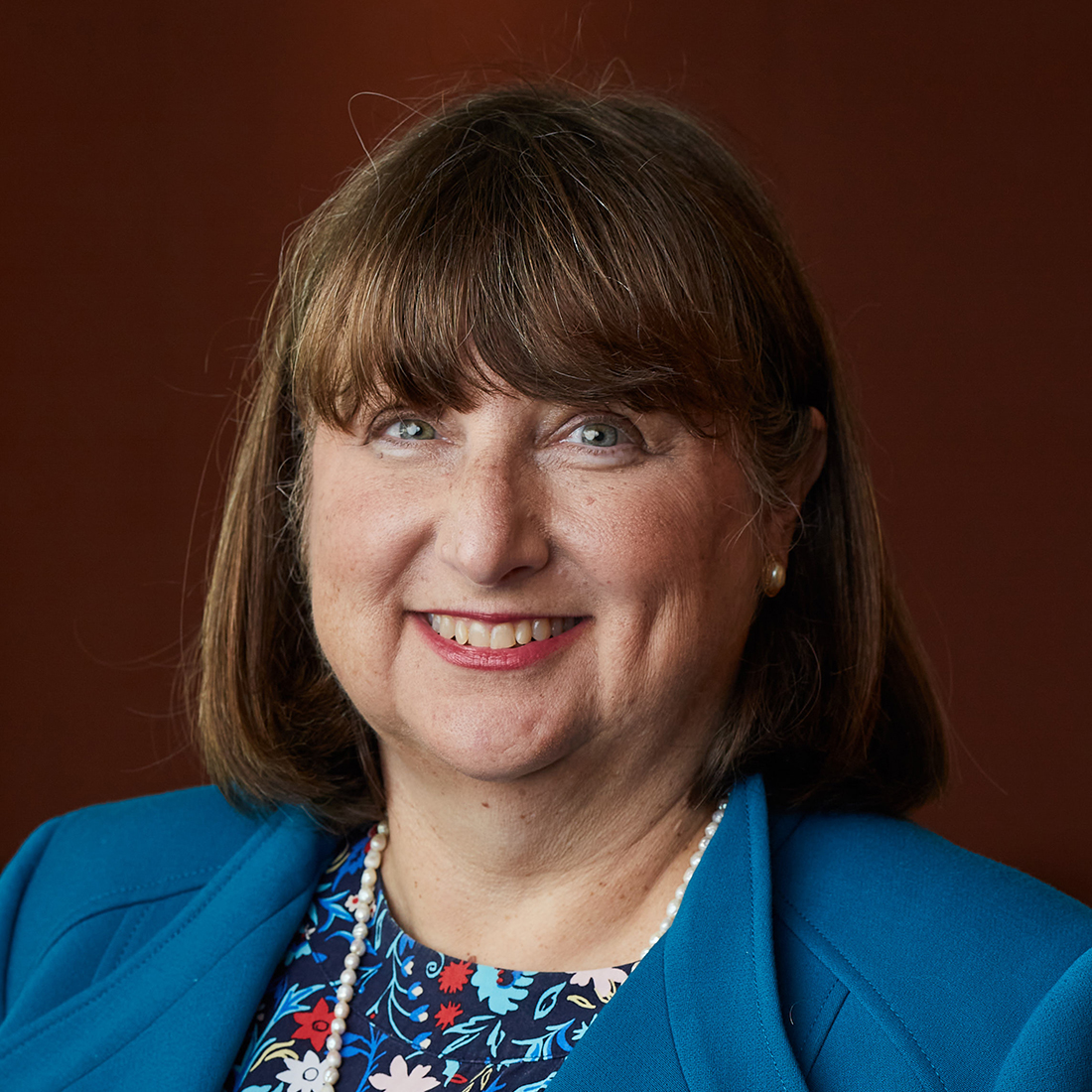
Julie Rovner is chief Washington correspondent and host of KFF Health News’ weekly health policy news podcast, "What the Health?" A noted expert on health policy issues, Julie is the author of the critically praised reference book "Health Care Politics and Policy A to Z," now in its third edition.
Reports from a top artificial intelligence company that it stopped several attempted uses of its product that could assist in manufacturing a bioweapon caught the attention of lawmakers in Washington this week. But it is still unclear whether or when Congress will act to regulate the fast-moving industry — and the House has left town until after Election Day.
Meanwhile, with many voters expressing anger over the rising cost of healthcare, President Donald Trump is proposing to send $500 checks to some people enrolled in Affordable Care Act insurance plans before the election. But even if those checks materialize, in most cases they will be smaller than the increases many policyholders have already seen.
This week’s panelists are Julie Rovner of KFF Health News, Anna Edney of Bloomberg News, Tami Luhby of CNN, and Alice Miranda Ollstein of Politico.
Panelists



Among the takeaways from this week’s episode:
- Anxieties about AI reached a fever pitch this week, with a few leading developers calling to slow the pace of innovation amid troubling reports about AI’s progress and use, including reported attempts to misuse AI for biological warfare. Meanwhile, the Trump administration is pressing to incorporate AI into healthcare.
- Federal lawmakers are exploring changes to the independent arbitration system created by the No Surprises Act, which took effect in 2022. While the law has cut down on patient exposure to surprise out-of-network medical bills in emergencies, the system has resulted in far larger paydays than anticipated for many doctors — which, in turn, has prompted a sizable increase in coverage costs, including for employers.
- Some cities and states are suing to block implementation of the latest public charge rules from the Trump administration, arguing they could have a chilling effect for some who are entitled to public benefits, such as the eligible children of immigrants. They allege that could leave cities and states on the hook and harm local economies.
- Abortion opponents are claiming victory as the Environmental Protection Agency moves to test water for remnants of abortion pills, among other chemicals and drugs. California’s attorney general is wrapping up a lawsuit against two nonprofits offering what they describe as abortion pill reversals, despite a lack of evidence the method works or is safe. And the family of a Texas woman who died after being denied an abortion is suing her doctors and the state’s attorney general, Ken Paxton.
Also this week, Rovner interviews Sabrina Corlette of the Georgetown University Center for Health Insurance Reforms, discussing some potential short-term fixes to the nation’s health system.

Email Sign-Up
Subscribe to KFF Health News' free Morning Briefing.
Plus, for “extra credit” the panelists suggest health policy stories they read this week that they think you should read, too:
Julie Rovner: KJZZ Phoenix’s “Data Shows DES Failed To Complete Most SNAP Eligibility Interviews, Resulting in Massive Cuts,” by Camryn Sanchez.
Tami Luhby: The Washington Post’s “What ‘Ferritin Face’ Means — And How To Tell If You May Be Iron-Deficient,” by Erica Sloan.
Anna Edney: Bloomberg News’ “Patients Who Fight Health Insurance Denials Often Win,” by John Tozzi, Tanaz Meghjani, and Ike Swetlitz.
Alice Miranda Ollstein: KFF Health News’ “Indigenous Groups Are Exempt From Medicaid Work Rules, but Native Hawaiians Aren’t,” by Ashley Mizuo.
Also mentioned in this week’s podcast:
- Science’s “‘Chilling’ Warning or Overreaction? AI Bioweapons Report Divides Experts,” by Jocelyn Kaiser.
- The New York Times’ “U.S. Health Officials Move Quickly To Deploy Medical A.I. Despite Concerns,” by Christina Jewett.
- Roll Call’s “Surprise Billing Dispute Process In ‘Crisis,’ Groups Say,” by Ariel Cohen.
- KFF Health News’ “A Generation of Kids Suffer as Trump Destabilizes Immigrant Families,” by Claudia Boyd-Barrett.
- Politico’s “Abortion Opponents Claim ‘Tremendous Victory’ as EPA Tests Water for Abortion Pills,” by Miranda Willson, Alice Miranda Ollstein, Ariel Wittenberg.
- Politico’s “Free Speech or False Advertising? California Judge To Rule on ‘Abortion Pill Reversal’ Claims,” by Rachel Bluth and Alice Miranda Ollstein.
Click to open the transcript Transcript: The Health Risks of AI
[Editor’s note: This transcript was generated using transcription software. It has been edited for style and clarity.]
Julie Rovner: Hello, from KFF Health News and WAMU Public Radio in Washington, D.C. Welcome to What the Health? I’m Julie Rovner, chief Washington correspondent for KFF Health News. And, as always, I’m joined by some of the best and smartest health reporters covering Washington. We’re taping this week on Thursday, Sept. 17, at 10 a.m. As always, news happens fast, and things might have changed by the time you hear this. So here we go. Today we are joined via video conference by Alice Miranda Ollstein of Politico.
Alice Miranda Ollstein: Hello.
Rovner: Anna Edney of Bloomberg News.
Anna Edney: Hi, everybody.
Rovner: And Tami Luhby of CNN.
Tami Luhby: Howdy.
Rovner: Later in this episode, we’ll have my interview with Sabrina Corlette, one of the authors of a new paper from the Georgetown University Center on Health Insurance Reforms, about some possible shorter-term fixes for what ails our dysfunctional healthcare system. But first, this week’s news.
So I try not to talk too much here about artificial intelligence, partly because we at KFF already have a separate podcast devoted to AI and its implications for the business of health, and partly because I am one of the many, many Americans who doesn’t really understand it. But I feel like we really can’t avoid it this week, with AI leaders all but pleading with Congress for regulation, lest they accidentally, or not, create something that could literally kill all us humans. And while I don’t think any of us has the expertise to comment on whether some future AI might actually be justified in trying to rid the planet of humanity, given what we humans have done to the planet, I’m more interested in reports about humans currently using AI to do things like manipulate viruses to create, you know, a pandemic — but maybe even a more deadly one than the one that we just had. Anthropic, which touts itself as the most ethical and responsible of the big AI companies, said it has already halted several attempts to use its AI bot, Claude, to potentially develop bioweapons. I feel like maybe this is something members of Congress might want to address in the near-term future?
Edney: Definitely, I think that, like, the timing for this, given what’s going on in the larger AI world with these warnings that we’re seeing, was certainly very ominous for creating that potential worst pandemic that you’re talking about. And it does seem like it could be part of that discussion and what Congress may want to do; it could be sort of its own thing. It’s unclear how that’s going to be handled, especially, I think, we all are aware of the timing as well, with the midterms coming up and Congress not getting a lot done. And this is a really complicated subject, I think — the kind of issues with this report coming out was these could be just regular research queries. You know, it’s really unclear if this was nefarious. If it is, that’s really bad, and if it wasn’t, let’s not get worked up about something that isn’t there yet. But it does show that there’s the potential for that to happen. So …it’s good to think about it early.
Rovner: And of course, the House, we should mention, has up and left until after the election. So they couldn’t do anything even if they wanted to. Alice, you wanted to add something?
Ollstein: Yeah. So I was up on Capitol Hill yesterday, and there did not seem to be a groundswell of interest in rapid action and keeping the members in session to deal with this. I mean, when it comes, you know, to technology, especially, often federal policy is decades behind, you know, where the technology is going and moves so much slower. And I don’t know, even if there was the political will to stay in session and do something, if they would even know what to do or be able to come up with something quickly. This is something that could take years. Meanwhile, the technology itself is just leaping ahead in leaps and bounds, and so I am not optimistic about a robust response from Congress, given their record recently, and given what I witnessed on the Hill. Even though there is bipartisan interest in doing something, but what that something is, there is no agreement.
Luhby: There’s a legitimate concern of how/what China is doing with AI, and even if we control what’s happening within our borders, we can’t control what’s happening with the development in the world. So that is an overarching problem that Congress can’t solve.
Rovner: Right.
Ollstein: I also often hear, you know, Oh, we should really pare back AI on everything except healthcare because it has so much promise in the healthcare space. But there’s also a lot of risk in the healthcare space. I mean, you were mentioning the development of potential viruses and bioweapons, but even beyond that, there’s already reports of AI being used to deny people’s claims, to entrench human biases in decision-making. You know, there’s a lot of risk in the healthcare space, too. It’s not all sunshine and rainbows and the risk is only in other areas.
Rovner: Well, you are actually anticipating my next question, which is: Meanwhile, from the “AI might not actually kill us, but it’s going to make a lot of people rich” file, my former colleague Christina Jewett, now at The New York Times, has a story this week about how medical AI entrepreneurs are exercising perhaps undue influence at the Department of Health and Human Services, and, according to the story, worrying some officials that AI adoption in medicine is coming faster than the evidence that it’s safe and effective — never mind money-saving. Again, as you were saying, Alice, I can’t imagine technology in medicine running ahead of attempts to regulate it. That’s only happened basically every time for the last 50 years.
Edney: I think the attempts to regulate it are — the issue is who’s going to do the regulating. The FDA seems sort of split right now, where you have the traditional medical devices director, and this is Christina’s reporting, as you mentioned, Julie, someone … more in the commissioner’s office who is a tech-connected person wanting to wrest the AI part of regulation from the medical device center, where it normally sits. So I think that that question, too, is still being figured out.
Rovner: And there’s even the, you know, what is AI? Is it a medical device? What kind of evidence would one need to approve it? Who would approve it? I mean, there’s definitely a lot more to come here. All right. Well …
Luhby: Looking at healthcare’s role in the economy, it’s a major source of jobs right now and in the future, but it may not be, depending on what happens with AI. I was just actually at a doctor’s appointment at a major New York City medical center, and the doctor was speaking to, you know, a human assistant in the room, which I was — and I said to her, “Thank you so much for actually, you know, using humans.” And she sort of said, “Well, we’ll see how long that lasts,” indicating that her medical center may be really pushing doctors to use more AI scribes. And I was thinking, Wow, that’s going to cost a lot of people their jobs.
Rovner: Although I just went to the doctor, and he was starting to use an AI scribe. He said he was just trying it out. So we will see how this all moves on. All right.
Well, back to the pocketbook issues that seem to be driving voter anger this fall, even more than AI and data centers, President [Donald] Trump, the day after he floated the idea of sending all U.S. adults a $5,000 check if they return Republicans to power after the midterms, separately is proposing to send a $500 check before the elections to about a million unsubsidized enrollees in the Affordable Care Act plans. Unlike the $5,000, which would pretty clearly have to be approved by Congress — spoiler: probably won’t happen; it would be really expensive — the $500 ACA checks at least seem plausible. They represent unspent user fees the federal government has already collected. Two questions about this: One, is it really legal? And, if it is, and the administration does it, will it make up for the huge increases that most unsubsidized ACA enrollees saw in 2026 after the Biden-era extra subsidies expired? A lot of people saw increases that were a lot more than $500 just this year.
Luhby: I mean, I think it’s questionable as to whether it’s legal and also whether it’s fair, because you’re also talking about giving this money only to be unsubsidized. And you can argue that, yes, the people who got subsidies already got, you know, a federal gift. But there are a lot of questions about these checks. But as far as whether they will make up for the massive increase in premium payments that a lot of folks have paid — especially for the people who didn’t receive subsidies, which, who are generally the people who make more than, you know, 400% of poverty, or … even a higher percentage, because the changes in the subsidy structure — those people are probably among the most … the ones who had the highest increases in premiums between ’25 and ’26. And there’s another round of double-digit premium increases on the way in 2027, or for 2027. So Cynthia Cox, one of our favorite experts at KFF, questioned whether $500 would even cover one month of a premium increase, much less one year. But, you know, as we know, healthcare costs are on the top of voters’ minds, and the Trump administration feels like it has to do something to say that it is helping to lower them ahead of the midterm elections.
Rovner: Yeah, and this would be, I guess, something that they, in theory, could do. Well, moving on, it may be time to revisit one of the few bipartisan pieces of consumer health legislation of the past decade: the No Surprises Act. That law has successfully spared millions of patients from ending up in the middle of payment disputes between health insurers and medical providers. What it hasn’t done such a good job at, though, is settling those disputes in a cost-effective way. Instead, to quote from the Georgetown study that’s the subject of this week’s podcast interview with Sabrina Corlette, “the dispute resolution process created by the law has cost the health system an estimated $22 billion in just four years.” As a result of that, groups from across the ideological spectrum, from the liberal Families USA to the conservative Paragon Institute, as well as Republicans and Democrats on some key committees in Congress, are sounding the alarm that something needs to change. Now this arbitration process that’s gotten so out of whack was the very last thing settled and almost scuttled this law on the launchpad. Is there a suitable alternative available, or will the magnitude of how badly this arbitration process is skewing in favor of providers who are getting enormous payouts going to force some sort of compromise?
Edney: It seems like there needs to be a compromise. I was a little surprised that that’s being acknowledged. I think when this was first being talked about and coming to light, it seemed like the lawmakers were like, “Well, the law is working for patients,” and, like, “Well, you know, it’ll be OK.” But as you know, those numbers are coming in, that’s … billions of dollars. That’s a huge amount. And, you know, there are options. I think a lot of it was talked about and not agreed upon. But maybe benchmarking these to what Medicare pays or something along those lines when there’s a dispute could be more palatable, given, you know, what’s going on now that they’ve seen the results of what ended up being put into law.
Rovner: Of course, that was, I mean, that was the hope when they were doing this is that they would set some sort of upward bound of, you know, yes …
Edney: Right.
Rovner: And sure, if you’re trying to lowball the provider, we’re going to make sure the provider gets at least something, you know, that’s reasonable if they’re not in-network. Except what’s happening is, with these arbitrations, these providers are getting things that are way more than anticipated, and that’s turning back into these premium increases that we were just talking about. I mean, it’s all sort of one big circle here.
Luhby: Right, and that’s one thing that, you know, as Politico reported this morning, that’s one thing that employers and insurers want to make sure that people know, and that congresspeople know, is that these increases, these, you know, these payouts that they have to provide for the doctors are going to increase premiums. And you know, as we just discussed, healthcare is on the top of voters’ minds. Already, you know, various consulting groups have said that employer coverage, which is the most prevalent type of coverage, the premiums again are going to increase by a lot for 2027. And, you know, again the employers and insurers are pointing fingers at this arbitration, you know, provision and what doctors are doing and how they’re manipulating it as one of the drivers of these increased healthcare costs and premiums.
Rovner: All right, we’re going to take a quick break. We will be right back.
Moving to immigration, this week nearly half the states filed suit in federal court to block the Trump administration’s new, quote, “public charge rule.” That’s what gives immigration officials more leeway to block people from entering the country who they think could eventually qualify for government aid. Tami, you wrote about this. What are the states arguing, and what are they asking for?
Luhby: Well, the main concern here — they want the rule to be blocked, but it looks like it’s supposed to go into effect tomorrow. And at this point, we know that the judge — there are two lawsuits: there’s states and cities — and the judge — it shouldn’t be probably the same judge, but we don’t know for sure yet. And the judge who has been assigned to the state lawsuit is not holding an initial hearing until, I think, it’s Oct. 9, or it’s early October, so it does look like the new rules will go into effect on Friday. But basically, what the concern is is that this is going to end up causing a lot of immigrants, particularly their families, particularly their U.S. citizen children, who may be eligible for benefits like Medicaid, like CHIP [Children’s Health Insurance Program], like housing vouchers, food stamps, school meals, WIC [Special Supplemental Nutrition Program for Women, Infants, and Children]. There’s, you know, a huge number of safety net programs that these immigrants and their families may choose to drop out of or not enroll in, and this is going to cause, obviously, you know, major concerns for hunger, for health, and housing. And the cities and states are arguing that they’re going to be harmed because they’re going to have to pick up the tabs. And, you know, these people will still need to, you know, obviously have healthcare and housing and food when it comes to it, so they’re concerned about their public costs as well as their local economies.
Rovner: Yeah, and I mean that’s a really important point, which is that this is not just about people coming into the country. This is about people who are already here. Alice, I know you’ve done some reporting on the whole public charge issue, and we’ve got a really good KFF Health News story that I will link to this week that’s called “A Generation of Kids Suffer as Trump Destabilizes Immigrant Families.” This is really reaching much beyond — you know, they originally, he said we’re just going to deport the worst of the worst — but this is reaching much, much further into immigrant communities here legally in the United States, right?
Ollstein: Yeah, and I think there are just a lot of downstream consequences of this that we saw the first time they did this in the first Trump administration, and that, you know, folks are predicting will happen again that impacts everyone in the community. So for one, immigrants tend to be younger than the general population, and so removing them from these, you know, insurance systems could raise other people’s premiums — you know, the people who remain, because the costs will be higher. It’ll be an older, sicker population sharing those costs. Also, you are seeing that when these rules go into effect, people who remain eligible for the insurance programs, just out of confusion or fear, don’t enroll, and so it impacts even the people it doesn’t officially apply to, through a chilling effect, which, again, you know, leads to those same higher premiums and worse risk pool. But also, you have, you know, you mentioned risks of infectious diseases; if you deter people from getting preventive care, from getting vaccines, from getting checkups, that puts the whole community at risk.
Rovner: Yeah.
Luhby: And even DHS [Department of Homeland Security] itself acknowledges that there’s going to be a chilling effect. They estimated that 950,000 people may opt to leave or not enroll in — they examined six public benefit programs: Medicaid, food stamps, CHIP, federal assistance — and I think nearly a million people who, you know, are eligible for these safety net programs who may not participate.
Rovner: Well, I guess that is one way to cut the budget.
Turning to reproductive health, Alice, there’s movement on that story you’ve been following about testing wastewater [drinking water] for remnants of abortion pills. Now, what’s the latest?
Ollstein: Yeah, so this was a story my colleagues and I broke recently that the EPA [Environmental Protection Agency] itself is now going to do some testing on this front. Of course, they’re not testing just for abortion pills; they’re testing for a bunch of different pharmaceutical medications. But putting abortion pills on that bigger list is, you know, something that anti-abortion groups have been clamoring for years and are counting now as this big victory. Of course, they’re still pushing for a separate process where EPA would require utilities around the country to monitor for certain drugs, including abortion pills. And so they’re still pushing on that front. But they consider this a step towards, you know, potential restrictions. Now, it’s important to know that the test the EPA is using only will show if any amount is detectable in the water; it will not determine the concentration. And so even if they say, “OK, we found traces of this,” it doesn’t mean it has any impact on plants, animals, humans. It does not mean that. So whatever they come up with, it’s important for people to keep that in mind. Environmental experts we talked to stress that this is sort of a bad-faith push. There is no evidence that there’s any actual environmental harm here. Pharmaceutical contamination of water is a real thing, but there are medications that are way more of a threat in their minds than this one.
Rovner: Yeah, but this is what they’ve been pushing as yet another way to try to go after abortion pills. Well, meanwhile, while the FDA continues to restudy the safety of mifepristone, at the urging of anti-abortion groups, in California, the attorney general is wrapping up a lawsuit against two anti-abortion nonprofits for their proffering of abortion pill reversals that purport to stop a medical abortion partway through. Unlike mifepristone, which has been studied in many clinical trials in the U.S. and internationally, there is no evidence that giving the hormone progesterone can save a pregnancy partway through a medical abortion. Alice, how big an impact could this case have, and when do we expect to hear from the judge?
Ollstein: So this could really set a precedent. There are a lot of legal battles around the country. There’s another one the New York attorney general is in the middle of that is similar to this one. But it’s getting into this interesting space between protecting patients versus free speech and what clinics, even, you know, less-regulated crisis pregnancy centers, like the ones that are at issue in this case, what they can tell people and whether states are able to regulate that in the name of protecting patients from potential harm. Like you said, this hormone regimen, where after you take mifepristone, which is an anti-progesterone, you know, they’re saying, Oh, if you change your mind and you don’t want to have an abortion after all, you can take a high dose of progesterone to counteract the effects and save the pregnancy. Again, this has been very little studied, and the studies that have happened are methodologically weak. They don’t have control groups. They don’t have random sampling. They’re very, very small numbers. Whereas, like you said, the medical studies of mifepristone itself have been covered millions over the years, and so there’s just a lot more evidence of the safety record. And so, this could be really interesting coming out of California, in terms of these clinics, which have really become a major front in the anti-abortion movement’s larger battle. These centers are very prevalent around the country and have only grown in number since Roe v. Wade was overturned, and so they’re really seen as sort of the forefront of spreading the anti-abortion movement’s message.
Rovner: Well, speaking of lawsuits that might set a precedent, the family of Tierra Walker, a 37-year-old pregnant woman who died in Texas of multiple complications after being repeatedly denied an abortion, has filed a malpractice suit against her doctors and is also suing Texas Attorney General and Republican Senate candidate Ken Paxton. Paxton, you may remember, personally threatened individual legal action against doctors who performed abortions, even on women whose medical conditions apparently qualified for exceptions to the state’s ban. What does it mean that they’re actually going after Paxton personally — or, I guess, in his role as attorney general in this case?
Ollstein: Yeah, they’re going after state officials, and they’re going after the hospital, the doctors. There’s a lot of different charges in this one case. There’s medical malpractice charges. There’s [Americans with Disabilities Act] ADA-like discrimination, refusing-of-care charges. There’s the constitutional charges about the law itself. And so this is really sort of getting into new territory. It’s something I covered in my book, that doctors largely have reported that when they’re operating under abortion bans, they’re more afraid of providing what, even what they consider a medically necessary abortion. They’re more afraid of the legal consequences of providing it than the legal consequences of not providing it. And this is an attempt, and there have been some others to try to change that calculus. So I know there’s an ongoing case in Georgia as well, a medical malpractice case. But it’s sort of attempting to make doctors also afraid of the legal consequences of not providing what could be a lifesaving abortion, and we’ll see what the outcome is in this instance.
Rovner: And we’ll talk more about this, and we’ll talk more about your book in the coming weeks as we get ready for its launch. Well, finally, this week the House may be gone, but the Senate is still here, and two Senate committees held confirmation hearings this week for Chris Klomp, the Medicare official who’s been nominated to be deputy HHS secretary, as well as a hearing for Nicole Saphier, the radiologist and former Fox News contributor, who is the latest nominee for U.S. surgeon general. At both the Finance Committee, which will vote on Clomp, and the health committee, which will vote on Saphier, there were lots of questions about the administration’s position on vaccines. This comes as Pennsylvania announces its third and fourth measles-related death this summer, and as HHS Secretary RFK Jr. [Robert F. Kennedy Jr.] gives a keynote address here in Washington today at his former nonprofit, the anti-vax group Children’s Health Defense. Interestingly, both Klomp, who is not a doctor, and Saphier, who is a doctor, sort of, kind of endorsed the measles vaccine, but neither appeared enthusiastic enough to satisfy HELP [Health, Education, Labor & Pensions] Committee Chair Bill Cassidy, who’s also on the Finance Committee, of their sincerity. Cassidy delivered some of his strongest critiques yet of the damage the administration is doing by promoting vaccine hesitance. Yet I wonder if Cassidy would plan to vote against either of these nominees, or if any Republicans plan to vote against either of these nominees.
Edney: I think that’s a great question. And Cassidy clearly has not done that in situations where the stakes — you know, it seemed like, you know, he had more reason almost, I mean, there was more, at least, like, outwardly publicly, you know, conflicting with his stance, and he didn’t do it. So he is leaving Congress, so that could change things for him. But I’m not sure that I would expect some sort of vote that really spoke out against Trump at this point.
Rovner: He voted to confirm the new CDC [Centers for Disease Control and Prevention] director, about whom he had basically the same questions.
Edney: Yeah, “Boy Who Cried Wolf,” I think is what that was.
Rovner: All right. Well, that is this week’s news. Now we’ll play my interview with Sabrina Corlette, and then we’ll come back with our extra credits.
I am pleased to welcome to the podcast Sabrina Corlette. Sabrina is a research professor, founder, and co-director of Georgetown University’s Center on Health Insurance Reforms. She’s also the co-author of a brand-new paper called “A Three-Part Strategy for Better Health Insurance” that includes a series of policy changes Congress could make in the short term that could help patients better navigate our messed-up healthcare system. Sabrina Corlette, thanks for joining us.
Sabrina Corlette: Oh, it is such a delight, Julie. Thank you for having me.
Rovner: So, I think a lot of us have been predicting that rising costs, lowering access, and increasing confusion is frustrating patients to the point that the nation is likely headed for another major healthcare debate, probably after the next presidential election. But this paper focuses on smaller changes that could be made in the nearer future. What made you decide to look at that?
Corlette: Well, I’ll be honest, Julie, one inspiration was the KFF [Health News] “Bill of the Month” series. You know, I follow that series, and I just saw story after story about patients encountering just the craziest billing situations, coverage challenges, and it just struck me — particularly in this last year, where we had this big debate over Medicaid and the Affordable Care Act marketplaces, and a number of groups and lawmakers were defending a status quo that, quite frankly, nobody was happy with — and so I got together with some of my colleagues, you know, what are some concrete things that would have a tangible impact on people’s experience with their health insurance that can be done quickly, would not require a lot of money — because as you know, Julie, all too well, anytime you want to improve coverage, immediately employers and others say, “Well, this is just going to raise premiums.” So we wanted to come up with something that could immediately improve coverage without raising costs, and learn from some state actions that, you know, are quite frankly happening on a bipartisan basis. So, things that felt achievable.
Rovner: Right. So, your first part is looking at immediate ways to reduce healthcare costs. What are some of those proposals?
Corlette: Yeah. Sort of a marquee proposal in here is to bring down deductibles. Deductibles have risen 43% over the last decade or so, and they’re just [an] insurmountable cost barrier for so many American families. So that’s No. 1. But as you know, Julie, if you were to try to lower deductibles across the board, it’s like pushing on a balloon, right? Immediately, premiums are going to go up. So the second part of that proposal is to reduce spending on excessive hospital prices that are, you know, many, many multiples of the Medicare rates. And we’ve seen real progress on that at the state level, with states as diverse as Indiana and Vermont starting to rein in most hospital prices.
Rovner: And we’ve seen both Democrats and Republicans pointing their fingers at hospitals. We’ve talked about that a lot on the podcast — that hospitals are clearly one of the big drivers right now. That seems to be getting through to policymakers, if not to patients.
Corlette: That’s right. Yep.
Rovner: That’s the cost part. Next is reducing unnecessary complexity, which I know is something that everybody would appreciate. What are a couple of the things that we could do there?
Corlette: Yeah, I mean the main thing that we looked at there was the prolific use of what’s called prior authorization, which is, like, before you can get a healthcare good or service, you have to run it by your health plan and get their advance approval. And that’s just, you know, it used to be that that was really used for certain experimental or very, very high-cost types of services, and now it’s just endemic. And so we propose a number of reforms to — not eliminate that practice because, you know, you do need some checks on the system — but to really try to streamline it and reduce the burden for not only patients but physicians as well.
Rovner: So last is protecting patients from corporate abuses — again, something that seems to have some bipartisan backing and that people get really furious about?
Corlette: Yeah, and here the list is pretty long, but I’ll just [home] in on one element, which is reining in some of the more egregious financial practices of private equity, which has really entered the healthcare space in a big way in the last decade or so. And so trying to limit some of the transactions that they engage in that sort of strip assets from a healthcare provider to line the pockets of the investors and really drain away the infrastructure of the, say, the hospital or health system, so that it’s not able to provide as high-quality care.
Rovner: Things like buying the hospital and then selling the real estate out from underneath, so the hospital now has to pay rent.
Corlette: Exactly.
Rovner: And you want to fix the dispute resolution system from something that Congress already tried to fix on a bipartisan basis, which is stopping surprise bills, right?
Corlette: Oh my gosh, yeah. I mean, you know, that’s one of those issues, again, I think could be very bipartisan. And it’s not every provider in the system, but largely private equity-backed physician group practices really taking advantage of the dispute resolution process under the No Surprises Act to the tune of $22 billion in costs. All that is being passed on in the form of higher premiums for employers and policyholders. So, yeah, we propose some significant reforms to that process.
Rovner: So, all of these things together are what we health policy types like to refer to as low-hanging fruit, in that it would be less controversial, say, than “Medicare for All.” But we’ve seen that even incremental changes like these that have bipartisan support can be really hard to push through. How optimistic are you that this Congress and this administration, both of which have said they want to do stuff about healthcare and healthcare costs, might be able to actually get any of this stuff done?
Corlette: Well, I think you and I both, Julie, have been doing this work for long enough. It’s true, nothing is easy. But I will also say that if you look at the polling, Americans now rank healthcare costs higher than groceries and housing as their No. 1 cost concern. I, quite frankly, think that if you’re a politician and you’re not listening to that data and thinking about ways you can reduce costs for people, then you’re committing political malpractice.
Rovner: We will see if any of this gets picked up. But thank you for doing the paper, Sabrina Corlette, and thank you for joining us.
Corlette: Thank you for having me.
Rovner: OK, we’re back. It’s time for our extra-credit segment. That’s where we each recognize a story we read this week we think you should read, too. Don’t worry if you miss it. We will post the links in our show notes on your phone or other mobile device. Anna, why don’t you go first this week?
Edney: Sure. This is a story from a few of my colleagues: “Patients Who Fight Health Insurance Denials Often Win.” And they took a look at some recently released data about prior authorizations and denials, and, essentially, you know, seeing how often people are able to overturn those when they try. Not a lot of people know that they can try to appeal that. And so I really encourage everybody to take a look at it. Check out where your insurer is. I think that that was interesting for me because, you know, they did it by insurer, so you can see what their stance is and how often they’re denying things.
Rovner: Yeah, and that reminder that we always have with the “Bill of the Month.” It’s, like, don’t pay the first bill, and if you get a bill, don’t be afraid to appeal it. Tami.
Luhby: My extra credit is a Washington Post story titled “What ‘Ferritin Face’ Means — And How To Tell If You May Be Iron-Deficient,” by Erica Sloan. The story stood out to me, personally, because I was actually diagnosed with low ferritin 14 years ago, but it took time for the doctor to figure out why I was feeling so tired. So I, actually, I had blood tests, and then I actually went to a sleep doctor because I was figuring, Well, I must not be, you know, sleeping well at night. Maybe I have sleep apnea. But he actually asked to see the blood tests, and he was the one who pointed out my low ferritin levels. So, for those who don’t know, ferritin is a protein that stores iron in the body. And the story cautioned people — the ferritin face, I think, is what got, you know, is trying to get people into the story because apparently this is a thing, although I had not heard of it before this.
Rovner: A thing on social media.
Luhby: Yeah, a thing on social media, and I don’t think I actually ever had ferritin face. I asked my husband. But the story cautioned people from trying to diagnose themselves with iron deficiency based on social media and influencers. But the attention, they said, is raising awareness about iron deficiency, which is really important and which is the, you know, the step before anemia. So I thought the story was important because it highlights how common iron deficiency is — nearly one-third of U.S. adults are affected — but how, I was surprised, it’s not part of regular screenings. And the article goes on to explain how to test for iron deficiency, which is to check your ferritin level, and how to treat it, which is to eat more iron-rich food, like spinach, beans, red meat, fortified cereals — or, if your iron levels are very low, to take iron supplements, which I also personally know are not the most fun because they can cause GI [gastrointestinal] issues. So, and if you’re curious about what ferritin face is, which I was, is apparently it falls under the, you know, “looking tired” umbrella: a dull complexion, dry skin, cracked lips, under-eye circles. But, you know, I think those are symptoms of many things other than iron deficiencies.
Rovner: And yet still news you can use. Alice.
Luhby: Yes.
Ollstein: I have a story from KFF [Health News]. It is by Ashley Mizuo, and it’s called “Indigenous Groups Are Exempt From Medicaid Work Rules, but Native Hawaiians Aren’t.” And it examines how, you know, lacking official federal recognition of your tribal status is making Indigenous Hawaiians, who are facing a lot of the same challenges as other Native groups in the mainland U.S., are not exempt from these new Medicaid work requirements that are starting on Jan. 1. And that could be a big barrier to care, and they already have a lot of barriers to care, including sometimes needing to travel from one island to another in order to access services. And so this could really prevent a lot of people who have a lot of health challenges from getting care they need. And so it, you know, looking at a sort of niche overlooked consequence of these new rules.
Rovner: My extra credit is also about an overlooked consequence. It’s a local story from KJZZ Phoenix public radio called “Data Shows DES Failed To Complete Most SNAP Eligibility Interviews, Resulting in Massive Cuts,” by Camryn Sanchez. And in a situation reminiscent of people in Arkansas losing their Medicaid back in 2018 because the state couldn’t stand up a system allowing them to report their work hours, it seems Arizona can’t figure out how to keep eligible SNAP [Supplemental Nutrition Assistance Program] beneficiaries on that program. Turns out that the state agency that runs the program reported that nearly 9 in 10 interviews with applicants were abandoned, dropped, or otherwise incomplete. The agency itself said it dropped more than 3 million calls due to call-center error or lack of call-center capacity. As a result of that, 53.7% of Arizonans attempting to recertify their food benefits were denied for failing to complete the interview. It is just a really wow story, and, you know, the point that, really, it is incumbent on the states to make these things available. That’s part of why they are supposed to be there.
All right, that is this week’s show. Thanks to our editor, Emmarie Huetteman, and our producer-engineer, Francis Ying. A reminder: What the Health? is now available on WAMU platforms, the NPR app, and wherever you get your podcasts — as well as, of course, kffhealthnews.org. Also, as always, you can email us your comments or questions. We’re at whatthehealth@kff.org. Or you can find me on X @jrovner, or on Bluesky @julierovner. Where are you guys hanging out on social media these days? Anna?
Edney: @annaedney on X or Bluesky. Also on LinkedIn.
Rovner: Alice?
Ollstein: @alicemiranda on Bluesky and @AliceOllstein on X.
Rovner: Tami.
Luhby: I’m just at CNN.com these days.
Rovner: That’s fine. We’ll be back in your feed next week. Until then, be healthy.
Credits
Francis Ying
Audio producer
Emmarie Huetteman
Editor
Click here to find all our podcasts.
And subscribe to “What the Health? From KFF Health News” on Apple Podcasts, Spotify, the NPR app, YouTube, Pocket Casts, or wherever you listen to podcasts.
Related Topics
More from KFF Health News