How Would They Fix It?
The Host
Julie Rovner
KFF Health News
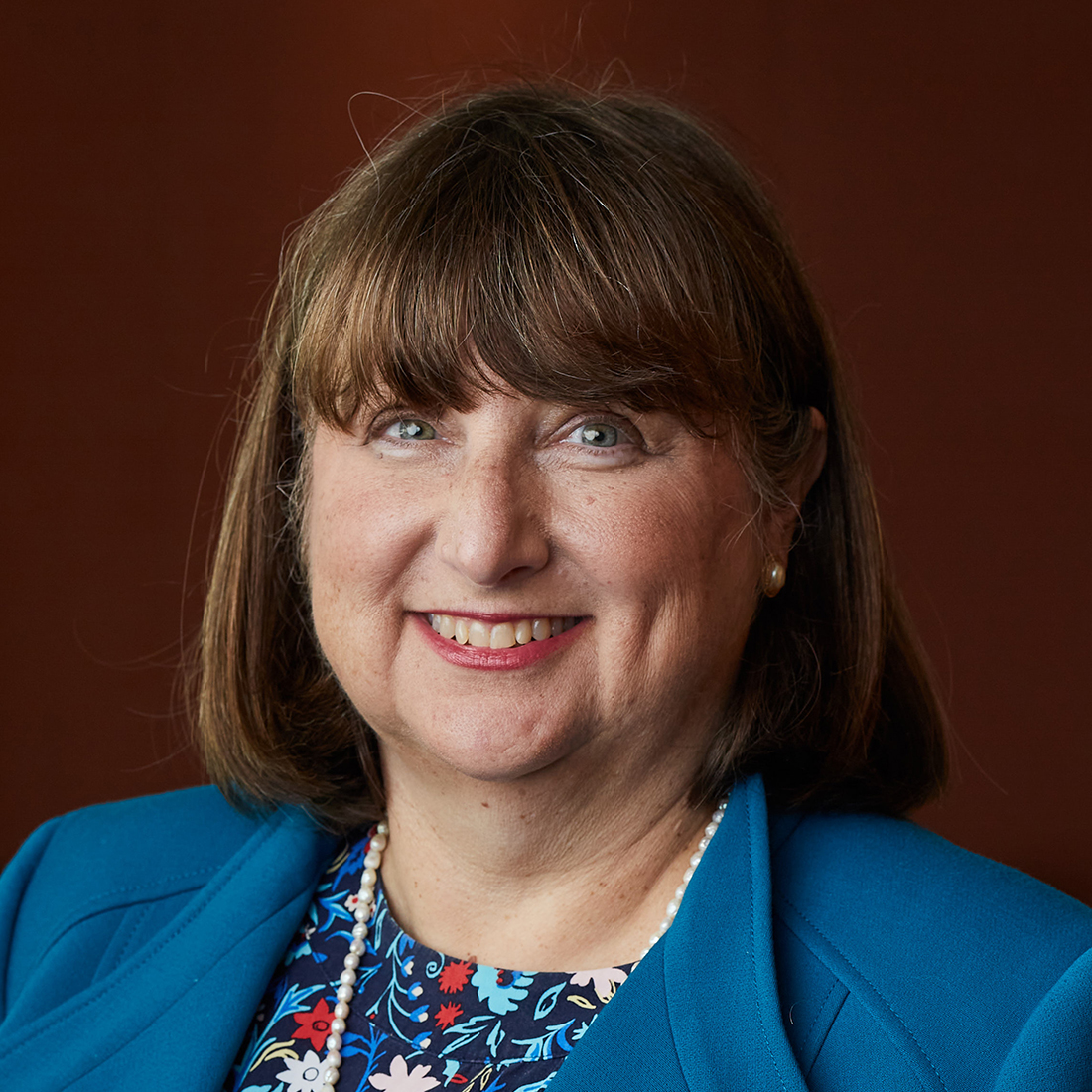
Julie Rovner is chief Washington correspondent and host of KFF Health News’ weekly health policy news podcast, "What the Health?" A noted expert on health policy issues, Julie is the author of the critically praised reference book "Health Care Politics and Policy A to Z," now in its third edition.
Health policy reform is firmly back on the national agenda after last week’s sweeping victories by Democrats in the midterm elections. Voters nationwide told pollsters that healthcare costs were among their top concerns.
To fuel the debate over fixing the ailing U.S. health system, Julie Rovner, KFF Health News’ chief Washington correspondent, launched a project this year called “How Would You Fix It?” It features interviews with public officials, stakeholders, and thought leaders from across the ideological spectrum about how to make the healthcare system work better. You can watch the entire series here.
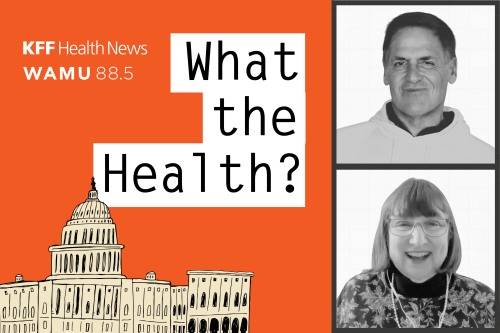
This week’s What the Health? podcast features insights from three public figures. First, Mark Cuban, the billionaire and former Shark Tank panelist who founded a company that sells generic medications at deep discounts, discusses the importance of price transparency in controlling costs.
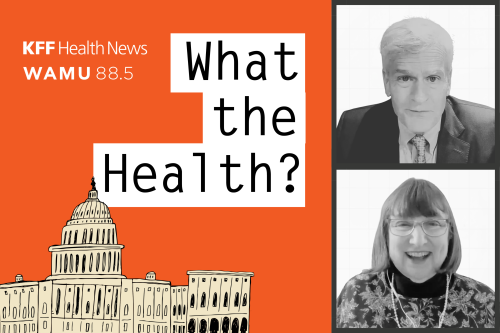
Next, Sen. Bill Cassidy of Louisiana, a physician and the outgoing Republican chairman of the Senate Health, Education, Labor, and Pensions Committee, outlines his Money and Value for Patients proposal for those on employer-sponsored insurance plans.
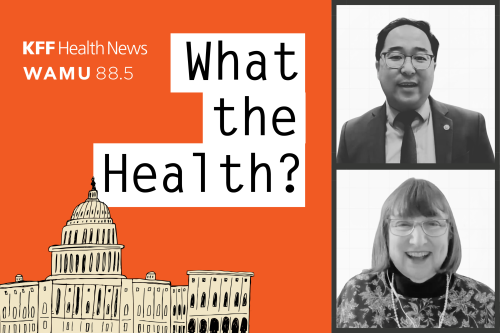
And Sen. Andy Kim of New Jersey, a Democrat who also serves on the HELP Committee, talks about his proposal to grant all children access to health coverage.
click to open the transcript Transcript: How Would They Fix It?
[Editor’s note: This transcript was generated using transcription software. It has been edited for style and clarity.]
Julie Rovner: Hello, from KFF Health News and WAMU Public Radio in Washington, D.C. Welcome to What the Health? I’m Julie Rovner, chief Washington correspondent for KFF Health News. We have another special episode for this week: a recap of our ongoing project, “How Would You Fix It?” In anticipation of the next big health reform debate, we’re asking public officials, stakeholders, and thought leaders from across the ideological spectrum how they would overhaul the ailing U.S. healthcare system if they had the power to. Here are some highlights from the interviews we did earlier this year. You can find the full interviews at kffhealthnews.org.
One of the newer voices in the ongoing healthcare debate is billionaire Mark Cuban. Cuban has literally been putting his money where his mouth is when it comes to drug prices, and he has thoughts about how to fix the broader health issues too. I spoke to Cuban in August.
I am so pleased to welcome businessman and entrepreneur Mark Cuban to “How Would You Fix It?” Mark is probably best known to most people as a former shark on the TV show Shark Tank and the former owner of the Dallas Mavericks NBA team. But he’s also the co-founder of the Mark Cuban Cost Plus Drug Co., which sells generic medications directly to consumers at transparent prices and big discounts. More recently, he’s been talking about even bigger reforms to the healthcare system, which is why I’m so excited to have him here. Mark Cuban, thank you so much for joining us.
Cuban: Thanks for having me.
Rovner: For decades now, the big debate in health policy has been whether the system should be more run by the government or more run by the private sector. Is that even the right way to focus on this anymore? Now everything is sort of hybrid and a mess.
Cuban: Yeah, no, it’s not. Because if the government doesn’t have data, and the government can’t trust the vendors that they’re working with, it doesn’t matter that it’s the government doing all the negotiating. And you see that in other countries. For instance, we get emails from countries around the world, from Canada, England, asking to buy generics from us because our prices for generics, particularly specialty generics, are less expensive than what they sell for in countries that have single-payer or universal care. And so, while I’m not opposed to single-payer or universal healthcare at all — and kind of the analogy I use is if healthcare costs $1 per person per year, yeah, great. Taxpayers would pay that. But … it would be a set $1, and it’d be obviously inexpensive. But when you don’t know all the costs, when there’s no transparency, it’s impossible to determine if it’s a better solution or not.
Rovner: So, what do you fix first?
Cuban: Transparency. You have to be able to publish contracts so that any contract that’s signed with a federal agency, the federal government, a state agency, a city, not only are the terms of the contract published, but the prices are published. So that Tricare would be required to publish their prices. By seeing the actual contract, you can see where the city, state, agency is getting ripped off. Because right now there’s confidentiality requirements, and the companies, like the big insurance conglomerates, they say, you know, we can’t do this. We can’t show this, it’s proprietary information — which is nonsense. And so, as a result, nobody knows how the deals are structured. And if you don’t know how the deals are structured, it’s impossible to negotiate better ones. And so, you take that to the next step.
The big healthcare companies — first of all, they’re vertically integrated. They have hundreds, if not thousands, of subsidiaries. People don’t even know what the subsidiaries are when they do business with them, right? And so, when that happens, there’s just no way for any of the states, cities, federal government to enforce the laws. So when I talk to governors, one of the first things I say in terms of reform is a) publish the contracts, and b) if you are doing business with a vertically integrated healthcare company and they are fined by any federal agency or any state government, they get one mulligan. If they are fined a second time, they can’t do business with you for five years. That will act as the enforcement mechanism to keep them in line. And then the third thing that I always push is that anybody is able to go out and make a cash purchase, whether it’s medical or pharmacy, as long as it’s less expensive than their out-of-pocket, and have it by law count towards their deductible and max out-of-pocket. When you do that, you give them the opportunity to shop when it, when something is shoppable. Not everything is. But you give them the opportunity to shop, and that helps force down prices.
Rovner: So I’ve been doing this since the 1980s, and it’s always been the Democrats beating up on the big insurance companies and the Republicans basically defending them. Now the Republicans are beating up on the big insurance companies. Are we kind of inevitably going towards a government-run single-payer?
Cuban: Like, if you look up, if you look at the Break Up Big Medicine bill that was introduced by Josh Hawley, a Republican, and Elizabeth Warren, to me that’s the first step. So the good news: It was introduced on a bipartisan basis. Because if you break up these big, huge conglomerates, everything changes. The price of everything drops like a rock. But the problem is, nobody else, no senators have supported it, and nobody in the House has introduced a comparable bill. Everybody just chickened out. And so that’s the first step. Put aside the economics. Put aside that we don’t know the cost. Put aside that we have no transparency. All those things are important, but making sure we have healthcare for everybody is more important. That’s the difference. I think that also should be an American dream. As an entrepreneur, I’m a big fan of the American dream. But being able to be healthy and not be afraid that you can’t afford what you need or your family needs, that’s wrong in our American dream. And you know, when we talk about healthcare as a right, doctors freak out because they presume that they’re going to be paid Medicare rates, and they lose control of their life, right? And they talk about opting out and not doing it, you know. And so you need to get all these stakeholders accounted for. And until you start to do that and put together a plan that people will accept, we’re not going to ever be in a position to take care of people like so many of us hope to do.
Rovner: And yet, that would require both parties to basically lay down their arms.
Cuban: Yes, which I think is plausible. I think it’s doable because the No. 1 thing that, in every poll, people are concerned about healthcare costs. It’s not the quality of healthcare. Nobody really complains about the quality. Our doctors are great. Our systems are great. It’s the economic side. And who defines the economic side? Those humongous healthcare conglomerates. And what’s the best way to get to a point where we have transparency at the contract level, flexibility and understanding, etc., all the things I mentioned? You break up those huge conglomerates that have thousands of subsidiaries that do $150-plus billion in intercompany transfers, that game the medical loss ratio. I mean, all these things happen because those big companies have more control over the economics of our healthcare system than the government does.
Rovner: Well, I hope we actually get to that point, and I hope you’re around to help with some of these stakeholder conversations.
Cuban: Oh, hopefully I’m not going anywhere.
Rovner: Louisiana Republican Sen. Bill Cassidy is a physician, and, for a few more weeks at least, chairman of the Senate Health, Education, Labor, and Pensions Committee. Sen. Cassidy lost his primary after sparring with Health and Human Services Secretary Robert F. Kennedy [Jr.] and seeing President [Donald] Trump endorse his opponent. Most of Cassidy’s work has been on the public health side of the health system, but he also has ideas for the broader system. I spoke with Sen. Cassidy in July.
I am so pleased to welcome Louisiana Republican Sen. Bill Cassidy to “How Would You Fix It?” Sen. Cassidy is a physician and the chairman of the Senate Health, Education, Labor, and Pensions Committee, which has been churning out health legislation of late. Sen. Cassidy, thanks for taking the time to join us.
Cassidy: Julie, thank you for having me.
Rovner: You’ve proposed something you’re calling the Money and Value for Patients Agenda, or MVP, as a replacement, I guess, for the Affordable Care Act. How would that work?
Cassidy: It’s not a replacement for the Affordable Care Act. It is only restricted to that which is in the employer-sponsored insurance market. And if we can look at where people are getting subsidies for their health insurance — you have a sophisticated audience, so I’ll speak this way— we can see that if you’re on Medicaid, you basically get 100% of your healthcare costs paid for. If you’re on the exchanges and less than 250% of federal poverty, it’s like 85%-plus. And then after that, it’s your marginal tax rate. If you’re at the 15% marginal tax rate, you pay your premium on a pretax basis, which means you get a 15% break. If you’re at the 37% marginal tax rate, much wealthier, you get a 37% pretax break on the money you paid for your premium. So the people who are middle-income on employer-sponsored insurance are the ones who are getting the least assistance from the tax code or the federal government to purchase their health insurance. What?! The people who are trying to do it the best — they’re working; they’re not on Medicaid. Some people on Medicaid work, but many don’t. The people who are working are the ones who get the least assistance. So, what can you do about that? What I would do in my MVP plan is give an advanceable tax credit to those on employer-sponsored insurance below a certain marginal tax rate, and if you’re below some percent, you would get it.
Rovner: So very rich people wouldn’t get this.
Cassidy: No, it’d be like less than 22% marginal tax rate. And so those are the people who need the help. Let’s focus where people need help. And that’s negotiable, but that’s just an example. Under my calculations, a family of four could get up to $2,000. Now, why is that important? Many families, maybe most, will not have more than $2,000 of out-of-pocket expense in a given year. Now, one year they may — the wife’s pregnant, or the son, you know, gets in a car wreck — but most years they’ll have less than $2,000. So that would potentially cover all of their out-of-pocket, particularly if you couple it with the price transparency legislation we’ll discuss in a second. And because the family now has $2,000 to cover their out-of-pocket, they can choose a policy with a higher deductible, which means a lower premium. OK, so if currently the average deductible for a small-business plan is about $3,000, you give them $2,000, they’re going to choose a $5,000 deductible, and that will lower their premium substantially. I like to speak, Julie, of the cost of being insured, which is not just your premiums, but your copays and your deductible. We’re given $2,000 for that copay and that deductible, which allows you to take a lower-cost premium, and you put it all together. And my favorite economist, ChatGPT, says that you could potentially save $5,000-$6,000 per year, per family, and that makes a significant, meaningful difference in their ability to afford life.
Rovner: So, is this in addition to employer coverage, or would this be instead of employer coverage?
Cassidy: No, this would be in addition to employer coverage. Right now, we see that small businesses are dropping coverage, and so this would, obviously, if the employee is choosing a cheaper plan because the plan they choose is a higher deductible, then it becomes less expensive for the employer. And so they can better afford to continue to offer. So this is a way to help that small business as well. I’ve talked to a small-business owner back home, several small-business owners. It’s becoming very difficult for them to give salary increases and/or hire more people if they continue to provide health insurance. So, if we’re able to take a little bit of that burden off of the employer to give an adequate insurance policy, then hopefully they can increase wages and/or hire more people and expand their business. So it’s a benefit not just for the family, but also for their employer. And frankly, the federal government ends up earning more tax dollars because, not getting too complicated, but the less money you’re spending on a pretax basis, the more money going into your post-tax paycheck, the more taxes you pay for payroll tax, etc.
Rovner: I’m thinking of private equity and some of the gaming of one of the laws that you were instrumental in getting passed to prevent surprise medical bills. How do you try to protect consumers from people in healthcare who are literally just in it for the profits?
Cassidy: Why not price transparency? If you don’t know the price of something, you can’t get a better deal. And that’s whether you’re the patient or whether you’re the business. And so the initial step to make sure that people are getting their best deal is price transparency. And, by the way, the wonderful thing in the last year or so, I’ve been exposed to people doing wonderful work, and people are developing apps on the phone, and you could say, “Hey Siri, where’s the urgent care center near me? What is their price schedule for a routine earache?” OK, I’m going to go to this one near me because it’s $50, not $150. So I go there, and then I come out with a prescription. “Hey Siri, where’s the cheapest place to get this prescription for amoxicillin, 500 milligrams BID?” Siri tells you, or the app tells you, not Siri, but the app. And these are, like, being developed now. I mean, this is not — no, this is now. And so if you couple money in the pocket with price transparency, giving the individual the ability to determine where to go to get the best price — and we have some other provisions in there that protect the patient, a lot of provisions — then you are going to bring value to the patient. That’s part of the solution in the employer-sponsored insurance market.
Rovner: Sen. Bill Cassidy, thank you very much.
Cassidy: Thank you, Julie.
Rovner: New Jersey Democratic Sen. Andy Kim is still in his first term in the upper chamber after having served three terms in the U.S. House, but he, too, is trying to put his mark on the broader health system debate, pushing a plan to create universal coverage for children first. I spoke to Sen. Kim in August.
I am pleased to welcome New Jersey Democratic Sen. Andy Kim to “How Would You Fix It?” Sen. Kim’s a member of the Senate Health, Education, Labor, and Pensions Committee, and just introduced legislation to guarantee health coverage to every child up to age 26. Sen. Kim, welcome.
Kim: Yeah, thanks for having me. It’s a pleasure.
Rovner: As I hope this series is highlighting, it appears the country is moving, albeit kind of slowly, towards another major debate over healthcare coverage and cost. What made you decide to step into these very choppy political waters?
Kim: Right now things are just moving in the wrong direction. We have upwards of, you know, 1.75 million to 2 million more kids losing Medicaid over the last year and a half. We see the numbers already atrocious: 4.4 million children in this country without health insurance, 23 million kids that are underinsured, which means they have coverage that doesn’t cover their full needs. I just find it to be — I mean, just appalling and a real dereliction of our duty that we have not found a way to be able to ensure that every child is able to go see a doctor when they need to without breaking the bank. So I think, for me, this has just been years in the making, and right now I wanted to introduce this because I can’t just be talking about what I’m against. I have to be talking about what I’m for. What is the vision for this country? Not just to reverse things that I think are wrong from what this administration has done, but I owe it to my constituents and to the American people to lay out a vision forward for us to try to think through where we go from here.
Rovner: So, how would this bill work?
Kim: First of all, the bill is called MediKids. So, as you said, it would be a guarantee of healthcare from birth to 26. I think one of the more novel parts of this that is different from what we see right now is that there’s an automatic enrollment upon birth into MediKids, which is a foundation built upon Medicaid. So the idea right now is we’re seeing so many kids and families losing Medicaid or potentially losing Medicaid in part because of just the onerous paperwork, the bureaucracy, the different types of things that are meant right now, just the twice-annual requirements to be able to recertify. That’s what’s standing in the way here and preventing so much of the progress that we need. So I wanted to really tackle that and be able to make sure that people can be able to get the care that they need.
And another part of it is that I chose to put the platform upon Medicaid because Medicaid, in many ways, was designed for kids. Having a system that is designed for kids, that is designed to be able to have the screenings at the appropriate times and age intervals, to be able to have that requirement, to be able to treat any and all problems that are determined, and to think about this as comprehensively — not just like healthcare here, dental and vision, but to think about it across all of it. All of that is necessary for kids because their bodies are developing, their brains are developing well into their 20s, which is why, again, I pushed MediKids out into the 20s. It’s like you want to make sure that all of these kids are able to get the care that they need, and that you don’t see the kind of withdrawal of or restriction of care that could have real consequences down the road. So that’s really what we were trying to do.
Rovner: So, as you well know, Democrats have been fighting for decades now over whether to try for a really comprehensive overhaul of the nation’s healthcare system or something more incremental. Obviously, the Affordable Care Act was something more incremental, but also fairly comprehensive. Is that how you envision this? Where do you fall on the “Let’s pull it up and start over from scratch,” and the “Let’s try to fix it one step at a time” debate?
Kim: Well, yeah. Well, look, I want to be bold, and I want something that can really push forward. Because look, I’ll be honest: The American people want something bold. Like, the problems that we are facing are enormous. No one is happy with the status quo, so we need to have that change. But I was also thinking through how to design something that I think will have enormous impact upon healthcare, but do it in a way that is implementable. You know, so with MediKids, I’m not creating some new bureaucracy. I’m not creating some new agency or new department. I am taking something that is already, frankly, covering a large percentage of children in this country already, and I’m trying to make it available for everybody through that automatic enrollment, and taking something that is proven to be able to have that comprehensive approach and use that as a foundation. I really tried to design this in a way that is implementable. And I really do think that it will have a sizable impact tremendously. Not just in terms of providing that care for kids, but everyone knows healthier kids means healthier adults, which means a healthier workforce, which means a stronger economy, which means lower healthcare costs. The knock-on effects are so strong. So many of the challenges that we see amongst adults when it comes to chronic illnesses and other challenges are often things that have been exacerbated because of the lateness of diagnosis or the lack of treatment early on. So those are the things that we’re really trying to think through when it comes to this approach.
Rovner: Do you have any thoughts that Republicans are going to maybe have some renewed interest in increasing healthcare coverage?
Kim: Well, what I will say is, first of all, if ever there was an issue that should be bipartisan or, frankly, nonpartisan, it should be about our kids, right? And that’s why I wanted to focus on this too. I think it’s the strongest argument that we have in our country when it comes to guaranteed healthcare. I get it, eyes wide open, I was on the Senate floor last year when I saw my colleagues vote to cut Medicaid at such a dangerous level, so I have my eyes wide open. But what I will say is, I’ve gone around the Senate over the last period of time, like the last two weeks since I’ve introduced, is that it is sparking that conversation. And whether or not my colleagues on the other side of the aisle or both sides of the aisle agree with all the different principles and proposals that I have in MediKids, it is creating this dialogue and this debate about healthcare for our kids. And that’s what I want. Yeah, that’s what I want us to be able to do. And you’re right. Like, we’ve seen bipartisan support in the past for CHIP [the Children’s Health Insurance Program], for healthcare for kids in different ways, and I just saw that going in the wrong direction last year, which is why I wanted to release this now to try to move it back into the fold. I saw a real deprioritization of concerns raised by parents of kids with disabilities that were worried about how these Medicaid cuts would affect them. It’s not good enough for them to just get, like, a wink and a “trust us” type of message. We really need to make sure that we just never have parents with that type of anxiety about whether or not they’re going to lose care for their child. So, well, we’ll see going forward. But at least my early conversations with my colleagues from both sides of the aisle, certainly around the overarching principles of care for kids, is promising. And I’m hopeful to be able to make some gains as we move forward in both the Senate, as well as in the House, as we start to push forward on that debate there too.
Rovner: Well, we’re all about keeping the conversation going forward. Sen. Andy Kim, thank you so much.
Kim: Yeah, thanks so much for having me.
Rovner: OK, that’s this week’s podcast. Thanks, as always, to our editor, Emmarie Huetteman, and our engineer-producer this week, Taylor Cook. You can always find me on the socials: @jrovner on X and @julierovner on Bluesky. Or you can email us at whatthehealth@kff.org. We’ll be back with our regular panel and all the health news next week. Until then, be healthy.
Credits
Taylor Cook
Audio producer
Emmarie Huetteman
Editor
Click here to find all our podcasts.
And subscribe to “What the Health? From KFF Health News” on Apple Podcasts, Spotify, the NPR app, YouTube, Pocket Casts, or wherever you listen to podcasts.
Related Topics
More from KFF Health News