For decades, the government treated measles as a preventable tragedy, with sizable outbreaks triggering national efforts to boost vaccination and stop the virus from spreading.
But this week, the Pan American Health Organization announced that measles has reestablished regular transmission in the U.S.
“It’s a very sad moment,” said Anne Schuchat, a former deputy director at the Centers for Disease Control and Prevention. “Measles causes so much unnecessary suffering,” she said, including “progressive degenerative nerve disease and death.”
Measles outbreaks are preventable: Two doses of the measles-mumps-rubella vaccine prevent about 97% of infections, so when a community is vaccinated, the virus can’t spread.
In the past two years, over 8,000 people have been sickened in outbreaks in the U.S. that have cost roughly $130 million in medical care, public health response, and productivity losses, Johns Hopkins University researchers estimate. States have reported at least 14 measles-associated deaths, including a 7-month-old in New York and infants in Pennsylvania and Wisconsin. Babies typically aren’t vaccinated before they’re 1.
Scientists blame the Trump administration for spreading vaccine misinformation and stifling a swift, strong response to outbreaks. It cut millions of dollars from children’s immunization programs run by states and terminated funds for vaccine hesitancy research.
President Donald Trump incorrectly said in August that the MMR vaccine could be “quite lethal,” and he repeated the debunked idea that vaccines may cause autism.

Email Sign-Up
Subscribe to KFF Health News' free weekly newsletter, "The Week in Brief."
Patsy Stinchfield, executive director of the Measles Collaborative, was a pediatric nurse at a children’s hospital in Minnesota during the nation’s surge of measles from 1989 to 1991. She recalled a ward devoted to children with measles and the effort required to prevent the virus from spreading to kids with cancer and weakened immune systems. Two died.
Back then, she said, the government “saw the urgency.” Officials held press conferences, issued clinical guidelines, and published reports in the CDC’s flagship journal — the Morbidity and Mortality Weekly Report, or MMWR — that drove policies.
The government launched the Vaccines for Children program to make immunizations free to underinsured families.
Cases plummeted. By 2000, measles was no longer a national threat.
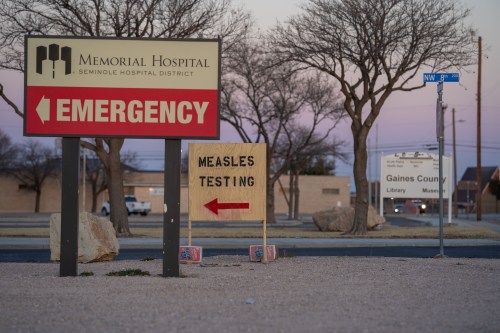
Just after Trump took office in 2025, a measles outbreak exploded in West Texas and spread to at least three other states and Mexico, sickening more than 4,500 people in the two countries and killing at least 16. In response, Health and Human Services Secretary Robert F. Kennedy Jr. falsely claimed on Fox News that measles vaccines lead to “deaths every year.”
Congress didn’t call a hearing, and HHS didn’t send funds until after the West Texas emergency subsided. Besides an annual measles update, the MMWR didn’t publish any report on the outbreaks that year.
The MMWR still hasn’t published detailed reports on outbreaks in South Carolina, Utah, and Pennsylvania. The CDC’s national measles update hasn’t appeared in the MMWR this year either.
All but vanquished a quarter century ago, measles has taken root again in the U.S. Compared with prior administrations, President Donald Trump’s second term has been marred by misinformation and actions that stifle public health.