Two people are dead, hundreds have been hospitalized, and public health officials are scrambling to trace record-setting cyclosporiasis outbreaks that have now spread to at least 47 states. Local health officials who are swamped by contact-tracing work are particularly frustrated by what they describe as a “slow,” “vague,” and even “scary” response from federal health agencies.
Yet, Health and Human Services Secretary Robert F. Kennedy Jr. insisted in an interview with USA Today this week that the country’s food surveillance system is “working better than it’s ever worked in history” and that the number of current outbreaks is “typical in the summers. We get a lot of cyclospora outbreak every summer.”
But nothing is typical about this summer’s cyclosporiasis outbreaks. It’s true — the U.S. has seen several cyclosporiasis outbreaks in recent years: 690 people sickened in 2020, with seven hospitalizations and no deaths. Twenty cases in Texas in 2017. There were some 600 cases reported to the Centers for Disease Control and Prevention in 2013, primarily from three states. Fifty cases in 2004.
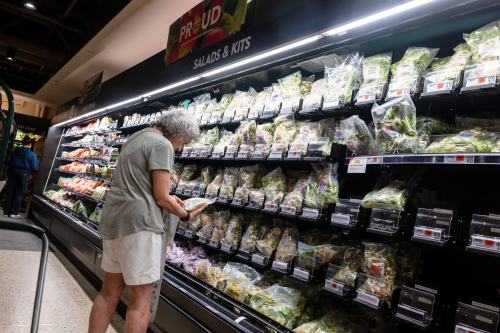
Compare that with numbers updated this week. Michigan reported more than 12,000 lab-confirmed cases in that state alone. The CDC said it was aware of over 10,400 confirmed cases, plus more than 12,200 cases it was still working to confirm. Federal officials have confirmed a source, shredded iceberg lettuce from central Mexico, in only 15 of the dozens of states affected.

Email Sign-Up
Subscribe to KFF Health News' free weekly newsletter, "The Week in Brief."
Untreated cyclosporiasis can cause prolonged illness — weeks in many cases, months for some — that can recur. Many people say it’s the worst pain they’ve experienced. And for young children, older adults, and anyone with a compromised immune system, the parasite can cause serious complications.
On Aug. 3, Michigan state health officials announced two people, both of whom had “significant underlying health conditions that may have been impacted by cyclosporiasis and dehydration,” had died. Both became ill prior to the voluntary Taylor Farms lettuce recall announced by the FDA on July 17.
Meanwhile, local public health workers in Michigan are conducting phone interviews with thousands of people, asking them to pore over their grocery apps and food delivery receipts to unpack when and where they were exposed — from the exact brand of bagged salad mix they ate to what type of taco they ordered at Taco Bell. And the strain on staff is real, especially after federal funding cuts that affected the state’s lab surveillance abilities.
Food safety experts are worried that if this is how the public health system is handling cyclosporiasis, then there’s even more reason to be concerned about how future outbreaks of more dangerous foodborne illnesses will play out.
Yes, they’ve heard all the poop jokes. Public health staffers are painstakingly tracing the sources of this massive outbreak, combing through fast-food orders and lettuce purchases as they listen to people’s lengthy, messy stories about their illness.