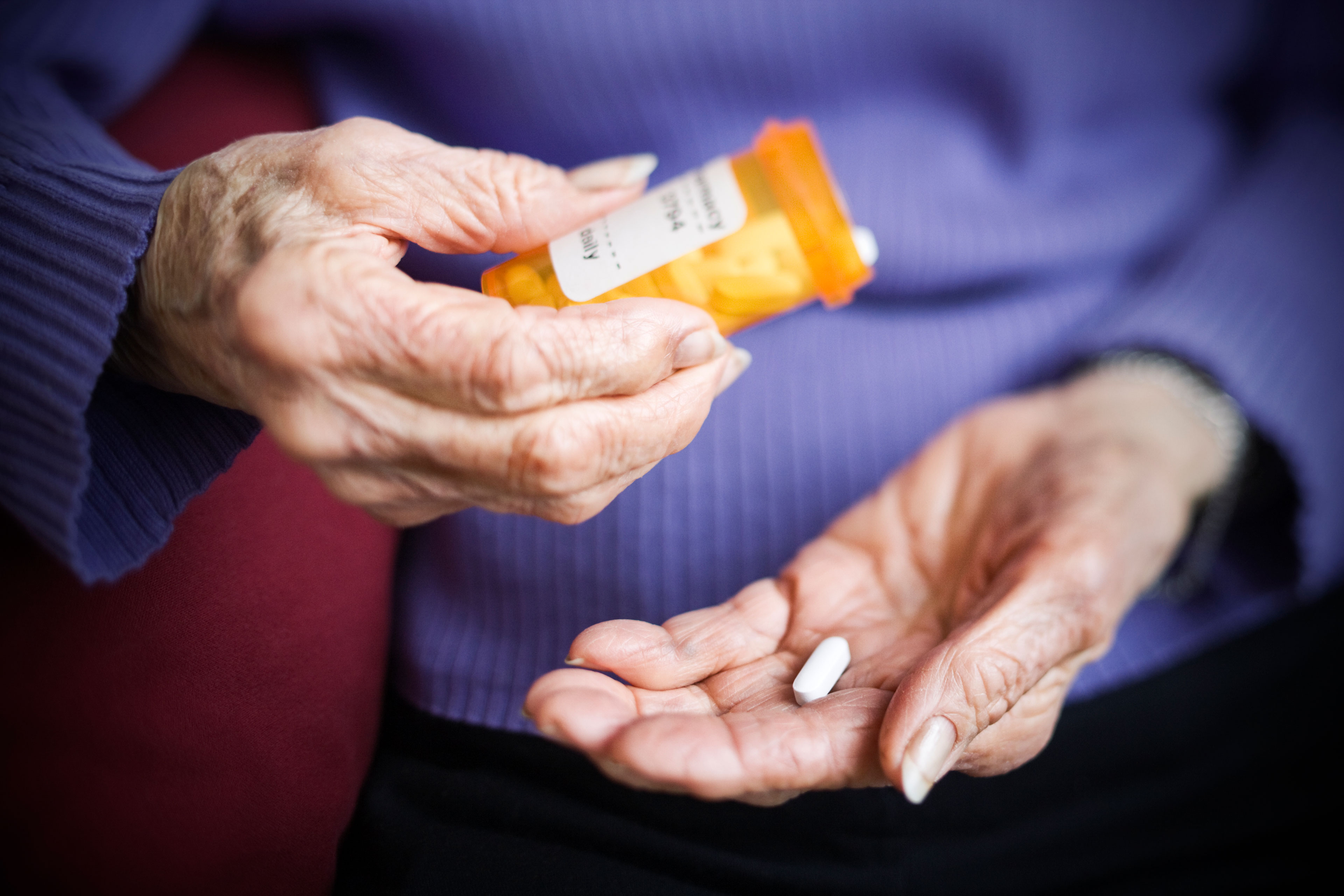
Medications can snowball as we age. Pill organizers pile up. Prescriptions that are no longer necessary can mix with other drugs to create concerning side effects.
“Once you get to six or seven prescription medications, you get a nearly 100% chance of some sort of side effect or intolerance,” said physician K. Eric De Jonge, director of geriatrics at MedStar Washington Hospital Center.
Paula Span writes “The New Old Age” column for The New York Times and KFF Health News. She joined WAMU’s Health Hub on Sept. 30 to talk about common medications — from aspirin to benzodiazepines — that some older patients are overusing.
Span shared tips for keeping loved ones safe and said it’s important for patients and caregivers to be proactive.
“Doctors prescribe medicine based on the evidence available at the time. But science doesn’t stop,” Span said. “Your doctor might not be up on the latest research. And patients get into a routine. They may not question if they still need the drugs they’ve been taking.”
Experts and pharmacists say: Check with your doctor to make sure the meds you’re taking are still right for you.
3 Common Drugs Older Adults Might Be Overusing
Not all older people need benzodiazepines, antibiotics, or daily aspirin — and taking them can carry increased risks.
By Paula Span Sept. 17, 2026
KFF Health News is a national newsroom that produces in-depth journalism about health issues and is one of the core operating programs at KFF—an independent source of health policy research, polling, and journalism. Learn more about KFF.