Latest KFF Health News Stories
Medicare Prepares Rule To Penalize Hospitals With High Readmission Rates
The federal health care program also wants to pay less to hospitals with higher-than-average costs for patient care.

Health Industry Could Feel Pinch, Then Pain From Default
Within a few weeks of a shutdown of Medicare and Medicaid money, health care providers could be in financial trouble. No one knows how to plan for it.
The Questionable Lure Of Free Long-Term Care Placement Services (Guest Opinion)
Internet long-term care placement services are the cyberspace era’s quick fix solution for many Americans seeking non-nursing home institutional care for their aging parents or relatives. But their expertise in navigating this bewildering world of assisted living is, at best, a hit-or-miss proposition.

New Emergency Care Programs Focus On Quality-Of-Life Issues
With training, hospital emergency department staff members can enhance their skills in pain and symptom management and improve their communication skills.

Head Of Major HMO Sees Openings For Accountable Care Organizations-The KHN Interview
Kaiser Permanente’s George Halvorson says that despite the complexity of ACO regs, some versions have the potential to save money and improve care.

Hospitals Look For Disney Magic To Make Customers Happy
Medicare payments soon will partly reflect patient satisfaction, so hospitals are seeking advice from the entertainment kingdom.

HHS Sets Rules For Consumer-Controlled Health Plans
Supporters hope the nonprofit co-ops will increase competition and cut prices.
AARP Finds Toll On Family Caregivers Is ‘Huge’
A new study by the AARP estimates that for the more than 40 million Americans caring for an elderly or disabled loved one, the value of their work is $450 billion a year.
It’s Not Just The Money: Cost Control In Cancer Care (Guest Opinion)
Health reform raises deep questions about the size and scope of government, about progressive taxation, about the individual mandate and more. It’s easy to forget that cost control will be a huge challenge, no matter how these ideological matters are resolved. Finding the right combination of humanity and restraint will be particularly hard in addressing life-threatening or life-ending illness.

Alan D. Aviles, the longest serving president of the nation’s largest municipal health system, discusses his efforts to stabilize HHC’s finances in the face of dramatic budgetary challenges — including the health law’s reduction in special funding for safety net hospitals and state efforts to reduce Medicaid costs.
A New Health Care? Many Doctors Skeptical of New Technology
Video: Like many physicians across the country, Cleveland doctor Conrad Lindes is worried about one of the government’s latest overhauls to the medical system: digitizing health care. He believes the government is forcing doctors to make a change to electronic medical records before they — and the technology — are ready.
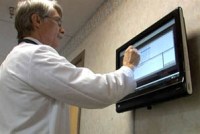
Doctors In Small Practices Slow To Dump Paper Records
Despite carrots and sticks from the federal government, some physicians are leery about moving to electronic health records.
Why It’s Okay That EHR Adoption Will Fall Behind 2011 Goals (Guest Opinion)
Federal officials had hoped a multitude of doctors and hospitals would adopt electronic health records in 2011. But, in reality, the number of physicians using EHRs won’t likely move beyond the current 20 percent to 25 percent rate. And that’s not necessarily a bad thing.

A Dozen States Slice Medicaid Payments To Doctors, Hospitals
Some experts fear that the cuts could lead to rise in number of doctors who refuse to take Medicaid patients.
Letter To The Editor: Hospices Are Serving A Critical Need
This letter was written in response to Jordan Rau’s story, Concerns About Costs Rise With Hopices’ Use, which was published by Kaiser Health News and the New York Times on June 27.

Managed Care Enters The Exam Room As Insurers Buy Doctor Groups
Large health insurers are trying to curb rising costs by gaining control over those who provide care: doctors.

New Rules Provide Relief For Sleep-Deprived Medical Residents
New rules limiting the shifts first-year medical residents can work in hospitals take effect today, but they won’t end the debate over the pros and cons of 24-hour workdays.
The Most Commonsensical And Hopeless Reform Idea Ever (Guest Opinion)
Two experts want to change hospital care in a way that may well rank as both the most commonsensical and most hopeless health reform proposal ever.
Mistakes In Outpatient Care Raising Concerns
Although safety measures are often directed at hospitals, experts say physicians’ offices and urgent care centers should get more scrutiny since the bulk of medical care is delivered there.

Growing Hospice Care Costs Bring Concerns About Misuse
Although the benefit is intended for patients who have no more than six months to live, 19 percent now receive hospice services for longer.