


Latest KFF Health News Stories
Virus Outbreak Seems To Hit Black Americans At Alarming Rate But Lack Of Data Obstructs Full Picture
Data on race and the impact of COVID-19 is too limited so far to draw conclusions, experts say. But disparate rates of sickness and death is emerging in many African-American and Latino communities. “We cannot have a colorblind policy,” Stephen Thomas, director of the University of Maryland’s Center for Health Equity tells Politico. “With a colorblind policy — ‘Hey, we’re all in this together’ — we’ll be left with an explosion of Covid-19 concentrated in racial and ethnic minority communities.”
So far, at least four grocery store workers have died. And employees at meat plants in several states are sick. Meanwhile, online grocers try to keep up with demand. And meal assistance programs try to reach vulnerable seniors.
Global Health Watch: Boris Johnson In ICU; As Wuhan Lockdown Eases, Residents Cope With Fallout
Outbreak developments are reported out of the United Kingdom, China and Spain.
While House Democrats have been eager to start working on another stimulus package, Republicans have been more hesitant, although in recent days Senate Majority Leader Mitch McConnell has talked about prioritizing health care in any potential legislation. Meanwhile, experts continue to warn about a deep and devastating hit to the economy. Some parts of the country may fare better than others, however.
Controversy Over Dismissed Naval Captain Offers Window Into Administration’s Crisis Priorities
Captain Brett Crozier raised health concerns about the sailors on his aircraft carrier. After his memo to senior officers went public, he was relieved of duty, and acting Navy Secretary Thomas Modly berated Crozier in a speech to the crew as being “too naïve or too stupid to be a commanding officer of a ship like this.” Modly later apologized, but the controversy created a furor within the Navy, and may be illustrative of the Trump administration’s response to the outbreak.
Rapid testing kits are starting to reach hard-hit areas, but the surging demand means results are still being held up. Meanwhile coroners worry that a lack of testing means that COVID-19 death totals won’t represent what’s actually happening. Other tracking developments are reported out of California, Wisconsin and Georgia.
President Donald Trump’s interest in the malaria drug hydroxychloroquine alarms some scientists who say that peddling false hope in the midst of a pandemic is dangerous and that the drug’s side effects can be severe. Others, however, are taking their cue from Trump and prescribing the medication.
Wisconsin’s Chaotic Back-And-Forth Over Delaying Primary Could Be Sign Of Things To Come In November
Wisconsin Gov. Tony Evers, a Democrat, tried to delay today’s primary, but was overruled by the state’s Supreme Court, which has a conservative majority. The state stands as a first test case in what both national parties expect to be a protracted fight over changing voter rules to contend with the pandemic. Meanwhile, voters and poll workers fear for their health.
The model that the White House has been relying on for number of cases and deaths was just updated to slightly more optimistic totals for the first wave of the outbreak. But other models contradict that outlook. Why is modeling so hard? Scientists have to take a number of unpredictable and unknowable factors into account. Still, they say, “it’s much better than shooting from the hip.” Meanwhile, the number of deaths in the U.S. surpasses 10,000.
New York’s monumental efforts to flatten the curve may be paying off as the first signs of hope emerge from this week’s infection numbers. But Gov. Andrew Cuomo warns against getting reckless or complacent. “Some suggest basically the curve goes up and then drops precipitously,” Cuomo said. “Some suggest a slight pause at the top. Some suggest there’s a longer pause at the top, which is effectively a plateau effect, or again the straight up and straight down precipitous drop, which is the peak effect. No one can tell you which will occur.”
President Donald Trump has put the onus on the states to acquire their own ventilators and other medical supplies, promising to act as backup as needed. But now, the administration is seizing some of those orders and relying on a distribution strategy that governors say just creates more confusion. Meanwhile, desperate states turn to each other for help, with those who haven’t been hit hard yet sending equipment to hot spots. In other news: a look at how New York’s ventilators stockpile was depleted years before the outbreak; the way Trump’s use of the national stockpile differs from past administrations; hospitals plead for more federal coordination to get supplies; and more.
White House Trade Adviser Issued Stark Warning To Trump In Late January, New Memo Reveals
The warning from Peter Navarro is just the latest to show that officials throughout the administration were trying to direct President Donald Trump’s attention to the growing threat of the coronavirus outbreak. Meanwhile, Trump and his advisers are bracing for the worst week yet as the outbreak could reach its peak in some hot spots. In other news from the administration: spats between top advisers, espionage efforts during a pandemic and a VA records project put on hold.
Today’s early morning highlights from the major news organizations.

Nursing Homes Have Thousands Of Ventilators That Hospitals Desperately Need
The prospect raises a grim dilemma: Should doctors take people off life support in order to save COVID-19 patients who might recover?

Cancer Patients Face Treatment Delays And Uncertainty As Coronavirus Cripples Hospitals
As hospitals across the country are forced to delay or cancel certain medical procedures in response to the surge in patients with COVID-19, those hard choices are disrupting care for some people with serious illnesses.
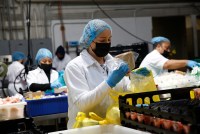
Inside Meals On Wheels’ Struggle To Keep Older Americans Fed During A Pandemic
Its older volunteers are staying home and its clients, mostly age 75 and up, are more vulnerable than ever.
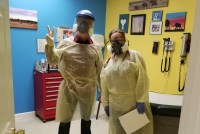
Dispatch From A Country Doctor: Seeing Patients Differently In The Time Of Coronavirus
Emergency rule changes by the federal government and some insurers have made telemedicine a useful tool.
Opinion writers focus on issues like leadership, medical care, elections, protective gear for workers and more.
After COVID-19: Doctors Ponder Best Advice As Patients Recover From Coronavirus
Doctors are making decisions about a patient’s recovery with an incomplete understanding of the disease caused by the coronavirus. Although federal officials have issued general guidelines, physicians said they can’t offer recovered patients who aren’t retested any guarantees about whether they could transmit the virus.
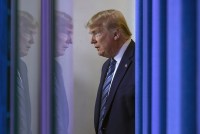
Second Time Around? Health Care Issues Trump Might Tackle If Reelected
KHN’s Julie Rovner examines what health care issues the administration might encounter if President Donald Trump wins in November.