


Latest KFF Health News Stories
Federal Prisons Will Keep Majority Of Inmates In Cells For Next 14 Days To Slow Spread
Prisoners will only be allowed out in small groups in order to shower, eat and make phone calls. The federal Bureau of Prisons plans additional steps to try to stop COVID-19 spread, like limiting transfers between facilities. News on how prisons are handling with coronavirus also comes out of Louisiana, New York and California.
Aircraft Carrier’s Captain Calls For ‘Decisive Action’ From Navy Leadership For 5,000 Sailors Aboard
After the captain of the U.S. aircraft carrier Theodore Roosevelt–where at least 100 have tested positive for coronavirus–asked for the removal of 4,000 of the nuclear-powered ship’s sailors and isolating them, U.S. Defense Secretary Mark Esper said “I don’t think we’re at that point.” Military news is on infection spreading in veterans’ homes, as well.
Spikes In Demand, Shortages Bring ‘Dramatic Changes’ To Industry Transporting Goods
“Shippers are facing huge challenges to ensure that they have the tools and have capacity,” said Lily Shen, president of an online marketplace that connects companies with trucking services. Also, it takes manufacturers weeks to crank up production for when demand for products like face masks and toilet paper spike. Other supply news reports on Whole Foods workers wanting better pay and safety, a walkout at Amazon’s Staten Island, N.Y. plant, Walmart’s safety measures, an uptick in business for local farmers, nonessential businesses, and construction workers.
Politico reports on an awkward exchange between U.S. and Thai officials in which the U.S. requested supplies and were told the U.S. was shipping those same supplies to Bangkok. Global news is on the growing power struggle between China and the U.S., new worrisome COVID-19 controls in Asia, WHO’s relationship with China, the increasing infection rate in Japan, successful testing in Germany, an alleged coverup of deaths in Russia, and signs of hope in Italy, as well.
Field hospitals are being set up in parks, stadiums, hotels and even the tennis center where the U.S. Open is held as government leaders face grim projections about an expected surge of patients. Meanwhile, health care workers talk about what it’s like inside the hospitals that are being slammed by the outbreak.
The Clock Is Ticking On Shifting Voting Practices For General 2020 Election
Turnout was expected to break records in November, but with two-thirds of Americans saying they’re scared to go to the polls and states not moving quickly enough to adapt to mail-in voting, election officials worry about what the general election is going to look like. Meanwhile, 2020 Democratic frontrunner Joe Biden raises significant doubts that the Democratic National Convention will happen as planned. Meanwhile, President Donald Trump is relying on approval of his response efforts to help him in the election, but what do the polls say?
Of the 184 deaths with complete information on risk factors in the study, 173 occurred among patients with at least one underlying condition. The conditions include renal disease, heart and lung issues and diabetes, among others.
While Political Leaders Lock Down Borders, Scientists Have Been Razing Theirs To The Ground
The global science community is uniting in an effort to rise to fight the virus. Never before, researchers say, have so many experts in so many countries focused simultaneously on a single topic with such urgency. Meanwhile, as scientists learn about the coronavirus as they go, uncertainty can sometimes translate into mixed messages for an already confused and desperate public. In other innovation news: a nasal swab produced by a 3D printer, the backstory of the now famous image of the virus, and the race for a vaccine.
As the pandemic continues to spread, there’s a growing push for public health agencies to change the guidance against healthy Americans wearing masks. Such a recommendation though would worsen the shortage of desperately needed protective gear for front line workers.
Tension Ramping Up Between Health Care Workers, Hospitals Over Personal Protective Equipment
Health care workers are not only facing a shortage of protective gear but are also a group that’s hard hit by the outbreak. As states, advocates and other leaders scramble to try to rectify the problem, some health care workers fight for their rights to be protected on the front lines of the pandemic. Meanwhile, a major medical staffing company has slashed benefits for its workers in the midst of the outbreak.
Plans To Re-Start Society All Rely On This Blood Test To Identify People Who Might Be Immune
The serology tests serve a dual purpose: finding Americans who can safely return to some normalcy and helping researchers find treatments for the disease.
Testing Blindspots In South And Midwest Cripple Efforts To Contain Spread Of Outbreak
The attention of the nation is on the coasts, but that doesn’t mean other parts of the country are safe. Testing is crucial to identify the next hot spots, but shortages and wait times continue to undermine containment efforts. Meanwhile, as new data shows nearly 25% of people infected with virus don’t show symptoms, advocates double-down on calls for social distancing. And the outbreak is changing social norms when it comes to how people should interact in public.
“I’ve never had to actually do this,” said Dalen Lacy said, a warehouse worker. “But I’ve got to do what I’ve got to do for my kids.” Lacy is among a wave of Americans who are seeking unemployment aid for the first time as the pandemic upends the economy. Meanwhile, what happens to those who can’t pay rent today? And consumer confidence plunges to its lowest level in nearly three years.
Overseeing Distribution Of Stimulus Trillions Might Be Easier Said Than Done For Democrats
Democrats are confronting the fact that it might be hard to oversee the $2.2 trillion stimulus spending when the physical act of congregating in the Capitol is dangerous. The Trump administration is also using the pandemic as a way to stop senior officials from having to report to Congress. Meanwhile, differences between Republicans and Democrats on the need for a fourth stimulus package signal rougher governing waters ahead.
Some states are receiving more medical equipment than they’ve requested while others are only getting a fraction, with some of it broken at that. Governors are making increasingly frantic requests to FEMA, but say they’re having to outbid each other for supplies. “You now literally will have a company call you up and say, ‘Well, California just outbid you,’” said New York Gov. Andrew Cuomo. “It’s like being on eBay with 50 other states, bidding on a ventilator.”
Trump Administration Decides Against Re-Opening Health Law Enrollment In Midst Of Crisis
Facing the looming surge of coronavirus patients, some states have re-opened their marketplaces for residents to sign up for insurance coverage under the health law. Although the Trump administration considered following suit, it has decided to pursue other options.
President Donald Trump and his coronavirus task force, including Drs. Anthony Fauci and Deborah Birx, struck a serious tone Tuesday saying Americans must brace for a “bad two weeks.” They also projected that at least 100,000 Americans could succumb to the coronavirus even with strict social distancing measures in place. Without the shutdown, the number would skyrocket higher.
Opinion writers weigh in on public health topics stemming from the pandemic.
Today’s early morning highlights from the major news organizations.
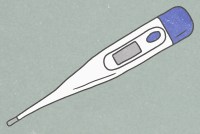
Temperature Check: Tips For Tracking A Key Symptom Of Coronavirus Contagion
Taking one’s temperature is not as easy as it sounds. For one reporter, the first challenge was finding a thermometer.