After Thomas Zordani had flown all the way from his home in Denver to Phoenix for a consultation with a Mayo Clinic neurosurgeon, he was surprised when he was called into the clinic’s financial office and told he had to make a $5,000 preservice deposit, even though his insurance had out-of-network benefits.
He refused. His appointment was canceled.
“I was so livid,” Zordani said, recalling that day in April 2024.
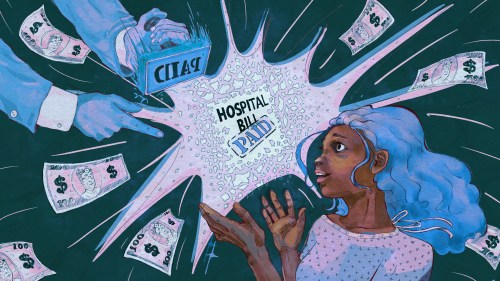
Zordani’s experience is becoming increasingly common. Though traditionally patients receive bills after getting treatment, hospitals and other medical providers are changing things up, sometimes requesting payment before providing care. That preservice charge could be all or part of a remaining deductible, for example, or a sizable percentage of what the visit or treatment might cost. If they don’t collect up front, these care providers fear, they’ll increasingly face unpaid medical bills.
In Zordani’s case, he was initially told by the clinic his care would be in-network, but the clinic later determined that it was not contracted with his insurer. “We regret that this individual’s experience did not meet the high standard of communication we strive to provide when helping our patients understand their insurance coverage and financial responsibility,” Andrea Kalmanovitz, Mayo’s communications director, told KFF Health News.
But these up-front payments can leave patients with questions. First, for instance, do consumers really have to pay these preservice charges?

Email Sign-Up
Subscribe to KFF Health News' free weekly newsletter, "The Week in Brief."
There is one clear rule: In emergency situations, hospitals that accept federal Medicare financing cannot, by law, demand up-front payment before stabilizing a patient who arrives at an ER, said Matthew Fiedler, a senior fellow and health policy researcher at the Brookings Institution.
Other consumer protections are less clear.
Patients who get in-network care may have some recourse in their contracts with their insurers to avoid payment before receiving medical care, so they should check the fine print, experts told KFF Health News. But beyond that, all bets are off.
“In out-of-network settings, I’m not aware of any barriers that would prevent a provider from doing this,” Fiedler said.
Meanwhile, those preservice deposits are contributing to consumers’ frustration with rising healthcare costs, including monthly premiums, copays, and deductibles.
A recent KFF health tracking poll found that lower out-of-pocket costs ranked as the top change insured adults would like to see from their health coverage plans.
Hospitals and other medical providers are increasingly asking for payment before providing care, collecting more of what patients might owe as rising insurance deductibles add to Americans’ financial pressures.