RFK Jr. vs. Congress
The Host

Julie Rovner
KFF Health News
Julie Rovner is chief Washington correspondent and host of KFF Health News’ weekly health policy news podcast, "What the Health?" A noted expert on health policy issues, Julie is the author of the critically praised reference book "Health Care Politics and Policy A to Z," now in its third edition.
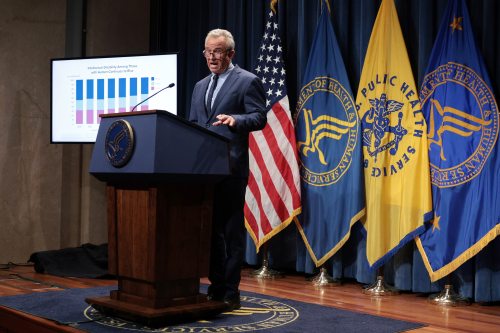
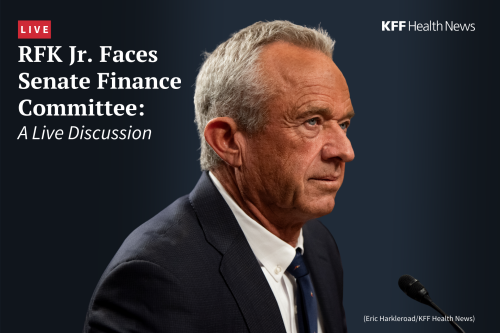
Health and Human Services Secretary Robert F. Kennedy Jr. completed his marathon tour of House and Senate committees this week to defend President Donald Trump’s proposed budget for his department, but he got grilled on lots of non-budget matters as well, most notably his proposed changes to the childhood vaccine schedule.
Meanwhile, Trump made some of his own health policy, signing an executive order to facilitate the use of hallucinogens to treat mental health conditions. That action came just days after it was suggested to him in a text message from podcaster/influencer Joe Rogan, who was present in the Oval Office for the signing.
This week’s panelists are Julie Rovner of KFF Health News, Victoria Knight of Bloomberg Government, Alice Miranda Ollstein of Politico, and Sheryl Gay Stolberg of The New York Times.
Panelists



Among the takeaways from this week’s episode:
- There were fewer fireworks than expected during Kennedy’s four-day, whirlwind tour of Capitol Hill. One thing that was clear is that Kennedy got the political memo that he is to watch his vaccine rhetoric and keep the focus on politically palatable topics such as chronic disease and healthy eating. Still, there were episodes of indignation and grandstanding, from the secretary and from lawmakers. Kennedy also sometimes struggled to defend administration proposals to cut funding.
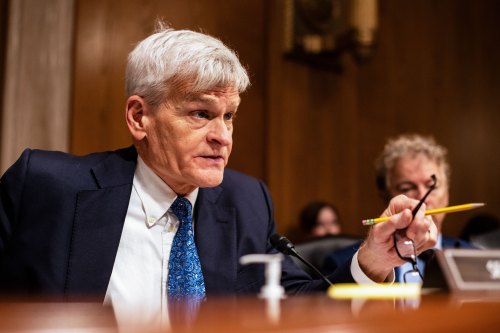
- Among members who pressed Kennedy on vaccines was Sen. Bill Cassidy (R-La.), who is facing a difficult primary challenge. Cassidy, a physician, has in the past clashed with Kennedy over vaccines and has been targeted by the Make America Healthy Again movement. In hearings, however, Cassidy led with questions on abortion issues, which fit more aptly into his red-state politics. Meanwhile, though Cassidy’s Senate seat is considered at risk, it’s not clear that the MAHA muscle on the ground is living up to the threat.
- Defense Secretary Pete Hegseth has decreed that annual flu shots will no longer be required for active-duty and reserve military service members. This appears to be a sign that the balance between public health and personal liberty is tilting toward the latter more than ever. It also is contrary to conventional wisdom that the flu, unchecked, could take a toll on the armed services. Minimizing the threat of flu among the troops has been viewed as a readiness issue.
- Meanwhile, National Institutes of Health Director Jay Bhattacharya, in his role filling in as leader of the Centers for Disease Control and Prevention, has reportedly canceled publication of a study that found the covid vaccine dramatically reduced hospitalizations and emergency room visits. News reports indicate that Bhattacharya objected to the study’s methodology, but CDC officials say it’s the same methodology used in the past.
Also this week, in the latest installment of our “How Would You Fix It?” series, Rovner interviews doctor, author, and Harvard public health professor David Blumenthal about his ideas for making the health system work better.

Email Sign-Up
Subscribe to KFF Health News' free Morning Briefing.
Plus for “extra credit” the panelists suggest health policy stories they read this week that they think you should read, too:
Julie Rovner: The Washington Post’s “KitKat, Gatorade or Granola Bars? What’s Banned Under New SNAP Rules Is Mixed,” by Rachel Roubein.
Sheryl Gay Stolberg: Politico’s “Trump’s Surgeon General Pick Faces Mounting GOP Opposition,” by Amanda Friedman and Alice Miranda Ollstein.
Alice Miranda Ollstein: The Washington Post’s “Where U.S. Science Has Been Hit Hardest After Trump’s First Year,” by Carolyn Y. Johnson, Lydia Sidhom, and Susan Svrluga.
Victoria Knight: The New York Times’ “A $440,000 Breast Reduction: How Doctors Cashed In on a Consumer Protection Law,” by Sarah Kliff and Margot Sanger-Katz.
Also mentioned in this week’s podcast:
- Politico’s “Set on Ousting Cassidy, MAHA Faces First Midterms Test,” by Alice Miranda Ollstein and Liz Crampton.
- The Washington Post’s “CDC Won’t Publish Report Showing Covid Shots Cut Likelihood of Hospital Visits,” by Lena H. Sun.
- The Journal of the American Academy of Pediatrics’ “Annual Summary of Vital Statistics: Trends in the Health of Americans During the 20th Century,” by Bernard Guyer, Mary Anne Freedman, Donna M. Strobino, and Edward J. Sondik.
click to open the transcript Transcript: RFK Jr. vs. Congress
[Editor’s note: This transcript was generated using both transcription software and a human’s light touch. It has been edited for style and clarity.]
Julie Rovner: Hello, from KFF Health News and WAMU Public Radio in Washington, D.C. Welcome to What the Health? I’m Julie Rovner, chief Washington correspondent for KFF Health News. And, as always, I’m joined by some of the best and smartest health reporters covering Washington. We’re taping this week on Thursday, April 23, at 10 a.m. As always, news happens fast, and things might have changed by the time you hear this. So here we go.
Today, we are joined via video conference by Sheryl Gay Stolberg of The New York Times.
Sheryl Gay Stolberg: Hi, Julie.
Rovner: Alice Miranda Ollstein of Politico.
Alice Miranda Ollstein: Hello.
Rovner: And we welcome back to the podcast my former KFF Health News colleague Victoria Knight, now at Bloomberg.
Victoria Knight: Hi, everyone. Happy to be back.
Rovner: Later in this episode, we’ll have the latest installment of our “How Would You Fix It?” series. This week with David Blumenthal, a physician, health policy expert, author, and former Obama administration official. He literally wrote the book on the history of presidents and health reform through George W. Bush, and he has a brand-new book on the last three presidents and their health care policies. But first, this week’s news.
So, Health and Human Services Secretary Robert F Kennedy Jr. on Wednesday completed his tour of Capitol Hill, having appeared before seven separate House and Senate committees in four days of hearings. Ostensibly, Kennedy’s appearances were to answer questions about President [Donald] Trump’s budget proposal for the Department of Health and Human Services. But, as usual, there were lots of other topics as well, as this was the first time the secretary appeared before some of these panels, and the first time some of these members of Congress got to question him in person ever. Victoria, you sat through all of the hearings, right? Or at least all the hearings this week. What was your big takeaway? I guess, not as many fireworks as some of us might have been expecting?
Knight: Yeah, definitely not as many fireworks. I mean, I think that it’s pretty clear Kennedy has gotten a mandate in some way from the administration to watch his rhetoric, basically, especially his vaccine rhetoric. And we even, at Bloomberg, we’ve had reporting directly saying that he’s … there’s an internal memo that said, you know, he’d keep his messaging on chronic diseases and nutrition and health care affordability, you know, more palatable topics. So I think he definitely tried to stick to that messaging. But there were points where the Kennedy that has for years been anti-vaccine came back through. And so we saw that in certain lines of questioning. And also he really wasn’t able to justify the cuts. He was there on the Hill to testify about the HHS budget, which President Trump proposed putting in still significant cuts to HHS. It wasn’t as deep as proposed last year. But there wasn’t really any good justification that Kennedy provided, except that the U.S. is in a lot of debt, and they need to, we need to reduce it. But he kept being, like, The programs are still good. We need to do these programs.
Rovner: I’m amused, because this, you know, goes back forever of when Cabinet secretaries come up to justify cuts to their departments that they clearly don’t want to make, and they’re not allowed to say, But it wasn’t my idea.
Knight: Well, and also that they know Congress will reject it. And so it’s, it’s kind of all fake anyways. All these congressional appropriators are like, Yeah, this is not happening.
Rovner: Yeah. Hence the reason why they get to talk about other things. I will say one thing that I noticed is that he was less rude to these committees than he had been in previous appearances on Capitol Hill.
Stolberg: Really?
Rovner: Yeah.
Stolberg: I sat through all seven of them. Julie. I thought he was pretty rude.
Rovner: I guess it’s all in how you look at it. I thought he wasn’t. Yes, he was definitely still rude, but I really thought there were times when he had now sort of taken the briefing that you get, which is to try and agree with something that a member of Congress says, and says, I will work with you, which he hasn’t done before. He’d just been combative before.
Stolberg: That maybe is true, but he has a habit of addressing members of Congress by their first name, which is a serious violation of protocol. And he was rebuked in the House last week for doing that with Frank Pallone, the Democrat of New Jersey. He did apologize for that, which I thought was interesting. But that did not stop him from also accusing senators of, Democrats, of making stuff up, grandstanding, and, you know, fake indignation. And, you know, he yells at them. And then at one point, Diana Harshbarger, the Republican in the House that was chairing the committee, said to him, she just said, I think it’d be best if everybody would just simmer down.
Rovner: Yeah, there were definitely moments.
Stolberg: And I would add to what Alice [Victoria] said, I do think that the big takeaway was that vaccines really still dominate his tenure. That is the defining issue of his tenure. [Sen. Bill] Cassidy yesterday was very pointed in correcting Kennedy when Kennedy cited a study that he said showed that advances in or reductions in deaths from an infectious disease were largely due to hygiene and sanitation, which is actually true in the first half of the 20th century, before vaccines were introduced. And the second line in that study, which Kennedy did not cite, was that, you know, vaccines had made an incredible difference and were extremely important. And Cassidy had somebody look up that study in the middle of the hearing and came back to Kennedy and said, This is what you didn’t say. You took it out of context.
Rovner: Yeah, I was actually very impressed, because first Cassidy couldn’t find the study, and then …
Stolberg: I knew the study because I had cited it before.
Rovner: I had a feeling you probably knew it. I was trying to find it, and I couldn’t find it. So I was glad that they did.
Stolberg: It’s in the Journal of Pediatrics in 2000 by an author named Guyer, not David Geier, but G-U-Y-E-R. You can look it up.
Rovner: We could. I will put a link to it in the show notes. OK.
Knight: I did want to mention also, I do think Cassidy did press Kennedy on vaccines. Certainly, everyone was watching that very closely because of his hesitation last year to vote for Kennedy, and really talking about struggling with the vote, and extracting all these commitments from Kennedy, ostensibly to vote for him, for HHS secretary. Cassidy did not mention any of those, like Kennedy violating any of those commitments, which he clearly has. He was supposed to be in frequent contact with the HELP [Health, Education, Labor & Pensions Committee] chair, go up to the Hill quarterly. He hadn’t been to the — Kennedy had not been to the Hill since September. In some of the committees, he hadn’t been there since last year, the last budget proposal. So Cassidy also did not mention these childhood vaccine recommendation overhaul that Kennedy did, which is a huge deal. And he did not mention the Advisory Committee on Immunization Practices being completely overhauled as well, and all those members being fired, which are two things Cassidy said he extracted commitments from Kennedy on. So I just want to make that point. Yes.
Stolberg: One quick on that. After the hearing, I asked Cassidy, “Do you think Kennedy has lived up to his promises to you?” And he looked at me and he said, “We’ll talk later.”
Rovner: I would say, Alice, you wrote a separate story about the fix in which Chairman Cassidy finds himself. He’s being challenged in a primary by a Republican congresswoman endorsed by the Make America Healthy Again PAC. I thought Cassidy was actually more restrained than I expected him to be in yesterday’s hearings. Although I think I guess it was our colleagues at The [Washington] Post who thought he was pretty combative. I mean, what did you take away from the Cassidy-Kennedy relationship?
Ollstein: Yeah, definitely. I mean, one thing I noticed with both Cassidy and a few other Republicans is one of the few topics where they feel comfortable really going after Kennedy and the Trump administration more broadly is abortion. They think that the administration has not done enough to restrict access to abortion pills, and so they felt more comfortable hammering Kennedy on that issue. You saw Cassidy do that. You saw [Sen. Steve] Daines and a couple of other very anti-abortion senators raise that. And I think that’s an area where they feel like they’re more aligned with the sort of activist GOP base than the administration is. And so whatever blowback they would get for questioning the administration is outweighed by their anti-abortion bona fides. So …
Rovner: Although I would say, I will interrupt before you finish and say I thought it was interesting that the members kept doing that because I thought most of it was for show, because we knew early on, because he’s been to all of these committees, that Kennedy was not going to talk about the FDA study on the abortion pill because there’s pending litigation, which is an easy out. But they made, they all made their little speeches, and they knew exactly what he was going to say.
Ollstein: Oh, absolutely, absolutely. I mean, they want to be seen fighting on the issue, for sure. I’ve talked to a lot of anti-abortion activists who say, you know, Look, the Trump administration keeps saying we got to go through the process with the study. We got to go through the process with the courts. We got to check all the boxes. And the anti-abortion activists point out, you know — correctly, I think — that the administration has been very willing to break with protocol, and even, you know, legal procedure on a bunch of other issues, and they’re saying …
Rovner: Which we’ll get to in a moment.
Ollstein: … Why not us? Why are they so careful when it comes to our issue when, clearly, they do whatever they want on other issues? And so, I mean, that is a fair point, and I think it’s going to be a continuing frustration. The dynamic we wrote about is the influence of the Make America Healthy Again, MAHA, as a political force. We’re going to really get a key test of that in Cassidy’s primary that’s coming up in just a few weeks. MAHA has put a big target on him and wants to knock him out. And my colleague and I took a really critical look at their influence in the race, and it’s sort of not living up to the hype, I would say. MAHA is not making a big impact financially in the race, and they are not making a big impact, really, in messaging. They haven’t succeeded in putting MAHA issues — like vaccines, like healthy food, chemicals in the environment — they haven’t made those the top issues in this race. It’s sort of the same bread-and-butter, cost-of-living Republican red meat stuff that you’re seeing in other states. And so, I think, you know, we talked to a lot of people, you know, close to the situation, who said, even if Cassidy loses, it’s not going to be because of MAHA. And so I don’t know if that makes him more willing to tangle with RFK in these hearings or not.
Rovner: I did think, I thought that it was politics that made him lead with abortion, though, because he … I mean, Louisiana, as we know, is one of the most anti-abortion of all the anti-abortion states. He’s been a longtime anti-abortion crusader. This is not a new position for him, and he’s got this primary, so he would like to bring out his supporters. I mean … I saw that. It’s like, oh, aha, politically, that makes sense, even though he knew that Kennedy wasn’t going to respond to the question.
Aside from the secretary’s continuing denial of the accusation that he is anti-vax, there was, in fact, considerable anti-vaccine-related news this week. First, over at the Defense Department, where Secretary Pete Hegseth has decreed that annual flu shots will no longer be required for active-duty and reserve military members. This is, according to Hegseth, “because your body, your faith, and your convictions are not negotiable.” Now, flu vaccines have routinely been given to members of the military since just after World War II for the fairly obvious reason that viral infections pass easily among people who are living together in close quarters, like, you know, members of the military. And vaccine requirements in the military, in general, date back to the Revolutionary War, when George Washington ordered troops to submit to the then fairly new smallpox vaccine. Sheryl, you’re our public health historian at the table. Has there ever been a time when the balance between personal liberty and public health has been tilted so heavily towards personal liberty as it is right now?
Stolberg: I don’t think so. We’ve had anti-vaccine activism in the United States for as long as we’ve had vaccines. And especially at the turn of the 20th century, around the time when smallpox was kind of racing through Boston and other cities, there was a big anti-vaccine push. You might remember, in 1905, the Supreme Court ruled that states could mandate vaccination to protect the public health, and that was in a case brought by a pastor in Cambridge, Massachusetts, who didn’t want to get vaccinated for smallpox. And then we had the ’60s, when, you know, vaccines were new, and public health people were touting them, and there was a big embrace of vaccination. So it’s very interesting to see what Hegseth has done. And what came up yesterday in the HELP Committee hearing, where [Sen.] Patty Murray reminded Kennedy that during the Great Influenza of 1918, the flu was very indiscriminate, and a lot of soldiers were killed. It did not strike only young people and old people. It struck down people in the prime of their life, many, many in the military. And she said that, you know, this was an issue for readiness. And Kennedy was like, You think the flu is going to kill people? Like, the flu is not going to kill people. And it seemed obvious to me that he did not really understand that influenza is not the same all the time, that the virus mutates, and it very well could mutate into a pandemic strain. And he himself is pushing for a universal influenza vaccine, which has been kind of like the dream of public health people, so we could guard against, you know, all types of flu strains.
Rovner: And not have to redo the vaccine every year.
Stolberg: Right. So, in short answer to your question, I think certainly not in the last 50 or even 100 years have we seen the ascendancy of the medical freedom movement and the argument that individual liberty takes precedence over the health of the community.
Rovner: Yeah. Alice, you wanted to add something.
Ollstein: Yeah. I’ve also seen a lot of people pointing out that it’s not like this is an across-the-board embrace of individual liberty. I mean, if you’re in the military, you still can’t grow a beard if you’re a man, even if you have a skin condition where shaving really hurts and is bad for your skin. You don’t have the personal medical freedom to transition from male to female, or female to male. You don’t even have the personal freedom to wear what you want, to have the hairstyle you want, and so this is really just about vaccines. And, like Sheryl said, you know, really could threaten military readiness. There have been several wars in the past where more soldiers died of disease than died of violent combat impacts. So this is a very interesting carve-out that has a lot of people worried.
Rovner: Also on the vaccine front at HHS, NIH [National Institutes of Health] Director Jay Bhattacharya, who was actually acting in his role as acting director of the Centers for Disease Control and Prevention, has reportedly canceled publication of a study that found the covid vaccine dramatically reduced hospitalizations and emergency department visits. Bhattacharya, reported both The Washington Post and The New York Times, complained that the study’s methodology was flawed. But CDC officials say not only is it the same methodology used in the past, but it’s also basically unheard of for a study approved by CDC’s own scientists not to be published in the agency’s “Morbidity and Mortality Weekly Report” once it reached the stage that this study had reached. Is there any conclusion to be drawn here? Other than that the study’s results contradict the administration’s position that the covid vaccine is not helpful.
Stolberg: Raises a question about radical transparency, that’s for sure. Secretary Kennedy came into office promising radical transparency. This doesn’t seem radically transparent.
Rovner: No. Kennedy keeps saying — and he said how many times during these hearings? — that he’s trying to restore trust in the science agencies. And this does not strike a lot of people as a way to restore trust when something is canceled because you don’t like the results. Victoria, did you want to add something?
Knight: Yeah, I mean, I think that’s a great point. He just said multiple times throughout all these hearings, especially when Democrats were questioning him on vaccines, that I’m willing to look at studies, I’m willing to look at data, I’m willing to review everything, if you’re bringing up maybe things he allegedly said he had not seen before, data or whatever. So yeah, exactly this goes exactly against that. You would think if there’s a study showing something, he’d be willing to view it. If that was his philosophy.
Rovner: We would see. All right. Well, meanwhile, President Trump continues to make his health policy out of the White House. Last Saturday, he summoned his top health officials, plus popular podcaster Joe Rogan, to the Oval Office to sign an executive order to facilitate research into and to fast-track FDA review of some previously banned psychedelic substances, including ibogaine and LSD, which are legally considered to have no medicinal uses. This is actually not all that controversial. It’s part of an ongoing push from researchers who say that some of these substances might well be useful for treating things like severe depression, PTSD, and even opioid dependence. But what made this so unusual is that it was apparently pushed to fruition in just a matter of days by a text from Joe Rogan to President Trump. So what message does this send about the so-called gold-standard science being the only thing that counts in this administration, when a podcaster with a big following that the president wants can spring loose a major policy shift in less than a week?
Stolberg: So I have a theory about this, actually. Well, first, it is highly unusual that Trump would step in on this, right? Like it’s not the ordinary course of science that the president issues these executive orders. But Casey Means, who is President Trump’s nominee for surgeon general, has advocated the use of psilocybin, and so has Secretary Kennedy, for that matter. But this is one of the things that is kind of stalling her nomination. [Sen.] Susan Collins has raised concerns about this. I guess I just kind of wonder if Trump is trying to put his imprimatur on this research, maybe as a backhanded way to give her a boost? Or maybe I’m just too Machiavellian, and maybe it’s just that Joe Rogan texted him, and he was like, Yeah, that’s a good idea.
Rovner: And it was, in fairness, it was already in the works.
Stolberg: Yeah. And, I mean, there is a lot of legitimate scientific reasons to do this kind of research.
Rovner: And, I will say, I mean, I’ve studied this, and I believe breaking just today, they’re, you know, rescheduling marijuana. Again, all of these technical changes are to make it easier to do the research. Part of the problem has been that because these substances were scheduled as having no medicinal uses, you couldn’t get them to do the research. So one of the things that this does is make it easier. To have Joe Rogan in the Oval Office on a Saturday morning struck me as, like, OK, this is a little strange.
Knight: But isn’t that how this administration works? Right? I mean, I think that, just in general, there’s a lot of influencer types that — I would say, Joe Rogan, podcaster, influencer type — that just have influence in this White House because they have forged a connection with Trump. And so, if they say something to him, he will take that into account and change policy sometimes.
Rovner: And he wants the young male demographic, which Joe Rogan very much represents. All right, we’re going to take a quick break. We will be right back.
OK, we are back. And turning to the Affordable Care Act, despite reassurances from Trump administration officials that the lapse of the Biden-era additional premium tax credits didn’t result in a big drop in coverage, we’re getting more data suggesting that is not the case. A new report this week from the group representing the 21 states that run their own marketplaces show[s] about 900,000 enrollees dropped coverage in the first three months of this year. Compared to last year, disenrollments are up 24%. Hardest hit, not surprisingly, are older enrollees between the age 55 and 64. Their premiums are higher to begin with, so the loss of additional subsidies hits them harder. Meanwhile, even people who have managed to keep coverage are paying more, as many dropped the more generous “gold” and “silver” plans, for those with higher deductibles but lower premiums. And those deductibles are often eye-popping indeed — not just $1,000 or $1,500 a year, but often more than five figures. I know I say this roughly every other week, but I’m surprised this isn’t making more of an impact in the national conversation. I mean, you know, I keep seeing people who say I’m having to drop my insurance or, you know, I have insurance and I can’t afford to use it because my deductible is $10,000. I know it sort of swept into this whole “affordability” thing, but I thought this might have come up more during seven hearings with the secretary of HHS.
Knight: I mean, I think it’s partly because there is just so much happening in the world right now that everything else is getting pushed aside in a way, if it’s not related to the Iran war or gas prices or things like that. But I do think, I mean, we’ll see, but Democrats, once we were starting to get — you know, we just started to get some of this data about ACA enrollment and how it’s changing now that the premium tax credit, enhanced premium tax credits, were not extended by Congress, we’re just now starting to get some of the data. So I think as we see more data, and then we’ll see even more of that going into the summer, I think Democrats, at least, will be hitting this really hard on the campaign trail, and maybe that will permeate and become part of more of the national conversation. We’ll see, but they’re at least gonna message on it, certainly.
Rovner: Yeah, I think, you know, one of the things that’s important to remember is that the administration, it’s telling the truth when it says, you know, most people were still enrolled in January, because a lot of those people got auto-enrolled. And it takes several months of not paying your premiums before you can actually get kicked off your insurance. So in fact, we’re only just starting to see how many people.
Ollstein: This is just the beginning. And the fact that we’re already seeing such coverage losses means that there’s going to be more. And I think it’s going to have a political impact in certain contexts. I mean, there was a report just about the big drop in enrollment in Georgia, and Georgia is a major swing state with some major races coming up, and so I expect it to have a big impact there. And so I think, rather than being like a dominant national message, I think in certain places where you’re really seeing the strain. I’ll also point out that it’s not just about people becoming completely uninsured. There’s also a big shift from people being in more comprehensive health care plans to people moving into skimpy, high-deductible health care plans. And that’s going to have a lot of ripple effects going forward as well, and going to lead to a lot of struggle. And so I think it contributes to the overall sense that people are really in financial dire straits and can’t afford basic daily life.
Stolberg: We’re going to see that, coupled with a lot of Democrats talking, as they did during the hearings, about cuts to Medicaid. Kennedy insists that we’re not cutting Medicaid, but if you talk to any rural hospital executive around the country, they will tell you that they are crumbling under the loss of Medicaid reimbursements. And I think that those, the Medicaid and also the ACA enrollments, will emerge as powerful issues for Democrats.
Rovner: Kennedy was repeating the age-old argument that’s always made that if the amount of money to Medicaid goes up, it can’t be a cut, even though that doesn’t keep up with inflation or enrollment or the number of people. Yeah, so, I mean, it’s like … if you’re paying more, if your mortgage goes up and you’re paying more for it and it goes up more than you’re paying, than you’re able to pay, then that’s really a cut in your income. So it’s a perennial argument that we do see.
Stolberg: It’s Washington accounting.
Rovner: Yeah. Finally, this week, there is news on the reproductive health front. In Pennsylvania, a state appellate court ruled that a 1982 ban on the use of public funds to pay for abortion violates that state’s Equal Rights Amendment. Now this case could still be appealed to the state Supreme Court, but this is a pretty significant ruling for a very purple swing state, right, Alice? And it could lead to state-funded Medicaid coverage for abortion, if it’s upheld.
Ollstein: That’s right. And I will say there was a major state Supreme Court race last year, and it was all about abortion rights — that was, like, the dominating issue in it. And the progressives prevailed on that message. I think you’re really seeing, like you said, a very mixed state, a very purple state, really being swayed in the direction of supporting abortion rights. And we’ve seen that in a lot of states, you know, since Dobbs — states you might not expect to go in that direction. And I think it’s going to continue to dominate state Supreme Court races as an issue. You’re seeing that right now with Georgia. I would advise folks to keep an eye on that. There’s a very pro-abortion rights message for those candidates in that race. … But this is specifically the issue of Medicaid coverage of abortion, I think, is going to keep coming up over and over as well, because it’s really getting at the question of, yes, you can have legal access to abortion on paper, but if you can’t afford it, is it really accessible? So this could open up access to a lot of low-income people that would not maybe be able to afford it otherwise.
Rovner: And for the people who are wondering, Wait a minute, I thought Medicaid coverage of abortion is banned — it’s federal Medicaid coverage of abortion is banned. States may use their own money if they wish to pay for abortion, and many bluer states do. That’s the question at hand here.
Meanwhile, in South Carolina, lawmakers are advancing a ban on abortion that’s so strict it would subject women who have abortions to punishment, although not as severe as the punishment for those who perform abortions. I thought this was a basic tenet of the anti-abortion movement, that the women who have abortions are also victims and shouldn’t be punished. Is that changing?
Ollstein: It’s been a very loud debate recently. You have different wings of the anti-abortion movement who are clashing on this, and many are watching the total number of abortions in the U.S. go up since Dobbs, and say this incremental strategy where we shield women who have abortions from prosecution and only go after the doctors. Some of the hard-liners feel that that’s not working, and so they have to try something else in order to actually have the chilling effect that they want to have and deter people from even attempting to get abortions. And then you have a lot of the more mainstream groups who really are against that strategy, and say that, you know, this will just drive voters into the arms of Democrats if we look like we’re the quote-unquote “war on women” that we’ve been accused of waging all these years. And so it’s a very active debate right now.
Stolberg: I was going to say, do you remember when Trump was running in 2015 and he said that he thought women should be punished for having abortions? And there was a big firestorm over it from the anti-abortion movement. And he basically shut up on that.
Rovner: Yes, I do remember that.
Stolberg: So … you can see how things have evolved. Of course, that was, you know, when Roe was still into effect. Then we got Dobbs, and, as Alice said, things are changing.
Rovner: Yes, things are changing. All right. Well, that is this week’s news, or at least as much as we have time for. Now we will play my “How Would You Fix It?” interview with David Blumenthal, and then we’ll come back and do our extra credits.
I am pleased to welcome to “How Would You Fix It?” David Blumenthal, a true Renaissance man of health policy. When I first met David in the 1980s, he was teaching at Harvard Medical School, doctoring in Boston, and writing about health policy. Since then, he has served as president of the health policy research organization The Commonwealth Fund, and, before that, as national coordinator for health information technology in the Obama administration. In his “spare time,” air quotes, David has written countless journal and other articles and several books, most notably, with political scientist James Morone, The Heart of Power: Health and Politics in the Oval Office, which chronicles presidential health policies from Teddy Roosevelt through George W Bush. Now he and Morone are out with a follow-up book called Whiplash: From the Battle for Obamacare to the War on Science, which covers the rather eventful last three administrations in health care. David Blumenthal, thank you so much for joining us.
David Blumenthal: Oh, it’s my pleasure. What a great introduction. Thank you so much for that.
Rovner: So, if it’s Congress that makes the laws, why is it that the president is so pivotal when it comes to health policy?
Blumenthal: Well, people forget that there is only one official in the United States who is elected by all the people, and that is the president. That gives him — or someday her, we hope — a legitimacy, a symbolic authority, and an ability to rise above the din of Washington conversation to reach the American people and to build support or mobilize opposition to whatever an enterprising congressman or senator has in mind. Those same congressmen and senators really crave direction, most of them, from the president to know what that official’s priorities are, so they can line up behind it. They also want to know what the president might veto before they put a lot of effort into things. So all those things are reasons why presidents have a level of authority which is often underappreciated, especially in health care, where the day-to-day conversation often focuses on what a senator or a congressman or a committee chairman is saying. But in the end, unless the president is behind something important, it’s not going to happen in the Congress.
Rovner: And pretty much everything major in health care has had a president spearheading it, hasn’t it?
Blumenthal: Exactly. Some that have succeeded, like Medicare and Medicaid, Lyndon Johnson’s proposals, and some that have not, like the Clinton health plan. And then, of course, the Affordable Care Act, which was uniquely the product of President Barack Obama’s sponsorship, passion, enduring commitment, with a lot of help from Nancy Pelosi.
Rovner: Can you talk a little bit about tinkering versus major reforms, and what you’ve learned from studying the last dozen or so major health reform debates? I know just in the 40 years I’ve been doing this, you know federal government has gone back and forth between We should try to do something big; no, we can’t do something big, so we should try to do something small; no, it doesn’t work if we do something small, we should try to do something big. It’s just been this constant swaying.
Blumenthal: Well, one of the stories that we tell in both of our books is the story of the dance that has gone on over the ages between proponents of major health care reform and opponents. And this has typically been Democratic proponents and Republican opponents. And the story is this: Somebody in the Democratic Party proposes a massive health care reform proposal, and the Republicans scream socialism, government control, death panels, whatever, and propose an alternative that is smaller, more about free markets, more about the private sector, more about competition. The Democratic proposal goes down in flames, and then 20 years later, the Democrats come back and propose what the Republicans proposed the first time. Then the Republicans say socialism, government control, more limited government, more free market, more private sector. Same thing happens. It goes and goes and goes. What we saw with the Affordable Care Act was that the effort to get anything meaningful in the way of coverage, with a less governmentally oriented program, had run out its rope. There was just nowhere else for conservatives to go, which is why we got the Heritage Foundation proposing what Gov. Mitt Romney and Ted Kennedy accepted in Massachusetts as the basis for health care reform. So I think what happened was that — and this, I think, you saw mostly in the repeal-and-replace failure — the Republicans could not come up with anything that was more incremental, less comprehensive, and still made a difference for people’s insurance, especially on the issue of preexisting conditions.
Rovner: They were OK with the repeal, just not with the replace.
Blumenthal: Exactly, which is a story that we tell, in detail, in Whiplash. So incremental reform is the way Americans do business. We’ve now incremented our way to a four-legged stool that can achieve universal coverage. We have employer-sponsored insurance, which, of course, is subsidized by the government. We have Medicare, which is the third rail of health care politics. We have Medicaid, which can be expanded if states and the federal government choose, and we have the Affordable Care Act. And together, those got us, during the last years of the Biden administration, to 93% coverage of Americans. We have the tools to increment our way now to universal coverage, and that just seems … to be the way Americans want to do business, at least in health care.
Rovner: How does that politicization of not just health insurance coverage but everything that surrounds health and health care becoming red or blue — how’s that going to impact the next big health debate?
Blumenthal: Well, it’s red-blue. It’s also … has racial overtones. It also has xenophobic overtones, with attitudes toward immigration. All these things now run straight through health care. I think there’s a difference between the psychology of opposition to vaccination and suspicion of the NIH and the people who come into play when it comes to the cost-control issue. Cost control is a bread-and-butter issue. Vaccination is about personal freedom, the sanctity of bodies, the freedom to say no. It has a different overtone and undertone to it. I think that the controversy over cost will be viewed much more as a traditional interest-group struggle, rather than as a red-blue struggle. And I think there’ll be some people from the Republican Party who will get to the point where their constituents are saying, We may have health insurance, but it’s not worth a damn because our deductibles are too high and our copayments are too high. We got to do something. And I think there’s a chance for a bipartisan solution on that score.
Rovner: So we’re calling this series “How Would You Fix It?” How would you fix it if you could wave a wand and put aside all of the politics that I know you now know so well. But if you could do one or two things to make our health system function better, what would it be?
Blumenthal: Well, you know, we, in writing the book, we spent some time with President Obama, who said, you know, I would have loved to have had “Medicare for All,” but I knew that was impossible. So we now have this Rube Goldberg apparatus providing us coverage, and I think we’re stuck with that. So what I would do first is make the Affordable Care Act as generous as it should have been and got to be after the Inflation Reduction Act. And I think if we did that and worked our way around the Supreme Court’s prohibition about requiring Medicaid expansion, which we almost did in the IRA — it’s little-known, but there was an alternative to expanding Medicaid that would have made it a federal program, added to the state program, and not be … go crosswise with the Supreme Court. That, plus … so that would be just sort of make do everything we can to make coverage as universal as it could be. And then add to that a set of incremental changes that would reduce the cost of care. That would involve, I think, more regulation of private insurance to reduce the complexity of benefits and the complexity of billing. The Netherlands and Germany run their health systems through private insurance. They just standardize what the private companies offer. We could do that. In fact, the Affordable Care Act begins that process, especially in marketplaces like California, where private insurers are heavily regulated.
The second is we need to break up the monopolies that have formed at the local level in the health care provider system, where you have virtually no competition based on price or anything else. We need to change the way we pay for care much more aggressively. Artificial intelligence has enormous potential to reduce administrative costs, but it also has an enormous potential to run them up. If the incentives in the system are not fixed, the incentives in the fee-for-service system will lead to using AI to maximize billing.
Rovner: Which we’ve already seen.
Blumenthal: Right, and not reduce administrative expenses. And so we need to give providers and other powerful interests an incentive to use AI to make the health care system work better, rather than to make it generate more revenue. So I think those are some of the things that we’ll need to do. So, build on what we have, the four-legged stool, the foundation for universal coverage we already have, and begin to take on the cost of care through changes that are, for which there are precedents elsewhere in the world, but which until now, we’ve been unwilling to take on.
Rovner: David Blumenthal, we’ll see how this all plays out. Thank you so much.
Blumenthal: Thank you, Julie.
Rovner: OK, we’re back. Now it’s time for our extra-credit segment. That’s where we each recognize a story we read this week we think you should read, too. Don’t worry if you miss it. We will post the links in our show notes on your phone or other mobile device. Victoria, why don’t you start us off this week?
Knight: Sure thing. My story for extra credit is in The New York Times, and the title is “A $440,000 Breast Reduction: How Doctors Cashed In on a Consumer Protection Law,” by Sarah Kliff and Margot Sanger-Katz, Sheryl’s colleagues. So this is a really interesting look at the ramifications of the 2020 No Surprises Act that was passed by Congress. And the whole point of this act was to protect patients from surprise medical bills. Because, you know, it still happens nowadays, but this law helps it. Basically, sometimes patients go to an out-of-network doctor, they might get stuck with a really, really high bill, and it’s really difficult for them to pay. So Congress wanted to do something about it. They did, and now, basically, insurers and doctors have to go to an arbitrator if there is a conflict about the price of the bill, if it’s an out-of-network bill. This article really had a lot of great data points on how it seems arbitrators are really favoring doctors in these decision-making and awarding doctors with these really high amounts of money for these medical procedures. So basically, the doctors offer an amount of money that the medical procedure should cost, and the insurers offer one, and the arbitrator just picks one of the two prices. And so doctors are really getting awarded way more. … Some doctors are profiting off of this by certain types of procedures, such as breast reduction that was mentioned in the title. And so it was really fascinating. And a few lawmakers were interviewed, and they were like, Well, we didn’t really think about that happening, but at least patients are protected. I don’t know if Congress will do anything about it, but it’s a new twist in our health care system.
Rovner: Yeah, I love this story because there’s been complaints about the arbitration system pretty much since the law passed. And I think it takes, you know, a story like this for everybody to say, Oh, my goodness, is that what’s happening? Alice, why don’t you go next?
Ollstein: Yes, I have a[n] analysis from The Washington Post. It’s called “Where U.S. Science Has Been Hit Hardest After Trump’s First Year,” and it’s looking at these science and research grants from the National Institutes of Health, and even though Congress has largely protected that funding and approved increases, even where the White House pushed for decreases, that money is not going out, and it’s really not going out to certain researchers researching certain topics, chief among them things that impact women’s health. And this is partially, as the article gets into, a result of this war on what’s viewed as DEI [diversity, equity, and inclusion]. And so research into conditions that primarily or solely impact women, like endometriosis, are seen as DEI and are therefore getting cut. And so it really gets into the toll that’s taking on these labs around the country that are, you know, potentially discovering breakthroughs, but are now in limbo and having to lay people off and has big consequences.
Rovner: Another story that made me angry. Sheryl, you have one of Alice’s stories as your extra credit.
Stolberg: I do. So this is from Politico by Alice and her colleague, Amanda Friedman: “Trump’s Surgeon General Pick Faces Mounting GOP Opposition.” And the reason I like this story is because it’s about Casey Means, and in how this — there’s a wave of attacks coming against her, kind of under the radar from the right, from abortion opponents, including the policy arm of the Southern Baptist Convention, and also people who, as we mentioned before, are perhaps raised questions about her embrace of psychedelics. And I think that what happens with Casey Means is really kind of a symbol, or it’s like a microcosm of what is going to happen with the MAHA movement. And yesterday, after the hearing, I asked Sen. Cassidy, who is kind of sitting on Casey Means’ confirmation, “When are we going to see a vote on Casey Means?” And he said, “No comment.” So I just think that this is something to watch, and I applaud Alice and her colleague for pointing out this kind of below-the-radar campaign to hold her up.
Rovner: Yeah, really, really good story. All right. My extra credit, also from one of our podcast panelists, Rachel Roubein at The Washington Post. It’s called “KitKat, Gatorade or Granola Bars? What’s Banned Under New SNAP Rules Is Mixed.” And I love this story because it’s one of those “what seems simple is anything but” policy stories. What seems simple here is the idea that food stamps shouldn’t be used to pay for unhealthy food like candy and soda. But who determines what’s healthy and how is that decided? Thanks to a big pilot program from the Trump administration, two dozen states have received permission to make changes to the food and drink that’s eligible to be paid for using SNAP [Supplemental Nutrition Assistance Program] benefits, and 10 states have now implemented restrictions. But it’s a lot harder than just saying you can’t buy soda and candy. In some states, Gatorade and even Pedialyte are ineligible, even though those are often given to nurse sick kids. In Iowa, KitKat and Twix bars are eligible because they’re made with flour and so they’re not technically candy. Some SNAP rules are so arbitrary that — and this is not part of Rachel’s story because it just happened — a bipartisan group of U.S. senators on Wednesday introduced the “Hot Rotisserie Chicken Act” to make sure that Costco’s famous $4.99 roasted bird remains available to those getting federal food assistance. We will watch to see if that flies. Sorry. Not really sorry.
Rovner: OK, that is this week’s show. Thanks to our editor this week, Stephanie Stapleton, and our producer-engineer, Francis Ying. We also had production help this week from Taylor Cook. A reminder: What the Health? is now available on WAMU platforms, the NPR app, and wherever you get your podcasts — as well as, of course, kffhealthnews.org. Also, as always, you can email us your comments or questions. We’re at whatthehealth@kff.org. Or you can still find me on Twitter @jrovner, or on Bluesky @julierovner. Where are you folks these days? Sheryl?
Stolberg: I’m at @SherylNYTon X, formerly Twitter, and Bluesky.
Rovner: Victoria.
Knight: I’m @victoriaregisk on X.
Rovner: Alice.
Ollstein: @alicemiranda on Bluesky and @AliceOllstein on Twitter [X].
Rovner: We’ll be back in your feed next week. Until then, be healthy.
Credits
Francis Ying
Audio producer
Taylor Cook
Audio producer
Stephanie Stapleton
Editor
Click here to find all our podcasts.
And subscribe to “What the Health? From KFF Health News” on Apple Podcasts, Spotify, the NPR app, YouTube, Pocket Casts, or wherever you listen to podcasts.