The Peculiar Politics of Hospitals
The Host
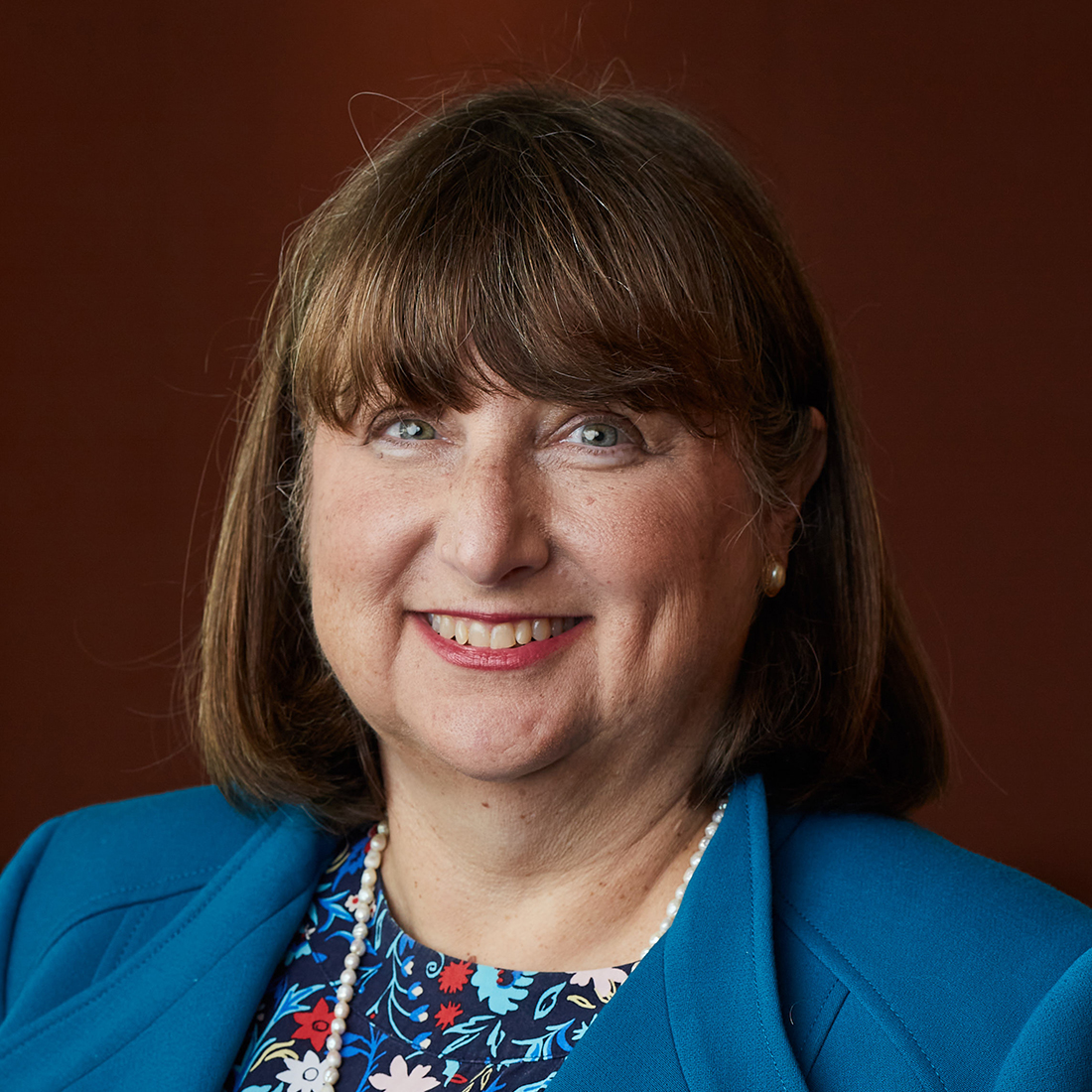
Julie Rovner
KFF Health News
Julie Rovner is chief Washington correspondent and host of KFF Health News’ weekly health policy news podcast, "What the Health?" A noted expert on health policy issues, Julie is the author of the critically praised reference book "Health Care Politics and Policy A to Z," now in its third edition.
Republicans and Democrats on the House Ways and Means Committee had strong words for hospital CEOs about their prices at a hearing this week. But it remains unclear whether they will follow up their words with actions to force prices down.
Meanwhile, in a rare bit of positive health policy news, a study of the first two years of the new 988 suicide prevention hotline shows it reduced suicides among young people, and more so in states that fielded more calls.
This week’s panelists are Julie Rovner of KFF Health News, Joanne Kenen of the Johns Hopkins Bloomberg School of Public Health and Politico Magazine, Shefali Luthra of The 19th, and Rachel Roubein of The Washington Post.
Panelists



Among the takeaways from this week’s episode:
- Hospitals have long been the most sacrosanct of healthcare stakeholders to politicians, partly because every member of Congress has at least one in their district. Hospitals are often major employers and have a powerful lobbying presence. So it was notable that members of Congress from both parties were willing to criticize hospital CEOs strongly at a hearing to examine hospital prices.
- The Supreme Court heard arguments this week about labeling for the controversial pesticide glyphosate, which may or may not cause or contribute to cancers. The issue divides the Make America Healthy Again movement, which sees the Trump administration’s support of the Environmental Protection Agency’s conclusion that the product is not carcinogenic as a political betrayal.
- A study demonstrating the effectiveness of the national 988 suicide prevention hotline in reducing youth suicide is a bit of good news stemming from a rare bipartisan effort to address a serious problem.
- Another pair of studies this week suggest that the Trump administration’s delay of the recommended birth dose of the vaccine to prevent hepatitis B could increase the number of cases of the disease and cost millions more in health spending to treat its complications.

Email Sign-Up
Subscribe to KFF Health News' free Morning Briefing.
Plus for “extra credit” the panelists suggest health policy stories they read this week they think you should read, too:
Julie Rovner: The New York Times’ “While Advising Kennedy, Top Aide Had More Than $25 Million Stake in Wellness Company,” by Christina Jewett and Benjamin Mueller.
Joanne Kenen: ProPublica’s “Unfounded Health Concerns Are Powering a Solar Backlash,” by Anna Clark.
Rachel Roubein: KFF Health News’ “Big Companies Position Themselves for Payday From $50B Federal Rural Health Fund,” by Sarah Jane Tribble.
Shefali Luthra: The Atlantic and KFF Health News’ “A ‘Barbaric’ Problem in American Hospitals Is Only Getting Bigger,” by Elisabeth Rosenthal.
Also mentioned in this week’s podcast:
- KFF’s “KFF Health Tracking Poll: Health Care Costs and the Midterms,” by Audrey Kearney, Mardet Mulugeta, Alex Montero, Isabelle Valdes, Lunna Lopes, and Ashley Kirzinger.
- KFF’s “Reaching Voters on Health,” by Drew Altman.
- JAMA’s “Suicide Mortality Among Adolescents and Young Adults After Launch of a Suicide and Crisis Lifeline,” by Vishal R. Patel; Michael Liu; and Anupam B. Jena.
- JAMA Pediatrics’ “Economic Impact of Delaying the Infant Hepatitis B Vaccination Schedule,” by Eric W. Hall; Prabhu Gounder, Heather Bradley, and Noele P. Nelson.
- JAMA Pediatrics’ “Impact of Removing the Universal Hepatitis B Birth-Dose Vaccination in the US,” by Margaret L. Lind, Matt D.T. Hitchings, Roshni P. Singh, Benjamin P. Linas, Derek A.T. Cummings, and Rachel L. Epstein.
click to open the transcript Transcript: The Peculiar Politics of Hospitals
[Editor’s note: This transcript was generated using both transcription software and a human’s light touch. It has been edited for style and clarity.]
Julie Rovner: Hello from KFF Health News and WAMU public radio in Washington, D.C. Welcome to What the Health? I’m Julie Rovner, chief Washington correspondent for KFF Health News. As always, I’m joined by some of the best and smartest health reporters covering Washington. We’re taping this week on Thursday, April 30. As always, news happens fast and things might have changed by the time you hear this. So, here we go.
Today we are joined via videoconference by Shefali Luthra of The 19th.
Shefali Luthra: Hello.
Rovner: Rachel Roubein of The Washington Post.
Rachel Roubein: Happy to be here.
Rovner: And Joanne Kenen of the Johns Hopkins Bloomberg School of Public Health and Politico Magazine.
Joanne Kenen: Hi, everybody.
Rovner: No interview this week, but lots of news. So let’s dive right in. I want to start with politics this week. The House Ways and Means Committee held a kind of remarkable hearing with some large hospital chain CEOs, at which members from both parties took great public umbrage at hospital pricing practices. The headline on the Ways and Means GOP chair Jason Smith’s opening statement was, quote, “The Prices You Charge Patients Are Borderline Extortion,” and that was among the milder charges that he and other committee members lobbed at the witnesses. Yet Ways and Means members have been talking about things like site-neutral payments for Medicare and reining in the 340B Drug Pricing Program for literally years now without actually doing anything about them. Was this all just for show? Or might we actually see some action on hospital pricing this year?
Kenen: They did take a bite at this, about the site-neutral payments, in a limited — on certain things. I looked it up last night because I figured Julie would know it by heart but I couldn’t remember. It was 2015. So they did a little bit of it, and they — it was bipartisan. And they did not solve the problem. They sort of nibbled around the edges. Consolidation of hospitals and acquisition of physician practices, etc., have intensified in the last decade. So there is a bipartisan willingness to nibble. We don’t know if there’s a bipartisan or even either side really having the stick-to-itness to get something done. I wasn’t in that room. Some of you may have been on the Hill more than I get there. I don’t feel that action is imminent, but I do think that the conversation is returning to hospitals in a way we haven’t seen it for a while. And hospitals are a lot of money.
Rovner: That was my point is that hospitals are where the money is in healthcare. Rachel, you wanted to add something.
Roubein: Oh yeah, and we saw in Trump 1 [President Donald Trump’s first term] some efforts around site-neutral at the Centers for Medicare & Medicaid Services. But just sort of politically speaking, why the rhetoric is interesting, it used to historically be a little harder for lawmakers to take aim at their friendly neighborhood hospital. They’re major employers in their districts, particularly rural areas, and they also support lawmakers.
Rovner: Yes, and I would say for those who don’t follow this as weedily as we do, site-neutral payment is when hospitals who own outpatient clinics charge more for the same service in the hospital than they do in the clinic. The art justification is, Well, we have to help support the rest of the hospital facility, so we have to charge more. And this has been a point of contention for some time.
Kenen: But that playing field has changed. So it’s more, there are more of them now than there were when there were more independent medical practices and more independently owned, either small chains or non-chain hospitals. The whole hospital industry has changed. And if I can add just one other quick fact why, I think politically, the targets have been insurers and drug companies, right? And that’s what the conversation’s been about for quite — the dominant conversation. And I think it’s because insurance prices are really high, and they go up every year, and you see it in your paycheck week after week. And drugs, most of us do go to a pharmacy or have a mail order. So many of us are confronted with paying out-of-pocket for a drug, and people who don’t have great insurance might pay a lot out-of-pocket for a drug, or they’re on a drug that’s not in their formulary, etc. It can be confusing. Most of us in any given year are not in a hospital. And sometimes, when we are in a hospital, we’re grateful for it. It’s not that everybody gets perfect care and there are no bad outcomes. Of course, there are. But if the hospital I gave birth at saved my kid, I’m grateful for that. And it was a long time ago. Eighth grade wasn’t so great, but the rest of his life is right. So we have a different relationship in terms of how we interact and how often we interact with our hospitals.
Rovner: So building on that one hint of why Republicans might be feeling freer to criticize hospitals — who have long been, as Rachel points out, the most protected of all the healthcare stakeholders in Washington — came from KFF’s latest healthcare tracking poll. Quoting KFF President and CEO Drew Altman’s latest column, which I will link to, quote: “What jumped out from the poll is the value voters place on villainizing health care’s big interests now. It’s like serving up a big fat slow curveball for every candidate to hit.” Putting on my cynical hat, maybe the message that politicians are taking here is to talk a big game on healthcare but don’t do things that will actually impact negatively the people who fund your campaigns. In other words, it is all for show and they’re not planning on doing it.
Luthra: That’s kind of the interesting question, right? I was thinking a lot this morning about the really great No Surprises Act story in The [New York] Times that Margot Sanger-Katz and Sarah Kliff wrote, and one of the points that they make is there’s less political pressure when people aren’t seeing firsthand the consequences for reform. And so if there isn’t really vocal outcry from consumers directly at hospitals as an institution, where does that political pressure come from? I don’t know that we have an answer that suggests it would be strong enough to outweigh what an important interest hospitals are.
Rovner: Yeah. I want it noted that, in addition to going after Big Insurance and Big Pharma, members of Congress are now going after Big Hospital, which, as Joanne points out, is pretty rare. We will see if anything comes of it.
Well, one of the reasons that healthcare is such a hard subject to, you know, legislate on is that there are almost always unintended consequences. Lawmakers want to give people stuff, and they want to give healthcare providers stuff, but they don’t want to figure out how to pay for it or who should pay for it. Case in point — those very popular weight loss drugs known as GLP-1s. The Trump administration last year announced a deal that would make the drugs made by Eli Lilly and Novo Nordisk — those are the two big makers of these popular drugs — would make those drugs available through a Medicare pilot program provided by insurers. But even with the drugmakers agreeing to dramatically slash the drugs’ prices, insurers have balked at the added cost, causing the pilot to be canceled. Now, Medicare plans to pay for the drugs itself, apparently, at least temporarily. But of course, that’s going to pile new costs on a program that itself is not financially stable, and run the risk of doing to Medicare what many employers are doing to their workers, cutting off coverage for these drugs after they’ve already started it. There’s no easy solution to giving people new, modern, even working technologies that are expensive, right?
Kenen: As more and more research about the potential benefits of these drugs — and also they are still relatively new. We could be having a whole different conversation about long-term use in a few years. But right now, one finding after another shows that it’s not just weight loss and diabetes, that there may be a lot of other benefits which still have to be studied or understood better, and who would benefit, and all those questions for the scientists. But these could be, end up being as common as statins down the road, and very expensive. So then the question is: Who gets the savings? Is it going to be worth it if Medicare pays for the drugs and ends up with fewer hospitalizations for advanced diabetes complications and amputations and kidney failure and all the terrible things that can come from advanced, uncontrolled diabetes? Is an insurer — insurers don’t like to always pay long-term. They don’t like to spend something tomorrow where the benefits may be 10 years down the road, because that person might not be your customer anymore in 10 years. So you’re investing in their long-term health, but they’re gonna be paying their premiums to your competitor in 10 or 20 or 30 years. So I just see this is getting more and more and more expensive, or at least the demand, the more and more people. How are we defining — diabetes has a clinical definition, but obesity is a little fudgier, right? No pun intended.
Rovner: Two points. One is that the one thing we know about prevention and people who are not children is that it doesn’t pay for itself. So if you keep these people from dying from their diabetes complications and other complications of obesity, they’re going to live longer and eventually are going to die of something else, and that’s going to be expensive. So probably not a savings from CBO’s [the Congressional Budget Office’s] point of view. But the other thing is that other countries aren’t having this issue, because they have price controls on drugs, and we don’t. And try as hard as President Trump seems to be doing to piggyback off of other countries’ price controls, at some point — and I guess this harkens back to the hospital conversation — at some point Congress, the president, could just bite the bullet and say: Hey, we’re not going to let you charge — we’re not going to buy your drugs if you’re going to charge this much. So charge us less. I don’t see that anytime soon, but it is a possibility, yes?
Luthra: Certainly. And I think one thing we’re not thinking about as well is what happens — right? — when people have had access to these drugs and then suddenly they are no longer covered. And with GLP-1s in particular, it’s actually kind of complicated and fascinating, because we are seeing all of these compounding pharmacies, some — right? — more in compliance with regulations than others, developing knockoffs. And people, I’ve talked a lot of them, will just go to those places instead, buy those products at a price they can afford, but the safety, the quality, may or may not be guaranteed. And there’s just a very large conversation that we’re not having about all of these consequences and trade-offs that we can’t quantify, by nature of us kicking the can down the road on dealing with the pricing problem.
Rovner: Yeah, there’s a lot of PhD theses that are going to come out of this. There are just so many tentacles of it to study. And Joanne’s right. We don’t know.
Kenen: Right. Particularly, to combine PhDs. The sweet spot is going to be like an AI analysis of GLP spending, or some 20 years out or whatever. That’s going to be what all the PhD theses are.
Rovner: Yes, well, going from insoluble problems, most of what we talk about is kind of by necessity, bad news or divisive news. So this week I wanted to highlight an actual good-news story in health policy. According to a new study in the Journal of the American Medical Association, youth suicides have dropped markedly in the two years following the implementation of the 988 suicide prevention hotline. And while it’s hard to attribute all of the improvement to the hotline’s existence, the researchers were able to tease out that suicides decreased most in states with higher volumes of answered 988 calls and that suicides didn’t change much in peer countries that didn’t implement a hotline, like in England. And even more good news, while the Trump administration ended a specific part of the program that was aimed at helping LGBTQ+ callers last year, HHS [Department of Health and Human Services] Secretary Robert F. Kennedy Jr. testified during his marathon of hearings last week that the department would reinstate that option. Now all of this was the result of a bipartisan push in Congress over several years. What are the chances that seeing something good come from working together might prompt more cooperation that things, that lawmakers might agree on? This is my non-cynic hat.
Kenen: Maybe in an alternative universe.
Rovner: Go head, Rachel.
Roubein: I thought this was interesting, because, as you said, this was something that was rolled out with bipartisan support in 2022. And it came off of the heels of the pandemic, which really exposed issues with youth mental health. I remember writing about the time this number was replacing a 10-digit hotline number, and advocates, etc., weren’t sure how much people would know about it, how received it would be from that standpoint, because you really had to get the message out that this was out there. So I thought that these numbers a few years later were pretty striking.
Rovner: Yeah, I thought it was striking how fast that we were able to sort of see a difference.
Kenen: But also there’s a history going back at least 10-ish, and probably longer, years on mental health. There’s bipartisanship. There have been a number of bills, both on opioids and substance abuse and mental health in general, not just for kids. There’s several over, in recent years, about mobile clinics and just spending more money. And this is great news, right? It’s good. And I think it helps in this area. Like by, can you work on some youth issues? Or could you work on some, continue working in a bipartisan basis on mental health issues? Because this country has a lot of mental health challenges. So I think a success makes that lane broader and better lit, but I don’t think it necessarily spills over to fixing all the 800,000 other problems stacked up in Congress. But it’s good. It’s obvious, I think, not just good news but I also think it’s good news for moving ahead and doing something else good.
Rovner: Yeah, I would say it’s good news on its own, but it’s also potentially good news on the Let’s make other policy and fix other problems in the healthcare system. All right, we’re going to take a quick break. We will be right back.
OK, we are back — and back to divisive stuff. The Supreme Court on Monday heard arguments in a case surrounding glyphosate. That’s the pesticide sold under the brand name Roundup, which Make America Healthy Again supporters and many scientists say causes, or at least contributes to, multiple types of cancers, and which the U.S. Environmental Protection Agency has determined is not carcinogenic. The case at issue concerns whether or not the maker of Roundup, Monsanto, should have included a warning label on its packaging. I’m less interested in the details of the case here, which involve whether states have the right to require labeling that the EPA does not, than the split it’s causing in the MAHA movement as the Trump administration backs the EPA’s finding that glyphosate is not carcinogenic, which MAHA supporters find to be a complete betrayal of their cause. Does this potentially have as much political oomph as the dispute over vaccines? Certainly not helping the MAHA movement be happy with the Trump administration.
Roubein: This has definitely opened fissures between the Make America Healthy Again movement and the Trump administration. On top of that, I think one of the things that people in the MAHA movement were particularly upset about was Trump’s executive order earlier this year to boost domestic manufacturing of glyphosate. But at the same time, we have seen the Trump administration try and make nice with some MAHA leaders, inviting them to the White House. Some of them even spoke to Trump a little bit. So you’re kind of seeing that kind of divide here with the administration also trying to placate as well.
Rovner: Yeah, this is sort of a fascinating political alliance that they’re on the one hand trying to protect and on the other hand trying to not allow, particularly when it comes to things like vaccines, not let it alienate people who are outside the movement, which as we have seen has turned out to be an extremely delicate dance.
Luthra: And we’ve talked about this before, but I think one thing we still don’t really know is just how amorphous vs. cohesive MAHA as a movement is, and also its political potency. And there are Senate primaries that are good tests of this, [Sen.] Bill Cassidy an obvious one, given his vote on RFK and his stance on vaccines broadly. But we are still many months out from knowing if Trump alienating MAHA, if Republican institutions alienating parts of the MAHA movement, actually matters. Clearly a lot of Democrats think it might. That’s why we’re seeing so many of them court this constituency. But, yeah, I just think we really need to get a better sense as to how much of this is an influence that has been maybe a little bit hyped up, even by us in the press, and how much of it is actually substantial and influential.
Rovner: Yeah, we know that the anti-abortion movement is powerful and turns out their voters, and when they make endorsements, when they get behind somebody or when they go against somebody, they have the money and the power and the clout and the vote to back that up. We don’t really know that yet about MAHA. I think that’s a really fair point. Joanne you wanted to add something?
Kenen: No I think we don’t know as much. I think that the Trump people think they’re voters and that they think they helped them in 2024. But MAHA, I agree with what both of you just said. It’s amorphous. There are people whose primary issue is vaccines, and that’s how many of us think of MAHA, but it is also about healthy food. And some things that people could find common ground are the pesticides, the chemicals. Those are things that actually had been identified more with Democratic causes or Democratic voters in the past, those, some of the environmental issues. But I think, Julie, the question you asked is right. It’s a political force, but is it a political force that’s gonna gain power or just sort of dissipate? And there’s so many other things right now changing the politics of the country. I don’t think we could possibly know, even if you took a terrific poll today and found out they were mad. We have a pretty short news cycle.
Rovner: Yeah, we do. We’ll see. All right. Well, meanwhile, elsewhere in the Trump administration, scientific retribution continues apace. The Justice Department this week announced the indictment of a former aide to Dr. Anthony Fauci for using his personal devices and email addresses to skirt public record laws and keep official communications private. Now this isn’t really news. The scientist, named David Morens, testified before a House hearing in 2024 and basically admitted what he did. So the question here is whether this criminal indictment is the beginning of a new effort to publicly punish those who the Trump administration accuse of unspecified wrongdoing regarding their handling of the covid pandemic. I would note that this week, obviously, we also got the indictment, again, of former FBI director Jim Comey. It’s not clear how much of this is the Justice Department trying to please President Trump and how much is sort of a new effort on this scientific front.
Luthra: That’s such a good question.
Rovner: Thank you.
Luthra: No, I just, I think you’re right. It’s just not clear, because the acting attorney general hasn’t been in his role for very long. We know one of the reasons he has this job is because of dissatisfaction with how Pam Bondi approached the president’s goal of going after political opponents and targets. And so maybe, in a way, the why of it doesn’t matter if it creates a perception that this war on science is, in fact, renewed or accelerated or regaining steam in some way. If that’s how people feel and what the consequences look like, then there’s obviously a chilling effect that could be even greater than what we’ve already seen.
Rovner: Yeah, and I would point out, it is a crime to use your personal devices to avoid public records laws. It is pretty common, but the actual indictment came so long after this. And is this the beginning of a series of, We’re gonna go punish the people who we think wronged us during the pandemic using whatever power we can find, or is this a one-off? And I guess we’ll have to see.
Kenen: But I think he was sort of easy pickings because he had publicly admitted it. It’s up to the courts to decide if he’s guilty of an actual crime or just not following the rules. That’s not our decision. But it’s also, he was an easy target because he had admitted it, but he had also — it’s a sore spot. It’s the China lab thing. It’s not just some study or something to do with covid. It was very specifically, there are people who believe it was engineered and a lab leak that—
Rovner: Oh, yeah, this clearly feeds into that. Right?
Kenen: Into that conspiracy theory, which is unproven, and we may never know the full story of how covid emerged, but that’s a political button for a certain segment of Trump supporters.
Rovner: Well, the administration’s ideologic purge continues as well. Late last week, the president fired all 22 members of the advisory board for the National Science Foundation. Now, the National Science Board is a bipartisan group that has advised the NSF since 1950. It is hardly full of political firebrands. Also this week, the Substance Abuse and Mental Health [Services] Administration announced it would no longer pay for test strips to see if drugs are adulterated with fentanyl or other potentially deadly substances, because it “facilitates,” air quotes, illegal drug use. Now there is a long and lively debate about whether such harm reduction policies protect lives or encourage illegal drug users to continue to use drugs, or both. But it does look kind of weird the week after the administration sought to loosen restrictions on both marijuana and hallucinogens. Yes?
It doesn’t feel very consistent. Let’s put it that way. Though on the one hand, No more harm reduction, but we’re going to make it easier for you to use LSD and marijuana, because Joe Rogan thinks that it can help you with PTSD]. Which maybe it can — I’m not suggesting that was a wrong decision. I’m just suggesting that it does not look very consistent on a policy level.
Kenen: That’s a good word, Julie.
Luthra: No. You’re right, I think, to highlight the Joe Rogan maybe not manosphere but podcast-adjacent world where obviously you are trying to appeal to a very specific demographic by loosening regulations on marijuana or LSD in particular. And maybe it’s as simple as a lot of the party drug stimulants don’t fit into that demographic, at the risk of being incredibly reductive, like cocaine is associated with Brat summer. Brat summer is not — right? — the Joe Rogan-adjacent cultural force. I don’t know, maybe there’s something to there that this doesn’t fit into that same policy category because of who is seen as the people who end up sort of fitting into these different drug areas.
Rovner: It does feel sort of overtly political, though, that going after particular groups of people who might or might not support you. Not that every, obviously, every administration is overtly political in some ways. They want to help the people who support them and not help the people who don’t support them. This just feels much more picking and choosing audiences.
Kenen: I think you’re right, and it’s also a shift. I think that the country made a lot of progress in, again, that bipartisan mental health push we were talking about a few minutes ago. There was a greater understanding that addiction is a disease — there’s a criminal element, it’s an illegal drug, and there’s bad people involved in that market, obviously — but that this is not entirely a criminal justice issue. This is also a mental health and health issue, and that people need treatment. So we did sort of, not 100%, but we got much better at thinking about that. Chris Christie was one of the first appointees that Trump made in his first term on that initial opioid commission who really pressed that message. And this just seems to be a sort of demographic and class for subsectors of the population, who’s the Silicon Valley people who are into psychedelics vs. who’s using quote-unquote “street” drugs. So we’ll just have to see how this plays out.
Roubein: Oh, I think with fentanyl strips, specifically, we’ve seen sort of a ping-pong with administrations, too. With, you’re talking about the politics, like Elinore McCance Katz, under Trump 1, who was the head of SAMHSA, opposed this. And then the Biden administration came in, and they had their drug strategy, which leaned heavily into harm reduction, which, as you mentioned duly, has been political.
Rovner: Going back to needle exchanges in the early 2000s. It’s always been: Do you want to make it safer? And if you do make it safer, does that deter people from stopping using illegal drugs? That’s sort of the age-old debate about harm reduction. But you also don’t want when we had the overdose crisis, particularly when fentanyl first came on the scene. Do you really want people dying of fentanyl when they could have a test strip that costs a dollar and find out it’s, like: Ooh, this thing has been cut with fentanyl. Maybe I shouldn’t take it.
Kenen: Right. Because if your goal is to get people into treatment and off of drugs, you can’t do that once they’re dead.
Rovner: That is very true. All right. Finally, this week, there is vaccine news, because there is always vaccine news these days. The decision by the Department of Health and Human Services to drop the recommendation for the birth dose of the vaccine to protect against hepatitis B could result in hundreds of cases of the disease that could have been prevented and millions of dollars in additional healthcare costs to treat liver cancer and other complications. That’s according to a pair of studies in this week’s JAMA Pediatrics journal. That’s partly because not every pregnant woman gets tested before giving birth, and also because there are other ways infants can contract the virus, that people keep saying, Oh, it’s only sexually transmitted. It’s not only sexually transmitted. There is such a thing as household transmission. I don’t suppose this study is going to change anybody’s mind who wanted the change on the hepatitis B vaccine in the first place, though, will it?
Roubein: I think we’ve seen people in their camps on this one. The medical establishment, even some Republicans, Sen. Cassidy, etc., had been upset about this decision.
Rovner: Yes, Sen. Cassidy, who is a liver specialist and is particularly unhappy with this decision, and yet, you know, science. So we will see if this also plays out.
All right. That is this week’s news. Now it’s time for our extra-credit segment. That’s where we each recognize a story we read this week we think you should read, too. Don’t worry if you miss it. We will post the links in our show notes on your phone or other mobile device. Shefali, why don’t you start us off this week?
Luthra: Mine is from The Atlantic and KFF Health News by the wonderful Elisabeth Rosenthal. The headline is “A ‘Barbaric’ Problem in American Hospitals Is Only Getting Bigger.” And I would very much say that you should read this in installments, because it is very, very difficult to get through. It’s about how her husband died in the emergency room, and just the quality of care that he got, and for how long he was just boarded and — right? — kept without really getting the appropriate care, and how they knew that this was going to happen, because it had happened so many times and they’d gone to the ER. And she uses her experience as a journalist to also highlight how the problem of boarding has actually gotten a lot worse, which I didn’t realize, and we’ve all known for a long time that boarding is terrible, and being in the emergency department is actually really bad for you a lot of the time, even though it’s supposed to be a place for people in the midst of health crises. And I think there’s just a really effective blend of what her family’s story is and what the policy problems are. And — right? — by the end she realizes the only way to get appropriate care for her husband is to call somebody who she knows and see if they can get special treatment, which it just kind of is the way it is, I think, in a lot of these emergency departments. And I hope that when people read this and think about the experiences of their loved ones getting emergency care, they bring us to something where actually we can fix this. Because it feels like it’s something that, speaking of things that are easy to fix, everyone should want to.
Rovner: Yeah, absolutely. It is quite the story. Rachel.
Roubein: My extra credit this week, the headline is “Big Companies Position Themselves for Payday From $50B Federal Rural Health Fund,” by KFF Health News’ Sarah Jane Tribble. She writes about the $50 billion pot of money Congress earmarked for rural healthcare in America, which came amid Trump’s One Big Beautiful Bill last summer, which also cut money to Medicaid. And Sarah, she writes about the tussle to get funds, which is kind of a persistent problem that we see in healthcare, and how small community healthcare providers may find they are sharing the billions with, as she called it, “an army of corporate giants before it reaches their patients.” And she talks about sort of a lack of digital infrastructure, which is generally an issue at rural hospitals, but how some state plans showed that a “heavy dose” of spending will go to companies that “increase the use of electronic health records, strengthen cybersecurity, and improve state and health system technology platforms.” I liked the story because I think it’s really interesting to see this fight over how to get funding for your healthcare system.
Rovner: And making the point that they’re taking money away from everybody. And they say they’re giving back. First of all, they’re taking a trillion, $900 billion out and giving $50 billion back, so it doesn’t make up for the cuts. But also that the money that they’re giving back isn’t going to the places where they’re doing the cutting, which I think is sort of the broader point. Sorry. Go ahead. Joanne.
Kenen: This is from ProPublica, by Anna Clark: “Unfounded Health Concerns Are Powering a Solar Backlash.” Basically, there’s now a new thread of disinformation that solar power is bad for us, not the power but that the process of capturing the sun’s power, that radiation is blocking things, and the noise, that there’s sort of, quote, “visual pollution.” So anyway, it’s interfering with the growth of, the spread of solar power in Michigan, which is one of the states that had been sort of — pretty far north and pretty cold — I hadn’t realized it was one of the targeted states for a big push for solar energy, but it is. We’ve seen health disinformation about pretty much everything, and the latest is the sun.
Rovner: Yeah, really interesting story. My extra credit this week is from The New York Times, by Christina Jewett and Benjamin Mueller, and it’s called “While Advising Kennedy, Top Aide Had More Than $25 Million Stake in Wellness Company.” The aide in question, Calley Means, is the brother of the wellness influencer nominated to serve as surgeon general, Casey Means. And now Calley Means is a full-time regular employee in the federal government. But for most of last year, when he was advising HHS Secretary Kennedy as a, quote, “special government employee,” he also continued to hold a large stake in the health company Truemed, which profits from people using money in their health savings accounts to pay for medical expenses insurance doesn’t cover. According to the story, that includes things like $10,000 saunas and radiation-blocking underwear. And health savings accounts were dramatically expanded last year in the Republican budget bill. Now, Calley Means says he didn’t work on HSA policy, but it’s hard to ignore just all the appearances of conflicts in this administration. And just because there are so many of them, shouldn’t really normalize it. So this has been really good shoe leather reporting here.
OK, that is this week’s show. Before we go, some well-deserved kudos to some of our podcast panelists. [Bloomberg’s] Anna Edney has been named a winner of the annual NIHCM [National Institute for Health Care Management] health awards for her work on a series about the high cost and often limited benefit of new cancer drugs, and [The Washington Post’s] Lauren Weber and our own Shefali Luthra here have been named finalists for the University of Michigan’s Livingston Award for young journalists, along with KFF Health News’ Aneri Pattani. I’m not kidding when I say we let you hear from the best and smartest reporters covering healthcare.
As always, thanks to our editor this week, Stephanie Stapleton, and our producer-engineer, Francis Yang. A reminder: What the Health? is now available on WAMU platforms, the NPR app, and wherever you get your podcasts, as well as, of course, kffhealthnews.org. Also, as always, you can email us your comments or questions. We’re at whatthehealth@kff.org. Or you can still find me on X, @jrovner, or on Bluesky, @julierovner. Where are you guys hanging these days? Joanne.
Kenen: On Bluesky and LinkedIn.
Rovner: Rachel.
Roubein: On X, @rachel_roubein. Bluesky, @rachelroubein.
Rovner: Shefali.
Luthra: On Bluesky, @shefali.
Rovner: We will be back in your feed next week. Until then, be healthy.
Credits
Francis Ying
Audio producer
Stephanie Stapleton
Editor
Click here to find all our podcasts.
And subscribe to “What the Health? From KFF Health News” on Apple Podcasts, Spotify, the NPR app, YouTube, Pocket Casts, or wherever you listen to podcasts.